


Researcher of the Month
Mariami Kochiashvili
Major: Biology, Psychology; Class of 2026
Research Mentor: Dr. Sima Mofakham, Neurosurgery, Electrical & Computer Engineering, Dr. Charles Mikell, Neurosurgery
News and Video Feature: 11/3/2025
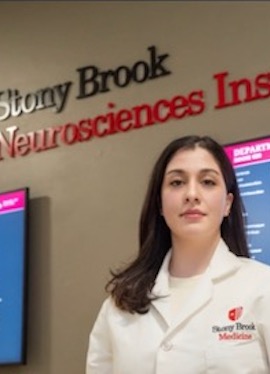
Mariami Kochiashvili is a dual Biology and Psychology major who is fascinated by the brain and how it
works. Since January 2025, she has found real connection and purpose as a member of
the Mofakham-Mikell Lab in the Department of Neurosurgery, which integrates functional
neurosurgery, computational neuroscience, imaging, and machine learning to better
understand and treat conditions such as severe traumatic brain injury (TBI) and disorders
of consciousness. Within this innovative research environment, Mariami focuses on
neurodegenerative diseases, particularly Parkinson’s disease, and investigates how
Deep Brain Stimulation (DBS) can improve both motor and non-motor functions.
Mariami employs computerized motion analysis, landmark-based facial tracking, and
high-resolution kinematic assessments to measure tremor, gait, and facial expressivity
in both DBS- treated and non-DBS Parkinson’s patients, as well as healthy controls.
This data-driven approach allows her to capture detailed patterns of improvement that
traditional clinical assessments may miss. As a URECA Summer Research participant,
Mariami was able to immerse herself in research full-time and make substantial progress
on her project. In just this past month, Mariami had the opportunity to present her
research findings at the Institute for Chemical Biology & Drug Discovery (ICB&DD)
symposium on campus; and the following week, at the 2025–2026 American Physician Scientists
Association/APSA Northeast Regional Meeting at the University of Rochester School
of Medicine and Dentistry (URSMD), with support from a URECA mini grant. Mariami aspires
to become a physician-scientist, dedicated to bridging the gap between research and
clinical care.
On campus, Mariami is actively involved as a member of the Pre-Med Society, the National
Society of Leadership and Success (NSLS), and the CAS Dean’s Student Leadership and
Advisory Council (DSLAC). She also serves as a Teaching Assistant for both Biology
and Psychology classes. Before transferring to Stony Brook in Fall 2024, Mariami earned
her Associate of Science degree with Honors in biology from Kingsborough Community
College, where she participated in the CUNY Research Scholars Program (CRSP). Her
project, titled “Importance and Efficacy of Nutraceuticals in Regulating Appetite
and Satiety Signals for Weight Management,” earned her the Best Poster Award at the
10th Annual CUNY-wide CRSP Symposium in June 2024.
Born in Tbilisi, Georgia, Mariami moved to the United States at age 17 — an experience
she describes as strengthening her resilience and determination to succeed. Beyond
academics, Mariami enjoys reading, traveling, and exploring diverse cultures and languages. Below are excerpts of her interview with Karen Kernan, URECA Director.
The Interview:
My research project: “Assessing Deep Brain Stimulation (DBS) to enhance Parkinson’s Disease
(PD) Treatment through Computer - Based Motion Analysis of Tremor Gait and Facial Expressions,” focuses
on improving how we evaluate the effects of DBS therapy in Parkinson’s patients. Parkinson’s
disease is a chronic, progressive neurodegenerative disorder characterized by the
loss of dopamine-producing neurons in the substantia nigra, a region of the brain
responsible for coordinating movement. This degeneration leads to hallmark motor symptoms
such as tremors, rigidity, bradykinesia (slowness of movement), and postural instability.
Beyond motor symptoms, many patients also experience non-motor challenges including
changes in mood, facial expressivity, and cognition that significantly impact quality
of life. Although Deep Brain Stimulation (DBS) can significantly improve motor symptoms,
traditional clinical rating scales often fail to detect subtle yet meaningful changes.
To address this gap, this study uses AI-based motion tracking and facial analysis
tools to objectively measure tremor amplitude, gait patterns, and facial expressivity.
By providing precise, individualized data, these computer-based methods can help optimize
DBS programming and reveal how motor and emotional circuits interact in Parkinson’s
disease. Ultimately, our goal is to move toward more personalized, and effective clinical
care for patients that advances early detection and prevention of disease progression.
I first got involved with research at Stony Brook shortly after transferring here
in Fall 2024. I’ve always been deeply fascinated by the brain, its patterns, mechanisms,
and its connections to both neuroscience and psychology, so I began reaching out to
neurosurgery labs right away. In January 2025, I was fortunate to join the Mofakham-Mikell
Lab at Stony Brook University Hospital, where I now work under the mentorship of neurosurgeon
Dr. Charles Mikell and computational neuroscientist and physicist Dr. Sima Mofakham.
The Mofakham-Mikell Lab integrates neurosurgery, computational neuroscience, and engineering
to better understand and treat complex brain disorders. My lab studies not only Parkinson’s
disease, which is the focus of my URECA summer project, but also coma and consciousness,
arteriovenous malformations (AVMs), and Post-Traumatic Epilepsy.
For me, this experience has been incredibly inspiring: it’s where science, technology,
and compassion come together. Every dataset and every patient interaction remind me
that behind the science are patients whose lives can be transformed through research,
innovation, and our dedicated efforts.
When I first joined the Mofakham-Mikell Lab, I didn’t have any prior experience in
neurobiology. My previous research focused on the role of nutraceuticals in regulating
appetite and satiety for weight management, which taught me how to design experiments,
analyze data, and approach scientific questions critically. Yet even though I’ve only
been in the lab for a short time, I’ve learned an incredible amount. In under a year,
I’ve gained guidance from my PIs and learned from the diverse perspectives of medical
and graduate students in the lab. This experience has deepened my understanding of
complex neurological diseases and the experimental approaches used to study them.
The URECA program gave me the opportunity to dedicate an entire summer to research.
Having uninterrupted time to focus on my project allowed me to engage deeply with
the data, troubleshoot challenges, and make meaningful progress, all while cultivating
perseverance, discipline, and a deeper appreciation for the scientific process. What
inspires me most is knowing that our work has a direct impact on patients’ lives.
Every patient interaction reinforces the purpose behind the work. I love the challenge
of pushing myself to learn more, think critically, and work hard for both the research
itself and the people it ultimately serves. This experience has strengthened my passion
for neuroscience, inspired me to pursue meaningful contributions, and reminded me
that science is not just about discovery: it’s about making a real difference in the
world.
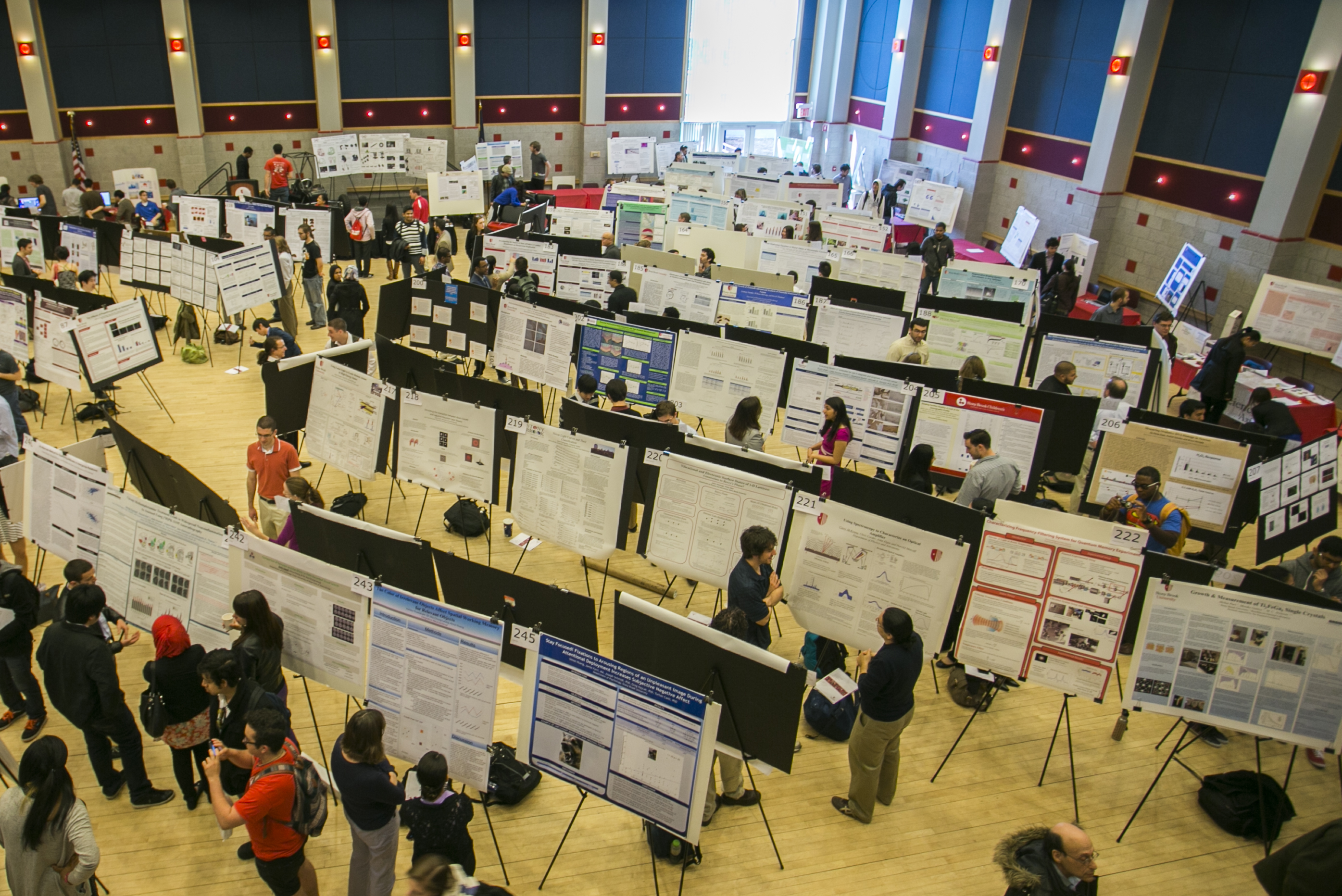
Both meetings were incredible experiences. I had the opportunity to present my research
at the 19th Annual ICB&DD Symposium on “Drug Discovery & AI: Advances and New Directions." It
was an incredible experience. I had the chance to discuss my work with professors
from different universities, gain feedback, and learn about the latest developments
on cutting-edge applications of artificial intelligence in drug discovery on structural
biology and neurobiology. The poster session was particularly engaging, as I could
interact with students from various departments, exchange ideas, and see a wide range
of innovative research projects.
Attending the 2025–2026 APSA Northeast Regional Meeting at the University of Rochester
School of Medicine and Dentistry (URSMD) MSTP events was also inspiring. The keynote
lectures by physician-scientists emphasized the power of impact-driven research and
its essential role in advancing medicine. The conference provided a platform to connect
with Rochester medical students and faculty, discuss the clinical implications of
my work, and receive meaningful feedback. I was able to share my findings, learn from
ongoing research projects, and explore potential interdisciplinary collaborations
that could further enhance my study. Overall, these experiences reinforced my commitment
to continue presenting my research at upcoming symposiums and conferences, raise awareness
about Parkinson’s disease, and to develop interventions and prevention strategies
that can improve patients’ lives.
The next steps for this research include preparing the findings for publication, which will allow the results to reach a wider scientific and medical audience. Sharing these insights is critical, as it can inform other researchers and clinicians working with Parkinson’s disease, ultimately helping to improve patient care and guide more effective treatment strategies.
I think the hardest part of undergraduate research is often just getting started. Reaching out to faculty, expressing interest, and not always receiving the response you’re hoping for can feel discouraging. What I’ve learned is that persistence is key, and setbacks are a normal part of the process. Rejection isn’t a reflection of your potential; it’s just a step along the way. Curiosity, determination, and resilience are what ultimately open doors. Every effort you put in—every email, every meeting, every follow-up teaches you something new and brings you one step closer to an opportunity.
Take advantage of summer research programs, such as URECA or SOAR. Participating in
URECA gave me the invaluable opportunity to focus full-time on my research, dive deeply
into the scientific process, and develop skills I wouldn’t have gained during the
regular semester. It also opened doors to present my work at several symposiums and
conferences, connect with mentors, and engage with the broader research community.
Summer programs are a great way to build experience, grow your confidence, and make
meaningful contributions to your field of study.
My mentor, Dr. Mofakham, is incredibly collaborative and supportive. She is deeply dedicated to her work and to helping me grow as a professional researcher, and I truly enjoy working with her. She is a role model for me and has inspired me to pursue excellence in my own research. The entire lab is highly collaborative, and I’m grateful to be surrounded by knowledgeable and inspiring colleagues, including medical, graduate, and PhD students, who are deeply committed to each project and from whom I’ve gained valuable insights and broader perspectives on my research. I truly appreciate working alongside them, sharing ideas, and exploring new aspects of Parkinson’s disease together. Our lab meetings are a valuable space to share progress, troubleshoot challenges, and receive feedback.
I genuinely love being in the lab. It’s where I spend most of my time, fully immersed
in the research, and it’s something I’m truly passionate about. This experience not
only deepens my understanding of neuroscience but also motivates me to consider the
real-world impact of our work and how it can ultimately help patients with severe
neurodegenerative diseases.
After graduating from Stony Brook, I plan to attend medical school with the goal of becoming a neurosurgeon. My current research has provided invaluable insight into neurological diseases, patient care, and the connection between neuroscience and psychology, which directly relates to my future profession. I hope to continue conducting research that bridges science and clinical practice, contributing to innovations that improve patient outcomes and quality of life. Ultimately, I aim to combine my clinical work with ongoing research to make a meaningful impact on the lives of patients with severe disorders. I am committed to saving lives and work tirelessly toward that goal. Everything I do is dedicated to supporting patients, their hopes, and their journey toward recovery.
Yes, direct contact with patients is a central part of our research, and it’s one
of the most meaningful aspects for me. When I interact with patients, they share their
stories of the day they were diagnosed with Parkinson’s, the challenges they face,
and the emotions behind their tremors and facial expressions. Seeing firsthand how
tremors affect simple daily tasks, such as holding a cup, writing, or drawing, is
incredibly emotional. Sometimes patients struggle to smile at their grandchildren
or even communicate effectively, which highlights just how profoundly this disease
impacts their lives. These experiences are deeply motivating and inspire me to do
more to help them. They reinforce why I want to become a neurosurgeon and fuel my
dedication to research. I love being in the lab and the work I’m doing.
Every moment in the lab, every hour spent towards my research project with my lab
members, feels purposeful because I know it has the potential to benefit current and
future DBS and Parkinson’s patients. I am incredibly grateful to be part of the Mofakham-Mikell
Lab and to work alongside my lab members toward our shared goal of improving patient
care. I would also like to thank Dr. Carine Maurer and Dr. Guy Schwartz from the Stony
Brook Neurology Department for their collaboration on this research. This work has
given me confidence, strengthened my motivation, and allowed me to focus on what I
am truly passionate about, which is making a meaningful difference in patients’ lives.