


Researcher of the Month
Shiya Lin
Majors: Biology, Psychology ; Class of 2027
Research Mentor: Dr. Sandeep Mallipattu, Medicine/Div. of Nephrology & Hypertension
News and Video Feature: 6/1/2026
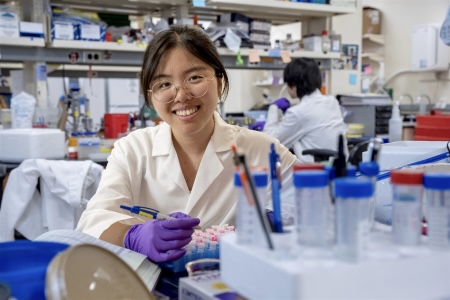
“If I remember I used to fail every single experiment that I did at the beginning. … but the thing is, I was so happy to just be in the lab space, and to learn and really delve myself into this model that I was so interested in. … I ended up accumulating 105 pages of detailed notes [and] … by the end of the summer, I was injecting mice by myself, without much supervision. I was extracting proteins… I was definitely learning a lot and making a lot of mistakes, but I'm really glad I went through that initial process because otherwise I wouldn't have learned what was wrong about what I did, discovered which parts of the procedure were more important and why, and felt the determination to improve.…" - Shiya Lin, Class of 2027
Shiya Lin is a double major in biology and psychology who has been working in the Mallipattu Lab in the Department of Medicine, Division of Nephrology and Hypertension, since September 2024. She currently investigates “Developing human kidney organoids to investigate the role of NFkB signaling in glomerular disease and model kidney diseases for high throughput drug testing” and is delighted to be able to continue her research this summer as a participant in SUNY SOAR – a summer research program that provides summer support for students who are first generation and/or financially disadvantaged.
Shiya’s fascination with the therapeutic potential of organoids began when she was a high school student at Bronx HS of Science and had the opportunity to conduct a research project (virtual) with Dr. Howard Alan Fine of Weill Cornell Medicine, an investigator who works on developing brain organoid models for glioblastoma therapies. Later, as an undergraduate seeking to further develop her interest in organoids, Shiya initiated contact with the lab of Dr. David Tuveson at Cold Spring Harbor Laboratories in her first year at SBU and successfully negotiated a summer volunteer internship at CSHL to work on pancreatic organoids and develop hands-on laboratory techniques/skills.
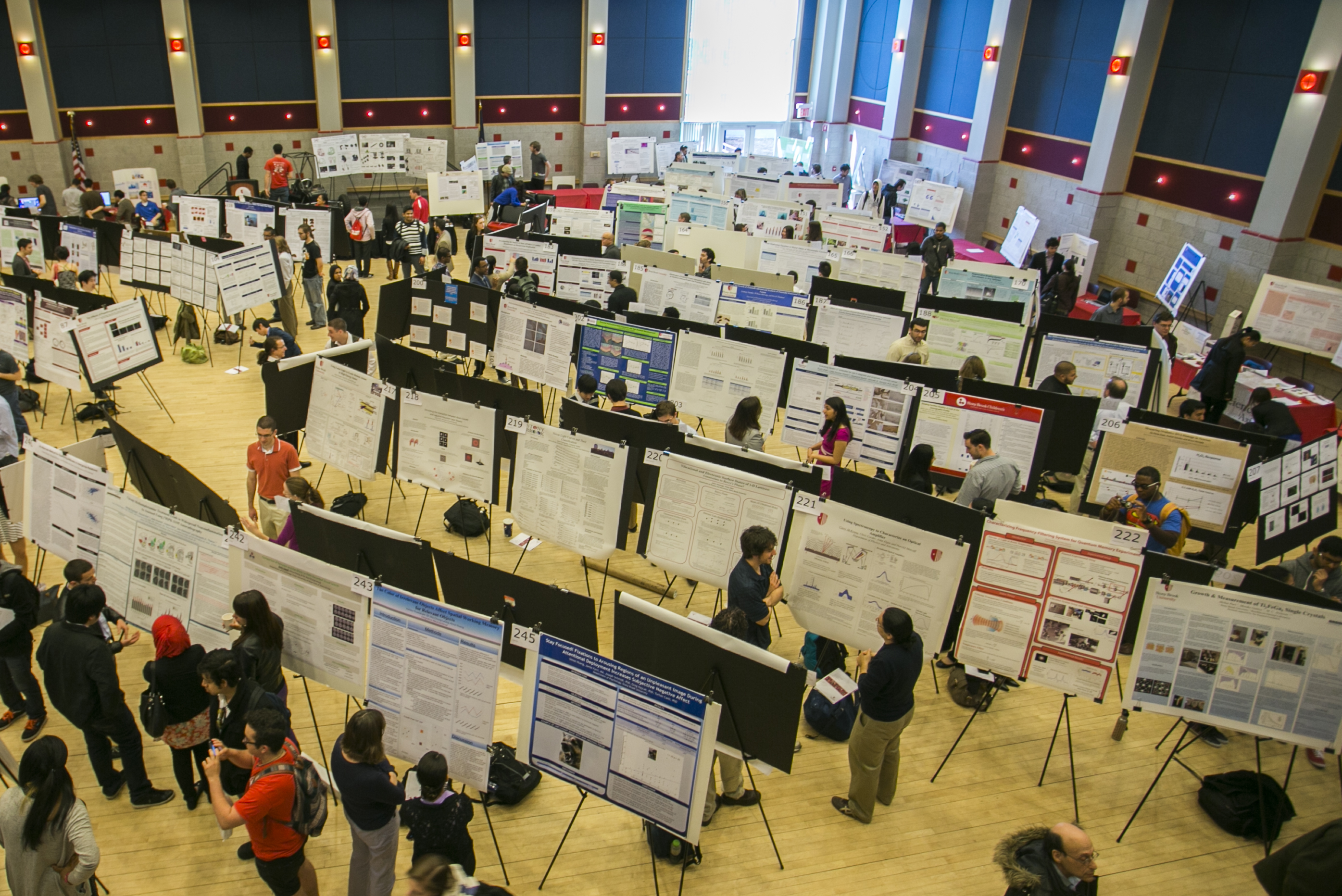
When she later joined the Mallipattu Lab at the start of her sophomore year, Shiya was ready to put her skills to use, and experienced tremendous learning and growth as she put more and more time into research: “I would get so excited that I was finally applying myself in a formal setting, and that what I was learning in the classroom was directly supplementing what I was studying in lab, and then what I was troubleshooting in lab would therefore directly supplement what I was exposed to in class.” Not only did Shiya develop her skills in stem cell culture, organoid generation, immunofluorescence staining, mousework, and PCR, but she has also benefited from the multiple opportunities to present her work, including giving an oral presentation at the 1st Annual Long Island Kidney Education and Research Symposium/ LIKER Symposium in December 2024. Shiya also presented posters at the Women in Medicine and Science Research Day (March 2025); the Annual Department of Medicine Research Symposium (September 2025); and at the URECA Celebration (May 2026); and attended the ASN Kidney Week 2025 in Houston, Texas. Currently Shiya is working on a first-author manuscript for a project regarding “The Impact of Size on Differentiation and Metabolic Activity in Human Kidney Organoids” as well as a second manuscript related to the effects of Birc3 in NFkB signaling and glomerular disease. Shiya’s long-term goal is to pursue MD/PhD degrees and to continue researching organoid models.
At SBU, Shiya has been active as a Resident Assistant at Schomburg-West Community; as a Teaching Assistant for Introductory Biology Laboratories (BIO 204/205) and the Korean Language Department (KOR 111); and is spearheading a Biological Beautification Committee to paint a mural in the Center for Molecular Medicine. In the Fall, she will serve as the Editor-In-Chief & President of Young Investigators Review and work as a Nursing Assistant at the Stony Brook Hospital Surgical Oncology & Kidney Transplant Floor.
Shiya is a first-generation college student who attended Bronx High School of Science. Her hobbies include writing to penpals, scrapbooking/journaling, and learning languages. Below are excerpts of her interview with Karen Kernan, URECA Director.
The Interview:
My work in the lab revolves around the generation of human kidney organoids to study various diseases and pathways. Organoids are essentially "miniature organs" that are able to differentiate from stem cells, and form into 3D spheres with many of the complex structures that make up each organ (in our case, the kidney). This separates them from other models such as 2D cell culture, spheroids, and even mouse models, as they are able to more accurately depict the conditions of the human body and eliminate issues that may arise from animal testing. However, kidney organoids are still a relatively recent discovery and have many limitations that scientists are working through to mature the model.
What our lab found was that because human kidney organoids currently lack vasculature (i.e. blood vessels), we start to see that the middle of these organoids begin to die out and form what we call "hypoxic cores" at a certain point in their growth. We hypothesize that this is directly related to the size of the organoids, and that after a certain size threshold, oxygen and other nutrients are no longer able to reach the center. To classify these, we split the organoids we were developing into different size groups and imaged their components (how well they reflected actual human kidneys) as well as their metabolic function (if they performed the same despite their differences in size), and found that a specific size of organoids were most optimal for experiment uses. The project that I presented at the URECA symposium involves the potential of organoids as a model, and how we have been able to apply our new selection criteria to use these organoids to model different kidney-related diseases for drug testing.
I originally worked at a lab at Cold Spring Harbor the summer after my freshman year, because I was really interested in learning more about organoids and was looking for labs that actively promoted their organoid research on Long Island. I reached out, got accepted for the summer, and did a rotation there helping out with experiments and learning many different techniques. The commute wasn't really working for me, though, so after the summer, I reached out to my current lab primarily because I saw a video of my PI, Dr. M., talking about organoids as a model. I was really interested in the direction of his research and so I reached out, asked if I could join the lab, and started from there.
Oh there was so much new stuff to learn! I remember I used to fail every single experiment that I did at the beginning. I was so bad at it, … but the thing is, I was so happy to just be in the lab space, and to learn and really delve myself into this model that I was so interested in. I would come into the lab every day, and I would ask questions: “Can you review this thing that I did? Can you take a look at the result I got here?” … I asked so many questions, and even though I didn't do well in a lot of my initial experiments, I definitely improved over the summer.
I had a composition notebook that I kept with me, and I would write about every single protein that I didn't understand, every single procedure that was new to me. I would write down the procedures, write down the parts that I would make mistakes on, and I would ask my mentor: “Where do you think I'm going to mess up here?” … I ended up accumulating 105 pages of detailed notes of everything that I didn't understand and everything that I wanted to clarify later. I would write down every single word that was unfamiliar to me, and then I would research it later so that I could follow the lab meetings better. And I think that process really helped me a lot.
By the end of the summer, I was injecting mice by myself, without much supervision. I was extracting proteins… I was definitely learning a lot and making a lot of mistakes, but I'm really glad I went through that initial process because otherwise I wouldn't have learned what was wrong about what I did, discovered which parts of the procedure were more important and why, and felt the determination to improve. And so when I came to Stony Brook and joined the Mallipattu Lab, I was much more prepared.
The mistakes that I used to make, I didn't make anymore. And it gave me a leg up because I was already familiar with the experiments, I was already very interested about the model that we were studying, and I was able to take a lot of the skills that I learned before and translate them into my current projects.
Many of the techniques were new. In the Mallipattu Lab, the organoids that we're growing are kidney organoids, and they're also grown in suspension… Kidney organoids are actually some of the hardest organoids to grow because of how many different cell types we have to generate from the same originating stem cells. But even though some techniques were completely new to me, I had a really, really helpful mentor who stuck with me the entire time, and she explained so much to me throughout my first year working in this lab, which made my transition much easier.
I really am grateful that Stony Brook is a teaching hospital, and also, an R1 research institution. The PIs here understand and expect that we're students. … The postdocs are very open to having students, and they also understand that the student might not know, or even, comprehend a lot of the projects that they're working on. And so in turn, they are very, very patient, and also very excited when their students begin to pick up on their experiments, and start to understand the research more in depth.
My experience in the Mallipattu Lab has always been that it’s a very undergraduate-focused lab space. We share a lab space with multiple other PIs, and we as students always converse with each other whether it’s with other undergraduates, master's students, or even the PhD students. We all gather together and help each other a lot whenever we don't understand something or need a favor. And that's the best learning environment that I could have asked for as an undergraduate.
A lot of my research has to do with what I'm learning in class as well. It keeps me motivated as a student, as well as a researcher. Whether it’s in or outside of the classroom, I feel like I'm constantly excited to be in that space. When I first got involved in research, it made me realize how much of a knowledge gap I had in certain areas, and so when I would learn about it in class, I would get so excited that I was finally learning about this in a formal setting, and that what I was learning in the classroom was directly supplementing what I was studying in lab– and then what I was troubleshooting in lab would therefore directly supplement what I was exposed to in class.
I think that, as a student, a lot of times we tend to wonder: “Why am I learning this? What's the use of this specific pathway or this equation that I'm learning about?” And then when you realize, “Oh, I'm actually using it in lab; I'm actively making use of the material,” it makes you much more excited to learn. You always hear that the best way to learn a language is to immerse yourself in that language and its culture. And the best way to learn about science is to immerse yourself in it too! I'm constantly immersing myself in these topics, and it makes me feel like what I'm doing has a purpose to it. It’s benefiting me as a person, benefiting me as a student, and it's benefiting me as a researcher as well.
No, this is actually my first time getting a summer research program, so I am really excited to meet the cohort that I'm going to be interacting with! Just being able to be funded financially to work full-time in the lab is a great opportunity, and I always feel like I learn the most and make the most progress over the summer.
I'm hoping to pursue an MD-PhD, so research will continue to be a part of my life. And I'm hoping to continue studying organoids, whether in the kidney or in a different organ system. What I'm really interested in is assembloid models, where you can link together different organs. There's just a lot of potential with organoid models, and I hope to keep developing that and learning more about the systems. Maybe one day, I’ll even be able to contribute to an organ transplant with an organoid that I generated in the lab!
Dr. M is very, very busy. He's the Chief of Nephrology, oversees so many different projects, and he runs a lot of training programs with the fellows as well. … But he makes time for us and is a good mentor. When he meets with us, whether I'm presenting or listening to others deliver updates in the lab, he always has a lot of questions and pushes us to fully understand the scientific process. He wants us to be researchers, not just technicians, and always asks us for our thoughts on how an experiment went– what we think should be done next– before giving his input.
It is really meaningful to know that your mentors and PI believe in your potential. It’s something that I'm very grateful for, because I can see that he's cheering for me, and that he wants me to succeed in my research and in my professional development as an early, budding scientist. And I think that that sort of support is especially impactful coming from someone who is actively practicing medicine and running his own research lab, just like I want to do in the future. Working with Dr. M. along with some of the other mentors I’ve had in the lab has done a lot for my confidence as a researcher. They welcome my questions and concerns about my projects, even if it's just something that might be considered trivial, and allow me to devise my own experiments and take hold of the direction of my research. Knowing that my mentors believe in me makes a difference in my learning, and pushes me to meet their expectations and create opportunities for myself.
Research is a great way to get involved on campus and also in your own learning, because there are so many different types of research. Not everyone will like wet lab research, some people will prefer dry lab, clinical, … but there are so many different ways that people can be involved. A lot of people don't realize that Stony Brook professors and PIs want you to reach out to them. They want to see that there's someone who's interested in learning about what they're doing, and they're willing to provide that guidance for someone who's just starting out.
I've heard first year students say that they have to wait to get involved in research, and I really don't think that's the case. You can cold email, but it's much better if you really take the time to look at the research that's happening on campus and reach out to the specific people that are participating in research that really makes you excited. Because when you're coming into the lab, or working on the field, and you're doing something that you think is really cool and transformative, you will be so much more excited to dedicate yourself to the work and will want to take the initiative to learn more.A thousand percent. When I applied to Stony Brook, it was around the time that we had just received the largest research endowment given to any public institution. There were so many new opportunities that were flourishing and being advertised about the university, and I knew that I would be able to find the resources to make the most of my experience here.