



Mohammadreza Aliyari Receives 2026 ICCE Outstanding Student Abstract Award
The Department of Civil Engineering is proud to celebrate Mohammadreza Aliyari, a PhD student advised by Dr. Ali Farhadzadeh, whose research has been recognized with the 2026 ICCE Outstanding Student Abstract Award. His work stood out in a highly competitive field, ranking within the top 3% of over 750 international submissions for the 39th International Conference on Coastal Engineering.

Recognition of Excellence
The ICCE Outstanding Student Abstract Award is a global distinction awarded to emerging scholars who contribute significantly to the field of coastal science. Mohammadreza was selected based on his commitment to:
- Advancing Global Knowledge: Enhancing the shared understanding of complex coastal environments.
- Innovative Practice: Bridging the gap between theoretical coastal research and practical engineering applications.
- Addressing Critical Impacts: Focusing on vulenerable coastal systems facing unprecedented natural and anthropogenic threats.
- Fostering Resilience: Promoting creative and diverse solutions to modern coastal engineering hurdles.
Mohammadreza will be formally honored with a certificate during an in-person presentation at the 39th ICCE in Galveston, Texas.
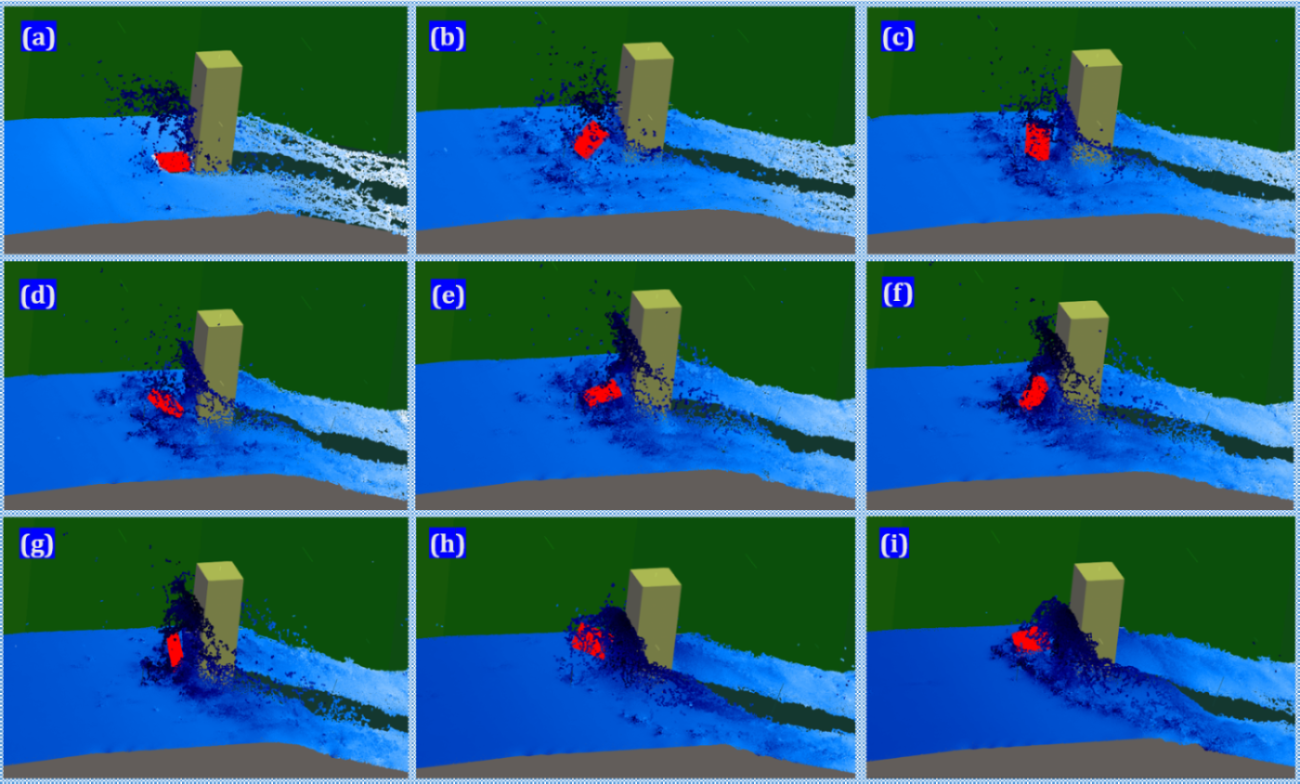
Research Impact & Innovation
Supported by the National Science Foundation (NSF), Mohammadreza's doctoral research targets the intersection of coastal resiliency and disaster mitigation. His recent work focuses on:
- Probabilistic Debris Modeling: Formulating a new framework to predict how floodborne debris is picked up and transported during extreme surge events.
- Structural Vulnerability: Categorizing the specific ways coastal infrastructure fails when subjected to the combined forces of debris impact and hydrodynamic pressure.
- Evolving Engineering Standards: By utilizing a mix of advanced numerical simulations and experimental data, his research identifies critical gaps in the ASCE 7-16 design codes. His findings introduce the industry to "stochastic impact" modeling--a more realistic way to calculate the cumulative stress on buildings during a flood.