Minor in TV Writing
Our Minor in TV Writing offers students a creative path toward enhanced engagement with subjects in their major field of studies. Students will explore creating stories for the world of episodic and narrative television, learn to analyze current trends, and engage in creative and intellectual exploration of the issues and emotions that excite them. The minor is designed for students who wish to develop their creativity and expand their writing abilities while pursuing other studies.
With our emphasis on VISUAL STORYTELLING and VISUAL COMPOSITION, a Minor in TV Writing provides the visual literacy skills necessary in today’s marketplace. This distinct minor is designed to empower the aspiring TV writer to break into this growing and dynamic field and to offer students the necessary background to pursue writing on a graduate level. TV Writing minors should graduate with a SPEC SCRIPT and a REVISED PILOT SCRIPT, building a strong portfolio of creative work. In addition, students will learn how to pitch themselves and their stories to producers and networks. Students will be guided in storytelling technique designed to harness their imagination as they create compelling, authentic, and original stories for today’s audiences.
Faculty and graduate teaching assistants come from Stony Brook University’s Master of Fine Arts (MFA) in Television Writing. This stand-alone MFA is one of a handful in the country to offer in-depth graduate studies in the burgeoning field of TV writing.
Program Director: Karen Offitzer
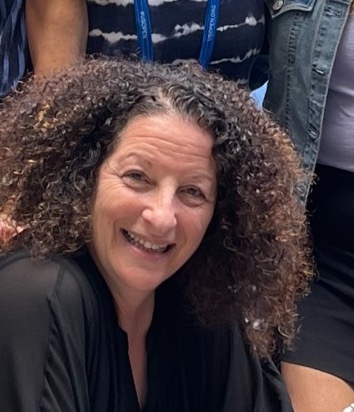 Karen Offitzer received her MFA in Creative Writing from the University of Arizona,
and a Masters from NYU. She is the Founder and former Program Director of the MFA
in Creative Writing at National University, and has received grants and awards for
her short documentary work, most notably for her short, I Am Not Who You Think I Am, exploring the effect of a year-long free humanities education program on the lives
of those who were homeless and working poor. Her short fiction and nonfiction have
appeared in Alaska Quarterly Review, Phoebe, and Sonora Review and her book, Diners, is a pictorial chronicle of America’s roadside eateries.
Karen Offitzer received her MFA in Creative Writing from the University of Arizona,
and a Masters from NYU. She is the Founder and former Program Director of the MFA
in Creative Writing at National University, and has received grants and awards for
her short documentary work, most notably for her short, I Am Not Who You Think I Am, exploring the effect of a year-long free humanities education program on the lives
of those who were homeless and working poor. Her short fiction and nonfiction have
appeared in Alaska Quarterly Review, Phoebe, and Sonora Review and her book, Diners, is a pictorial chronicle of America’s roadside eateries.
Karen Offitzer, Director
Minor in TV Writing
Melville Library N3022
karen.offitzer@stonybrook.edu
- Academics
How Do I Earn a Minor in TV Writing?Your entryway to the 21-credit minor consists of three required courses: FLM 101, Introduction to Filmmaking and Television, FLM 102, Introduction to Film and Television Composi5on, and FLM 215, Scriptwriting for Film and TV. These three courses, open to everyone, invite you to participate hands-on in the experience of visual literacy and introduce you the nuts and bolts of visual storytelling.
The heart of the television writing experience is two advanced seminars, chosen from TVW 220, TVW 221, FLM 302 or FLM 303. In TVW 220, Advanced Television Writing, students can delve deep into writing, choosing from topics such as Comedy Writing, Writing the Web Series, or Writing the Drama Script. In TVW 221, The Writers Room, students engage in a collaborate writing workshop designed to mimic a professional writers room. Students work together to develop and write a TV show or web series.
Students can choose to enroll in FLM 302, Producing Practices for Film and TV, with topics such as Directing Actors for Film and Television and Understanding the Business of TV, or FLM 303, Podcasting, which explores audio podcasting as the essence of storytelling: listening to and communicating via the spoken word, person-to-person, and visualized exclusively through the imagery conjured via methods and choices specific to the oral tradi5on.
Minors also take one upper-level advanced theory course, FLM 310 Topics in Film and TV or FLM 320, Story Analysis for Film and TV writers, or an equivalent course from another department. Our FLM and TVW courses are taught by working writers who approach visual storytelling from the ground up, as fellow practitioners.
Our minor offers a cohesive approach to fulfilling Stony Brook's general education requirements, including SPK, ARTS, HUM, HFA+, and EXP. Even a single course in the art of television writing presents a rich complex of learning opportunities, not only for those in the arts and humanities, but those in any field: hands-on immersion in the narrative, analytical and technical skills required for cinematic expression will enable students to create visual stories about the issues at the core of their own studies, whatever they may be. At the conclusion of their studies, students will have the opportunity to choose a final course that best serves their interest. Students can enroll in the Capstone Project, offering an intensive pilot revision workshop, or complete an Internship, or can or enroll in an addi5onal advanced TV Writing workshop.
Students should declare the Minor in TV Writing sometime during their sophomore year, at which time they should consult with advisors of both their major and minor to plan their course of study. The objective is to fulfill the TV writing minor's requirements in a way that is coherent and complementary to the major. The minor can be declared online from within SOLAR. Please refer to the Academic Calendar regarding the deadline for submission of the Minor Declaration form.
For questions about the minor, or to set up an appointment to meet with an advisor, please contact us at tvw_undergrad@stonybrook.
The director of the TV writing minor is Karen Offitzer: Karen.offitzer@stonybrook.edu
- Courses
Sample Course OfferingsFLM 101: INTRODUCTION TO FILMMAKING AND TELEVISION: VISUAL STORYELLING
TOPIC: Exploring Visual Storytelling: A hands-on introduction to the art of narrative filmmaking and cinematic storytelling. Using smartphones or comparable devices, students will become familiar with the ideas, materials and technical skills needed for creative expression in this medium. Participants will learn how to use images in conjunction with sound, text and narrative structure as a basis for communicaitng ideas visually. Specific visual communication skills include: clarifying a subject, defining a goal, defining an audience, exploring the tools and resources available.FLM 102: INTRODUCTION FILM AND TELEVISION COMPOSITION: HOW FILMS AND TV SHOWS SAY WHAT THEY MEAN
TOPIC: Film and Television Across the World: During this semester, we will take a close look--and listen--to a
survey of films and television shows from across the world and throughout history. Screenings will include
short films, animated films, documentaries, TV shows, music videos, etc. We will attempt to break apart the
different components of these selected works to better understand how they operate and how they combine with one another to impact us as viewers--to excite us, to move us, to frighten us, etc. – and how they inform us as practitioners.TVW220 : ADVANCED TV WRITING
Topic: Introduction to Late Night, Sketch, and Joke Writing. This course covers the fundamentals of joke writing, late night comedy writing and sketch comedy writing in the style of SNL, Amber Ruffin, Full Frontal, and The Daily Show. Structured like a comedy writers' room, students learn to pitch jokes and sketches live in front of their peers.FLM 215: SCRIPTWRITING FOR FILM AND TV
Topic: Writing the Television Pilot: Over the semester, students will work in a supportive, collaborative
environment, learning how to analyze past and current television in a variety of genres, to hone their skills on
the principles of story and the medium of television writing. Using this foundation, students will then pitch
their own TV series ideas and develop stories for a pilot episode resul5ng in written outlines, beat sheets and scenes with dialogue to be read aloud in class. The goal of the class is to establish a foundation for television writing, emulate the professional writers room experience and teach students how to both give and receive constructive feedback on work presented. Students will finish the class with a completed outline, teaser and first act of their own half-hour or hour-long pilot.FLM 301 Story Analysis or Film and TV Writers
TOPIC: This Show Sucks: A Study Of The Worst TV Shows In The World. While some series, The Simpsons or
Law and Order for example, seem endlessly iterable others are canceled swilly -- their fans relegated to the
swampy comment sections of b-tier, industry listicles. Take, for example, Cop Rock. The world's first -- and
only? -- musical procedural. Think CSI meets Hannah Montana. WHO GREENLIT THAT?? Was he a genius or
completely bananas? Both, maybe, because the show won several Emmys before landing on the butcher
block after only 11 episodes. In this class, we’ll survey and read the pilot scripts of narrative shows which
were canceled in one season or less, and discuss why they failed. We will take into account economics,
cultural context, and story development. At the end of the semester, each student will pitch their own awful
TV show, and justify why it could never succeed.FLM 303: Podcasting
Topic: Audio Storytelling Skills: In this introductory course, students will learn how to conceptualize and craft
their own podcasts—visualizing stories through audio only. Students will gain experience in developing and
pitching ideas, writing specifically for sound, best practices in interviewing styles and techniques, recording and editing basics, marketing, branding, distribution and more. The focus is on learning and developing storytelling and entrepreneurial skills specific to audio, and strengthening oral communication and presentation skills by researching, writing and proposal presentations as well as participating in the evaluation of oral peer presentations and pitches. - Topics
TopicsFILMMAKING AND TELEVISION WRITING COURSE DESCRIPTIONS FOR FALL 2026
NO PREREQUISITES TO ENROLL IN THESE INTRODUCTORY FILM CLASSES:
FLM 101 INTRODUCTION TO FILMMAKING AND TELEVISION: VISUAL STORYTELLING SBC: ART
A hands-on introduction to the art of film and television. Students will become familiar with the ideas, materials and technical skills needed for creative expression in these mediums. Participants will learn how to use images in conjunction with sound, text and narrative structure as a basis for communicating ideas on film and TV. Participants will craft ideas into short pieces using Smartphones or comparable devices. Participants also attend a CREATE event, the common-hour film and television series, or an equivalent.
FLM 101.01 #90788 TU/TH 3:30 PM - 4:50 PM Tim O’Connor
FLM 101.02 #90789 TU/TH 2:00 PM - 3:20 PM Jing Wang
FLM 101.03 #90790 TU/TH 3:30 PM - 4:50 PM Jing Wang
FLM 101.04 #90807 TU/TH 11:00 AM - 1:50 PM TBA
FLM 101.05 #90808 TU 12:30 PM - 3:20 PM Amy Gaipa
FLM 101.06 #90809 TU/TH 12:20 PM - 1:50 PM TBA
FLM 101.07 #90871 M/W 2:00 PM - 3:20 PM Conor Demmett
FLM 101.08 #90810 M/W 3:30 PM - 4:50 PM Conor Demmett
FLM 101.09 #90836 M 3:30 PM - 6:20 PM TBA
FLM 101.10 #90837 TH 12:30 PM - 3:20 PM TBA
FLM 101.11 #91873 M/W 11:00 AM - 12:20 PM TBA
FLM 101.12 #91874 W 3:30 PM - 6:20 PM TBA
FLM 101.13 #91910 F 11:00 AM - 1:50 PM TBA
FLM 101.14 #92416 TU/TH 11:00 AM - 12:20 PM TBA
FLM 101.15 #92417 TU/TH 11:00 AM - 12:20 PM Elizabeth Rohrbaugh
FLM 101.16 #93360 TU/TH 3:30 PM - 4:50 PM TBA
FLM 101.17 #93361 TU/TH 2:00 PM - 3:20 PM William Chandler
FLM 101.18 #95507 M/W 9:30 AM - 10:50 PM TBA
FLM 101.19 #95508 M/W 11:00 AM - 12:20 PM TBA
FLM 102 INTRO TO FILM AND TELEVISION COMPOSITION: HOW FILMS SAY WHAT THEY MEAN SBC: HUM
How do filmmakers and TV creators tell their stories on screen? In this course, we will discuss how stories are conveyed from a creator's perspective—from script to screen, from cast to crew. We might understand how a screenwriter conveys story. How about an actor? A production designer? Or an editor? We will also explore films and television series that made an impact on the history of entertainment. After successful completion of this course, you will have created a 3-minute scene on a mobile device using the principles you have learned. And you will be able to view content with a critical eye, appreciating the art and craft of visual storytelling in a whole new light.
FLM 102.01 #90838 FRI 9:30 AM - 12:20 PM with Karen Offitzer
FLM 102.02 #90839 TU/TH 11:00 AM - 12:20 PM with Will Chandler
FLM 102.03 #90841 TU/TH 12:30 PM - 1:50 PM with Will Chandler
FLM 102.04 #91589 M/W 5:00 PM - 6:20 PM with Dave Chan
FLM 102.05 #93345 M/W 6:30 PM - 7:50 PM with Dave Chan
FLM 102.06 #95693 FRI 12:30 PM - 3:20 PM with Karen Offitzer
FLM 201 VISUAL STORYTELLING ACROSS THE DISCIPLINES SBC: STAS
This course introduces visual storytelling as a basic competency, on par with expository writing, as an essential tool for conveying and understanding information across disciplines. We will investigate how the act of telling a story or communicating information with visual content serves as a powerful tool for helping make sense of the world. It will offer the opportunity to develop proficiency in visual storytelling (visual analysis, narrative structure) and foundational technical skills (writing, camera use, lighting, editing, sound) beneficial to communicative and expressive work across, and as a means of fostering links between, the disciplines.
FLM 201.01 #92313 TU 2:00 PM - 4:50 PM with Kate Levitt
FLM 201.02 #92314 TH 2:00 PM - 4:50 PM with Kate Levitt
FLM 201.03 #92418 TU 11:00 AM - 1:50 PM with Kate Levitt
FLM 203 PODCAST: AUDIO STORYTELLING SKILLS FOR FILMMAKERS SBC: SPK
Audio Storytelling Skills for Filmmakers Podcasting is the next step in the technological liberation of storytelling via digital means. It is a companion and complement to video and filmmaking. In this introductory course, you will learn how to craft your own podcast--visualizing your stories with audio only--and present it to the world. You'll gain experience in writing for sound, interviewing styles and techniques, recording and editing basics, pitching ideas, marketing, branding, distribution, monetization and more. The focus is on learning and developing new storytelling and entrepreneurial skills, and strengthening oral communication and presenting skills by researching, writing and presenting proposals and pitches and participating in the evaluation of peer oral presentations of researched proposals and pitches.
FLM 203.01 #90860 TU/TH 9:30 AM - 10:50 AM with Amanda McLoughlin
FLM 203.02 #95690 TU/TH 11:00 AM - 12:20 PM with Amanda McLoughlin
If you’ve taken FLM 101, you can enroll in any of these 3-credit 200 level courses:
FLM 215 Forms of Scriptwriting SBC: HFA+
FLM 215.01 #90843 W 3:30 PM - 6:20 PM with TBA
Study and practice of scriptwriting for film and television through readings, screenings, discussions and regular submission of original work. FALL 2026 215.01 will focus on WRITING FOR TELEVISION.
FLM 215.02 #91872 TH 11:00 AM - 1:50 PM with Tim O’Connor
This section of Film 215 will focus on the initial, crucial phases of writing a feature length screenplay— from idea generation through the drafting of a treatment and initial script pages. We'll explore how to generate story ideas, nurture them through research, expand them through exercise and then craft them into a working structure. A significant portion of the semester will be dedicated to workshopping student work, and we’ll dive into what it means to live the life of a writer.
*Students may repeat FLM 215 as topic changes to fulfill requirements
** TV Writing minors must take TV Writing Topic
***Creative Writing majors and minors: FLM 215 is the equivalent of CWL 315 and will count as a workshop for the BFA or Creative Writing minor. If you’ve completed CWL 202 we will issue you permission to enroll. Please email Liz McRae (elizabeth.mcrae@stonybrook.edu) and provide ID # and course section.
FLM 220 Documentary Filmmaking SBC: HFA+
FLM 220.01 #95511 TU 2:00 PM - 4:50 PM Social Impact Documentary Filmmaking with Elizabeth Rohrbaugh
In "Social Impact Documentary Filmmaking," students will embark on a transformative journey that delves into the world of socially conscious storytelling through the lens of documentary filmmaking. This course aims to explore the powerful intersection between media, social impact, and catalyzing positive change in society. Through an immersive and hands-on approach, students will learn the essential principles of documentary filmmaking and storytelling techniques while channeling their creativity towards projects that can inspire action and drive social progress.
FLM 221 Fiction Filmmaking SBC: HFA+
FLM 221.02 #95510 TH 12:30 PM - 3:20 PM with Elizabeth Rohrbaugh
Study and practice of fiction filmmaking from story to production and post-production, through readings, screenings, discussion and regular submission of original fiction filmmaking projects. Topics include: Short Fiction, Film Animation, American Hollywood Film, Genre Filmmaking, Indie Filmmaking.
If you’ve taken FLM 215 or CWL 315, you can enroll in this 3-credit 200 level course:
TVW 221 THE WRITER’S ROOM SBC: HFA+, WRTD
TVW 221.01 #90866 W 2:00 PM - 4:50 PM with Dave Chan
In The Writers Room course, we will "break" Season 1 of a television series and each of its episodes. We will develop character and story arcs over the course of the season as well as ABC stories in each episode. Television is the "little big screen" and though it follows the same principles of traditional storytelling, there are nuances that make this medium entirely unique. After successful completion of this course, you will understand the process of breaking episodes of a season, character/story arcs, and write one episode.
If you’ve taken FLM 102, you can enroll in this 3-credit, 300 level course:
FLM 301 FILMMAKER’S TOOLBOX SBC: TECH
FLM 301.01 #90844 TU 12:30 PM - 3:20 PM with Tim O’Connor
A hands-on course exploring the techniques and technology of visual storytelling, examining tools filmmakers use to create compelling images and stories. With a focus on inventive low budget production, we will dive into the key aspects of making movies: cinematography, sound recording, lighting, editing and directing.
If you’ve taken FLM 101, you can enroll in either of these 3-credit, 300 level courses:
FLM 302 PRODUCING PRACTICES FOR FILM AND TELEVISION SBC: SPK
FLM 302.01 #90859 MON 2:00 PM - 4:50 PM with Amy Gaipa
Today’s indie producer is a problem-solving entrepreneur, navigating storytelling in an ever-changing industry. Producers often have to wear all the hats at one point or another while discovering/developing stories to tell; pitching to garner interest and funding; as well as packaging their work for a strategic festival run and distribution.
We will explore how projects are conceived, developed, pitched, packaged, financed and marketed with an eye on targeting festival submissions and releasing work on alternative digital outlets. This class has proven to be beneficial in preparing past participants who have pursued high-level internships after graduation.
FLM 304 Launching Your Podcast / Advanced Production Class SBC: TECH
FLM 304.01 #95516 TH 11:00 AM - 1:50 PM with Kerry Donahue and Kathleen Russo
Audio storytelling is a craft, and the skills that make a great podcast episode also translate to film, journalism, and narrative writing. In this advanced workshop, you'll build those skills through hands-on exercises: pitching and developing a story, recording interviews, gathering sound in the field, writing for the ear, and editing it all together. In the second half of the semester, the class collectively chooses a theme, and you each produce a 6–8-minute narrative profile for a shared podcast, taking on real production roles along the way: executive producer, host, producer. Weekly listening diaries keep you engaged with the form outside of class. By the end, you'll be able to answer the question every podcaster needs to answer: What do you want your listeners to think, feel, and do when they finish an episode?
Prerequisites: 200-level course in podcasting, journalism, film, or writing.
If you’ve taken FLM 102 and one 200 level or higher FLM or Equivalent, you can enroll in this 3-credit, 300 level course:
FLM 320 TOPICS IN FILM SBC: HFA+
FLM 320.01 #90861 TU 11:00 AM - 1:50 PM with Jing Wang
A critical survey of a particular period, genre or ideology in filmmaking and television. Emphasis will be on exploring the evolution of that period, genre or ideology from a practitioner’s perspective.
IF YOU ARE READY TO COMPLETE THE CAPSTONE (with permission of the Director)
FLM 402 CAPSTONE PROJECT SBC: EXP+
FLM 402.01 WED 2:00 PM - 4:50 PM with Amy Gaipa
Students, having completed their primary course load for the filmmaking minor will continue to deepen their practice in visual storytelling, screen/television writing or experience in the field by choosing and planning a production and/or writing strategy that culminates in a “final” project approved through the submission of a drafted proposal for approval including an annotated bibliography. A midterm and final project portfolio will be created encapsulating your Capstone progress and experience. Drawing upon the skills acquired thus far, students will be working independently while checking in for guidance, feedback and critique while also occasionally assembling as a class to share personal experiences, troubleshoot, and discuss each other's unique artistic process. The culmination of each student's work will be presented and celebrated at the Stony Brook Film and Television Writing Capstone Festival Screening.
______________________________________________________________________________
INSTRUCTOR BIOS:
Conor Demmett is a filmmaker and educator from NY. He received a BA in Film Studies & Production from Hofstra University and an MFA in Screenwriting from Stony Brook Graduate School. He presented for the Dogme Group which took 1st-place in the 2020 SUNY PACC pitch contest, winning the $10,000 grant. In his 10 years experience working in film, Conor has written/directed several short films and currently has a slate of feature films in various stages of production.
Dave Chanis an award-winning Asian American screenwriter and filmmaker who holds an MFA in Television Writing from Stony Brook University–Killer Films. He was selected as a Finalist from over 2,700 applicants in the Paramount Writers Mentoring Program, the Nickelodeon Writing Fellowship, and the Television Academy Internship Program. He also produced the episodic proof-of-concept A Father's Son starring Ronny Chieng (Crazy Rich Asians) and Tzi Ma (The Farewell). Dave teaches and inspires future storytellers at Stony Brook University in his undergraduate Film and Television Writing courses.
Will Chandler An Academy of Motion Picture Arts and Sciences NICHOLL FELLOWSHIP in SCREENWRITING winner, WILL CHANDLER has sold scripts and worked on assignments for major studios and independent producers. His Nicholl-winning script CYRANO OF LINDEN VIEW was optioned by writer/producer Michael Schiffer, his spec script THUMB was sold to Sony Pictures in a preemptive bid, and actor Russell Crowe hired him for BUSHRANGER, a sweeping historical drama based on the life of Australian outlaw Ben Hall. Will has also written for The Jim Henson Company, L-Squared Entertainment and others. Before that, Will was a Script Development executive in movies and miniseries for Green-Epstein Productions, where he guided dozens of projects for ABC, CBS, NBC and HBO. Will got his start in the entertainment business as a story analyst/script doctor for CBS, Viacom, Harpo Productions, New World Pictures, Lifetime and more. In addition to screenwriting, maintaining his scriptwriting column and teaching, Will is a judge for an internationally recognized screenwriting competition.
Amy Gaipa's love of independent and developmental projects includes ACTING in The Swords, Dirty Rhetoric, Girl in the Straw Hat, Good Grief, Silver Tongues, La Vida Inesperada, Trudy Bolt in TITANIC, the Sloane readings at the Tribeca Film Festival, a slew of roles onstage including New York Madness, The Visiting Hours, and a summer stint at Steppenwolf; PRODUCING The Swords, Dirty Rhetoric, Trilogy of Lamentations (in development), Good Grief, Whiskey Kills The Hunger (post); Mastic Beach Mini Indie Film Festival (2019-present); PRODUCTION DESIGN The Swords, Cop Shop (documentary reenactments),The Circle (Brooklyn Sci-Fi Festival and Nightmares Film Festival), Dirty Rhetoric, Poor Arthur, WKH, Div Kid, Christmas: 1987, Brennen, Good Grief, and MBMIFF. Amy graduated summa cum laude with an MFA in Film Direction from Stony Brook University which has deepened her dedication to the craft of storytelling both in front of and behind the camera. Amy is a member of SAG-AFTRA, ACTOR’S EQUITY, and very proud to be the 2021 recipient of the NYWIFT, New York Women In Film & Television award.
Kate Levitt is an award-winning screenwriter, script editor, and curator who focuses on nontraditional, coming-of-age narratives and experimental media. Her drama pilot, Living, won Showtime Network’s Tony Cox Award for Best Scripted 60-minute pilot in 2019. Her scripts have also finaled in the Atlanta Film Festival, and the Page International Screenwriting Competition and have placed in the Austin Film Fest as well. Her new-media feature, Me,Me - a collage of social media footage - premiered earlier this year at Foxy Production Gallery. As a curator, Kate has worked with eminent video artists such as Paul McCarthy, Ryan Trecartin, and Petra Cortright.
Amanda McLoughlin is the CEO of Multitude, a podcast collective, production company, and ad sales provider. A digital creator since 2004 whose career started in finance and business services, she created Multitude in 2018 to support fellow creators in making a living on their own terms. She was named a Forbes 30 Under 30 Media honoree in 2021, she currently co-hosts three podcasts (Spirits, Join the Party, Attach Your Résumé) and Executive Produces several more.
Tim O’Connoris a filmmaker based in New York City. His work as a television director, producer and writer has aired on HBO, Hulu, ABC, Discovery ID and Oxygen. His first feature film as a writer & director, THE UNDISCOVERED COUNTRY, was released via indie streaming platform NoBudge in 2019 and his award-winning short film, WE WANTED CHILDREN played at festivals across the country in 2022, including Brooklyn Horror, FilmQuest and Flickers Rhode Island. As a screenwriter, Tim has been an artist-in-residence at the Millay Colony for the Arts and Willapa Bay AiR. His comedy feature script BLUESHIFT won the Alfred P. Sloan Feature Award in 2017 and his television pilot CEREMONY was selected for the 2022 Blue List. He holds an MFA in Film Directing from Columbia University and teaches film production and screenwriting at NYU Tisch and Stony Brook University.
Elizabeth (Liz) Rohrbaugh is a writer and director from Brooklyn, NY. Her film Becks, an independent musical drama starting Lena Hall, Mena Suvari, Christine Lahti, and Dan Fogler premiered at the 2017 LA Film Festival, where is won Best US Narrative Film. Becks was released in theaters, Showtime Networks, and on VOD and other streaming platforms. It holds a 95% rating on Rotten Tomatoes and received positive reviews from The New York Times, Variety, The Los Angeles Times and the Hollywood Reporter. Elizabeth’s short film DYLAN, which played at a number of prestigious Queer and mainstream film festivals around the world and was a Vimeo Staff Pick and a Vimeo Short Of The Week. Elizabeth works as a freelance director for commercials, promos and PSAs. She spent a decade as a writer, director and editor at MTV in their On-Air Promos department, where she won an Emmy Award and several Telly Awards for her work on some of their biggest shows, movies and brand integrations.
Kathleen Russo is the Director of the Audio Podcast Fellows Program at Stony Brook Southampton. She curates the Writer Speaks Wednesday Series and special events for the Summer Writers Conference at Stony Brook. In addition, she is currently in production for a new Hillary Clinton podcast with iheart radio to be launched soon. She was the executive producer with Tina Brown of the podcast TBD by Wondery, nominated one of the best podcasts of 2019 in Cosmopolitan, and created and produced the podcast/radio show Here’s The Thing with Alec Baldwin (WNYC production). She has been a contributor to The Moth, This American Life and StoryCorps. Past producing credits include: two movies with Academy Award-winning director Steven Soderbergh (Gray’s Anatomy, And Everything Is Going Fine) and an Obie Award-winning play called Spalding Gray: Stories Left To Tell.
Jing Wang is a New York-based independent filmmaker whose work focuses on the immigrant experience, reflecting her deep commitment to both her craft and her community. Her films have been showcased at the Museum of the City of New York, the Rooftop Film Festival, and WNYC’s The Greene Space. Her work has also been featured in prominent publications like The New York Times, Gothamist, World Journal, and China Press. In 2023, Jing received the prestigious Sundance Documentary Fund Grant for her feature documentary Ride with Delivery Workers. She has been invited to speak at esteemed institutions such as NYU Tisch School of the Arts, Hofstra University, and the CUNY Graduate Center. Jing is an active member of New York Women in Film & Television (NYWIFT), Brooklyn Filmmakers Collective, and the Asian American Documentary Network (A-Doc). She holds a Master of Fine Arts in Integrated Media Arts from Hunter College. Jing teaches as an adjunct assistant professor at several CUNY and SUNY colleges, where she shares her expertise with the next generation of filmmakers.
COURSE TOPIC ARCHIVES:
- CREATE Series
CREATE Series - Student Showcases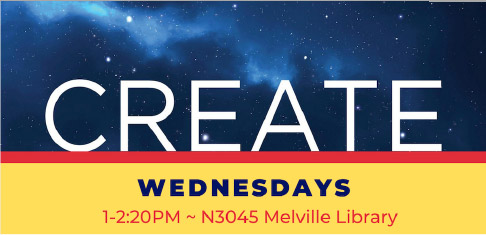 CREATE Wednesdays
1-2:20 p.m., N3045 Melville LibraryCreate Wednesdays is a series of talks and presentations by industry professionals, faculty and guests hosted by Stony Brook Filmmaking and TV Writing; providing insight and opportunity as you begin your creative path.
 Capstone Festival
Student filmmakers, screenwriters and TV writers celebrate the culmination of their minor coursework by presenting a special project at the Wang Center for their peers and the SBU community.
 Student Showcase
Student filmmakers and screenwriters from the inception of the program in FLM 101, 102, 215 and 301 were nominated and presented work at the Wang Center Theatre for their peers and SBU community.
- Learn More
Learn MoreLearn more about the minor in the Undergraduate Bulletin
- Minor Declaration
Minor DeclarationThe minor can be declared online from within SOLAR. Please refer to the Academic Calendar regarding the deadline for submission of the Minor Declaration Form.
For questions about the minor, or to set up an appointment to meet with an advisor, please contact us at tvw_undergrad@stonybrook.edu.
- Contact Us
Contact UsGot a question? We'd love to hear from you. Send us a message and we'll get back with you!