The faculty in the Women’s, Gender, and Sexuality Studies department at Stony Brook University are scholars and educators working across areas such as feminist theory, queer and
trans studies, race and ethnic studies, and social justice. Their research and teaching
reflect the program’s interdisciplinary approach and its focus on real-world issues.
This page highlights faculty research, including publications and current projects,
and shows how their work supports the department’s mission to engage others in critically
examining gender and sexuality across diverse cultural and global contexts.
Faculty Work
Immigration Detention Inc. The Big Business of Locking Up Migrants. Nancy Hiemstra
& Deidre Conlon.
The United States has the most extensive immigration detention system in the world,
expanding from a capacity of less than 5,000 detainees per day in the 1980s to 52,000
by 2019. While the most vociferous anti-immigrant rhetoric may be attributed to Republicans,
US detention infrastructure has grown exponentially regardless of the political party
in power, as reports of abysmal detention conditions pile up.
Nancy Hiemstra and Deirdre Conlon provide a damning exposé of the ways immigration
detention generates income while those detained are starved, sickened, and exploited
as a matter of routine detention operation. Drawing on over a decade of research and
focusing on detention centers in New Jersey and New York, the authors map public-private
financial relationships and trace how detention contracts for food, medical care,
and in-facility stores are fought over to the penny. By dissecting the inner workings
of immigration detention, they show a system governed by a capitalist logic that produces
sickening and corrupting dependencies in communities across the US.
Coming at a pivotal social and political moment, Immigration Detention Inc. makes
the case for dismantling immigration detention regimes everywhere.
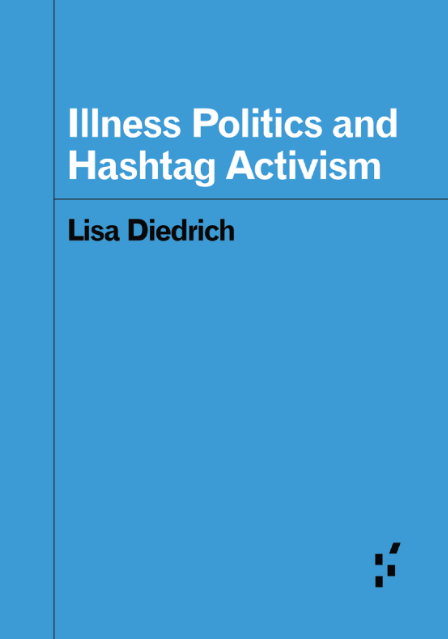
Illness Politics and Hashtag Activism. Lisa Diedrich.
Illness Politics and Hashtag Activism explores illness and disability in action on
social media, analyzing several popular hashtags as examples of how illness figures
in recent U.S. politics. Lisa Diedrich shows how illness- and disability-oriented
hashtags serve as portals into how and why illness and disability are sites of political
struggle and how illness politics is informed by, intersects with, and sometimes stands
in for sexual, racial, and class politics. She argues that illness politics is central—and
profoundly important—to both mainstream and radical politics, and she investigates
the dynamic intersection of media and health and health-activist practices to show
the ways their confluence affects our perception and understanding of illness.
Camming: Money, Power, and Pleasure in the Sex Work Industry. Angela Jones.
Camming is based on a five-year mixed-methods study of the erotic webcam industry,
and tells a pornographic story about the multibillion-dollar online sex industry colloquially
called “camming.” Through camming, millions of people from all over the globe have
found decent wages, friendship, intimacy, community, empowerment, and pleasure. This
deeply rich book is filled with the stories of a diverse sample of cam models from
around the world. This book is not a utopian tale. Cam models, like all sex workers,
must grapple with exploitation, discrimination, harassment, and stigmatization. Using
an intersectional lens, Jones is attentive to how the overlapping systems of neoliberal
capitalism, White supremacy, patriarchy, cissexism, heterosexism, and ableism shape
all cam models’ experiences in this new global sex industry. This thorough examination
of the camming industry provides a unique vantage point from which to understand and
theorize around gender, sexuality, race, and labor in a time when workers globally
face increasing economic precariousness and worsened forms of alienation, and desperately
desire to recapture pleasure in work. Despite the serious issues cam models face,
Jones’s focus on pleasure will help people better understand the motivations for engaging
in online sex work, as well as the complex social interactions between cam models
and customers. In Camming, Jones pioneers an entirely new subfield in sociology—the
sociology of pleasure. The sociology of pleasure can provide new insights into the
motivation for social behavior and assist sociologists in analyzing social interactions
in everyday life.
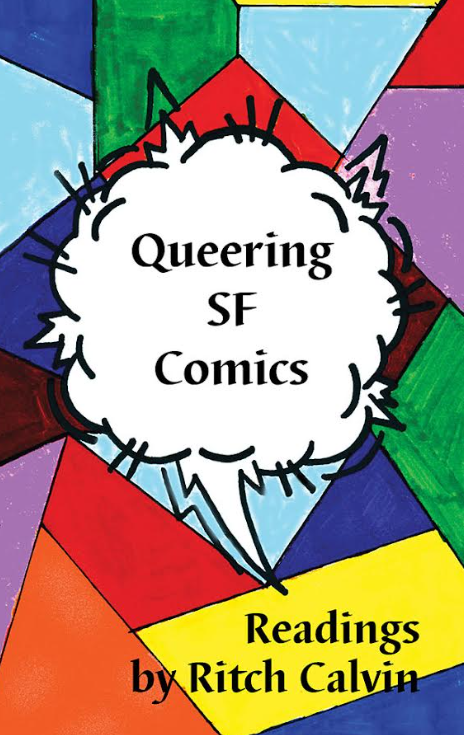
The 45 essays contained in Queering Science Fiction Comics build on the work of Queering
Science Fiction (2022). The Introduction provides a concise history of comics and
of the ways in which queer writers have made use of the comic form. These essays focus
on queer SF comics published between the years 2010 and 2023, and show that queer
writers take a variety of approaches to both science fiction and comics.
The comics featured in Queering Science Fiction Comics were published by well-known
companies, by lesser-known companies, and via self-publishing, and were selected to
highlight queer content creators, queer characters, and the ways in which both creators
and characters can work to queer the content and form of SF comics.
This is an exciting time to delve into queer SF comics, and these essays provide a
rich and wide introduction to this creative genre.
Familiar Perversions The Racial, Sexual, and Economic Politics of LGBT Families. Liz
Montegary.
Over the past two decades, same-sex couples raising children have become more visible
within US political and popular culture. Thanks to widely circulated images of well-mannered,
well-dressed, and well-off two-parent families, a select number of LGBT-identified
parents have gained recognition as model American citizens. In Familiar Perversions,
Liz Montegary shows how this seemingly progressive view of same-sex parenting has
taken shape during a period of growing racial inequality and economic insecurity in
the United States. This book evaluates the recent successes of the “family equality”
movement, while asking important questions about its relationship to neoliberalism,
the policing of sexual cultures, and the broader context of social justice organizing
at the turn of the twenty-first century.
Montegary’s investigation of the politics of LGBT family life takes us on a journey
that includes not only activist events and the courtrooms where landmark decisions
about same-sex families were made, but also parenting workshops, cruise ships, and
gay resort towns. Through its sustained historical analysis, Familiar Perversions
lays critical groundwork for imagining a queer family movement that can support and
strengthen the diverse networks of care, kinship, and intimacy on which our collective
survival depends.
Born This Way Science, Citizenship, and Inequality in the American LGBTQ+ Movement.
Joanna Wuest
The story of how a biologically driven understanding of gender and sexuality became
central to US LGBTQ+ political and legal advocacy.
Across protests and courtrooms, LGBTQ+ advocates argue that sexual and gender identities
are innate. Oppositely, conservatives incite panic over “groomers” and a contagious
“gender ideology” that corrupts susceptible children. Yet, as this debate rages on,
the history of what first compelled the hunt for homosexuality’s biological origin
story may hold answers for the queer rights movement’s future.
Born This Way tells the story of how a biologically based understanding of gender
and sexuality became central to LGBTQ+ advocacy. Starting in the 1950s, activists
sought out mental health experts to combat the pathologizing of homosexuality. As
Joanna Wuest shows, these relationships were forged in subsequent decades alongside
two broader, concurrent developments: the rise of an interest-group model of rights
advocacy and an explosion of biogenetic and bio-based psychological research. The
result is essential reading to fully understand LGBTQ+ activism today and how clashes
over science remain crucial to equal rights struggles.
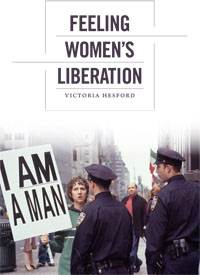
The term women's liberation remains charged and divisive decades after it first entered
political and cultural discourse around 1970. In Feeling Women's Liberation, Victoria
Hesford mines the archive of that highly contested era to reassess how it has been
represented and remembered. Hesford refocuses debates about the movement’s history
and influence. Rather than interpreting women's liberation in terms of success or
failure, she approaches the movement as a range of rhetorical strategies that were
used to persuade and enact a new political constituency and, ultimately, to bring
a new world into being. Hesford focuses on rhetoric, tracking the production and deployment
of particular phrases and figures in both the mainstream press and movement writings,
including the work of Kate Millett. She charts the emergence of the feminist-as-lesbian
as a persistent "image-memory" of women's liberation, and she demonstrates how the
trope has obscured the complexity of the women's movement and its lasting impact on
feminism.
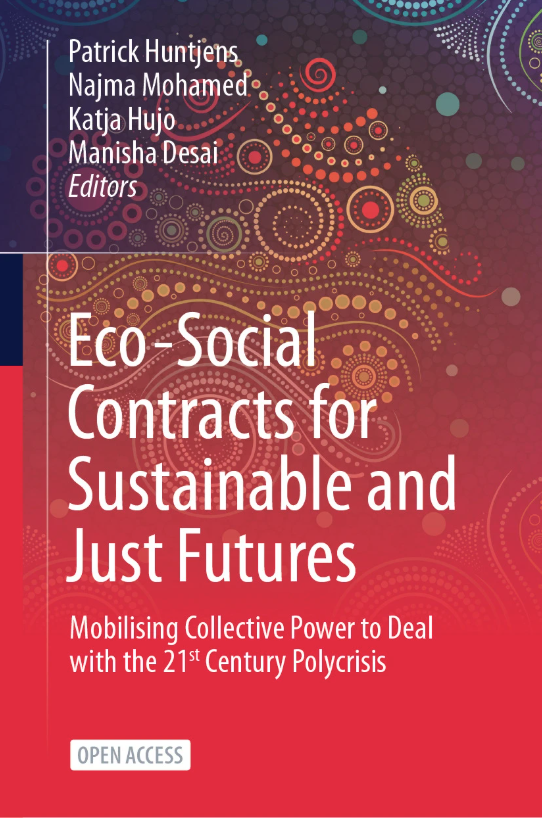
Eco-Social Contracts for Sustainable and Just Futures Mobilising Collective Power
to Deal with the 21st Century Polycrisis
Edited by: Patrick Huntjens, Najma Mohamed, Katja Hujo, and Manisha Desai. This groundbreaking
open access volume introduces eco-social contracts as a bold and actionable vision
for addressing the major, interconnected crises of our time—climate change, biodiversity
loss, rising inequality, and the erosion of public trust and democratic legitimacy.
At its heart lies a fundamental realization that can no longer be ignored: the social
contract has been broken for billions of people. As a result, the bonds between people,
planet, and power must be rewoven.
Increasingly recognized by the UN, global assessments such as the IPBES Transformative
Change Assessment, and by a growing international community of civil society leaders,
youth movements, and NGOs, eco-social contracts call for renewed solidarity, systemic
equity across generations and communities, inclusive governance, and a fundamental
transformation of economic systems.
They challenge dominant economic paradigms and present a holistic and compelling alternative—one
that rebalances our relationships with nature, institutions, and one another. This
book captures that momentum, blending visionary thinking and grounded inspiration
with hard-won lessons on unlocking and mobilising collective agency.
Rooted in diverse knowledge systems—from Indigenous cosmologies and feminist and care-based
economics to regenerative development and post-growth thought—it brings together contributions
from leading scholars, practitioners, artists, and activists across the globe. Bridging
theory and practice, it offers vital insights into how regenerative, inclusive, and
just futures can be co-created.
For changemakers, students, and all those seeking hope, direction, and clarity in
a time of global uncertainty, this book is both a call to action and a guide for transformation—inviting
readers to imagine and co-create sustainable and just futures our hearts and minds
know are possible.
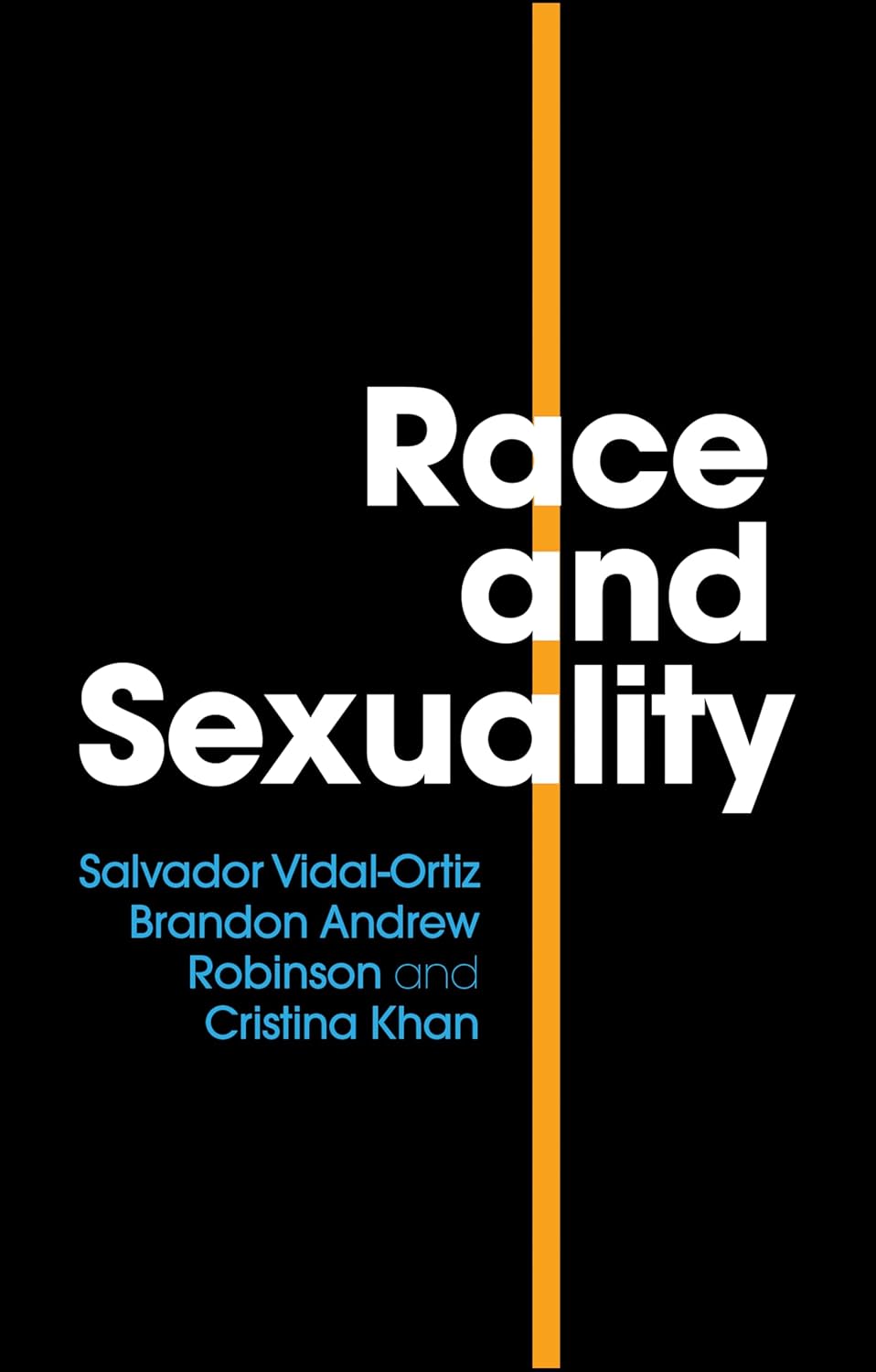
By: Salvador Vidal-Ortiz, Brandon Andrew Robinson & Cristina Khan. The connections
between race and sexuality are constant in our lives, yet they are not often linked
together in productive, analytical ways.
This illuminating book delves into the interrelation of race and sexuality as inseparable
elements of our identities and social lives. The authors approach the topic through
an interdisciplinary lens, focusing on power, social arrangements and hierarchies,
and the production of social difference. Their analysis maps the historical, discursive,
and structural manifestations of race and sexuality, noting the everyday effects that
the intersections of these categories have on people’s lived experiences. Considering
both US-based and transnational cases, this book presents an empirical grounding for
understanding how race and sexuality are mutually constitutive categories.
Providing a comprehensive overview of racialized sexualities, this book is an essential
text for any advanced course on race, sexuality, and intersectionality.