
Contact Information
-
Liz Montegary, Associate Professor
-
Email: liz.montegary@stonybrook.edu
-
Office: 2114 Humanities Building
- On Leave 2025-26 academic year
Research Interests
- Feminist and queer theory; transnational American studies; LGBT/queer activism; travel, tourism, and mobility studies; cultural studies of militarization.
Biography
Liz Montegary is Associate Professor and Department Chair of Women’s, Gender, and Sexuality Studies at Stony Brook University. She holds a Ph.D. in Cultural Studies from the University of California, Davis and an M.A. in Women’s and Gender Studies from Rutgers University.
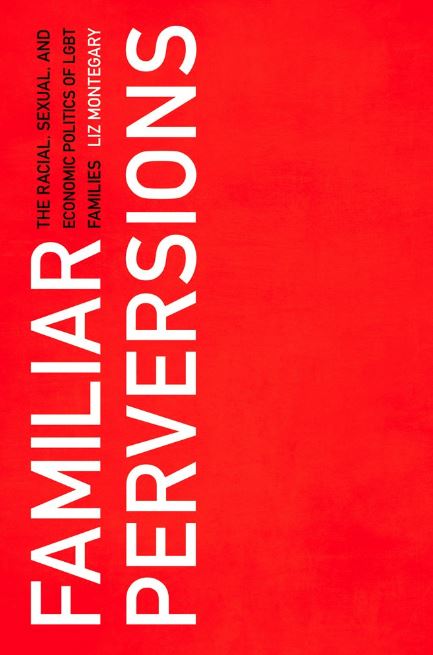
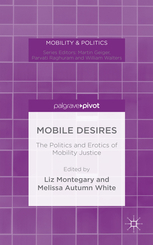
Broadly speaking, her research and teaching focus on queer cultural studies and transnational American studies. She is the author of Familiar Perversions: The Racial, Sexual, and Economic Politics of LGBT Families (Rutgers, 2018) and co-editor of the collection Mobile Desires: The Politics and Erotics of Mobility Justice (Palgrave, 2015). Her work on LGBT social movements; neoliberal cultural politics; militarization and securitization; and mobility, dis/ability, and the family has appeared in GLQ, WSQ, Signs, and Cultural Studies as well as edited book collections.
Most recently, she has published essays on the institutionalization of gender and sexuality studies on her campus and recent right-wing attacks on the field across the United States in Feminist Formations, The Scholar and Feminist Online, and The Abusable Past (Radical History Review’s blog). These projects have been inspired and informed by the emerging field of abolitionist university studies, which is committed to studying US higher education’s entanglement with the carceral colonial state and to building an alternative, abolition university.
In her next book, tentatively titled Ready & Resilient: Military Families and the Intimate Life of US Imperial Power, she extends her research on American familialism by examining US military policies and programs targeting the spouses and children of servicemembers. This project approaches the Pentagon’s interest in the fiscal and physical health of military families as an understudied dimension in the privatization of US empire and considers the implications of family abolition for anti-war and anti-imperial movements.
Publications
- “Anti-Gender, Anti-University: ‘Gender Ideology’ and the Future of US Higher Education.” Feminist Formations. 34.3 (Winter 2022): 1-32.
- “Abolition, Universities, and the American Right.” Forum: “Campus Policing.” The Abusable Past (Radical History Review’s blog), Aug 1, 2022.
- “Accounting for Our Institutional Selves,” Special Issue: Transnational Feminisms: Forms, Contexts, Topics, The Scholar and Feminist Online, 17.1 (July 2021).
- “Healthy Families, Secure Bodies,” Dossier: Queer (In)securities, GLQ: Journal of Lesbian and Gay Studies, 26.1 (Jan 2020): 140-51.
- Familiar Perversions: The Racial, Sexual, and Economic Politics of LGBT Families. Rutgers University Press, 2018.
- “Cruising to Equality: Tourism, U.S. Homonationalism, and the Lesbian and Gay Family Market,” Special Issue: At Sea, WSQ: Women’s Studies Quarterly 45.1-2 (Spring/Summer 2017): 203-220.
- Mobile Desires: The Politics and Erotics of Mobility Justice. Co-edited volume with Melissa Autumn White. Series: Mobility and Politics. New York: Palgrave Pivot, 2015.
- “An Army of Debt: Financial Readiness and the Military Family,” Special Issue: Everyday Credit and Debt, Cultural Studies, 29.5-6 (Sep-Nov 2015): 652-668.
- “Militarizing U.S. Homonormativities: The Making of ‘Ready, Willing, and Able’ Gay
Citizens,”
Signs: Journal of Women in Culture and Society, 40.4 (Summer 2015): 891-915.