


Mohamad Ballan
Associate Professor
History
Office: Social & Behavioral Sciences - Level 3, Room N-321
Interests: Medieval Mediterranean; borderlands and frontier history; migration and diaspora;political thought; Islamic history; medieval Iberia; early modern Europe; intellectual networks;philosophy of history; historiography; Ottoman Empire; Late Antiquity
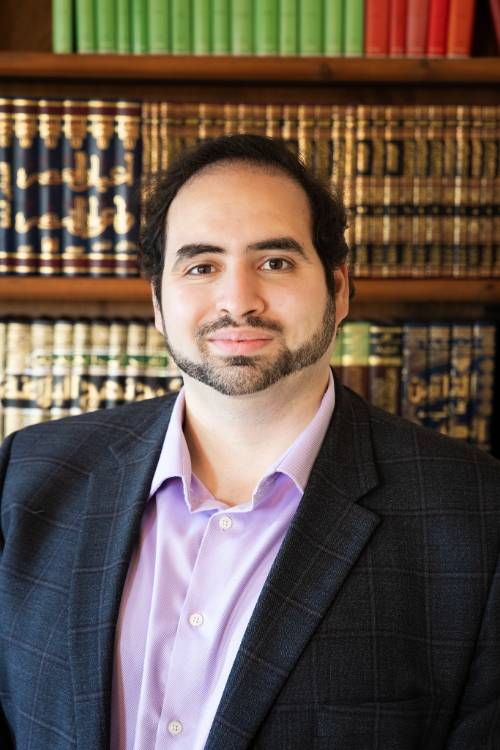
Bio:
My research focuses on the intellectual, political and cultural history of the Mediterranean and Islamic world, with a focus on medieval Spain and North Africa. The core themes of my research are borderlands, mobility, and scholarly practices in the premodern world. My work closely examines intellectual networks, the transformation of institutions during moments of crisis and transition, the role of borderlands in fashioning identity and difference, the centrality of migration and cultural change in human history, and the importance of medieval and early modern literary representation and historiographical production in shaping modern understandings of the past.
My first book, The Politics of Sovereignty in the Medieval Islamic West: The World of Lisan al-Din ibn al-Khatib (forthcoming with Oxford University Press in early 2027), explores the interplay between crisis and efflorescence, political fragmentation and intellectual innovation in the late medieval Mediterranean world. The book examines the phenomenon of the “scholar-statesman”—litterateurs, physicians, and jurists who ascended to the highest administrative and executive offices of state—in late medieval Islamic Spain and North Africa. The Politics of Sovereignty provides a new reading of the history of the Nasrid kingdom of Granada (1238–1492) that examines these issues by closely studying the life and works of Lisan al-Din ibn al-Khatib (1313–1374), the most prominent Spanish Muslim historian, chancellor and philosopher during the fourteenth century.
I am currently working on two major book projects, which reflects the two core strands of my research interests in the histories of Europe and the Islamicate world. The first, tentatively titled The Andalusi Diaspora: Conquest, Mobility, and Identity in the Medieval Mediterranean examines the formation of the Andalusi diaspora—descendants of people tracing their origins to al-Andalus—across the medieval Mediterranean world before 1492. This new history of a medieval diaspora emphasizes the importance of migration and mobility in shaping the fashioning of identities, and the intellectual and political networks that were constitutive of the medieval Mediterranean world. The book studies a constellation of communities and individuals to better understand the transregional dimension of the Andalusi diaspora between the ninth and fifteenth centuries.
The second book project, tentatively titled The Shadow of God on Earth: Caliphate, Imamate and Kingship in the Medieval Islamic West, seeks to provide a new history of kingship in the medieval Islamic world from the seventh through fifteenth centuries. It examines the intimate relationship between royal power and the articulation of the idea of the king as God’s representative on earth. It critically engages with a range of political, theological, juridical, and mystical discourses about royal sovereignty, drawing upon a range of literary, documentary and historical sources, including both texts and material culture, to demonstrate this idea animated the political culture of the medieval Islamic world. It covers such topics as royal genealogy, body politic analogy, royal sacrality, the fragmentation of political authority, and the articulation of a distinctly Islamic political theology. The book provides a comprehensive analysis of the interplay between notions of divine vicegerency and notions of kingship in the medieval Islamic West, while drawing on texts from across the breadth of the medieval Islamic world, from the Central Asia to Iberia.
I offer courses on the histories, societies and cultures of Europe, the Mediterranean and the Islamic world from Late Antiquity to the Early Modern period. My classes emphasize the interconnected histories of Europe, Africa and Asia during the medieval and early modern era (ca. 500-1800), while exploring the larger issues of mobility, commerce, sovereignty, identity, cross-cultural contact and cosmopolitanism in world history.
I look forward to the opportunity to work with graduate students interested in borderlands, cross-cultural encounters, mobility and migration, and intellectual history in the medieval and early modern world.
Select Works:
“Rebels and Renegades: Ibn al-Khatib and the Christians of Medieval Granada” in
Thomas Barton (ed.), Ethno-Religious Interaction in Premodern Iberia, North Africa,
and
Beyond (Turnhout: Brepols, 2026), 127‒172.
“‘The Jews of this Nation’: The Co-production of Sectarian Identity in the Fatimid Caliphate, ca. 1120” in David Nirenberg and Katharina Heyden (eds.), The Co-production of Judaism, Christianity, and Islam: Artefacts, Rituals, Communities, Narratives, Doctrines, Concepts (Turnhout: Brepols, 2025), 155‒184.
“Borderland Anxieties: Lisān al-Dīn ibn al-Khaṭīb (d. 1374) and the Politics of Genealogy in Late Medieval Granada,” Speculum Volume 98, Number 2 (April 2023): 447-495 [Received the 2025 Medieval Academy of America Article Prize in Critical Race Studies.]
"Genealogía, linaje e identidad etnocultural en la Granada nazarí,” in Mercedes García-Arenal and Felipe Pereda (eds.), De sangre y leche: Raza y religión en el mundo ibérico moderno (Madrid: Marcial Pons, 2021), 39‒70.
"Fraxinetum: An Islamic Frontier State in Tenth-Century Provence," Comitatus: A Journal of Medieval and Renaissance Studies 41 (2010): 23-76.
“The Nasrid College: Knowledge and Power in a Medieval Islamic City-State,” Medieval Studies Research Blog, April 27, 2022.
“Muslim Refugees in Medieval Malta (ca. 1463)? Mobility, Migration and the Muslim-Christian Frontier in the Mediterranean World,” Medieval Studies Research Blog, October 13, 2021.
“A Connected World: Exploring the Early Middle Ages with Ibn Fadlan,” The Library of Arabic Literature Blog.
Interview with Ottoman History Podcast on The Early Modern Islamic World.
Interview with Ottoman History Podcast on Legacies of al-Andalus.
Recent Courses
HIS 236 The World of the Later Middle Ages, 1000-1500
HIS 301 The Formation of the Classical Islamic World
HIS 307 Silk Roads and Spice Routes: Travel, Exploration and Discovery in the
Medieval and Early Modern World
HIS 390 The Medieval Islamic World, 600-1500
HIS 401 The Medieval Mediterranean
HIS 516 Empire, Kingship and Sovereignty in World History
HIS 516 Mobility, Migration and Diaspora