


Andrew W. Johnson
BA in History to a career in technology!
Andrew was born just outside of Paris and lived in France until just before his sixth
birthday, at which point his family packed up and moved to San Gimignano in the rolling
hills of Tuscany, Italy, between Florence and Siena.
Andrew completed five years of elementary school, three years of junior high school,
and one year of high school in Italy. The summer of his fifteenth birthday, his family
moved to Long Island. He finished high school, spent many years in college, and has
been working for his alma mater ever since.
He has many passions and hobbies outside of work, ranging from technology to riding
and racing bicycles, woodworking, photography, travel, and more.
Andrew is a Sr. Macintosh Systems Administrator/Apple Platform Engineer for Stony Brook University. He works in DoIt with the Computing Services department. During this process Andrew mentioned, "Looking back at my path from History student to a career in technology at Stony Brook has actually been an interesting exercise in itself."
Andrew is a Sr. Macintosh Systems Administrator/Apple Platform Engineer for Stony Brook University. He works in DoIt with the Computing Services department. During this process Andrew mentioned, "Looking back at my path from History student to a career in technology at Stony Brook has actually been an interesting exercise in itself."
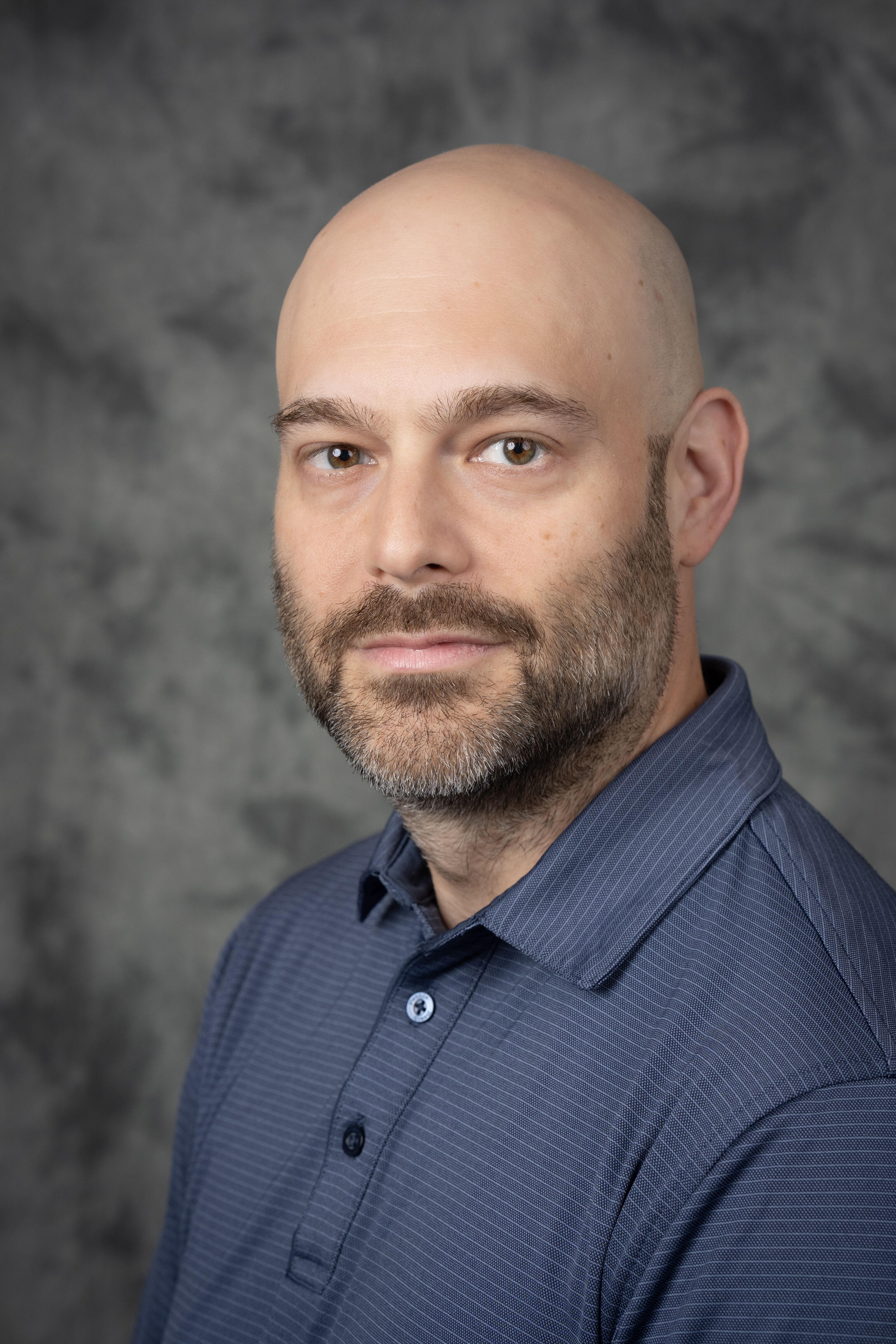
Interview with Andrew W. Johnson
Your time at Stony Brook
I started at Stony Brook as a freshman in the sciences way back in 1993, but by my
sophomore year I realized that wasn't what I wanted to study. I spent the next couple
of years exploring different subjects and taking courses to see if I could "find"
something that really interested me.
During that period, I began enrolling in history courses and found that I really enjoyed
them. Since I didn't have much familiarity with Asian history, I took quite a few
courses in that area. I believe I took three classes with Professor Iona Man-Cheong,
and I really enjoyed her courses.
One experience I still distinctly remember was a day when Professor Man-Cheong divided
the class into two groups and had us debate opposing sides of an argument using only
the historical material she provided to each group. It was fun, challenging, and incredibly
stimulating. More than 25 years later, I still remember it, which probably says something
about the impact it had on me.
A lifelong interest
For anyone who has had the opportunity to visit or spend time in Italy—and I'm sure
this is true of many other places as well—you are quite literally surrounded by history.
Where I grew up in Tuscany, that history stretches from the Etruscans and Romans through
the Middle Ages, the Renaissance, and into the modern era.
As a child, I had a vivid imagination, and I would often imagine what it must have
been like to live in those same places hundreds or even thousands of years earlier.
I remember wishing I could somehow open a window into the past and simply watch people
going about their daily lives in the exact places where I was standing.
There was also a much more recent and personal connection to history. Many of my schoolteachers
would tell us stories about World War II and what they and their parents had experienced
and endured during that terrible time. History wasn't always something distant that
existed only in books or ancient buildings; sometimes it came directly from people
around me who had lived through it.
I think my interest in studying history grew out of that combination of curiosity
and having history all around me, both physically and through the experiences of older
generations. For me, it became a way to understand what came before us, what people's
lives were like, and how the places and societies around us became what they are today.
Your career journey
I've always had a very technical side. In fact, that's why I originally came to Stony
Brook intending to study engineering—an idea that was also encouraged rather strongly
by my family because my grandfather was a civil engineer and everyone said I took
after him.
During the early to mid-1990s, the Internet exploded and computer technology began
changing rapidly. I had been tinkering with the Macintosh platform since 1990 on my
father's computer, and I just kept fiddling and learning throughout my college years.
I took on student jobs on campus working with computers. Around the time I graduated,
a full-time position was being created in the department where I had been working
as a student. I applied for it, got the job, and, as they say, the rest is history.
More than two decades later, I'm still at Stony Brook, although the technology and
the scope of my responsibilities have changed enormously. Today, much of my work revolves
around managing and supporting Apple's macOS platform in the university environment.
History beyond the classroom
I don't think everyone needs to study history in minute detail, but I do believe that
having a basic understanding of history is important. There is a great deal of truth
behind the idea that those who fail to learn from the past are destined to repeat
it. So much of what happens in the present—politically, socially, and culturally—has
roots in what came before it.
Studying history also taught me to look at an issue from multiple perspectives, examine
the available evidence, and avoid simply accepting something at face value. That way
of thinking has served me well in my career.
Part of my job involves troubleshooting and problem-solving. When something isn't
working, the obvious explanation isn't always the correct one. You investigate what
happened, gather information, look for patterns, consider different angles, and eventually
try to determine the root cause. In that sense, the analytical skills I developed
studying history have followed me into a career even though they might seem completely
unrelated.
Advice for students
My advice would be not to assume that choosing History means you have to follow a
traditional history-related career path. Your degree is part of your lifelong education;
it should not define the boundaries of your career.
I think it's important to be curious and explore opportunities, even when they don't
seem directly connected to what you studied. My own path certainly wasn't planned.
I arrived at Stony Brook thinking I would study engineering, graduated with a History
degree, and ultimately built a career in technology.
The skills you develop studying history—researching, analyzing information, questioning
assumptions, communicating clearly, and looking at problems from multiple sides—can
be valuable in any profession. Technology and tools can be learned, but knowing how
to think, investigate, and ask questions is just as important.
So I would encourage students to study what genuinely interests them, but also remain
open to where their other interests and abilities might take them. Sometimes the career
you end up loving isn't the one you imagined when you started.