
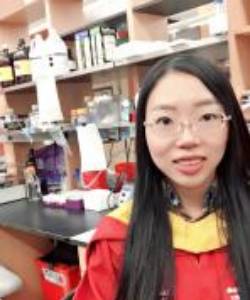
Jiabei He
 jiabel.he.1@stonybrook.edu
M.S., Biomedical Sciences 2016
Stony Brook University
B.S., Pharmaceutical Sciences 2014
Tianjin University
jiabel.he.1@stonybrook.edu
M.S., Biomedical Sciences 2016
Stony Brook University
B.S., Pharmaceutical Sciences 2014
Tianjin University
Investigating the role of USP2 in cancer stem cells and chemo-
resistance of triple negative breast cancer
Breast cancer is the second leading cause of cancer mortality for women. About 1 in
8 U.S. women will develop invasive breast cancer in their lifetime. Hormonal and targeted
therapeutics are useful in combating the growth of breast tumors with overexpressed
estrogen, progesterone and/or Erb-B2 receptors. In contrast, around 15%-20% tumors
that are lacking expression of these receptors, namely triple-negative breast cancer
(TNBC), don’t respond well to these existing therapeutics and consequently have poor
therapeutic outcomes. Cancer stem cells (CSCs) are enriched in TNBC and primarily
support the chemoresistance. It’s therefore essential to identify new molecular targets
and therapeutic approaches to tackle TNBC through inhibiting CSCs. Ubiquitin-specific
protease 2 (USP2) is a deubiquitinating enzyme known to stabilizes protein substrates
by removing their polyubiquitin chains. USP2 substrates include fatty-acid synthase
(FAS), mouse double minute 2 homolog (MDM2), MDMX and cyclin D1, proteins that are
associated with cancer progression. Hypothesis: We identified that USP2 gene expression
is significantly upregulated in CSC population of TNBC, leading us to study whether
USP2 is a novel regulator of CSCs and TNBC. Results: In this project, we
used both genetic and pharmacological approaches to target USP2 in multiple TNBC cell
lines. We found that inhibiting USP2 eliminates the CSC population by decreasing the
self-renewing factor Bmi1 and the epithelial-mesenchymal transition through Twist
degradation. Mechanistically, USP2 promotes Twist stabilization by preventing β-TrCP-driven
ubiquitination and proteasome-mediated protein degradation. In addition, USP2 inhibitor
ML364 treatment suppresses tumorigenesis and sensitizes tumor responses to
chemotherapy in pre-existing TNBC xenografts. Together, this study demonstrates a
novel role of USP2 in regulating Twist activation and CSC enrichment, suggesting that
USP2 inhibition is a valuable therapeutic strategy to attack TNBC.
Recent Publications:
1. He, J., et al., Inhibition of USP2 eliminates cancer stem cells and enhances TNBC
responsiveness to chemotherapy. Cell Death Dis, 2019. 10(4): p. 285.
2. Ruan D, He J, Li CF, Lee HJ, Liu J, Lin HK and Chan CH* (2017) Skp2 deficiency
restricts the progression and stem cell features of castration-resistant prostate
cancer by destabilizing Twist. Oncogene
3. Lee HJ, Ruan D, He J and Chan CH*. (2016) Two-Faced: What "twists" RNF8 from a
genome guardian to a cancer facilitator? Molecular & Cellular Oncology
4. Hu Y, Du Y, Liu N, Liu X, Meng T, Cheng B, He J, You J, Yuan H, Hu F*. (2015) Selective
Redox-responsive Drug Release in Tumor Cells Mediated by Chitosan Based Glycolipid-like
Nanocarrier. Journal of Controlled Release
5. Wang X, Ma H, Li G, He J, Na P*. (2014) Removal of Pesticides by Organic Montmorillonite
Composites. Advanced Materials Research