
A Shift in Systems: Charting a Course to Constellation Energy
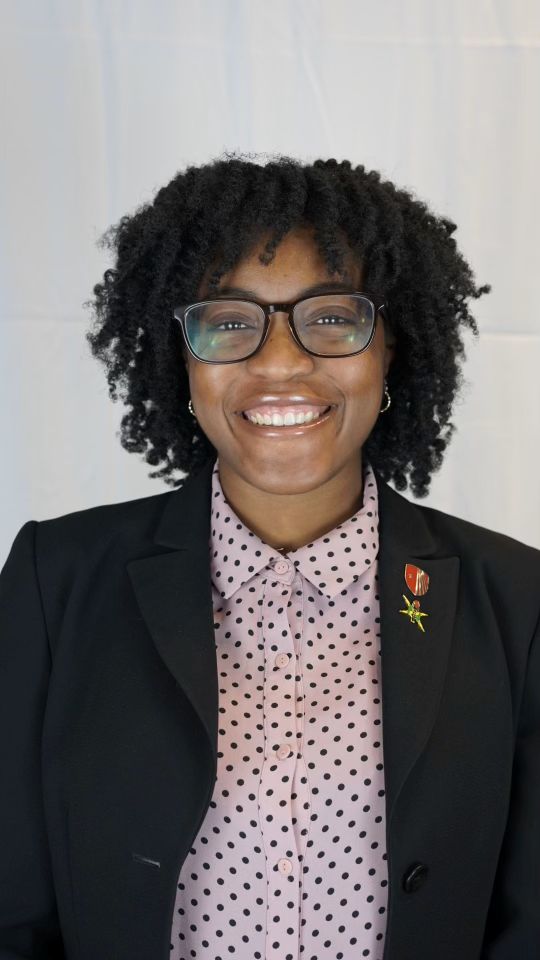
Meet Oluomachi (Olu) Uwakwe, a graduating senior majoring in Technological Systems Management (TSM).
Originally a Biomedical Engineering major, Olu found herself increasingly drawn to the combination of physics and calculus in Electrical Engineering. By the time she fully recognized that interest though, she felt she was too far along in her academic path to switch majors. The TSM major became a bridge that allowed her to stay connected to her electrical engineering coursework while gaining a broader understanding of how technical work connects to business and management.
Like many students navigating their academic paths, she found herself uncertain at times. She questioned whether TSM would lead her to the opportunities she had envisioned for herself. Those doubts faded though when she secured her first internship at Constellation Energy. That milestone confirmed that she was moving in the right direction and strengthened her confidence in her ability to succeed in the field.
She attributes much of her growth to experiences beyond the classroom. Through her persistence and campus involvement, especially in the National Society of Black Engineers (NSBE) where she found mentorship, guidance, and a supportive network, helping her shape her career trajectory. Stepping outside of her comfort zone played an essential role in clarifying her goals.
Throughout her time at Stony Brook, she has developed both technical foundations and strong collaboration abilities. She learned the importance of balancing structure with flexibility, carefully planning her schedule while also ensuring enough time for rest and personal well-being.
As she prepares to transition into her full-time role as a Systems Engineer at Constellation Energy, she reflects on the many lessons she has learned in the last few years: take the initiative, seek mentorship, and do not be afraid to pivot or change plans. Olu’s journey demonstrates how uncertainty does not mean you are on the wrong path. With persistence and intentional effort, clarity and success often follow.
Read more about Olu’s experiences below in an interview with CEAS Student Assistant Janice:
The Interview
Janice: What drew you to your current major? Did you always intend to major in Technological Systems Management?
Olu: I never intended to major in Technological Systems Management (TSM). I started as a Biomedical Engineering (BME) major, largely due to my mother’s influence. However, I had always been interested and liked Electrical Engineering (ESE) because of its strong foundation in physics and calculus. By the time I fully realized that interest, I felt that I was too far along in my academic path to switch into ESE. TSM became the best path for me as it was a path where I could remain involved in ESE courses while broadening my perspective. In that sense, it gave me a balance I didn’t know I needed.
What is a fun fact about yourself that people might not know?
My favorite color is pink, every shade included. I’ve also been wanting to get into power lifting!
Looking back at your undergraduate journey, which moments of academic or professional growth are you most proud of, and what tools helped you succeed?
My proudest moment would have to be landing my first internship. Early on I had some doubts about the TSM major, mainly because I was questioning if it would lead me to the opportunities I wanted. However, with persistence and actively putting myself out there, I was able to secure my internship. My involvement in the National Society of Black Engineers (NSBE) played a significant role in that process, as I connected with alumni who offered me guidance, encouragement, and insight which helped cultivate my growth and build my confidence. Securing that internship reassured me that I was on the right path and capable of succeeding in the field.
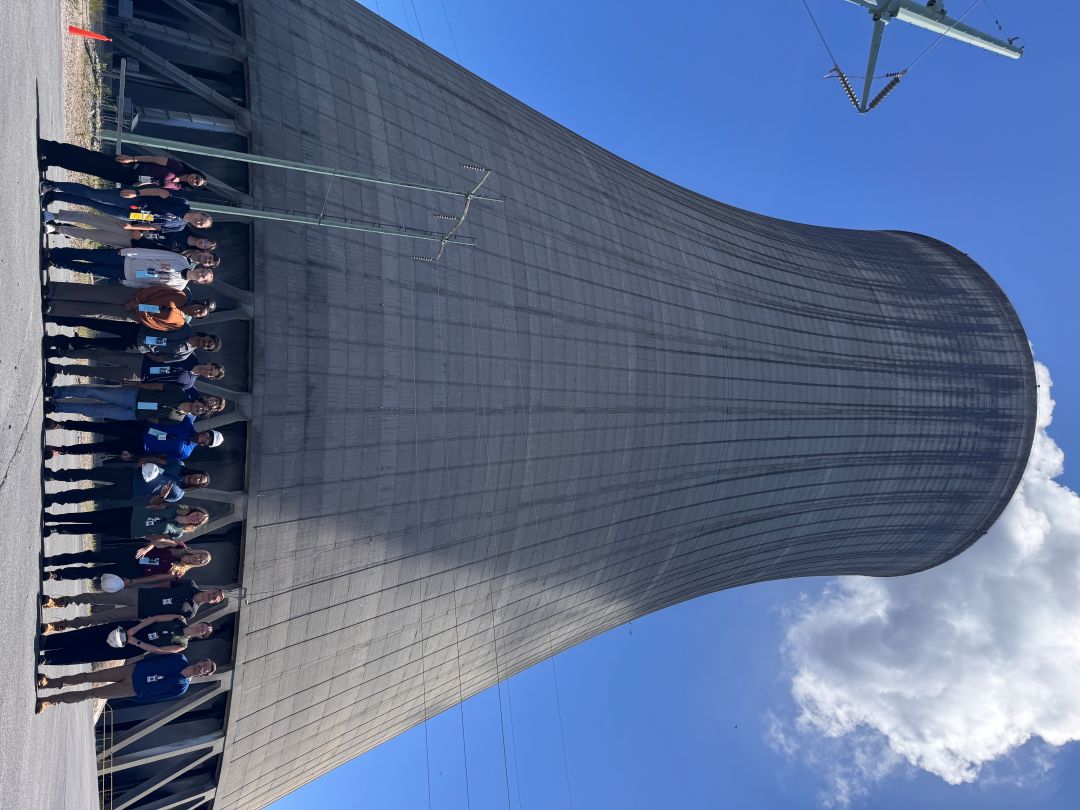 Olu and other interns in front of the cooling tower at the Nine Mile Point location.
Are there any experiences or extracurriculars on campus that prepared you for your role as a Systems Engineer?
The courses I took had the biggest impact. The product I worked on during my internship utilized applications like LTSpice and MATLAB. Through my previous courses such as BME 120, I had developed some foundational knowledge on MATLAB, which made it easier to apply to my role. Having that technical background helped me contribute more confidently during that internship.
How do you manage the workload of the TSM major while balancing coursework, involvement, and career preparation?
Generally, managing the workload of the TSM major involves a lot of planning and being intentional with my time. I’ve always been the type of person where “if something is not in my calendar, it doesn’t exist”, so scheduling everything keeps me accountable. Building the habit of sticking to a structured schedule has been essential. At the same time, I’ve also learned to stay flexible. If something gets pushed back or doesn’t go as planned, I adjust accordingly. Most importantly, I make sure to set aside time for myself. I get drained easily when I’m constantly around people, so planning a day to rest and recharge helps me maintain my mental health and protects my headspace.
Were there any courses or projects that had a particularly significant impact on you academically or professionally?
I think ESE 351 had a particularly strong impact on me since we used LTSpice to model converters and conduct testing. This course and my other engineering-related courses solidified my interest in pursuing this path professionally. At the same time, my TSM courses exposed me to the different working environments and organizational structures, shaping the way I navigate team dynamics and professional settings.
What skills do you feel the TSM major helped you develop most? How did those skills prepare you for your role as a Systems Engineer at Constellation Energy?
The TSM major has strengthened my collaboration and communication skills while also giving me a deeper understanding of what happens in the back-end of engineering projects. I think everyone focuses primarily on the technical side of engineering, but TSM emphasizes the business and management aspects. Engineering is not just the design and implementation, but it also involves coordination, strategy, and decision-making. In roles such as a project manager, you need to understand both the front-end execution and back-end processes. You’re never responsible for just one isolated component.
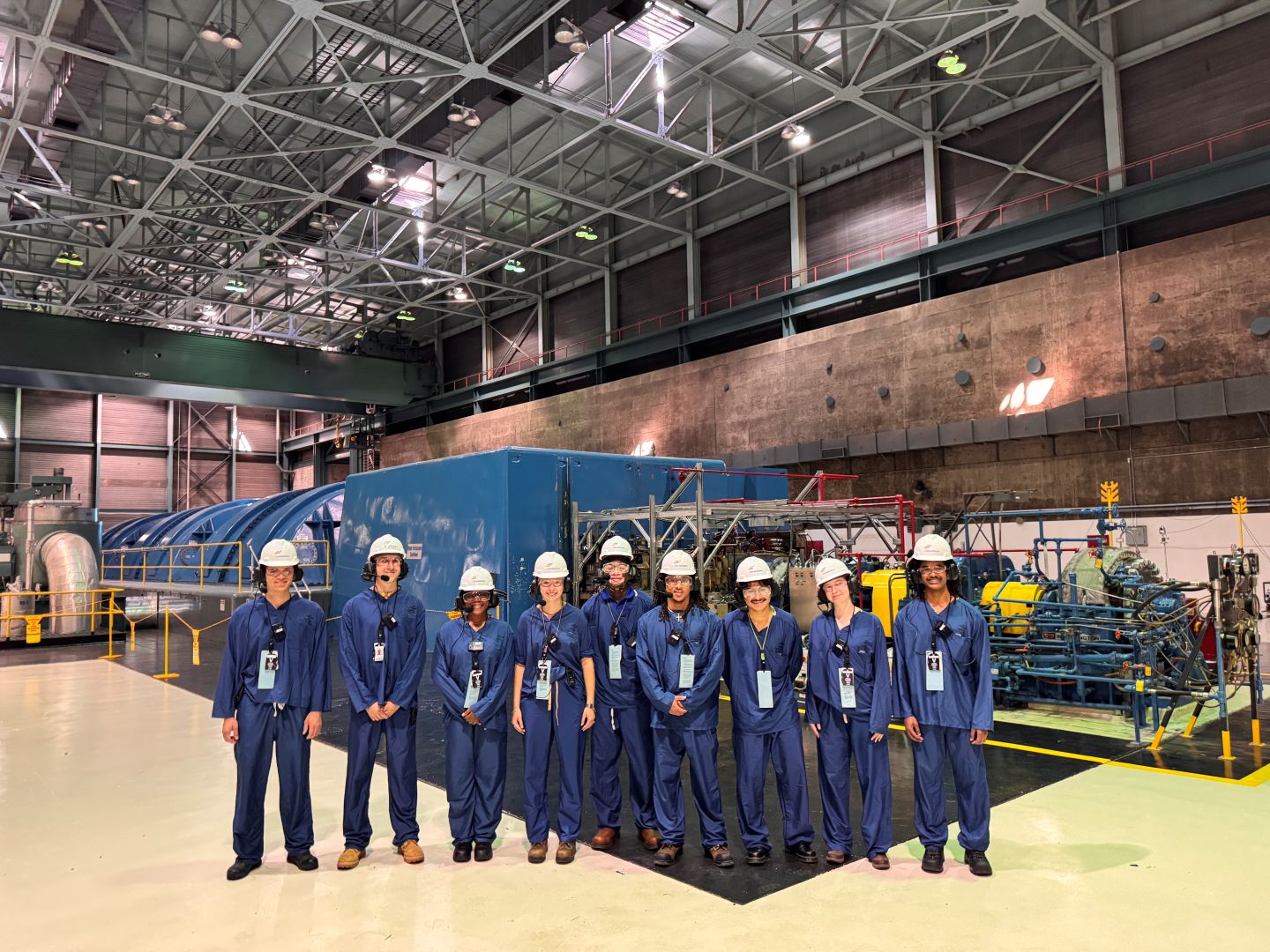 Olu and other interns on the turbine deck of the Nine Mile Point Plant.
Those experiences prepared me well for my internship, where the terminology, project structure, and teamwork dynamics felt familiar because of my experience in the group-based coursework in TSM. That kind of familiarity helped me adjust quickly and build confidence in contributing alongside other interns. As I begin my transition into my role as a Systems Engineer, I feel prepared to participate in that environment with a collaborative mindset that the TSM major helped me develop.
Are there any resources from CEAS or Stony Brook that you’ve found especially valuable throughout your academic journey?
I think the clubs and organizations on campus are incredibly valuable. CEAS does a great job promoting the numerous clubs and organizations, but getting to know the people around you and building connections is just as important. It can feel uncomfortable to put yourself out there at first, but you get used to it. Joining organizations taught me that involvement outside the classroom is just as important as your academic performance.
Meeting my mentor in NSBE truly helped shape my path. In addition, resources like the resume reviews from the Career Center and programs like the Diversity Professional Leadership Network (DPLN) gave me the opportunity to clarify where I wanted to focus professionally.
Now that you are graduating, what are things you wished you knew when you first came to Stony Brook?
I wish I had known how to study effectively. The fact is, college classes are more centered around what you do outside of class. So learning how to manage your time studying is crucial. That also means it’s up to you to go to your professor if you’re struggling or falling behind.
I also wasn’t fully aware of the amount of opportunities available, or how to apply to them. While SBU 101 helped with personal health and the general adjustment, academic and professional development resources weren’t as front-facing early on and I wish I had explored them sooner.
Most importantly, I wish I knew that it is okay to be exploring different courses and changing majors. It’s easy to feel insecure when things feel uncertain, but growth comes from the willingness to pivot.
In what ways do you think your overall involvement on campus has shaped your professional goals?
My mentorship in NSBE was eye-opening. I saw myself in my mentor, and she saw herself in me. The relationship helped steer me in the right direction. Beyond mentorship, meeting students through various organizations broadened my perspective while also helping me narrow down my long-term goals.
I see myself moving into a managerial route eventually because I find fulfillment in helping others grow. You often see yourself in the people you’re guiding, so I hope to be that person for someone else, just as my mentor was for me.
How did you come across this opportunity to be a Systems Engineer for Constellation Energy?
I knew early on that I wanted to work in the energy field so I researched the top energy companies and came across Constellation Energy. I initially applied to several of their open roles, except for their Nuclear Engineering role. Later on, I attended an NSBE conference where Constellation Energy was promoting their Nuclear Engineering role. I ended up speaking with the recruiter there, and I applied for the role. From there, I was interviewed and offered the role. The Systems Engineer position became my returning offer.
Do you have any advice for students who are considering or are new to the TSM major?
My advice would be to get involved on campus and put yourself out there. Success doesn’t come easy so the key is to get comfortable with being uncomfortable. Regardless of your major, what you do with your time outside of the classroom makes a huge difference. Take the chance to explore and join different clubs and organizations to help build skills that prepare you for research, internships, and professional opportunities.
Don’t be afraid to fail. You always end up learning something from the experience. The professors in the TSM major are very approachable, so talk to them and ask about their work. You never know what opportunities may come from those conversations.
If you’re ever unsure about your path, schedule a meeting with a career coach. Those conversations can provide clarity and direction for you.