


Technological Systems: Technology with a Purpose
Meet Anita Wang, a Spring 2026 graduating senior majoring in Technological Systems Management (TSM) and Economics (ECO).
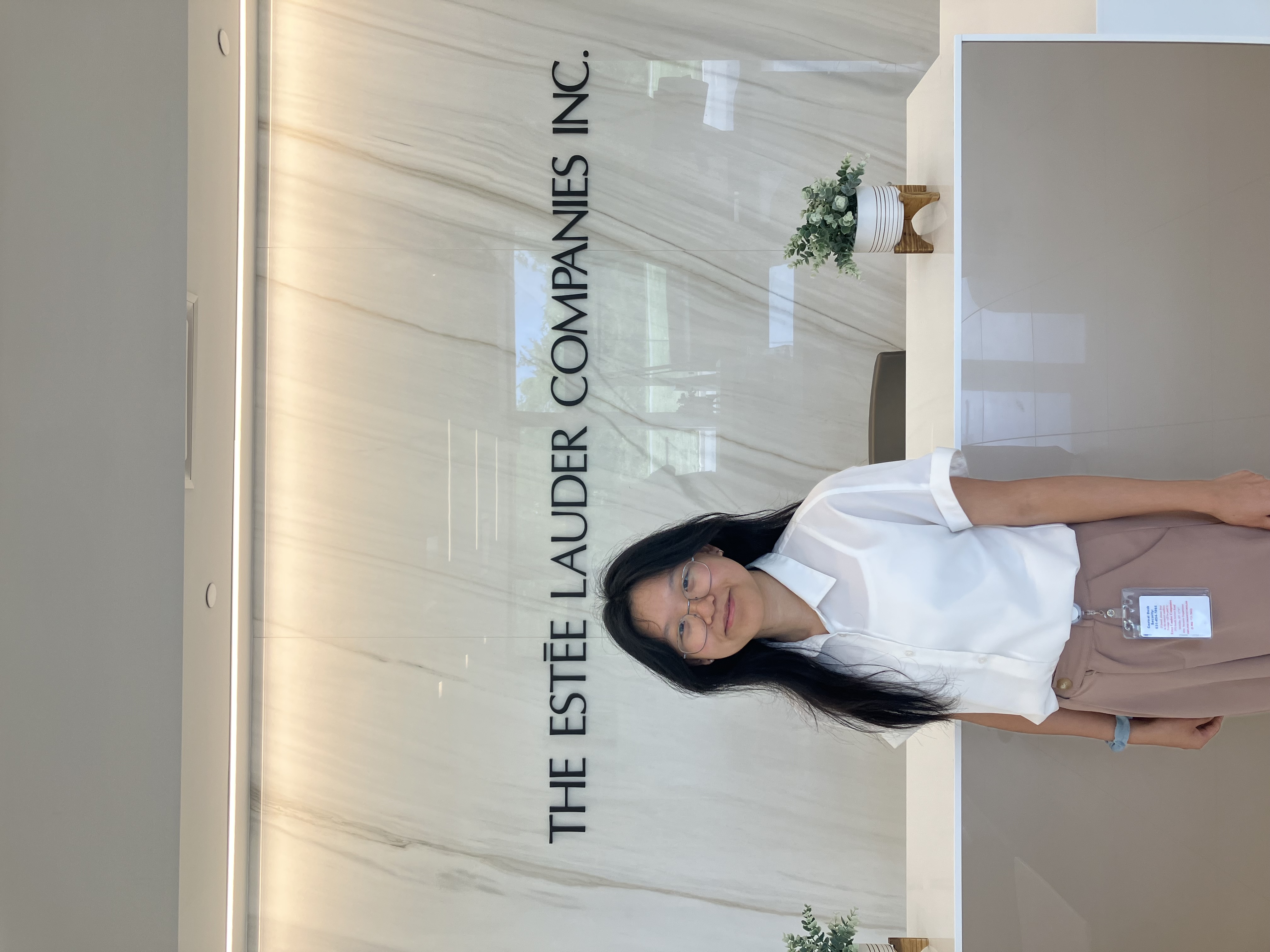
As graduation approaches, Anita Wang reflects on her college experience shaped by exploration, leadership, and a willingness to step outside of her comfort zone. Entering Stony Brook with an interest in Mechanical Engineering (MEC), Anita quickly realized that her interests extended beyond the traditional engineering path. With a growing interest in the intersection of technology and business, she found her place in the TSM major, complementing it with a second major in ECO later on.
Throughout her time on campus, Anita has remained active both academically and professionally. As a TSM Student Leader, she has worked to build a stronger sense of community within the major and help students navigate a program that is broad and flexible. Along the way, her experiences have pushed her to step outside of her comfort zone, developing technical skills, soft skills, while thinking more critically about how her interests connect to real-world applications.
More recently, Anita has been exploring the intersection of technology and policy, focusing on how innovation can be implemented in ways that are efficient and socially meaningful. As she prepares for her career after graduation, she’s found herself considering paths that allow her to make a meaningful impact through public service.
From navigating her academic path to building leadership experience and exploring future goals, Anita’s journey emphasizes the value of staying open to change and making the most of opportunities that come your way.
Read more about Anita’s experiences below in an interview with CEAS Student Assistant Janice:
The Interview:
Janice: Did you always intend to major in Technological Systems Management? What led you to pursue a second major in Economics?
Anita: I never intended on majoring in Technological Systems Management (TSM). I first came to Stony Brook with an interest in Mechanical Engineering (MEC), but I quickly realized that I only enjoyed the industrial design and CAD aspects of MEC, especially MEC 203 and the rest of the major didn’t align with my interests.
I’ve always been interested in the business side of technology, and when I took SBU 102 I learned about the TSM major from my instructor, which really put it on my radar. I also took an introductory economics course and really enjoyed it, but I hadn’t considered double majoring until my friend suggested it. After looking into the requirements, it felt doable, so I decided to go for it.
What excites me most is how these two majors come together. They’re both very broad which gives me a lot of flexibility in terms of future career paths.
What is a fun fact about yourself that people might not know?
I actually applied to many art schools when I applied to colleges because I have a strong background in art. I also have art gallery experience, so I’d definitely say I have a very creative side.
Looking back at your undergraduate journey, which moments of academic or professional growth are you most proud of, and what tools helped you succeed?
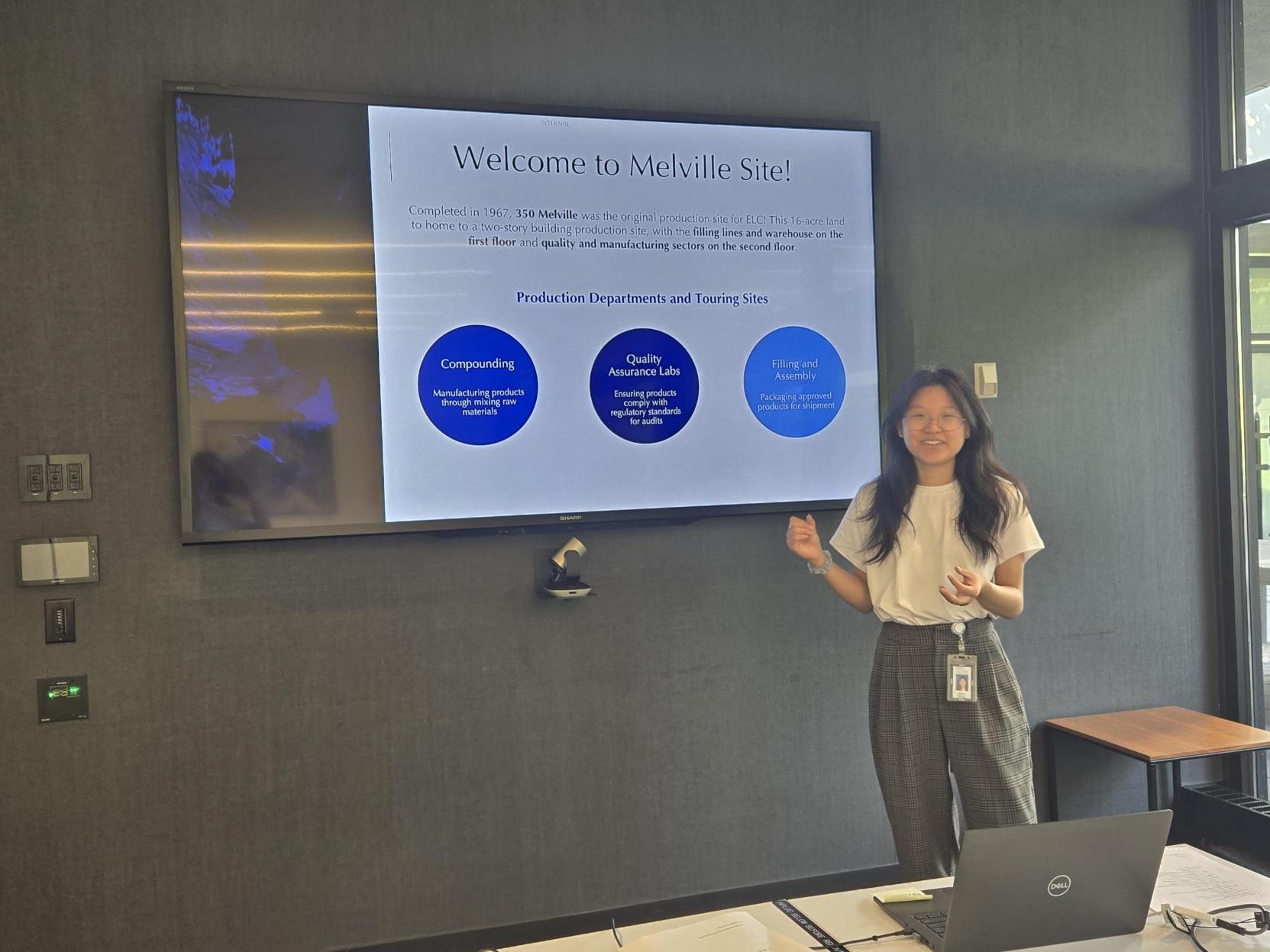
I’m most proud of getting my first internship at Stony Brook’s Environment (EHS). It ended up being exactly the field I was interested in and gave me a direct pathway into that area, as well as opportunities for future internships.
There was definitely a learning curve, such as understanding professional expectations and how to present myself. I also learned how to be proactive. Internships don’t always hand you work so being willing to speak up, ask questions, and take initiative is key to making the most of your internship. That experience really helped me become more self-motivated.
What does your role as a TSM Student Leader look like? You’re involved in campus clubs and leadership, can you tell me more about those experiences?
As a TSM Student Leader, I help organize events and work to increase awareness of the major. When I first started TSM, I felt there was a lack of structure and community, especially since many of the early courses of the beginning courses are asynchronous.
That experience motivated me to get involved and build a stronger sense of connection within the major. TSM is still relatively small so I want to make it more visible so students don’t always have to explain what it is.
You’re currently conducting research at the intersection of technology and policy, can you tell me more about what that involves?
My research focuses on how we can better integrate emerging technologies into society. It’s like bridging the gap between technology, economics, and policy, making sure that as new innovations are introduced they are implemented in a way that benefits people socially and economically.
How do you manage the workload of the TSM major while balancing coursework, extracurricular involvement, and career preparation?
Time management is very important. I like to plan things in advance, and stay very aware of my calendar so I can be prepared and on time for everything.
I also like to use tools like Notion, which is structured like Google Sheets but for your classes. Most importantly, I’ve learned how to prioritize my time and when to say no.
Were there any courses or projects that had a particularly significant impact on you academically or professionally?
Personally, I had a lot of fun in EST 393 (Project Management) and EST 392 (Engineering Economics) with Professor Moriarty were especially impactful for me. Those were classes where I really saw an intersection between my majors and understood how technology and business concepts come together.
I felt very comfortable in those courses and genuinely enjoyed them.
What skills do you feel the TSM major helped you develop the most?
The specialization courses helped me build technical skills, and each track offers a different skill set. For me, industrial engineering gave me a strong math foundation, so I feel strongest in math applications.
At the same time, being in TSM pushed me to put myself out there more. My experience with economics research also helped me better understand how the economy develops and functions.
Are there any resources from CEAS or Stony Brook that you’ve found especially valuable
throughout your academic journey?
Advising and the Career Center were both incredibly helpful. I actually went to the Career Center to help prepare for my first internship interview, and that one-on-one interaction made a big difference.
They also consistently share opportunities, but I think it is important to take the initiative and actively seek them out as well.
Now that you are graduating, what is something you wished you knew when you first came to Stony Brook?
I don’t have many regrets, but I do wish I had created my freshman schedule myself. Your schedule really impacts your time management and how effectively you can study.
Making sure you have enough time built in for coursework and preparation is really important.
In what ways do you think your overall involvement on campus has shaped your professional goals?
My involvement helped me develop a lot of soft skills that employers look for and pushed me to step outside my comfort zone.
Through leadership and project-based experiences, I’ve learned how to plan, allocate resources, and follow through from start to finish. Those experiences have really prepared me for future professional roles.
What does post-graduation look like for you?
I’m currently exploring opportunities in both industry and government, but I’m especially
interested in public service. I want to focus on helping people, whether that’s through
organizations like the Occupational Safety and Health Administration (OSHA) to improve
worker safety or the Department of Labor to support workers’ rights.
I’m open to different paths as long as I can contribute to public service in a meaningful
way.
Do you have any advice for students who are considering or are new to the TSM major?
I would encourage students to explore their options and really think about their long-term goals, since TSM covers a wide range of career paths.
It’s also important to talk to people with more experience and be proactive as opportunities won’t just come to you. Even though TSM is a smaller major, don’t be intimidated if others aren’t familiar with it. The skill set you gain is very versatile.