
About Dr. Jan Bernauer
|
|
Jan Bernauer was born in Mainz, Germany, where he lived until completing his PhD in nuclear physics at Johannes Gutenberg University (Germany). He then conducted postdoctoral research at MIT, where he stayed for eight years and became a research scientist. He joined Stony Brook in 2018, and is now an Associate Professor in the Department of Physics and Astronomy. Bernauer's research focuses on the physics at the intersection between Nuclear and Particle physics. His group conducts precision form factor measurements of the proton, which are essential for our understanding of non-perturbative quantum chromodynamics. |
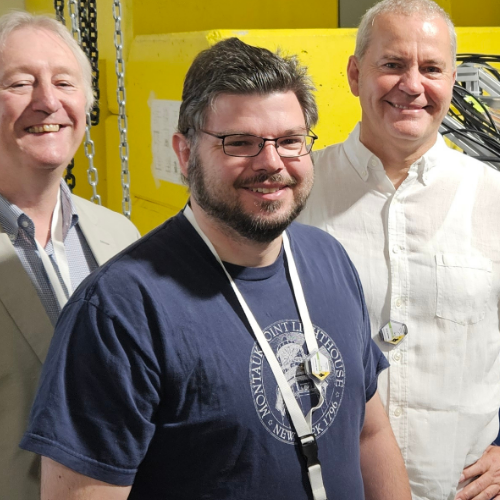
Mentorship Insights
1. What inspired you to become a mentor?
"To me, mentorship is part of being a professor. I enjoy both research and interacting with students, and in a university setting, mentorship naturally becomes part of that role. I want to help young people be the best that they can be, including unlocking their potential and giving them the guidance they need to reach the next level.”
2. What mentoring practices or strategies did you find effective or rewarding?
"Listening is the most important part. Students come with different priorities, ideas, and perspectives, and it’s important to understand where they’re coming from. Sometimes that means being a bit more direct and structured, and other times it means giving more flexibility. The key is finding the right balance for each student.”
3. Please share a rewarding mentoring story.
“I had one student with anxiety and ADHD, which caused him to struggle to complete lab reports on time. Instead of giving him a single deadline at the end of the semester, I set smaller, structured deadlines that gave him enough time without overwhelming him. That approach worked perfectly, and I've gotten the best reports ever from him. It was incredibly rewarding to see how the right structure helped him succeed.”
4. What is one piece of advice for new or aspiring mentors?
“Listen to your mentees and don't assume they need the same things as you. Every mentor-mentee relationship is different, and not every match will be the right one. Sometimes the best thing you can do is help a student find a mentor who’s a better fit. Compatibility matters.”