


About the Creative Writing Major
The creative writing BFA is highly selective, supportive, and committed to helping undergraduate writers cultivate a skill set that translates to multiple career fields. Graduating class sizes never exceed 25 students and creative writing workshops are capped at 16. In addition to workshops, majors are also expected to take literature courses that encourage them to "read like a writer" and think critically about their place in the literary landscape. In their third year of study, majors declare their specialization in creative nonfiction, fiction, poetry, or playwriting. Additionally, majors have opportunities to minor in television writing or screenwriting, enroll in a publishing practicum, engage in our national undergraduate publication Sandpiper Review, and take part in community readings and events.
During their final year of study, majors write a creative thesis under the guidance of a faculty member and take courses on the ethics of the creative imagination, researching as a writer, and an independent reading course designed to fill in any literary gaps in their education.
After graduation, our students have gone on to medical school, law school, MFA programs, MA programs, taught abroad, worked in publishing, joined the corporate workforce, and pursued careers in television and film. No matter what career they've chosen for themselves, graduates emerge with an enriched sense of artistic identity, a strong ethical foundation, and first-hand experience in committing to long-term projects.
Why Major in Creative Writing?
Today’s world demands versatility, resourcefulness, independence and imaginative entrepreneurship, not only in the arts, but everywhere. Creative writing majors, in particular, have valuable skills that let them adapt to many different careers. Businesses are desperate for top-notch communicators. According to a 2016 study of Fortune 500 executives, 80% said that from two-thirds to all of their salaried employees need to write on the job. Meanwhile, medical schools are increasingly admitting students with demonstrable competence in the liberal arts.
So, in addition to immersive practice in creative writing, the BFA program delivers the following skills:
- Creative problem-solving. Ask any novelist and they’ll tell you, a novel is nothing more than a bunch of problems, solved with language. If you can find solutions in this most difficult of mediums, you can handle just about any other problem that’ll come your way.
- Expression and persuasion. The right words in the right order. How many advertisers, marketers, management consultants, and strategic planners across industries are looking for the same thing, to say nothing of lawyers, financial advisors, salespeople and politicians?
- Self-reliance. The BFA supports students as they develop their creative thesis project, but it's their name on the cover, not ours.
- Community and context. Literature doesn’t happen in a vacuum. Neither does education. Majors read and share their writing together, and together make connections to history, culture, and the professional literary world. All at a world-class research university.
For more specifics about career opportunities for creative writers, click here.
What do you get for the money?
Our program offers a small liberal arts college experience at Stony Brook prices. Enrollment in our creative writing workshops is capped at 16. Students really get to know their professors and each other. We admit only 25 or so majors per year, so students also get to know the other writers in their cohort. They take CWL 250, Join the Conversation, together as a group. Later, when they are about to embark on their book-length manuscript, they take two courses as a cohort: CWL 390, The Ethics of the Creative Imagination, and CWL 450, Senior Project Workshop. The curriculum is designed to foster a tight-knit community. Special events with visiting authors, sandwich breaks, and student showcases, sponsored by the program, reinforce that sense of an artist colony. No creative writing major will feel lost at what can be a bewilderingly large research university.
This page will help parents calculate tuition, room, board, and other expenses. It also contains links to financial aid, scholarships and campus jobs.
The Creative Writing program does not offer its own scholarships. Stony Brook, however, awards scholarships based on merit, diversity, leadership, need, and several other categories relevant to our students. Please visit the Financial Aid page for more information.
Southampton/Manhattan Options
How do I take a course in Manhattan or Southampton during the regular academic year?
 Our graduate program, the MFA in Creative Writing, offers workshops in Southampton
and Manhattan that, from time to time, talented undergraduates are allowed to take.
You can count up to 6 credits of graduate workshops toward your degree. A graduate
workshop is 4 credits.
Our graduate program, the MFA in Creative Writing, offers workshops in Southampton
and Manhattan that, from time to time, talented undergraduates are allowed to take.
You can count up to 6 credits of graduate workshops toward your degree. A graduate
workshop is 4 credits.
If you'd like to explore this option, your first step is to head over to the MFA program website to see what courses are being offered. As with undergraduate creative writing, MFA courses change topics every semester, and often there will be more than one topic offered under the same course number. Scroll down for Manhattan offerings.
Admission to graduate workshops requires a writing sample. Once you find a course to which you'd like to apply, email the MFA Program Director. In the body of the email, include your SBU ID number, the course/topic you'd like to take and who is teaching it, and a statement of purpose, which should be a paragraph or so describing what you hope to accomplish in the workshop and what motivates you to apply. Attach a writing sample of 5-10 pages in the appropriate genre. I.e., if you're applying to a poetry workshop, submit poems, not fiction.
The MFA Program draws visiting faculty from the culturally rich environs of the Hamptons and Manhattan. Undergraduates who come to Southampton are welcome to attend the Writers Speak reading series on Wednesday evenings. This series brings top authors from around the country to campus. They give a reading in the intimate environs of Radio Lounge, then answer questions about the writing life and sign books. At the end of the semester, MFA students take their turn at the podium, giving a reading for the community of writers at Southampton.
How do I take a course in the Southampton Writers Conference?

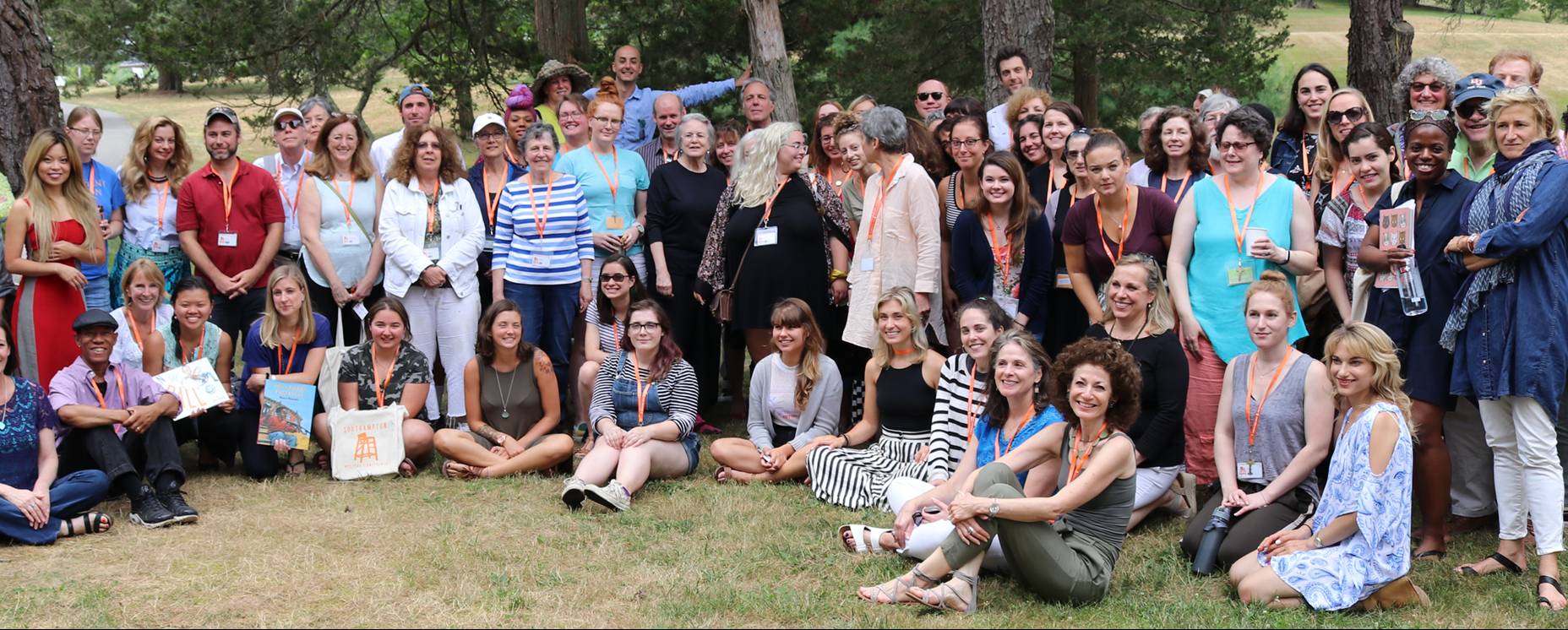
For 45 years, writers from across the country and globe have attended the Southampton Writers Conference to find outstanding workshops and a supportive community. Held every July, the SWC offers full days of programming including morning talks and lectures, afternoon workshops, evening salons, and nightly readings by today's top writers.
The SWC is a fabulous way to immerse yourself in a creative community and to study with superstar guest authors. Past workshop faculty include poets Billy Collins, Terrance Hayes, and Sharon Olds, and novelists E.L. Doctorow, Joyce Carol Oates, and Elizabeth Strout.
Admission to workshops at the Conference is through an application available in January. It requires a writing sample and statement of purpose. In your statement of purpose, mention that you are a creative writing undergraduate at Stony Brook. 5-day workshops are 2 credits. 12-day workshops are 3 credits.