


Arts Everywhere:
The Beauty in Life
The Arts Everywhere: The Beauty in Life exhibition, jointly curated by students from the Departments of Art and Philosophy, aims to display a variety of perspectives on beauty in our world. We asked artists to submit original artwork that shows what they find beautiful, valuable, moving, and/or worth defending.
Beauty is not universal, yet we often tell ourselves “this should matter to everyone.” The inaugural exhibition of Khôra Gallery reveals the tension between the personal and the universal. The selected works have rendered beauty a vast terrain for exploration, drawing our attention to what they hope others would notice, too.
Curated by
Anya Galperin, PhD candidate, Philosophy
Jennifer Chen ‘26, BA Studio Art
Jess Struzinski ‘27, BS Marine Vertebrate Biology, BA Studio Art
Kylie Liu ‘27, BA Studio Art, BA Psychology
Tatiana Borchetta ‘27, MA Philosophy
The Beauty in Life, part of the CAS Arts Everywhere Initiative, showcases artists who come from all disciplines and majors, contributing their representations of what is
beautiful in their lives: family, nature, everyday household objects and more…
Their answers to the question of “What is beauty?” range vastly in artistic subject,
size, and medium.
Together, let us discover beauty in everything we see.
Featuring the works of student artists:
Amyah Adrien ‘27, BA Studio Art
The Midnight Oasis, 2026
Mixed-media Sculpture
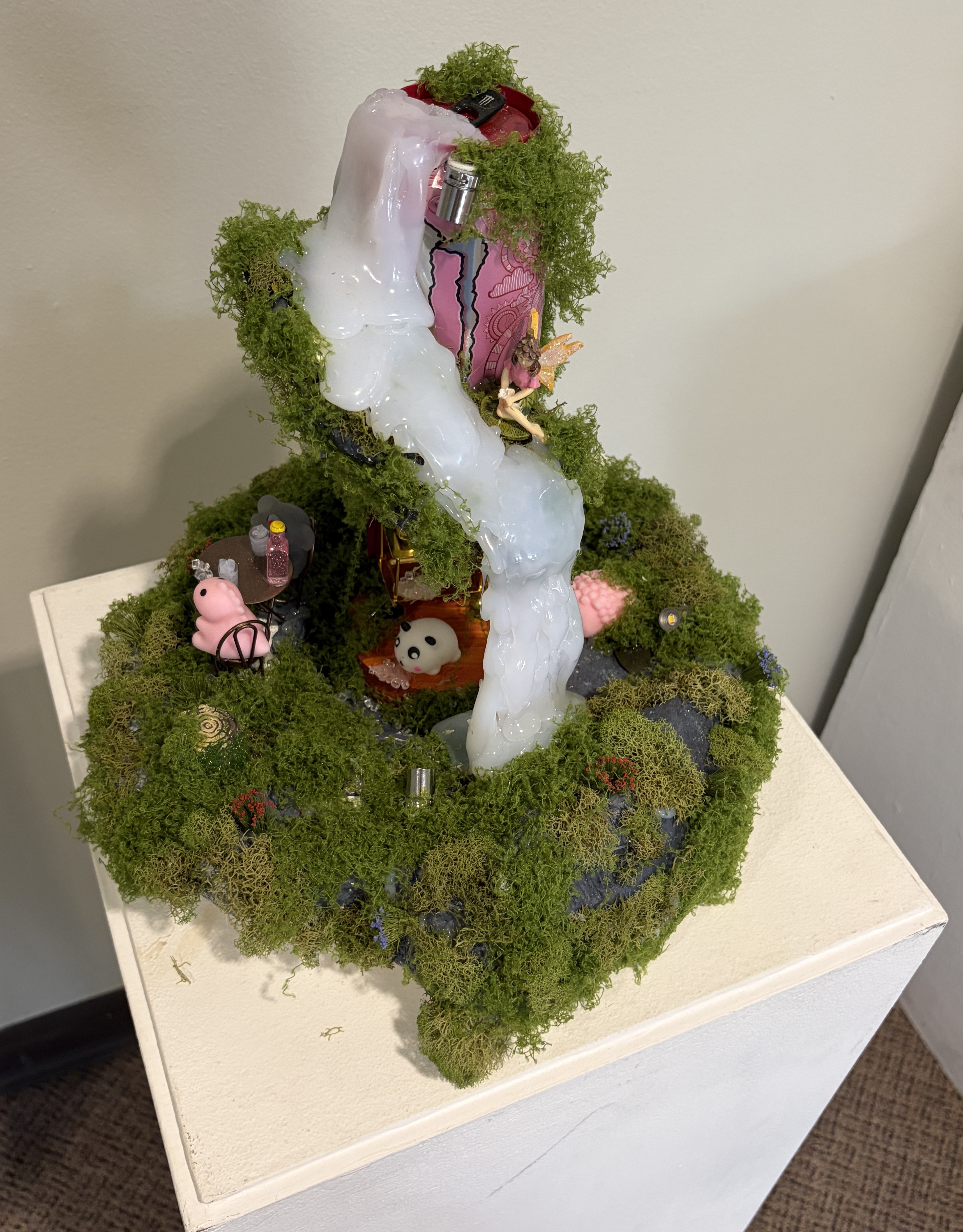 When I first started working on this piece, I was incredibly anxious about how it
would turn out, constantly fearing it would not match the vision in my head. I worried
that the materials would not blend properly, but as the final details fell into place,
it completely took my breath away. It turned out to be fun, cute, intense, and subtle
all at once. Everything I wanted it to be.
By transforming an everyday object like an energy drink can into the foundation for a cascading, lit-up waterfall, I wanted to explore how industrial everyday life can be reclaimed by the earth. This piece fits perfectly with the exhibition’s theme because it embodies exactly what nature means to me. It is not just quiet or serious; it has a playful, flirty side, a cute side, and a deeply environmental side.
The process of making this sculpture was very similar to my first submission, but the final energy is entirely different. While the first was light and whimsical, this one feels grounded, forest-friendly, and alive. With its tiny creatures gathering around the table under the mossy canopy, it operates as a vibrant, cozy miniature meeting spot where everyone and everything is welcome.
Amyah Adrien ‘27, BA Studio Art
The Gnomes Hidden Grove, 2024
Mixed-media Sculpture
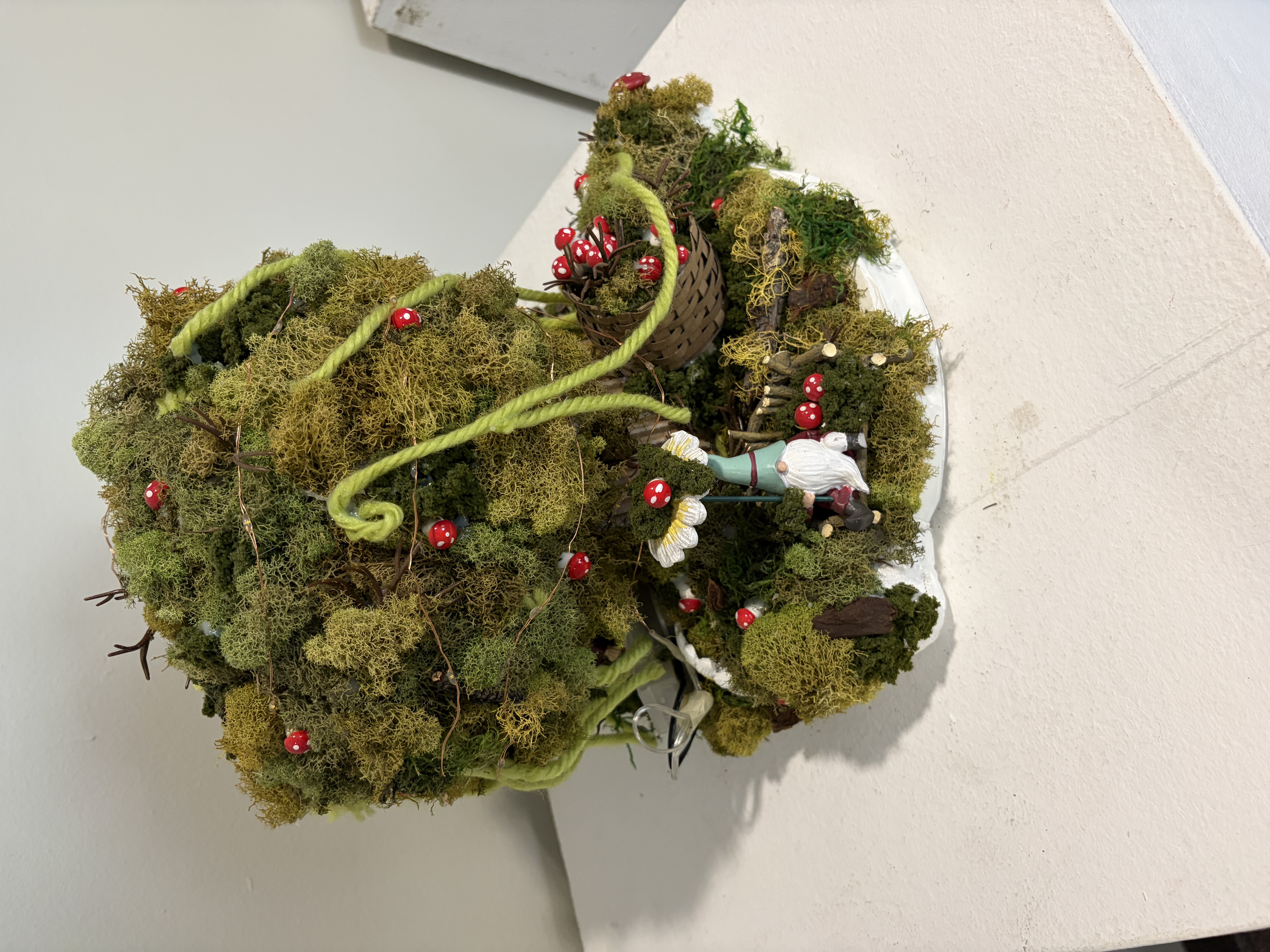 When I started making this piece, I just wanted to create something whimsical that
felt like a core childhood memory. I wanted to capture that feeling of how, even as
we get older, the little things we used to love as kids never actually leave us. They
stay with us, and we can look back and reinterpret them however we want as adults.
My process started out straightforward when I was building the base, but as I got into the actual details, it became so much fun. Layering all the different types of green moss, tucking in the tiny red mushrooms, and wrapping the warm fairy lights and yarn through the tree felt less like working and more like just playing and experimenting. It made me realize how rare it is to just have pure fun while making art.
I think this piece fits perfectly with the exhibition’s theme because it is a direct reflection of what childhood and memory mean to me. It is a physical reminder that you do not have to lose your sense of wonder just because you are growing up, and I hope it makes people stop and think about their own favorite childhood spaces.
Ariel Bernard ‘29, BS Chemistry
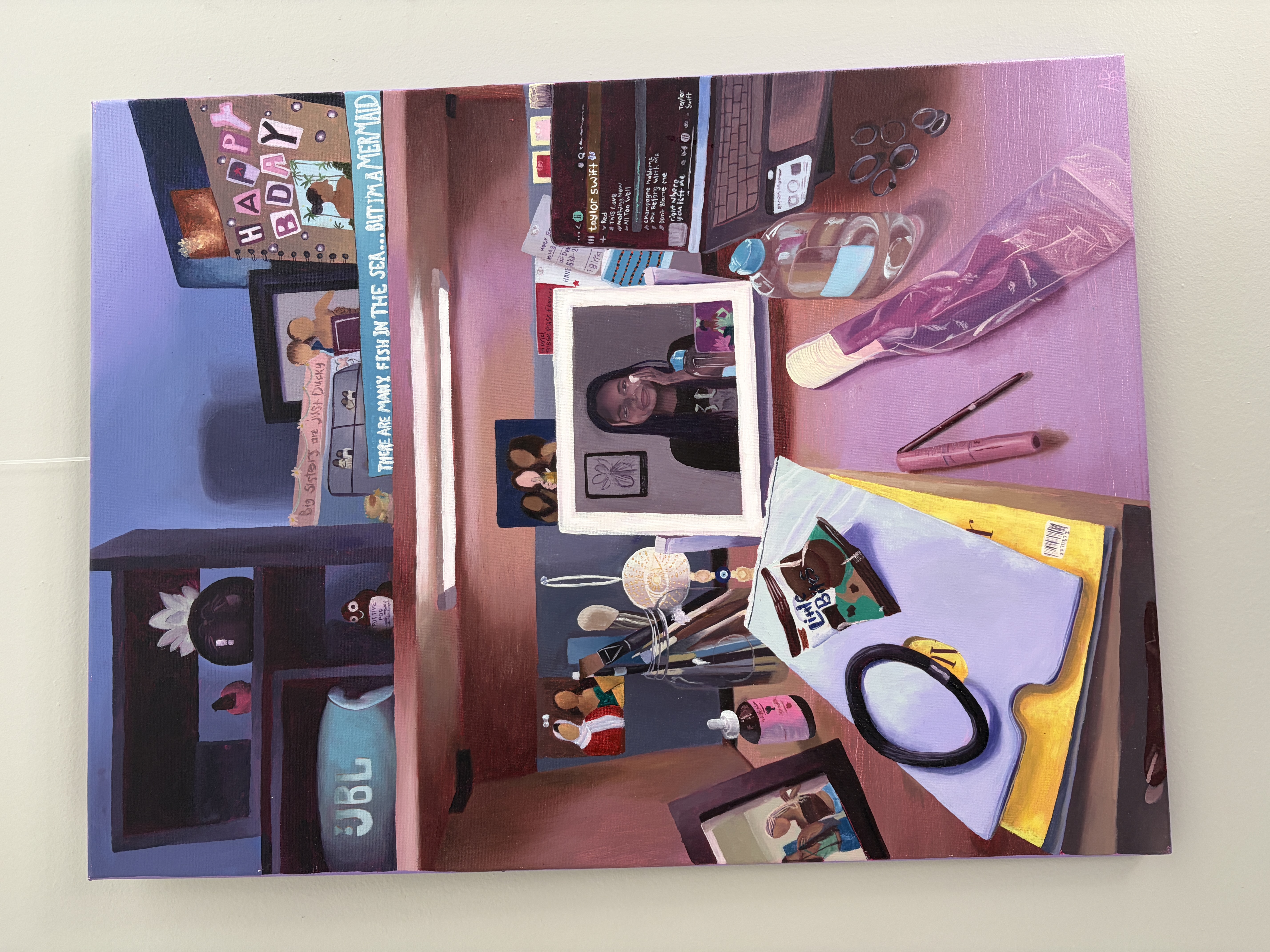
True Colors, 2026
Oil on Canvas
 In Only a Promise of Happiness (2007), philosopher Alexander Nehamas interprets the concept of beauty as a social
invitation to enhance experiences. Societal contemplation and interpretation of beautiful
things observed or felt in life allow even the most unlikely of people to establish
camaraderie. I appreciate this idea of beauty as it represents something personal
to me, as well as a key aspect of humanity that I feel we are beginning to lose: authenticity.
When we encounter authentic individuals, we are invited into unapologetic, unfiltered,
and private elements of their soul. To me, people are most beautiful in this rare
form, as they allow for the blossom of intense and unlikely connection with others.
Unfortunately, through things like social media and artificial intelligence, it has
become harder and harder to tell false information from reality. Preserving authenticity
requires people to be confident, vulnerable, and transparent. In this painting, I
chose a scene that displays completely raw aspects of my personality in the form of
guilty pleasure foods and music I listen to, pictures of close friends and family,
objects from past memories, and signals of future hopes and dreams. Including myself
in a vulnerable state of happy tears while removing my makeup works to depict the
difficult yet freeing acceptance of my true authentic self as I remove the mask on
display for the rest of the world, and look in the mirror at my honest face. Although
the elements of this painting are all very personal to me, I hope my audience is able
to find something in it that remains close to their hearts as well. I hope this allows
them to discover how these small things make them all the more uniquely beautiful.
Caroline Hammons ‘28, BS Biology, minor in Studio Art
Ode to Paint, 2025
Acrylic on Canvas
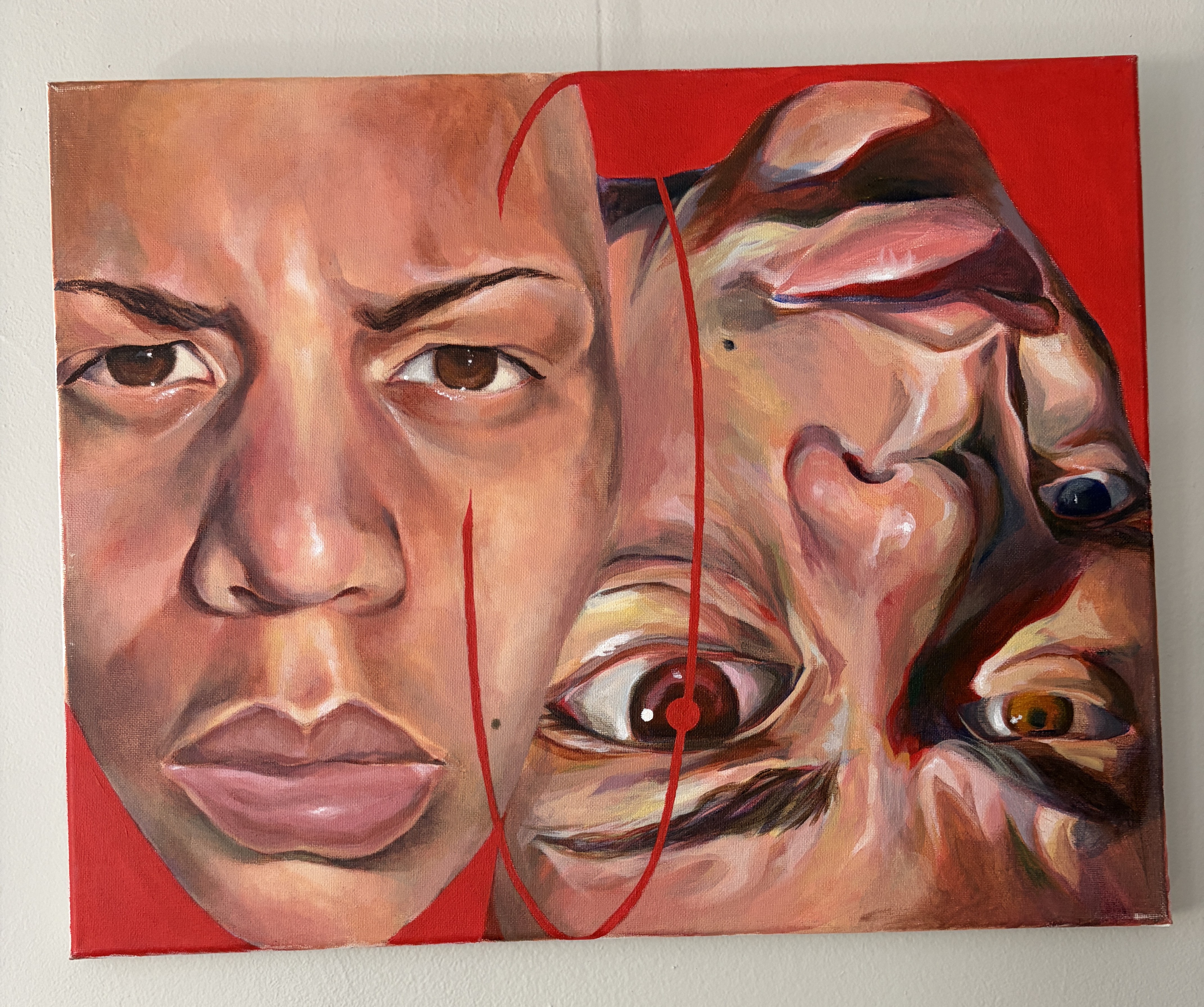
Paint has changed me. I see the world in shapes and shadows with edges of color, the
how of illusions, and what it's like to have the privelege to pursue communication
with the presence of color. Pain is the net in which I chase after my butterflies
of compulsions, chasing a satisfaction, a "rightness" to my actions. Paint is a reminder;
it is on nearly every piece of clothing I own, it messes my hands and my brushes.
Paint takes what is empty and fills it. Paint has changed me.
Shuling Hu ‘28, BA Studio Art
Fleurivore, 2026
Dried flowers
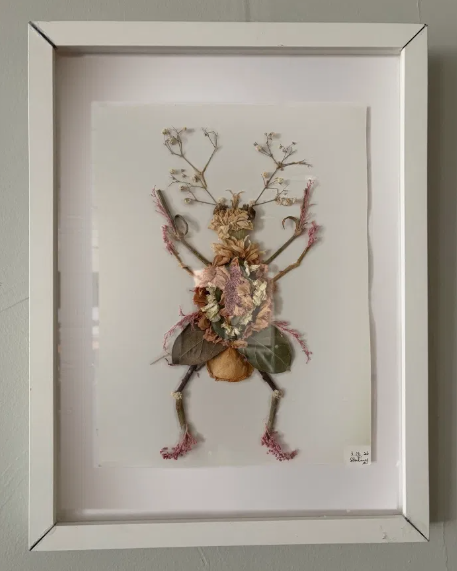
The name comes from the French word fleur (flower) and the Latin suffix -ivore (eater),
meaning roughly “flower eater.” This piece is a bug made entirely out of dried flowers—it’s
both the flower itself and a pollinator moving among flowers. I chose dried flowers
because I received a bouquet on Valentine’s Day and left it by my bed. Probably because
it was winter and very dry, the flowers eventually dried out completely. I thought,
why not use them for this project? By combining the bug and the flowers, I hope people
can see the delicate connection between them and appreciate pollination—a small but
beautiful and important act of nature.
Benson Ma ‘26, BA Studio Art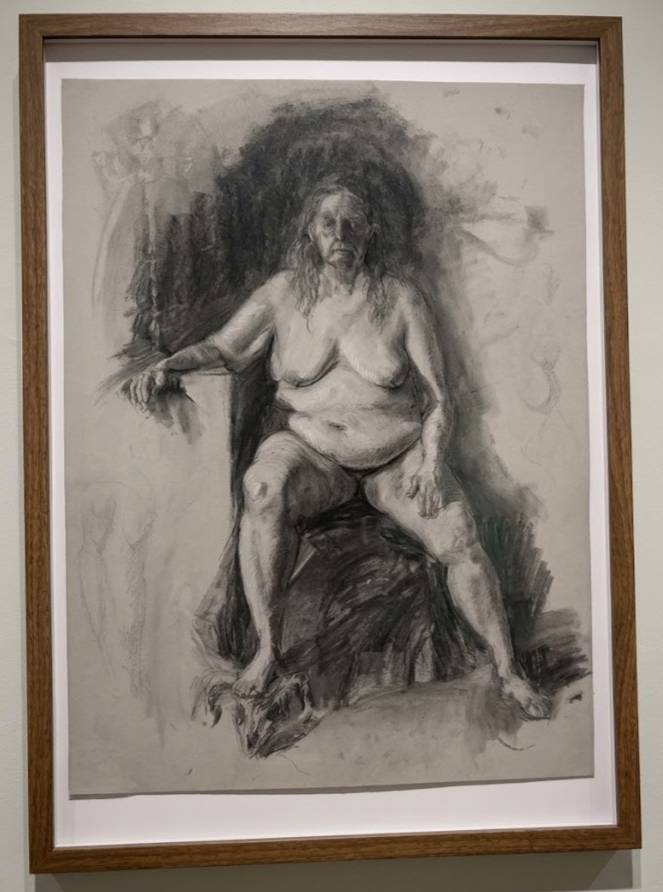
Figure Drawing (2), 2025
Charcoal on tones gray paper
The human figure.
winter sun on white rose, 2026
Charcoal on tones gray paper
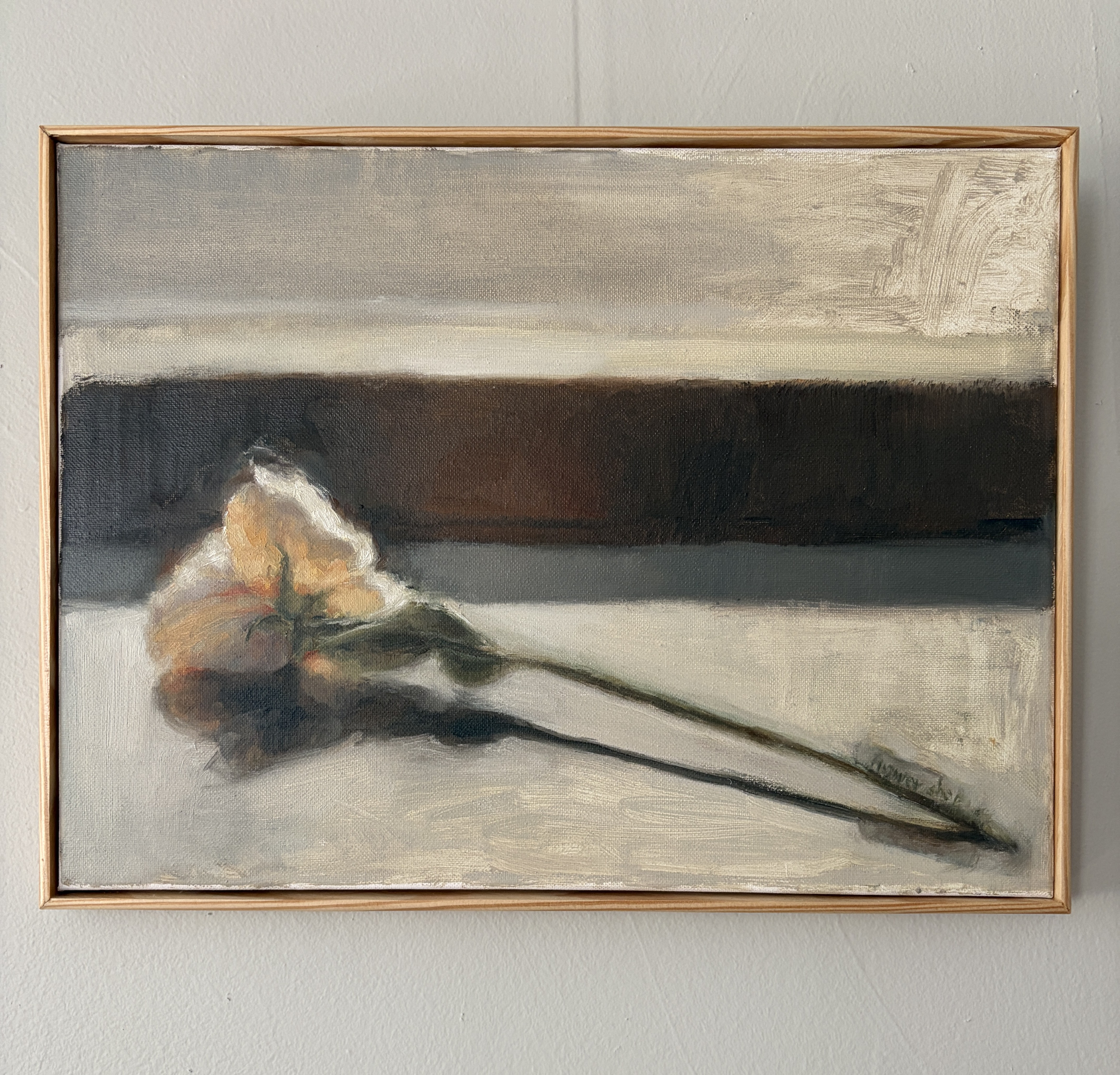 Flower Shop
Gabriella Markarian ‘26, BA Studio Art, minors in Digital Art and Art History
Shipwreck, 2026
Ceramic
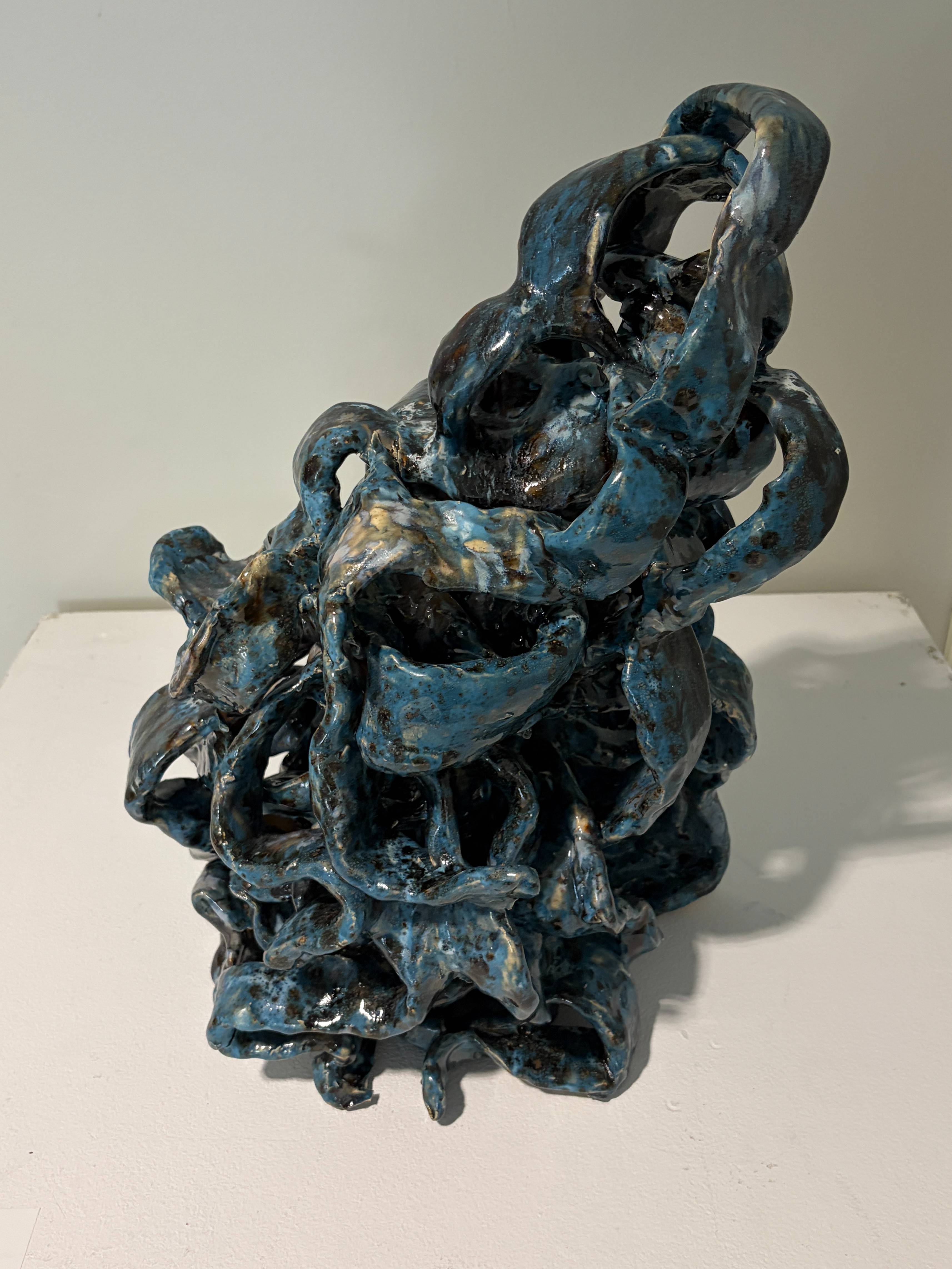
With Shipwreck, I wanted to create something that feels tangled, collapsing, and alive at the same
time. The sculpture twists upward through layered organic forms that resemble waves, roots,
coral, or debris being pulled together by the ocean. I used deep blue glazes with darker earthy tones to give the surface a heavy, weathered
feeling, almost like something that has been submerged underwater and transformed
over time.
I am interested in the idea that beauty can come from destruction and instability. Even though the piece feels chaotic and overgrown, there is still movement and softness within the forms. The twisting shapes fold into each other in a way that feels natural, as if the sculpture is continuously growing, sinking, or rebuilding itself.
Festival, 2026
Ceramic
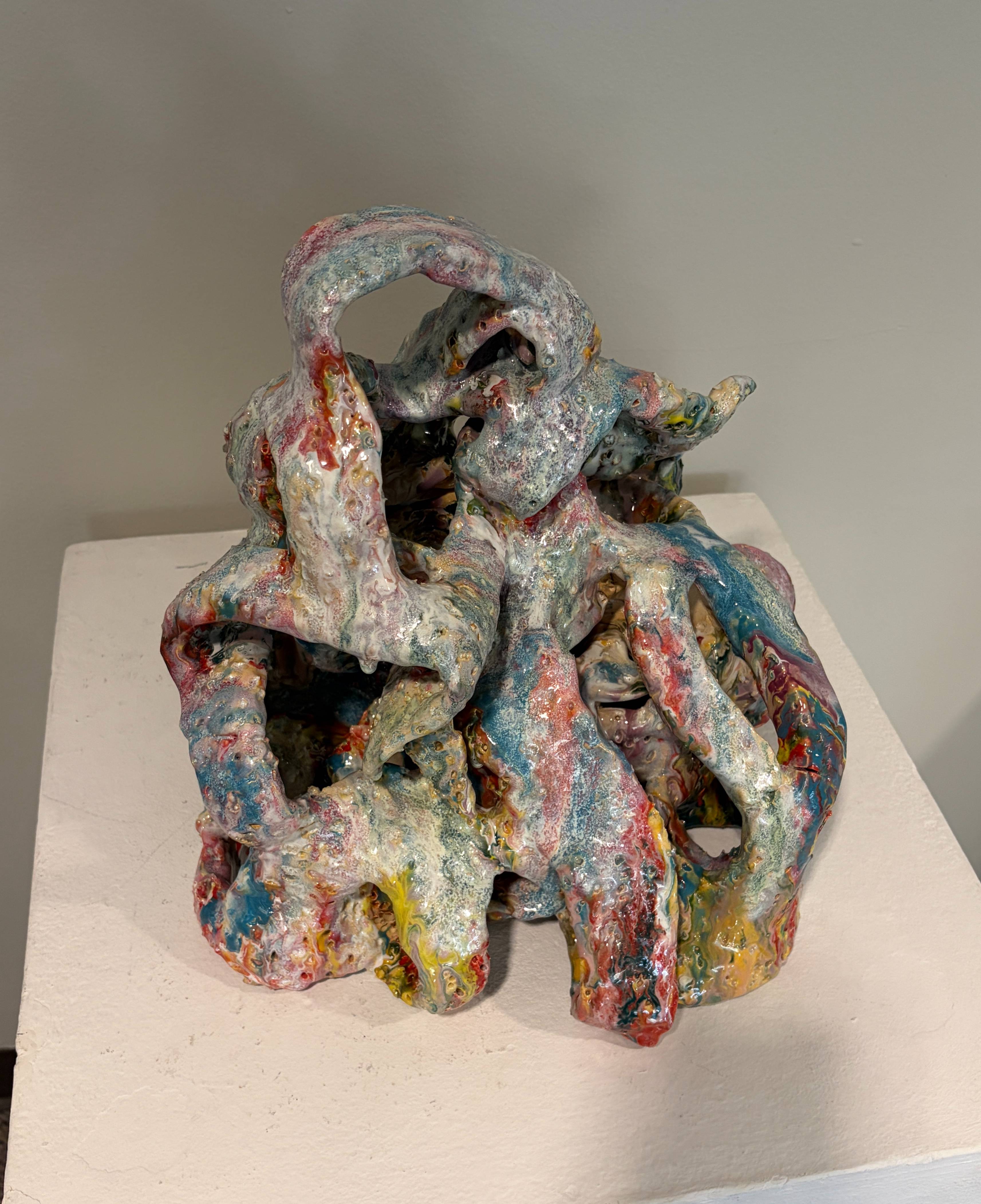
With Festival, I wanted to explore beauty through excess, energy, and chaos. The sculpture is made of twisting, dripping forms that fold into each other like
something constantly growing and overflowing. This work uses bright, saturated colors that move across the surface almost like
paint melting together. The layers of color create a feeling of celebration, movement, and unpredictability. What interests me is how beauty can come from things that feel messy, overwhelming,
or unstable. The sculpture does not try to be balanced or controlled. Instead, I allowed the forms to stretch, collapse, and merge together naturally,
making the piece feel alive and constantly shifting. The glossy surface and flowing shapes give it an organic quality, almost like coral,
melted candy, or something expanding beyond its limits. To challenge the traditional ideas of beauty by embracing irregularity, excess,
and transformation. Even though the piece feels chaotic, there is still harmony within the movement
and color. For me, the beauty of the sculpture comes from its freedom, its unpredictability,
and the way it turns disorder into something vibrant and immersive.
Felice Montella, B.A. Studio Art, Minor in Art History ‘28
Lonely Chair, 2025
Lithograph
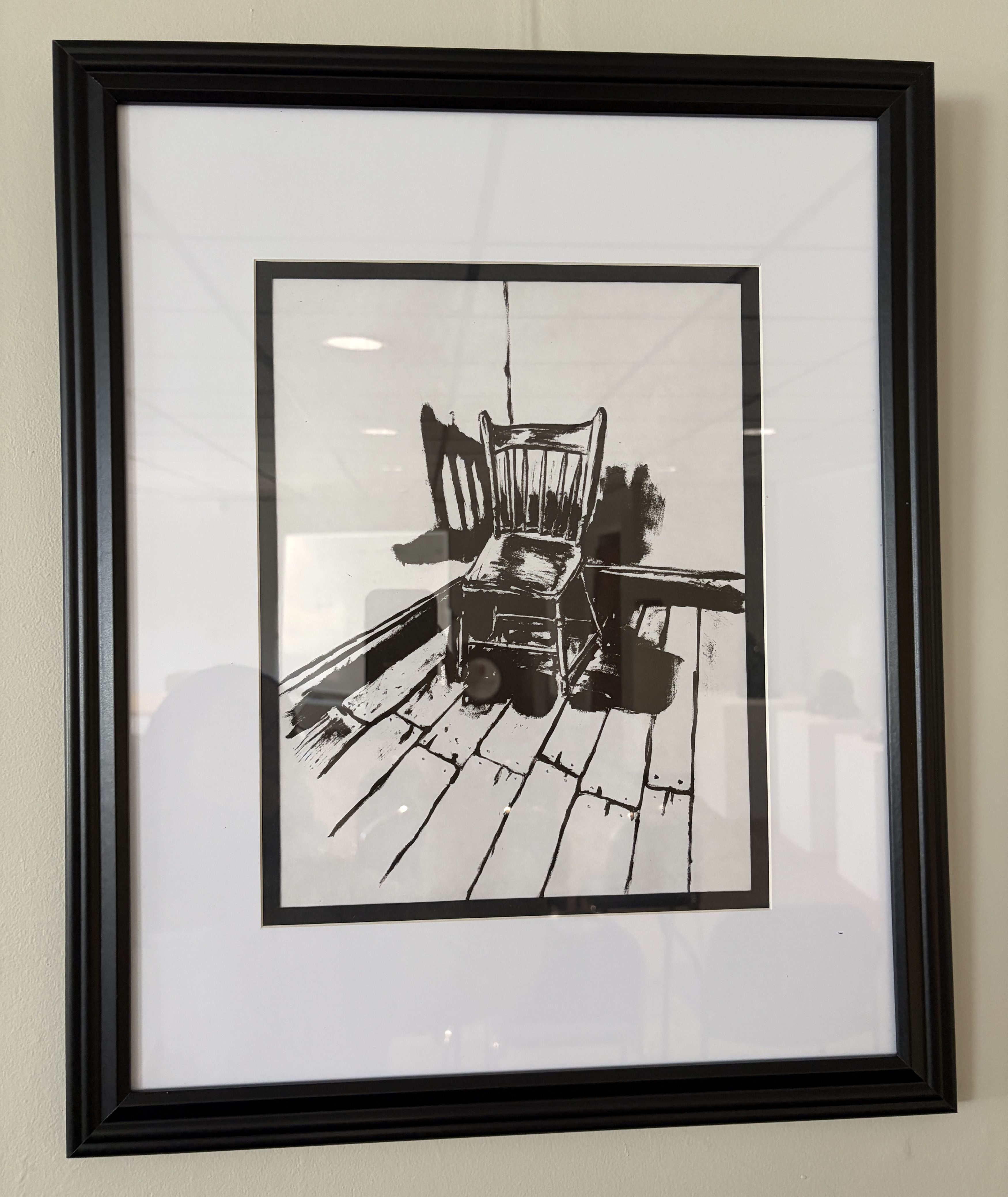
Sometimes I’ll see an object or a piece of furniture as simple as a chair in a certain
space and it becomes a beautiful thing, for I feel a connection with that object or
furniture. It’s beautiful how it draws an emotional feeling out of you. The chair
goes from just being an object that people take for granted, and becomes a piece that
turns a place into an emotional interior space stirring up feelings of nostalgia,
even memories. You see yourself as part of the chair and you start to think how something
so unappealing to others can become a thing of beauty to you. It becomes more than
just an aesthetically beautiful object, but something that stirs up emotional beauty.
Mariam Munawar ‘28, BA Studio Art
Distant, 2026
Ink and Soft Pastel on Charcoal Paper
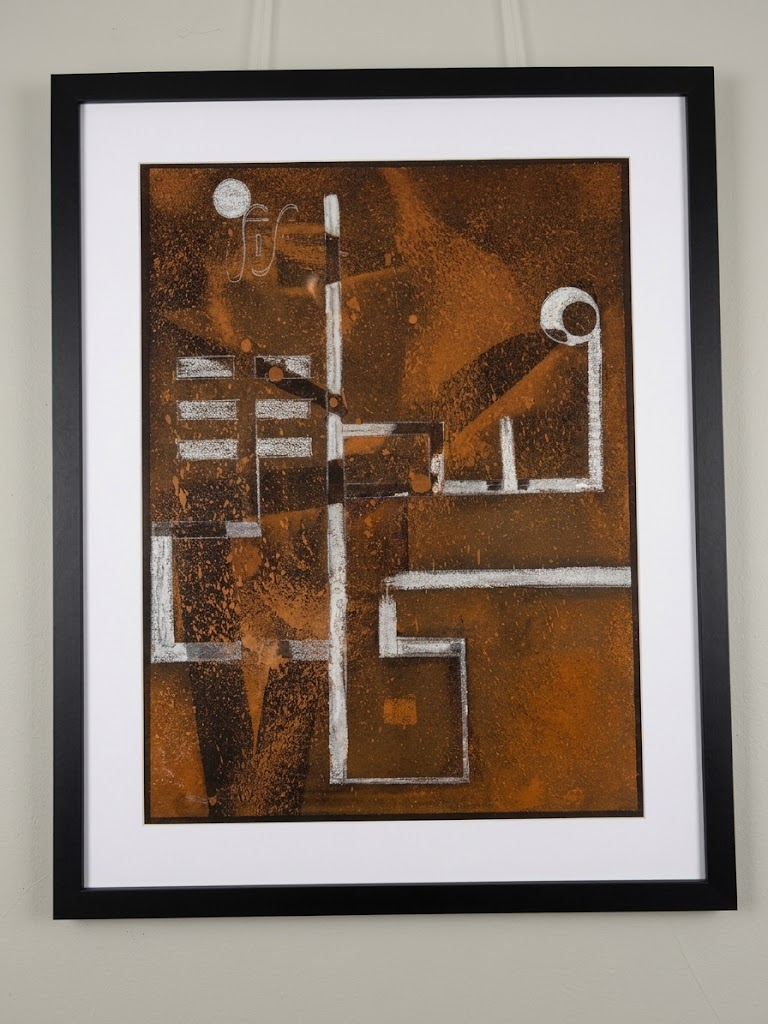
Distant is an abstract piece that explores the beauty in being spontaneous and flowing.
It also tries to look and find shapes in our language that are the basis of its origin.
While creating this simple yet insightful drawing, I just enjoyed the nature and texture
of all the materials that I used. In order to get ready for my creation journey, I
practiced writing words and letters that I found in my journal and photographs. I
tried to write them in an abstract and non-traditional way. I started the process
by just splashing the black charcoal paper with bronze ink. This flickering of luminous
ink marked the paper with four circles along with other random shiny dots and I used
those circles as my guide for next steps. I drew my letters and shapes. Later, I masked
some spaces and followed with a drawing using soft pastel and white ink.
Cameron Persaud ‘29, MS Neuroscience
The Creation of Memories, 2026
Digital Print
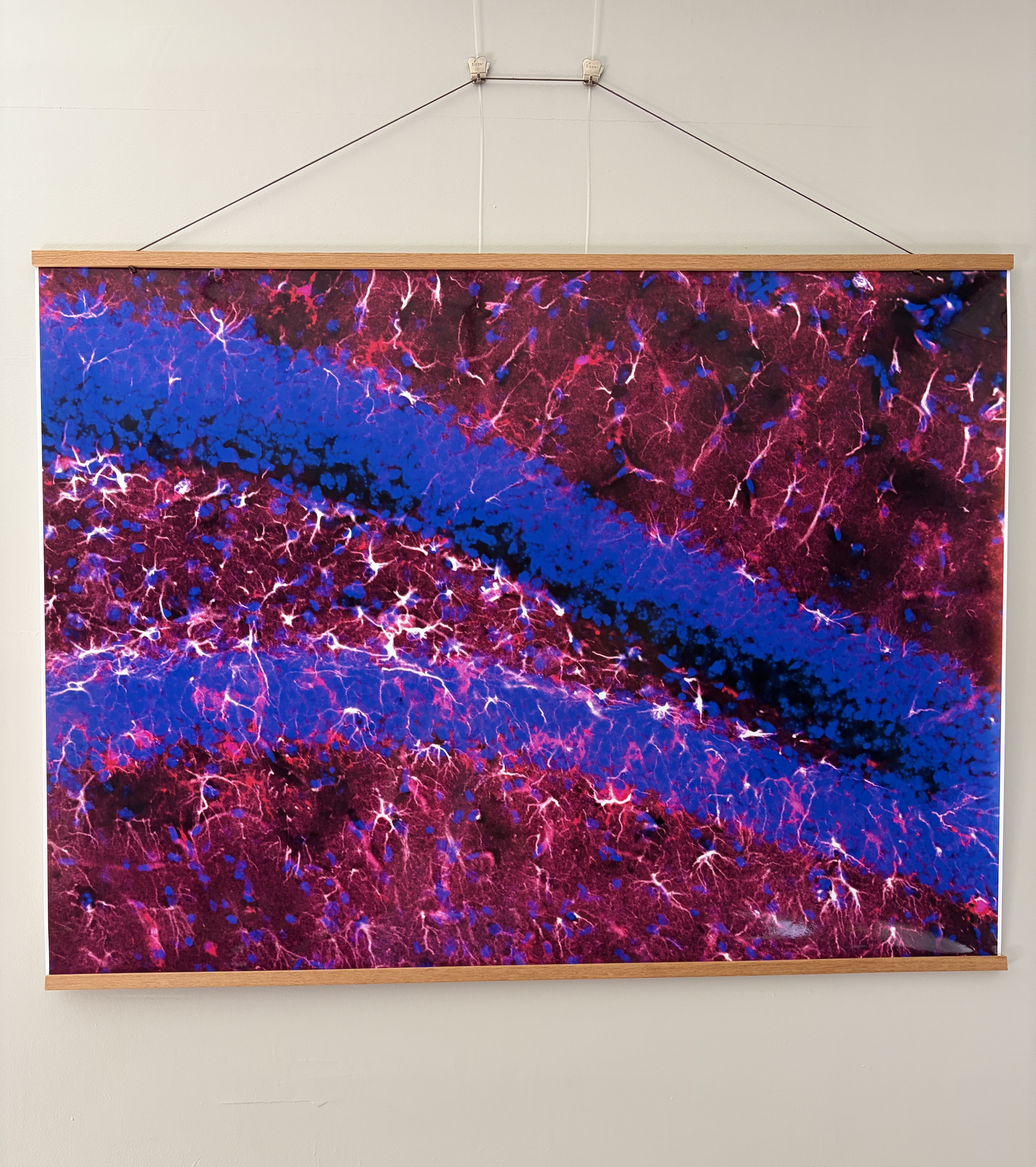
Memories form the basis of a person's personality: from how you celebrated the holidays
with your family, to accepting a job, to the hardships we face in life. Each moment creates a separate experience that the brain generates in the hippocampus
and stores in the neocortex, contributing to the unique tapestry of who we are. However, this intricate process can be disrupted by neurodegenerative diseases. For example, Alzheimer's Disease impacts the Dentate Gyrus, removing the brain's
ability to separate one memory from another and leading to confusion and loss of identity. My research focuses on the underlying mechanisms of how new neurons are created
in the dentate gyrus, which may hold the key to restoring memory function. Recognizing the beauty and complexity of the neurocircuitry in these brain areas
highlights the significance of neuroscience research. Works of art derived from scientific research can inspire cooperation across multidisciplinary
fields, fostering novel ideas and paving the way toward new cures for these devastating
diseases.
Michael Struzinsk ‘28i, BS Biology
Ever, 2026
Oil on Canvas
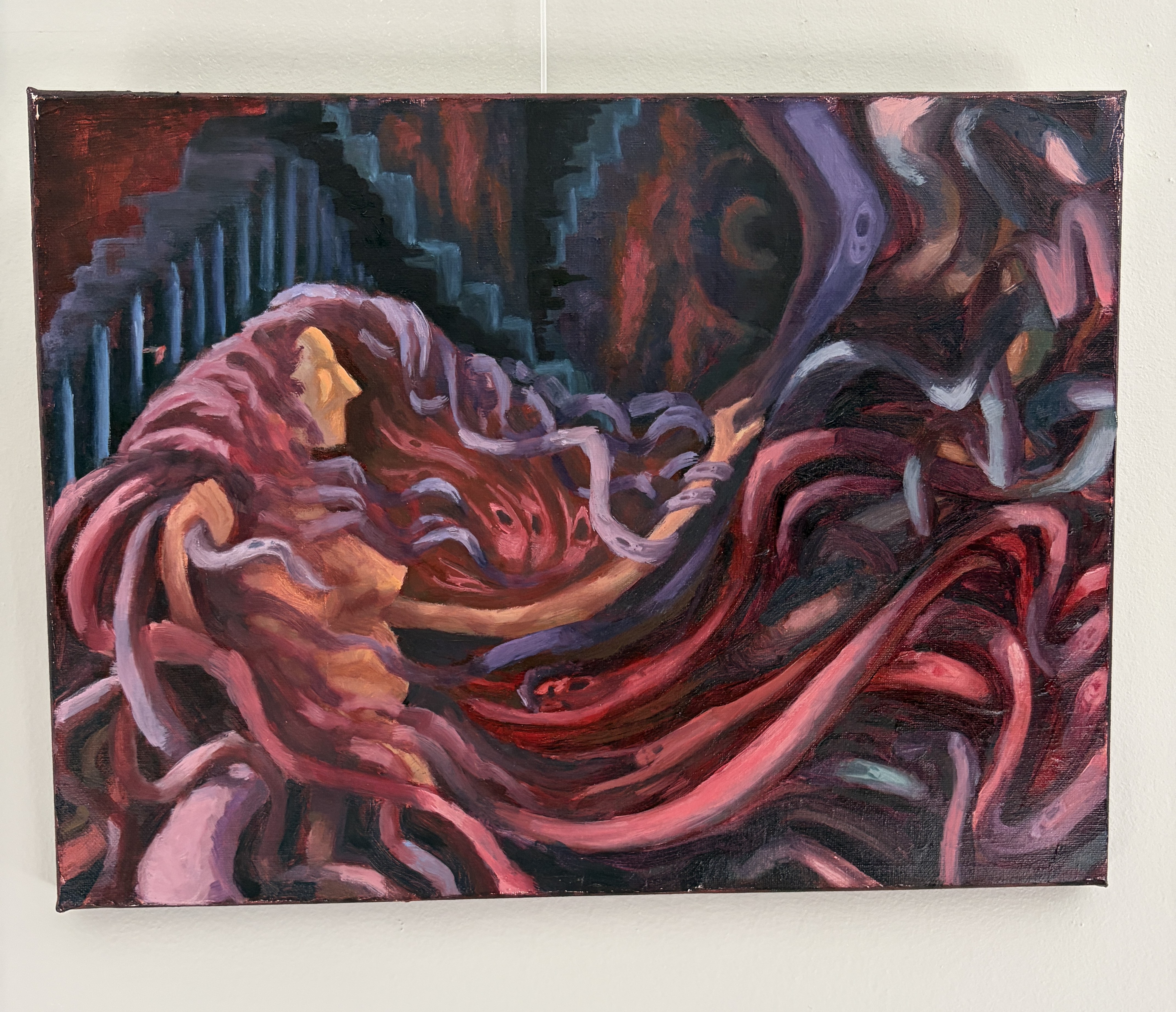
Inspired by dreams and lived experience, this piece materializes the tumultuous anatomy
of a nightmare. The central figure is in suggestive vulnerability—deprived of eyes and a mouth. She cannot scream for salvation, nor can she see a path forward. The tactile sensation of her own hands to her hair is her reality. Her exposed form is one of radical intimacy. Furthermore, she's suspended in indecision: Does she reach out, or does she pull
back and surrender to the void? Her hair functions as both a sanctuary and a cage. Its sheer scale offers a place to hide, yet echoes the "tortured soul" screaming
for release. The journey of healing is the ultimate aesthetic triumph. The stairs in the background are set next to a city intentionally juxtaposing the
feeling of each step's size. There's no singular peak; they simply go up. Rock bottom is not a grave, but a foundation. The lone eye in the sky, formed by crimson clouds, reminds the viewer that "seeing"
requires more than sight—it requires the courage to look at the whole picture. This piece is a defense of the struggle, a testament to the idea that the most profound
beauty is found when we find the strength to climb when there is no visible end.
Zachary Tecson ‘26, BA Media/Art/Culture
Distant Memory, 2025
Photograph
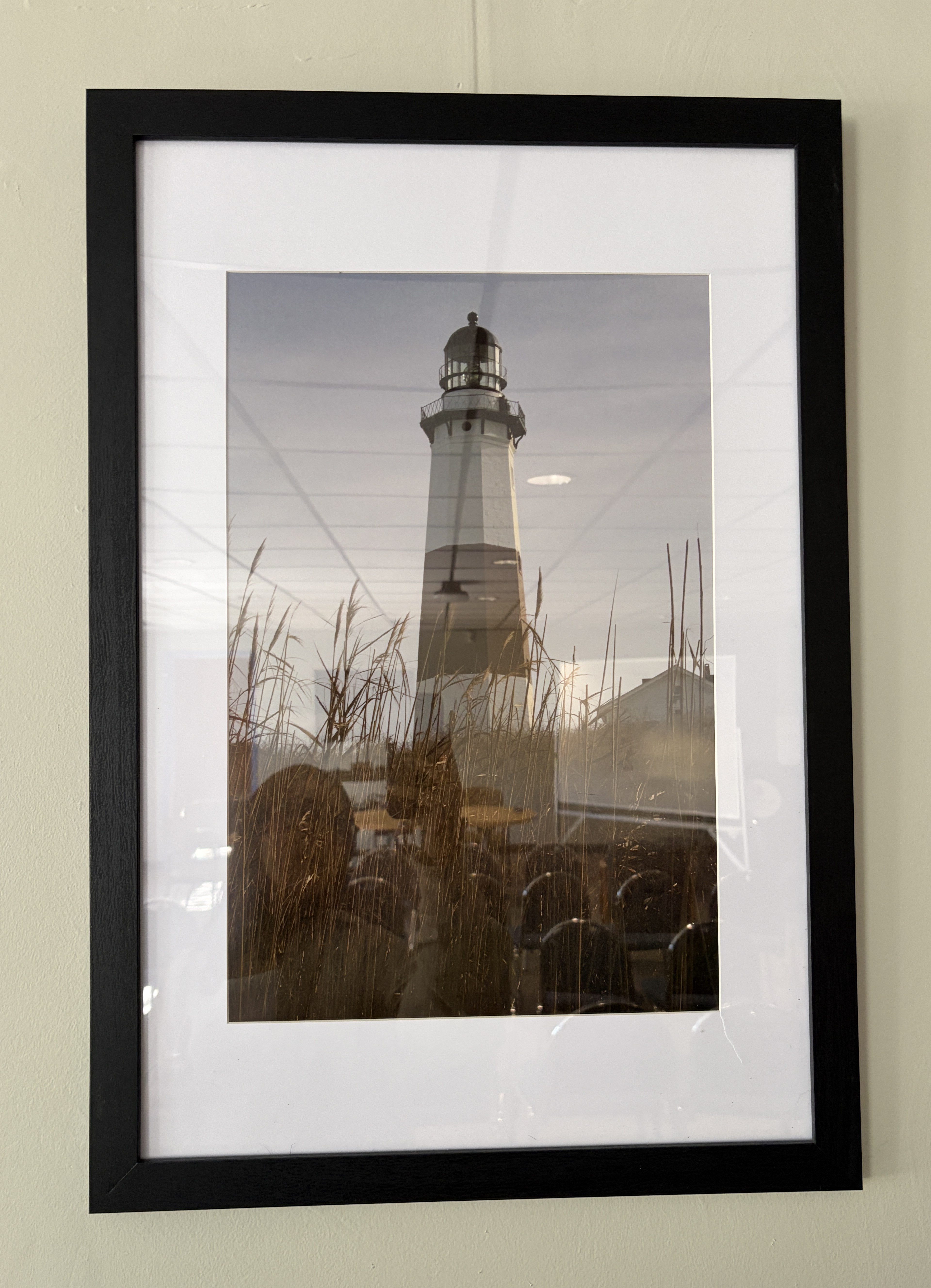
This is a photo of a lighthouse that I saw while on a trip to Montauk last year on
my mom's birthday. At first, this photo simply served as an image that I thought was beautiful and
looked nice, but after events in my personal life, the way I viewed the image has
changed. It is more than a simple pretty picture to me now, and also serves as a reminder
of a different time in my life. Looking at this photo reminds me of days when I had closer company in my life. The picture was taken while someone was still close to me and went on this trip
with me. However, times have changed and they have become distant from me now. I may never ever see them again but that is okay. This photo helps remind me of the past, both the good and the bad. Lighthouses serve as a guide by giving sailors light when it is dark, and this photo
does the same for me by helping me stay grounded in my memories.
Sara Tustin ‘28, BS Biology, minor in Studio Art
The Letter B, 2026
Oil on Canvas
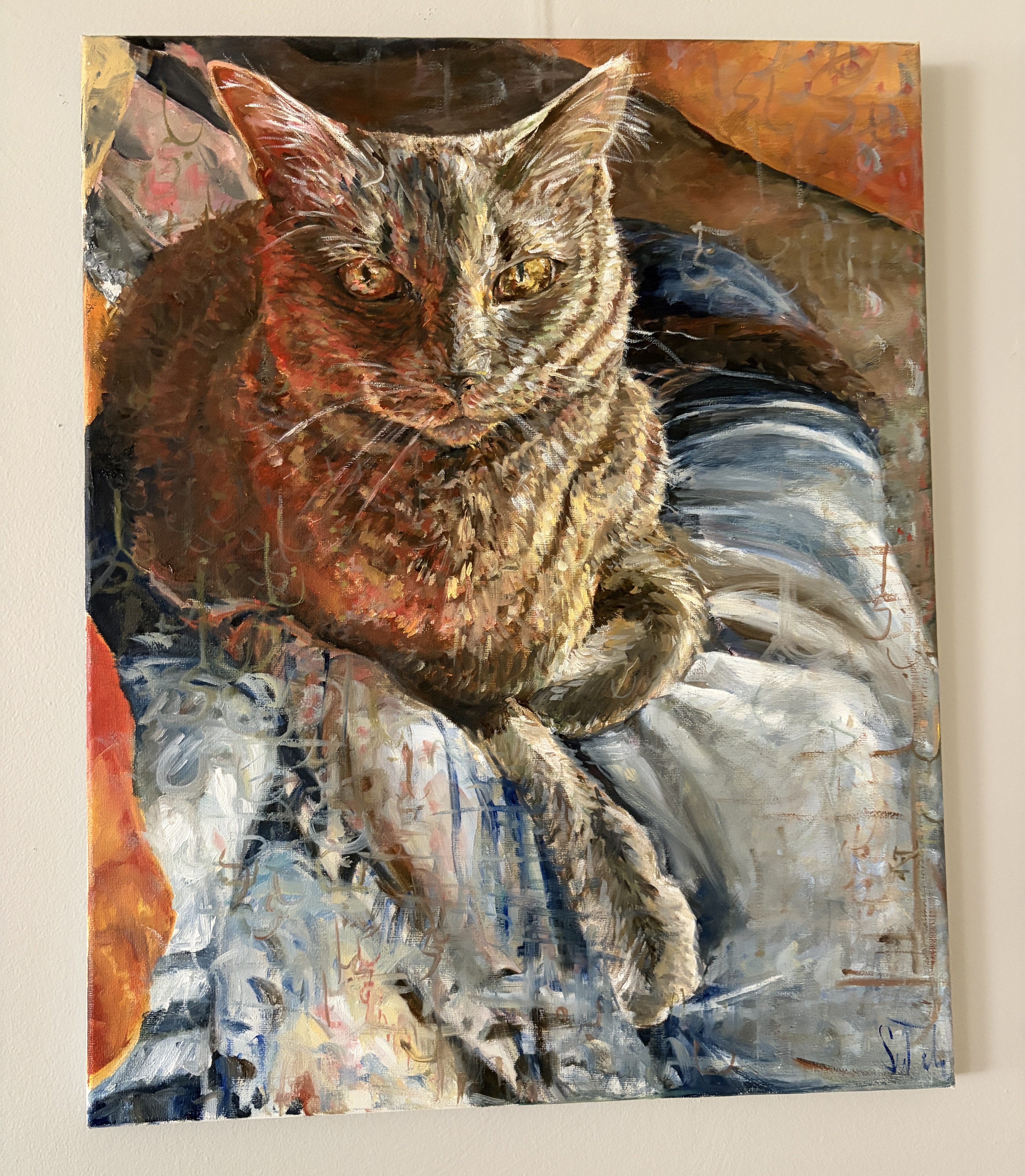
My childhood cat, Penny, passed away this February. When I was three, I had a speech
impediment where I couldn’t pronounce the letter b, in English or in Urdu. When we
got Penny, I was taught it by the word for cat, بلی (billi), which, as you can see,
is scattered throughout my painting. My cat was everything to me- but I think that
grief, in a way, is beautiful- that I could love something, or someone, so much, that
I miss them so fully and painfully. I miss the purring on my chest every night, the
fur stuck on all my clothes and blankets, I miss her always being next to me- and
that, in itself, is beautiful. The empty space next to me is a blessing, because it
being empty means she was once there to fill it. I think of her when I lay down every
night, when I don’t have to lint roll my shirts, and when I have to pronounce the
letter b.
Sara Tustin ‘28, BS Biology, minor in Studio Art
Wo/andering, 2025
Oil on Canvas
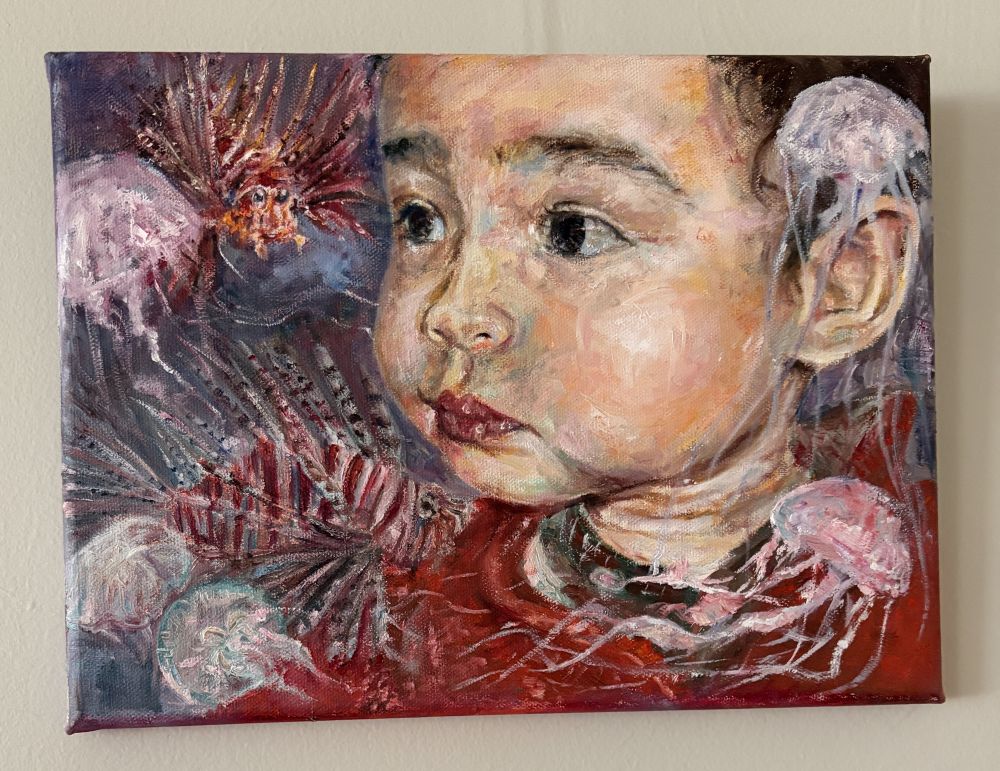
In this painting, I wanted to explore the moment when a child first encounters the
vastness of the world, all-inclusive of its beauty, uncertainty, and dangers, with
the moment they “gain consciousness,” in a way. Using oil paints, I painted my significant
other as a young child surrounded by jellyfish and lionfish in a glowy atmosphere.
The significance of these creatures would be in his current endeavors in scuba diving,
and the awe and wonder he still exhibits whenever he encounters them. My concept centers
on the emergence of early consciousness: that brief stage of life when curiosity is
pure, and awe is instinctive. A child’s innate vulnerability and expression of wonder
became the emotional anchor of the painting. Ultimately, this artwork is about recognizing
awe as the beginning of selfhood. In depicting a child enveloped by shimmering marine
creatures within a vague, atmospheric environment, I hoped to convey the beautiful
yet fragile, transformative moment when a person first sees the world as vast, luminous,
and full of possibilities.