


A Mind for Medicine, A Heart for Others
Meet Moiz Hassan, a sophomore majoring in biomedical engineering (BME) at Stony Brook
University. From conducting research on spinal cord regeneration in zebrafish to advocating
for students through campus leadership, Moiz has dedicated his time to exploring opportunities
that allow him to make a difference in the lives of others.
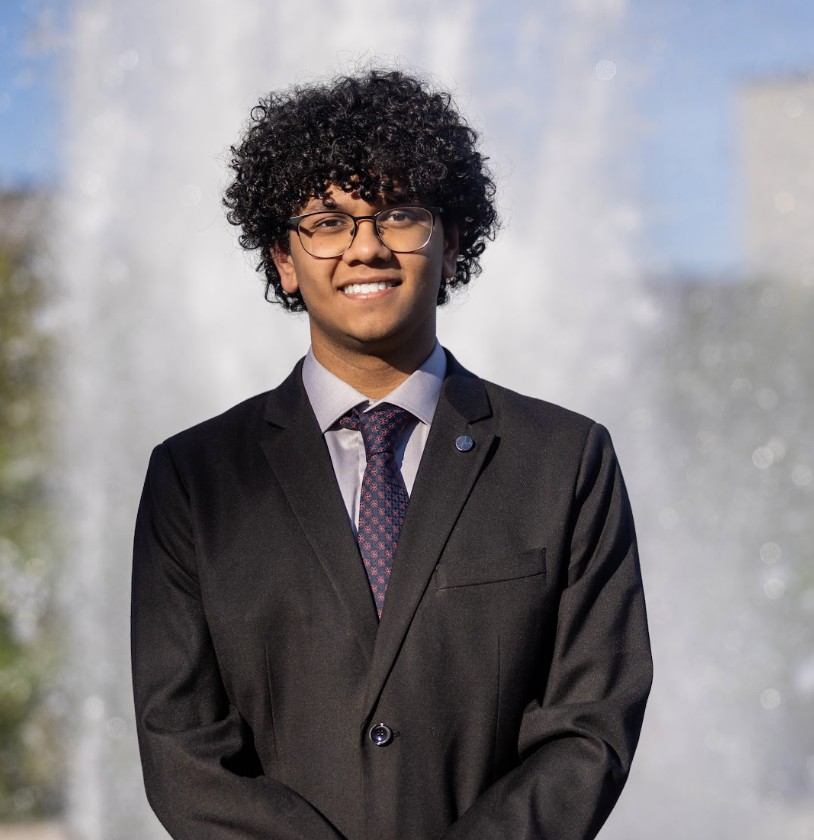
Biomedical engineering piqued Moiz’s interest through its intersection of medicine and engineering, combining his curiosity about human physiology with the hands-on nature of designing devices to improve patient care. Having lived in several countries before coming to Stony Brook, Moiz was exposed to different cultures, communities, and challenges. These experiences further inspired him to pursue opportunities that could positively impact people from a variety of backgrounds.
Beyond the classroom, Moiz has been conducting undergraduate research in the Martin Lab, led by Dr. Benjamin Martin, where researchers use zebrafish to study stem cell biology and tissue development, with the goal of advancing our understanding of regenerative medicine. Moiz’s research specifically focuses on spinal cord regeneration in zebrafish, exploring the role of stem cells in the regeneration process. Through his dedication to research, Moiz was awarded the URECA Summer Research Fellowship, allowing him to spend the summer conducting experiments and further exploring his research interests. He later presented his work at the Summer 2026 Symposium, where he had the opportunity to engage with fellow researchers and strengthen his ability to communicate complex scientific concepts to a broader audience.
Outside of research, Moiz continues to advocate for students through his campus leadership roles. As a Senator in the Undergraduate Student Government (USG), he has worked on numerous initiatives to help improve student life and strengthen connections between students and campus organizations. Additionally, as a College of Engineering and Applied Sciences (CEAS) Peer Mentor, he helps first-year students navigate their transition to college, using his own experiences to guide them through new opportunities and challenges.
While Moiz is still exploring what he hopes to pursue in the future, one thing remains certain: his desire to stay within the field of medicine and help those in need. From his research to his involvement on campus, Moiz’s experiences reflect a common purpose of making a difference in the lives of others. His journey reminds us that sometimes, the desire to help others is enough to inspire us to take the first step.
Read more about Moiz’s experiences below in an interview with CEAS Student Assistant Janice:
The Interview:
Janice: Did you always intend to major in biomedical engineering (BME)?
Moiz: The BME major stood out to me because I was interested in medicine and hands-on equipment design for patients. The major does a really good job of combining my interests, where the medical side teaches me about human physiology and how different devices can target patient care, whereas the engineering aspect teaches me how to break down problems into actionable items.
What is a fun fact about yourself that people might not know?
A fun fact about me would be that I’ve lived in many countries prior to coming to Stony Brook. I was born and raised in Pakistan for 5 years before moving to the United Arab Emirates, where I stayed for 9 years. I then moved to Texas for a short six months before returning to the UAE for another 3 years before eventually coming to Stony Brook.
It was really interesting learning about the different cultures and people. It was especially eye-opening to learn about the struggles of each country, especially in Pakistan, which has inspired me to do what I can to help people with a variety of backgrounds.
You’re currently conducting research on spinal cord regeneration in zebrafish in the Martin Lab. Can you tell me more about your research and what initially inspired you to pursue this topic?
What inspired me to pursue research in spinal cord regeneration in zebrafish was the idea that in humans, a papercut can heal in a few days, but an injury to the spinal cord, such as a severed cord, can cause paralysis. However, since regeneration is a spectrum, other organisms like zebrafish can regenerate their spinal cord. So the question that comes to mind is: Why are zebrafish able to regenerate their spinal cord, but humans are not able to? But this is such a broad question, so to even be able to answer it, we have to uncover the fundamental mechanisms that allow zebrafish to regenerate their spinal cord.
Currently, we are studying neuromesodermal progenitors (NMPs), which are a type of stem cell that participates in regenerative processes in the zebrafish. We are trying to uncover the role of these cells and how they work to contribute to regeneration, as this is a question that has yet to be answered. The long-term goal of this research is to help humans be able to heal from a severed spinal cord and paralysis.
You were awarded a URECA Summer Research Fellowship and had the opportunity to present your research at the Summer 2026 Symposium. What was that experience like, and what were your biggest takeaways?
It was a phenomenal experience being able to stay in the lab over the summer to conduct experiments throughout the day, as during the school year, it is difficult to conduct day-long experiments, especially with classes.
The Symposium also further developed my communication skills because I had the opportunity to explain my research to an audience that may not be familiar with the field. I learned the importance of breaking down complex information into bite-sized pieces that are easier to understand. I also had the opportunity to interact with graduate students and Principal Investigators (PIs) from different labs.
What has been the most rewarding or interesting aspect of your research so far? Have you encountered any challenges along the way?
One of the most rewarding parts of my research has been performing spinal cord injuries on zebrafish and then observing the regenerative process occur under a microscope. Being able to see the injured spinal cord come closer together and observe the movement of cells during the regeneration process is something you don’t really get to experience just by reading about it in literature. This allowed us to uncover certain mechanisms and cell movements involved in the zebrafish spinal cord regeneration process.
Something else that was really exciting was that over the summer, we managed to develop two zebrafish lines, which was difficult and time-consuming. These cell lines will greatly contribute to our research because we will now be able to continue studying these cells in future experiments.
One challenge I’ve encountered was that, as a freshman entering the lab, I didn’t have the same level of biological knowledge as the people around me. Even when concepts were broken down for me, some of the information was initially difficult to grasp. I spent a lot of time reading papers and learning about the basic biological pathways involved in zebrafish regeneration, which eventually helped me better understand the research and communicate with other researchers in the lab.
Another challenge was generating zebrafish lines themselves. Even if you follow the correct procedure exactly, it doesn’t guarantee the results you want. In our case, we used CRISPR-Cas, a gene-editing technology, to genetically modify zebrafish DNA. Even when the procedure is performed correctly, the modification may not reach the reproductive system, meaning the zebrafish might not produce genetically modified offspring. In other cases, the zebrafish may naturally die. It was a frustrating process that set us back at times, but I kept trying almost every day, and eventually we got there
You’re also involved in campus leadership as a CEAS Peer Mentor and a USG Senator. Can you share more about these roles and what inspired you to get involved?
As a Senator in the Undergraduate Student Government (USG), my responsibilities consist of aiding the funding process for campus clubs and working with various legislative documents. I pursued this role because I wanted to advocate for students and find ways to improve student life on campus. Some initiatives that I’m currently working on or have already completed include collaborating with the Student Blood Drive Committee to support and advocate for campus blood drives, pushing for residence hall campfire nights, addressing campus safety concerns involving e-bikes, and increasing communication and transparency between USG and student organizations.
As a CEAS Mentor, I’ve found a lot of fulfillment in using my own experiences to help my mentees navigate the transition to college. I especially enjoy supporting mentees who are interested in getting involved in research by sharing advice on finding opportunities, applying for positions, and navigating the application process. Having gone through a lot of trial and error myself, I understand how challenging it can be to get started, and I want to help my mentees avoid some of the mistakes I made along the way. Above all, I want my mentees to know that they can count on me for guidance and support whenever they need it.
How do you balance your BME coursework, undergraduate research, and leadership responsibilities?
Google Calendar has been a great source of help, but I also really try to be punctual and stay on top of my schedule, even if it means I’m running between places.
I’ve also tried to cut down on procrastinating as much as possible, which has given me much more time to dedicate to different projects and commitments.
What skills do you feel the BME major and your undergraduate research experiences have helped you develop the most?
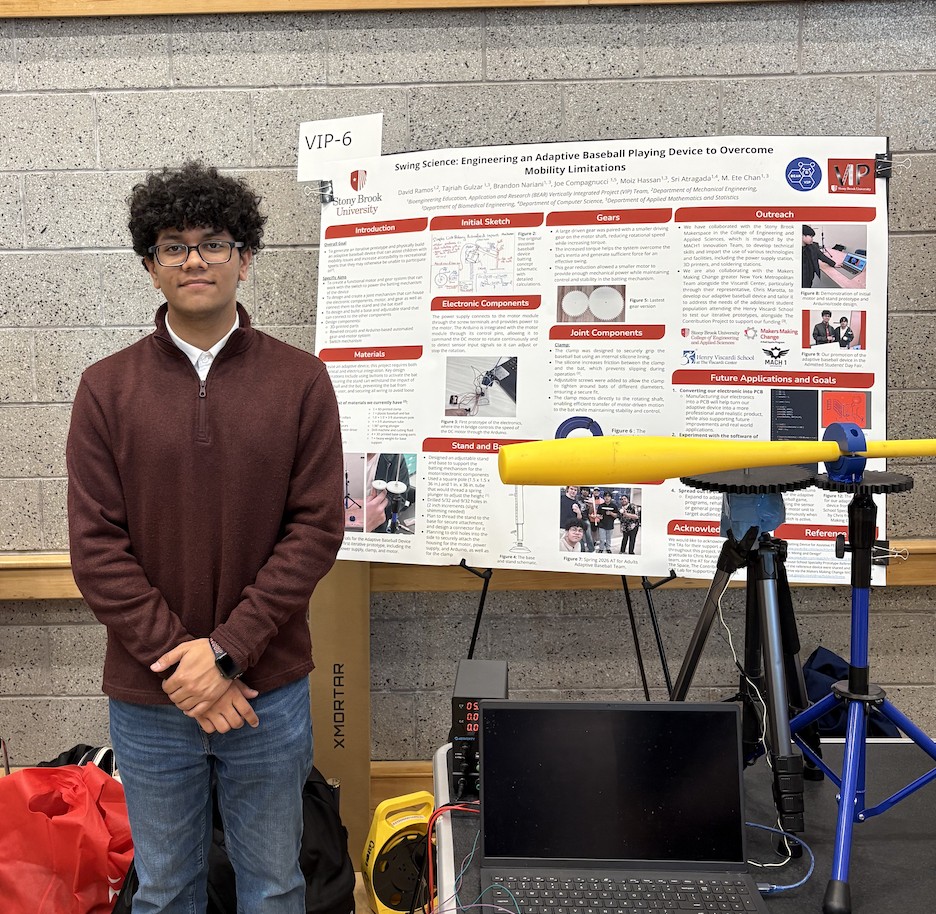
BME has given me access to a wide range of opportunities. For example, I’ve been able to work with the VIP BEAR team, which has helped me develop technical and hands-on skills such as soldering.
Research, on the other hand, has really taught me the importance of perseverance. Even if something isn’t working the way I want it to, I’ve learned to keep trying rather than giving up.
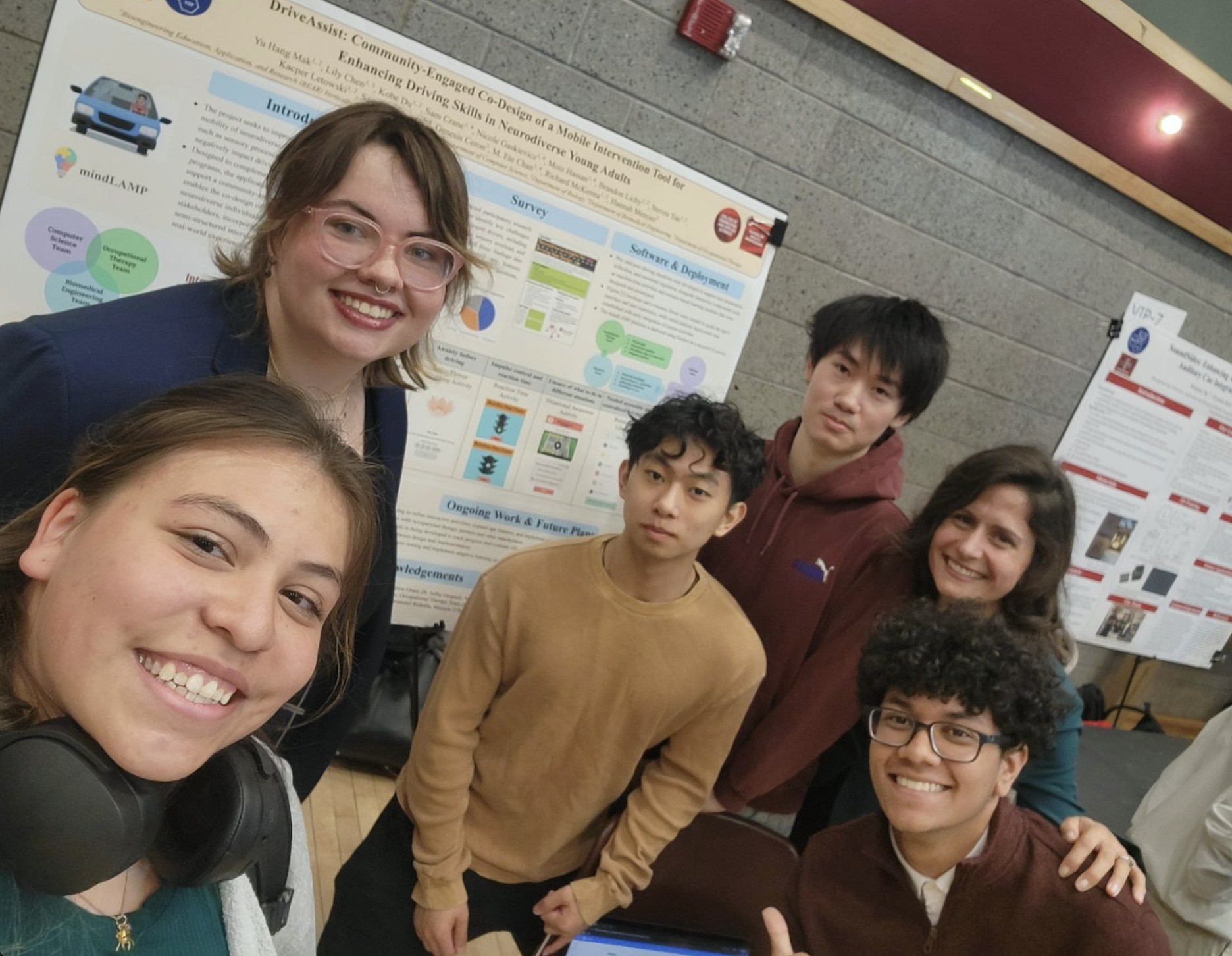
In addition, I’m a teaching assistant for BME 100 (Introduction to Biomedical Engineering), which has really helped me further develop my communication and other soft skills. For example, I’ve been assigned a lecture to teach to the class. Communication might not always be the first skill people think about when it comes to engineering, but being able to communicate with others and understand their needs is incredibly important, and being a TA has definitely helped me further develop those skills.
Are there any resources or opportunities at CEAS or Stony Brook that you’ve found especially valuable throughout your academic journey so far?
I would definitely say the variety of clubs available at Stony Brook. Each has a different mission, so you can find organizations that you connect with and surround yourself with people who share similar aspirations and interests. College is a brand-new environment, so being able to find a community and build a support system is extremely helpful.
How have your research and leadership experiences influenced your future academic and professional goals?
I’m still in the process of deciding exactly what I want to do in the future. After getting involved in research, I’ve found it to be an extremely interesting path that I never thought I would consider pursuing.
Whether I ultimately pursue medicine, the BME industry as a career, or a PhD in BME and continue conducting research, I definitely want to stay within the realm of medicine.
Do you have any advice for students who are considering or are new to the BME major, particularly those interested in pursuing undergraduate research?
My biggest piece of advice would be to put yourself out there. There’s nothing wrong with taking a leap of faith, whether that is applying for an opportunity or trying to get an interview. Even if it doesn’t work out, you still gain experience from applying, trying, and learning not to give up.
My other piece of advice would be that when an opportunity comes your way, don’t hesitate. Just go for it. Try new things because you’ll never know what you’re interested in unless you give it a shot.