


Faculty
Faculty
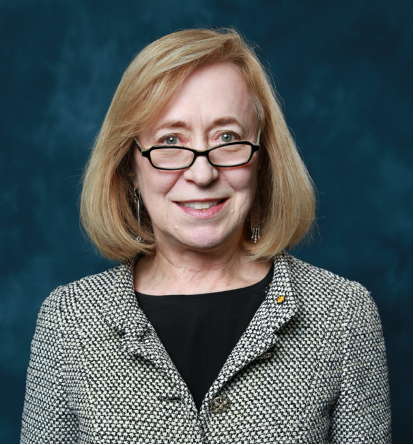
Principal Investigator
Susan E. Brennan, Professor of
Cognitive Science
Department of Psychology
Affiliated, Departments of Computer Science and Linguistics
Email: susan.brennan@stonybrook.edu
Website: http://www.psychology.sunysb.edu/sbrennan-/
Susan Brennan is Professor of Cognitive Science in the Department of Psychology at Stony Brook University, with affiliations in Computer Science and Linguistics. Her research for the past 35 years has focused on psycholinguistics, verbal and nonverbal communication, audience design in writing and speaking, and the human use of technology. Earlier in her career, she conducted research at Atari, Apple, and Hewlett Packard Labs on topics including computer-generated caricature, mediated communication, and natural language and speech interfaces to computers. Current interests include human-AI interaction, the impacts of AI and bias on stakeholders, and whether/how an automated agent could learn to be a capable dialogue partner. From 2015-2018 she served as Program Director at the National Science Foundation for the Graduate Research Fellowship Program.
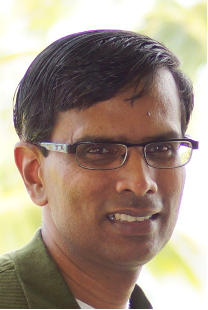
Co-PI
C.R. Ramakrishnan, Professor
Department of Computer Science
Email: cram@cs.stonybrook.edu
Website: https://www3.cs.stonybrook.edu/~cram/
Professor Ramakrishnan’s current research interests are knowledge representation and quantum computation. In knowledge representation, he works on systems that combine statistical and logical knowledge: ways to represent such knowledge, perform inference and learning over such knowledge, and design probes to maximize their information content. An application of such a combined statistical/logical system is the verification of probabilistic concurrent systems. In quantum computation his recent work is broadly in building and using quantum networks: techniques for efficiently sharing quantum information across a network, and for distributing computation over a network of quantum computers. He currently serves as the Graduate Program Director of Computer Science.
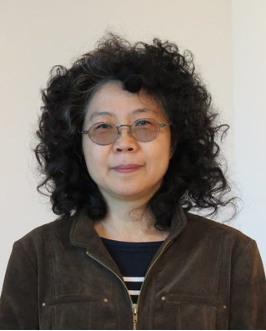
Co-PI
Wei Zhu, Professor
Department of Applied Mathematics and Statistics
Email: wei.zhu@stonybrook.edu
Website: https://www.stonybrook.edu/ams/faculty/faculty-profiles/wei-zhu.html
Professor Wei Zhu is a statistician and data scientist whose diverse research projects include the development and application of novel methods for (1) longitudinal and contemporaneous pathway discovery and analysis (for biological pathways, climate models and financial networks); (2) detection and classification of financial bubbles and crashes; (3) errors in variable regression (for situations when both the dependent and the independent variables suffer from random errors, which are indeed prevalent in real life and research); and (4) machine learning methods (for practical scenarios such as when the training sets are unbalanced). It is well known that each real world problem and dataset can often be modeled and analyzed in different ways – the key is to find the best way to obtain as valid and unbiased inference as possible. In parallel to this pursuit of methodology development, we also aim to help answer important questions to science and society. The following link features one of our latest research papers where we studied climate warming, sea level rising and their impact from a data science perspective: https://doi.org/10.3390/stats5010002. Another recent research paper can be found here. In this paper we use a reinforcement-learning framework, a frontier topic in data science and machine learning, to tackle the problem of vehicle mobility optimization.
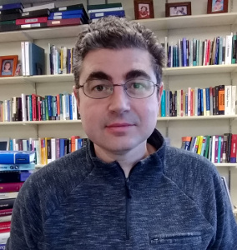
Co-PI
Jeffrey Heinz, Professor
Department of Linguistics
Email: jeffrey.heinz@stonybrook.edu
Website: http://jeffreyheinz.net/
Jeffrey Heinz is a Professor of Linguistics at Stony Brook University. He works in the Department of Linguistics and the Institute for Advanced Computational Science.
His research focuses on how people learn language. He studies how people recognize patterns in language based on what they hear and read. He is especially interested in the unconscious assumptions, or biases, that affect how people learn.
He also studies what makes a language pattern simple or complex. His work looks at patterns in sequences and other types of structured information.
His research combines linguistics, computer science, mathematics, and artificial intelligence (AI). He has helped identify different groups of language patterns that can explain how people learn from examples and why languages follow certain rules.
Read a recent article about his research: https://doi.org/10.15398/jlm.v9i1.262

Co-PI
Bonita London, Professor
Department of Psychology
Email: bonita.london@stonybrook.edu
Website: https://you.stonybrook.edu/identitylab/
Dr. London’s research aims to identify and explore the psychosocial and institutional mechanisms associated with social identity threat, and the consequences of threat for academic achievement and psychosocial well-being of historically marginalized groups (on the basis of gender, race, ideology and sexual orientation). Utilizing longitudinal, social-cognitive experimental, and survey methodology, Dr. London’s research lab takes a multi-method approach to studying social identity processes. Dr. London has developed and tested psychosocial models of threat and engagement among women and ethnic minority group members in Science, Technology, Engineering and Math (STEM), business, leadership and law fields.
Evaluator

Catherine Good, Associate Professor
Baruch College
Department of Psychology
Email: Catherine.Good@baruch.cuny.edu
Website: https://www.gc.cuny.edu/Page-Elements/Academics-Research-Centers-Initiatives/Doctoral-Programs/Psychology/Faculty-Bios/Catherine-Good
Dr. Catherine Good is an Associate Professor of Psychology at Baruch College, part of the City University of New York (CUNY). She also teaches graduate students at CUNY’s Graduate Center.
She earned a master’s degree in mathematics from the University of Kansas in 1994. In 2001, she earned a PhD in mathematics education and social psychology from the University of Texas at Austin. She then worked as a postdoctoral researcher at Columbia University from 2001 to 2005.
Dr. Good studies how social factors affect students’ learning, motivation, confidence, and academic success. She also develops programs to help students learn and stay engaged in school. These programs support students, teachers, and parents. Her goal is to reduce differences in learning, motivation, and academic success related to race and gender.
Her research has gained national attention. It has received funding from the National Science Foundation (NSF), the U.S. Department of Education, and the National Institutes of Health (NIH).
Additional Faculty
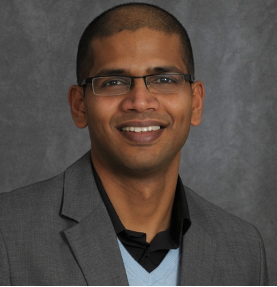
Niranjan Balasubramanian, Assistant Professor
Department of Computer Science
Email: niranjan@cs.stonybrook.edu
Website: http://www.cs.stonybrook.edu/~niranjan
Niranjan Balasubramanian is affiliated with Stony Brook University's Department of Biomedical Informatics and Center of Excellence in Wireless & Information Technology (CEWIT).
His research focuses on helping computers find, understand, and use information from written language. He works in two main areas: natural language processing (NLP), which helps computers understand human language, and information retrieval, which helps computers find useful information.
His research projects include:
-
Question Answering: Developing systems that can answer questions at a fourth-grade level.
-
News Analysis: Helping computers identify events and patterns in news stories.
-
Information Search: Using machine learning to improve search results.
-
Mobile Search: Making searches on mobile devices use less energy.
-
Wikipedia: Developing tools to create Wikipedia pages automatically.
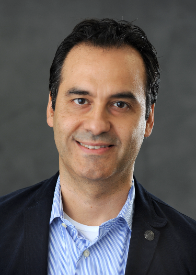
Hugo Benítez-Silva, Associate Professor
Department of Economics
Email: hugo.benitez-silva@stonybrook.edu
Website: https://scholar.google.com/citations?user=8tq7LXwAAAAJ&hl=en
Hugo Benítez-Silva earned his master’s and doctoral degrees in economics from Yale University.
His research focuses on retirement, employment, and financial decisions. He studies how people make choices about saving, investing, and retiring. He also examines how changes in income and uncertainty about the future affect these decisions.
His work explores disability benefits and early retirement rules in the United States. He studies how these programs affect people's decisions about working and retiring.
His current research includes:
-
Retirement and disability: Understanding how people make decisions about retirement and disability benefits throughout their lives.
-
Job searches: Studying how older Americans look for work.
-
Housing: Examining trends and decisions in the housing market.
-
Social Security: Exploring how information about Social Security affects people's well-being.
-
Health and retirement: Studying how spending on health and healthcare affects retirement decisions.

Braden Brinkman, Assistant Professor
Department of Neurobiology & Behavior
Email: braden.brinkman@stonybrook.edu
Website: https://sites.google.com/site/bradenbrinkman/home
Braden Brinkman earned his bachelor's degree in physics from Simon Fraser University in British Columbia, Canada. He then completed his PhD studies in statistical physics at the University of Illinois at Urbana-Champaign.
His research focuses on how groups of nerve cells, called neurons, work together in the brain. He studies how neurons communicate, respond to information, and influence behavior.
He is especially interested in how the brain's networks process information. He also studies how these networks change based on their structure and the world around them.
Research shows that what we see, hear, and experience can shape how brain networks develop. Different experiences can affect how we understand the world and how we behave. Brinkman studies how these experiences influence brain development.
He is also interested in making science, technology, engineering, and mathematics (STEM) education more accessible. He focuses on reducing barriers in learning materials, especially those that rely heavily on images or visual information.
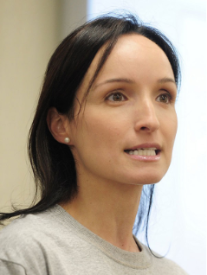
Mónica Bugallo, Professor
Department of Electrical and Computer Engineering
Email: monica.bugallo@stonybrook.edu
Website: http://www.ece.sunysb.edu/~monica/Welcome.html
Professor Bugallo’s research focuses on statistical signal processing. This field uses mathematics and statistics to study and understand data. She is especially interested in Monte Carlo methods, which use repeated random samples to solve complex problems.
Her research applies these methods to several fields, including healthcare, ecology, sensor networks, and finance.
She is also committed to improving education in science, technology, engineering, and mathematics (STEM). She has created programs that encourage students at all levels to explore engineering and research. These programs place special focus on students from groups that are underrepresented in STEM.
Professor Bugallo has written or co-written two book chapters and more than 200 research papers and conference articles.
She is a senior member of the Institute of Electrical and Electronics Engineers (IEEE). She also chairs the IEEE Signal Processing Theory and Methods Technical Committee.
She currently serves as Interim Provost at Stony Brook University.

Jason J. Jones, Associate Professor
Department of Sociology
Email: jason.j.jones@stonybrook.edu
Website: https://jasonjones.ninja/
Dr. Jason Jeffrey Jones studies how people behave and interact in society. He uses computers and data to understand human behavior.
His research includes social networks, online experiments, machine learning, and the analysis of large amounts of written text. He is especially interested in how people see themselves and how artificial intelligence (AI) is changing society.
Dr. Jones leads the Computational Social Science of Emerging Realities Group (CSSERG), pronounced "sea surge." This research team brings together experts from different fields. They use computer-based methods to study social issues and emerging technologies.
His team's research includes:
-
Virtual reality: Studying whether virtual reality can help people understand others' feelings.
-
Gender stereotypes: Exploring how gender stereotypes in language have changed over time.
-
Personal identity: Studying how people describe their identities and how these descriptions change over time.
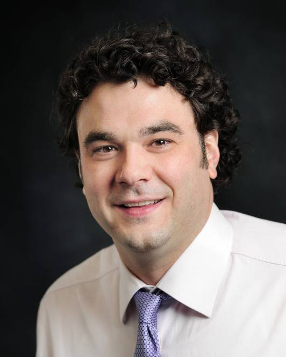
Reuben Kline, Associate Professor
Department of Political Science
Email: reuben.kline@stonybrook.edu
Reuben Kline is an Associate Professor of Political Science at Stony Brook University. He joined the department in 2011 and became an Associate Professor in 2018.
He is also the Director of the Center for Behavioral Political Economy at Stony Brook University. He edits the newsletter for the American Political Science Association's Experimental Research section.
He earned his PhD in Political Science from the University of California, focusing on political economy and public choice.
His research focuses on how people make decisions and respond to social challenges. He uses experiments, surveys, and behavioral game theory to study human behavior. Behavioral game theory examines how people make choices when their decisions affect others.
His research topics include:
-
Social challenges: Understanding how people make decisions when their interests may conflict with the needs of others.
-
Climate change: Studying what encourages people to take action to reduce climate change.
-
Ethics: Exploring how people make decisions about right and wrong.
-
Public opinion: Studying people's views on artificial intelligence (AI) and geoengineering, which involves technologies designed to change Earth's climate.
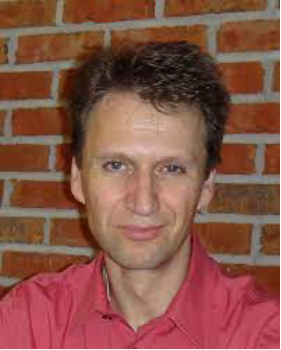
Klaus Mueller is a Professor of Computer Science at Stony Brook University. He is also a senior scientist at Brookhaven National Laboratory. He earned his PhD in computer science from The Ohio State University.
His research focuses on data science, artificial intelligence (AI), and data visualization. He studies how to use visual tools to understand complex data. He also works on explainable AI, which helps people understand how AI systems make decisions. Another focus of his research is computational fairness, which aims to reduce unfair bias in computer systems.
Klaus has received several awards for his research, including:
-
The National Science Foundation (NSF) Early Career Award.
-
The SUNY Chancellor's Award for Excellence in Scholarship and Creative Activity.
-
The IEEE Computer Society's Golden Core Award.
He is a member of the National Academy of Inventors and the IEEE Visualization and Graphics Technical Community (VGTC) Visualization Academy.
Klaus has written more than 200 research papers that have been reviewed by other experts. His work has been cited more than 11,000 times.
He serves as Editor-in-Chief of IEEE Transactions on Visualization and Computer Graphics, a research journal. He is also a senior member of the Institute of Electrical and Electronics Engineers (IEEE).
Learn more about his research on computational fairness.

Owen Rambow, Professor
Department of Linguistics
Email: owen.rambow@stonybrook.edu
Website: https://owenrambow.com/
Owen Rambow studies how computers understand and process human language. His research focuses on natural language processing (NLP) and computational linguistics.
He studies how words are formed (morphology), how sentences are structured (syntax), and how people use language in everyday situations.
Owen earned his PhD in Computer and Information Sciences from the University of Pennsylvania.
He has worked at several research organizations, including:
-
AT&T Labs – Research, where he worked on computer science research.
-
Columbia University, where he spent 15 years as a research scientist at the Center for Computational Learning Systems.
-
Elemental Cognition LLC, where he worked for three years. This company develops software to help computers understand language more deeply.
At Columbia University, Owen helped establish CADIM, a research group focused on Arabic language processing. The group developed advanced tools to help computers analyze Arabic text.
His research team also released several resources for other researchers. These include a detailed version of the Enron email collection, with added information to help researchers study the text.
Owen has published many research papers in leading academic journals and conferences.
He has also held leadership roles in the field of computational linguistics. These include:
-
Chair of the North American chapter of the Association for Computational Linguistics.
-
Program Co-Chair of the NAACL HLT 2016 conference.
-
Chair or senior member of program committees for many research conferences and workshops.

H. Andrew Schwartz, Associate Professor
Department of Computer Science
Email: Andrew.Schwartz@cs.stonybrook.edu
Website: https://www3.cs.stonybrook.edu/~has/
Andrew Schwartz earned his PhD in Computer Science from the University of Central Florida in 2011. His research focused on how computers can learn the meanings of words from information on the internet.
He later joined the University of Pennsylvania as a postdoctoral researcher. He then became a Visiting Assistant Professor in Computer and Information Science.
Andrew is the Lead Research Scientist for the World Well-Being Project. This research group brings together computer scientists and psychologists. They study how language used on social media can help researchers understand people's physical and mental well-being.
His research uses natural language processing (NLP) and machine learning to study large amounts of written text. These methods help computers find patterns in language.
His current research includes:
-
Health and language: Studying how social media language may help predict and understand physical and mental health.
-
Word meanings: Improving computer-based tools that organize and explain words and their meanings.
-
Attitudes and outlook: Studying how people think about the past, present, and future, including their levels of optimism.
-
Data collection: Using apps to collect information from people with little effort required from them.
-
Discovering patterns: Developing computer methods to find useful information about human behavior in large amounts of data.
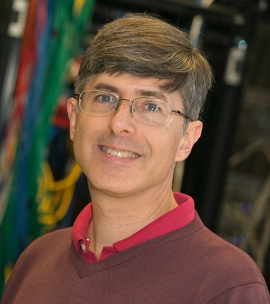
Steven Skiena, Distinguished Teaching Professor; SUNY Empire Innovation Professor and Director, AI Institute
Department of Computer Science
Email: skiena@cs.sunysb.edu
Steven Skiena is a Distinguished Teaching Professor of Computer Science at Stony Brook University.
His research focuses on designing algorithms, which are sets of steps that computers follow to solve problems. He studies algorithms that work with networks, text, and shapes. He is especially interested in how these methods can be used in biology.
Steven has written five books, including The Algorithm Design Manual and Calculated Bets: Computers, Gambling, and Mathematical Modeling to Win.
He is also the co-founder and Chief Scientist of General Sentiment, a company that studies information from the media. The company uses his Lydia system to analyze text and identify opinions and emotions.
Steven leads the Data Science Laboratory, which studies large amounts of written information. His team uses computer tools to find patterns in text and understand people's opinions and feelings.
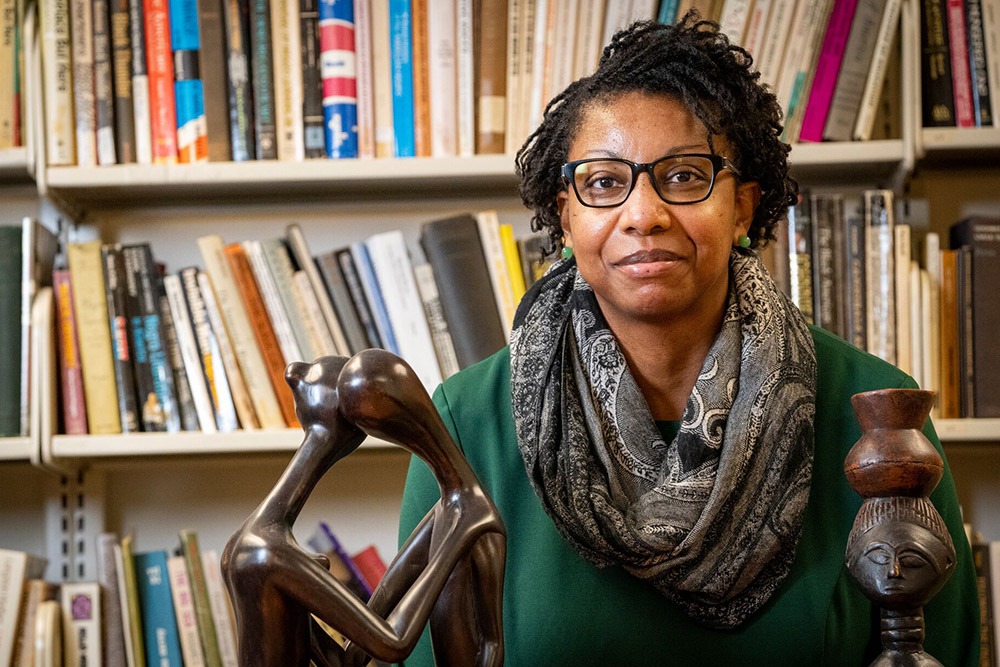
Adryan Wallace, Assistant Professor
Department of Africana Studies
Email: Adryan.Wallace@stonybrook.edu
Website: https://www.stonybrook.edu/africana-studies/people/indvidfacpage/wallace.html
Dr. Adryan Wallace studies gender, politics, economics, and Islam. Her research focuses on how politics and culture influence government institutions.
Much of her work explores the experiences of Muslim women in West Africa. She studies how women express their needs and goals while working within Islamic law (Sharia) and government systems that are not based on religion.
Her current book project focuses on Hausa women in Kano, Nigeria, and Tamale, Ghana. She examines how these women use nonprofit and community organizations to challenge traditional economic roles and advocate for women's rights.
Before joining the Department of Politics and Government, Dr. Wallace was a Jackie McLean Fellow at the University of Hartford from 2012 to 2013.
She has also received several research fellowships:
-
Ford Foundation Dissertation Writing Fellowship (2011–2012): Supported her doctoral research and writing.
-
Fulbright-Hays Doctoral Dissertation Research Abroad Fellowship (2010–2011): Supported ten months of field research in Nigeria and Ghana.