


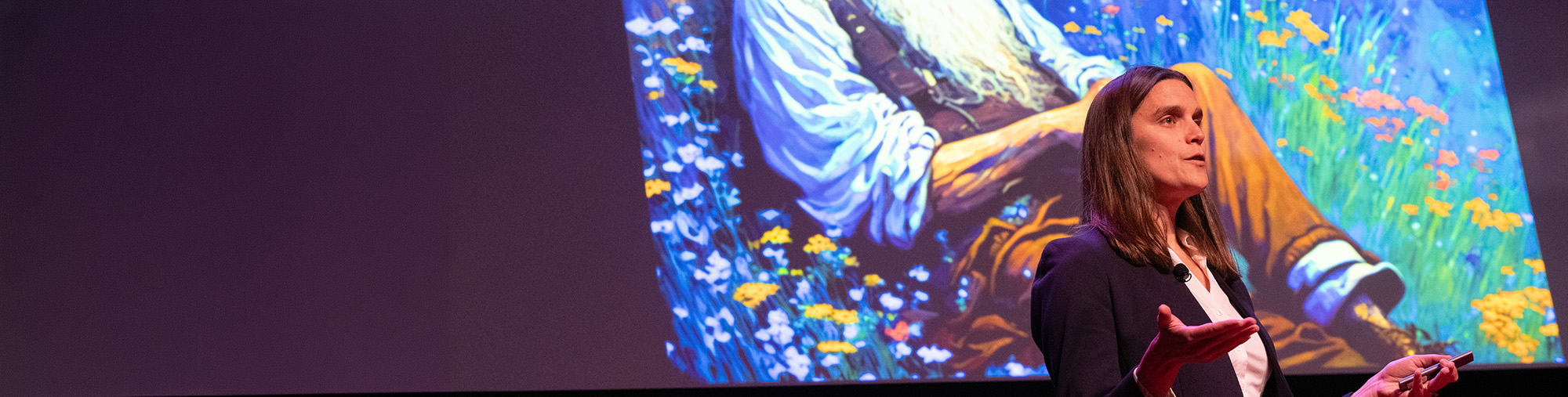
Discovery Prize 2023 Winner
Chris Johnson, PhD
Associate Professor, Department of Chemistry
“A New Platform to Track the Chemistry of Climatically Relevant but Currently Underaddressed Ultrafine Aerosol Particles”
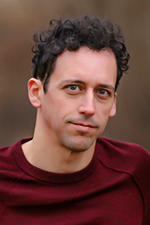
While studying for his PhD at the University of California, San Diego, Johnson developed a novel apparatus for researching chemical reactions in the atmosphere and in hydrocarbon combustion in which quantum tunneling is a critical step. In 2011 he earned his PhD in physics and received a National Science Foundation postdoctoral fellowship to continue his career at Yale University. There, he expanded techniques to record laser-based vibrational absorption spectra of precisely defined clusters with relevance to atmospheric particles and fundamental chemical principles. In 2014 Johnson came to Stony Brook University and built a research program with two main thrusts: to understand the mechanisms by which particles form out of thin air in Earth’s atmosphere, and to develop nanometer-sized catalysts to convert carbon dioxide into useful chemicals. He also developed a course introducing problem-solving for chemistry students using computer programming. He is currently co-authoring a textbook based on this course.
Discovery Prize 2023 Finalists
Mengkun Liu, PhD
Associate Professor, Department of Physics and Astronomy
“Revolutionizing Nanophotonics: Exploring a New Highway for Light-Matter Interactions”
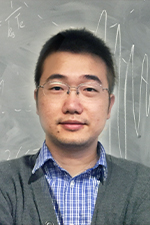
Liu uses advanced infrared and THz near-field microscopy, along with Fourier transform nano-IR spectroscopy, to explore the future of material science at the nanoscale. His lab focuses on investigating complex materials like transition metal oxides, low-dimensional Dirac/Weyl microstructures, superconductors and multiferroics. By accessing the native length and time scales of electron and lattice motion and monitoring their energy excitations, the group aims to resolve the mysteries of low-dimensional electrons and polaritons, Mott dynamics and other many-body physics, bringing them closer to practical applications in nanophotonics and optoelectronics. Liu earned his PhD from Boston University in 2012 then continued his research at the University of California, San Diego. He was appointed assistant professor at Stony Brook University in 2015 and promoted to associate professor in 2020. He holds a joint appointment at Brookhaven National Laboratory. He is the recipient of a Seaborg Institute Research Fellowship at Los Alamos National Laboratory (2009, 2010) and a National Science Foundation CAREER Award in 2021.
Sima Mofakham, PhD
Assistant Professor, Department of Neurosurgery
“Promoting Neurological Recovery Through Self-Organization of ensembles encoding goal-directed behavior”
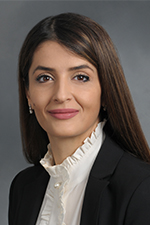
Mofakham joined Stony Brook in 2018. Together with Chuck Mikell, MD, at the Renaissance School of Medicine, she has worked to build a translational multidisciplinary laboratory that bridges basic science and clinical research. The Mofakham-Mikell lab integrates theoretical and experimental work and studies human consciousness by combining intracranial recording and stimulation with computational neuroscience, machine learning and artificial intelligence. These methods are combined to develop novel models and next-generation neuromodulatory approaches to understand and facilitate recovery of consciousness after traumatic brain injury. Mofakham completed her undergraduate and master’s training in in nuclear physics and condensed matter physics at Sharif University of Technology in Tehran, Iran. She earned her PhD in computational neuroscience at the University of Michigan, which was followed by postdoctoral training at New York University, where she built the first model describing how thalamic amplification supports the formation of neuronal ensembles representing a cognitive task such as working memory.