


Discovery Prize 2019 Winner
Il Memming Park, PhD
Department of Neurobiology and Behavior
“Personalized Landscape of Unconsciousness”
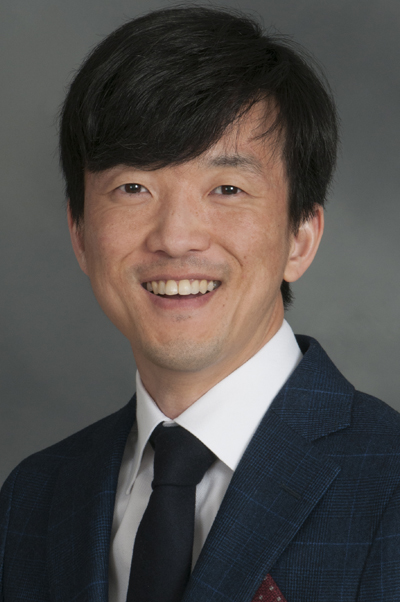
Il Memming Park aims to understand how information is represented and and computations are implemented in the brain in milliseconds to seconds time scale. He designs interpretable statistical models and machine learning methods specialized for neural time series. He earned his PhD in biomedical engineering from the University of Florida (2010), and trained with Jonathan Pillow at University of Texas at Austin as a postdoctoral fellow (2010-2014). He tightly collaborates with experimentalists who record from animal and human brains to uncover the hidden internal state dynamics underlying normal and abnormal cognition.
Watch II's Video
Discovery Prize 2019 Finalists
Melanie Chiu, PhD
Department of Chemistry
“Self-reproducing Nanocapsules”
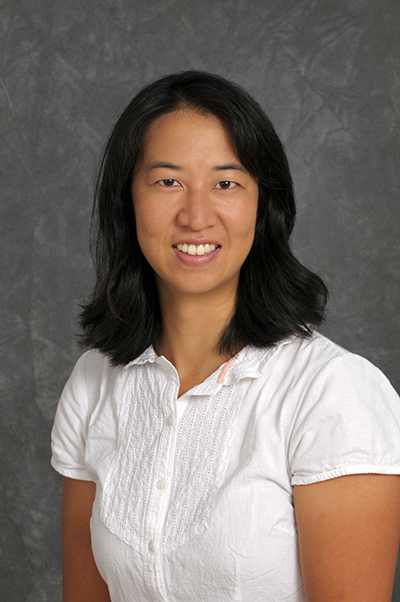
Eric Brouzes joined Stony Brook University as a research assistant professor in 2010. After majoring in physics at ESPCI in Paris, he studied the effect of mechanotransduction on the development of fly embryos at the Institut Curie, where he received his PhD. He later pursued postdoctoral studies in the lab of Norbert Perrimon in the Genetics Department of Harvard Medical School. He subsequently worked as a senior scientist for start-up companies RainDance Technologies and Metagenomix, where he discovered the world of microfluidics, before returning to academia.
Brouzes is researching cellular heterogeneity and its role in healthy and diseased tissues, such as cancer. His lab focuses on developing novel microfluidic approaches to perform quantitative, functional and genomic measurements at single-cell resolution. Those platforms rely on droplet and single-phase microfluidic technologies to enable precise manipulation and processing of single cells at low and high throughput. Recently, Brouzes started exploring technologies to perform spatial genomics in which genetic information from single cells is obtained together with location in the tissue.
Watch Melanie's Video
Sandeep Mallipattu, MD
DCI-Martin Liebowitz Professor,
School of Medicine, Division of Nephrology and Hypertension
“Combinatorial Approach to Building a Kidney”
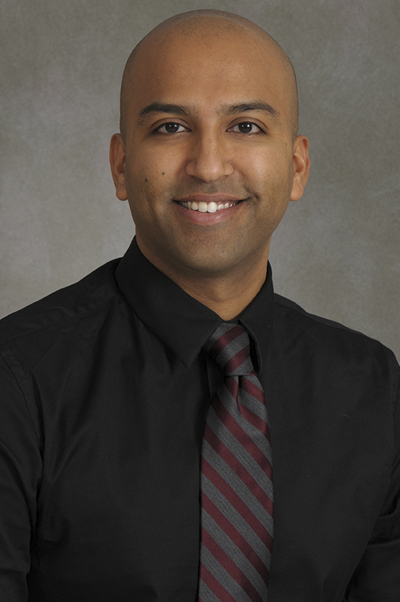
Sandeep Mallipattu’s laboratory investigates the molecular mechanisms that mediate the development and progression of kidney disease. He will be working with a multidisciplinary team of researchers to pursue a combinatorial approach to building a whole kidney. The team will utilize novel stem cell technology in combination with biological and nonbiological scaffolds to promote whole kidney regeneration. Building an artificial kidney from patient-derived cells will have a profound impact in the medical field, as well as the addressing the rising burden of kidney disease, health care expenditures, and organ shortage in the United States.
Dr. Mallipattu is the chief of Stony Brook Medicine Division of Nephrology and Hypertension and a tenured associate professor in medicine, with a special interest in the area of the molecular mechanisms, prevention and innovative treatment of kidney disease.Before joining Stony Brook University, he initially received training in biomedical engineering from the University of California, San Diego with a subsequent medical degree from Boston University School of Medicine and conducted Internal Medicine Residency and Nephrology Fellowship training at Icahn School of Medicine at Mt. Sinai.
Watch Sandeep's Video
Ming-Yu Ngai, PhD
Department of Chemistry
“Using Sunlight to Convert Greenhouse Gas into Valuable Chemicals”
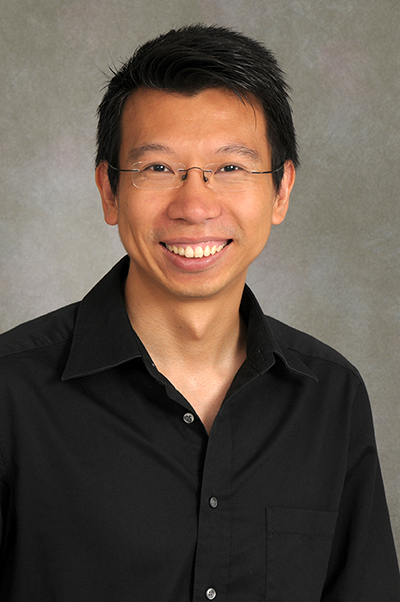
Ming-Yu Ngai received his B.Sc. degree from the University of Hong Kong and a Ph.D. degree from the University of Texas at Austin. In 2009, he moved to Stanford University as the Croucher postdoctoral fellow and then to Harvard University as a postdoctoral associate. In 2013, he was appointed as an Assistant Professor in the Department of Chemistry at Stony Brook University. His research focuses on the development of novel and practical chemical processes to address unmet challenges in organic synthesis and to synthesize functional molecules that find applications in the fields of life sciences, materials, and energy research.
Ming’s Discovery Prize proposal aims to develop resource-efficient, sustainable, and clean chemical reactions that harness renewable and free sunlight to convert a greenhouse gas, carbon dioxide (CO2), into valuable chemicals. An abundant, non-toxic, and inexpensive gas, CO2 is well-known for its association with anthropogenic climate change and can serve as a versatile and inexhaustible C1-building block to produce carbon-based fuels and value-added chemicals such as pharmaceuticals, agrochemicals, and functional materials. However, chemical functionalization of CO2 has been hampered by its high kinetic inertness and thermodynamic stability. To overcome this intrinsic energy barrier, his team will establish a dual catalyst system consisting of visible-light photoredox catalysts to capture, activate and photo-catalytically reduce molecular CO2, and harness the resulting •CO2‒ intermediate for further synthetic transformations. Accomplishment of his proposed research will: (i) revolutionize synthetic approaches to the preparation of high-value chemicals from the simple, non-toxic, and cheap feedstock, CO2; (ii) generate the versatile •CO2‒ moiety at ambient temperature and provide a new strategic chemical bond formation; (iii) make better use of both energy and carbon; (iv) store solar energy in the form of carbon-based fuels and chemicals; and (v) create new knowledge in CO2 capture, reduction, and utilization.