Center Sponsored and Related Conferences

Presented by the Stony Brook University Hospital Institutional Ethics Committee and cosponsored by the Center for Medical Humanities, Compassionate Care and Bioethics

9th Annual Medical Ethics Symposium- Trust but Verify: Ethical Challenges of AI in Healthcare

Friday, August 7, 2026: MART Auditorium live and via Webinar

Register Now

Keynote Speakers

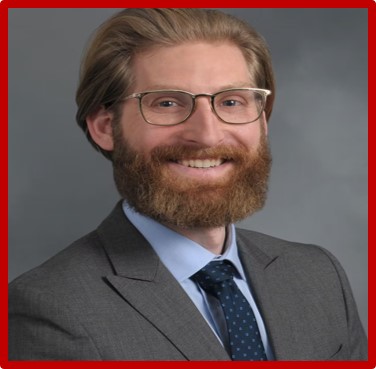
Dr. Kellie Owens

Kellie Owens, PhD

Dr. Kellie Owens is an Assistant Professor in the Section of Medical Ethics at NYU Grossman School of Medicine. She is a sociologist and empirical bioethicist studying how digital technologies are woven into the fabric of healthcare and society, and how governance structures can better support those most affected by technological change. She leads the Responsible AI review process for the Division of Applied AI Technologies and the IRB at NYU Langone. Dr. Owens’ research is supported by funders such as the National Human Genome Research Institute, the National Cancer Institute, and the Greenwall Foundation, and her recent work on algorithmic fairness and generative AI has been featured in Nature Medicine and JAMA Network Open.

Dr. Alexander Winkler-Schwartz

Alexander Winkler-Schwartz, MDCM, PhD, FRCSC, FAANS

Dr. Alexander Winkler-Schwartz is a highly accomplished neurosurgeon who excels at applying technological solutions to complex medical challenges. He completed his residency at McGill University’s Montreal Neurological Institute, North America’s first dedicated neuroscience institute. Dr. Winkler-Schwartz went on to complete a CAST-accredited Skull Base and Cerebrovascular Surgery fellowship in Salt Lake City, Utah; a Pediatric Neuro-oncology research fellowship in Paris, France (the largest pediatric neurosurgical center in Europe); and a Pediatric Neurosurgery fellowship at Cincinnati Children's Hospital, ranked the #1 Best Children’s Hospital by U.S. News & World Report. He earned his PhD through the Integrated Program in Neuroscience at McGill University, focusing on artificial intelligence and virtual reality neurosurgical simulation within the Neurosurgical Simulation and Artificial Intelligence Learning Centre. His doctoral thesis was titled, "Improving neurosurgical operative performance through virtual reality simulation and artificial intelligence."

Panel Moderator


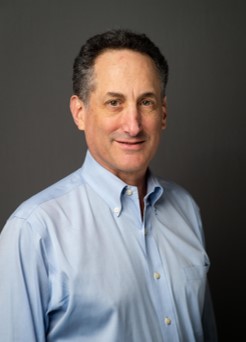
David Hoffman, JD

David Hoffman, JD

A warm welcome back to our former Keynote Speaker and Panel Moderator, David N. Hoffman, JD, a health care lawyer and clinical ethicist in New York, where he is an Assistant Professor of Bioethics of the Columbia Master’s Program in Bioethics, and a Clinical Assistant Professor at the Albert Einstein College of Medicine. David serves as the Chief Ethics and Compliance Officer/Hospital Counsel for the North Star Health Alliance, and as a clinical ethics consultant to the VNS Health Hospice program ethics committee. He previously served as a Clinical Assistant Professor at the Albert Einstein College of Medicine. 

Mr. Hoffman has provided counsel to hospitals, medical facilities and individual practitioners in: governance, mergers, affiliations, medical litigation, bio-ethical decision-making and regulatory matters. He has also served on, and advises, ethics committees and institutional review boards. 

David’s research focuses on the equal protection rights of clinicians and patients, as well as exposing pernicious myths about abuse of patients at the end of life. He is the author of a forthcoming chapter on AI and its application to medical care in The Handbook of AI Ethics, to be published by Springer.

Distinguished Panelists


Ahmad Aljobeh, MD
Clinical Informatics Fellow, SBM. Primary Specialty: Surgery. Interests in Vascular Surgery, Machine Learning & AI in Surgical Care, Clinical Informatics & Data Driven Healthcare, Predictive Modeling for Surgrical Risk Stratification.

Julie Luengas, DNP, MBA, RN, NI-BC, FHIMSS
Chief Nursing Informatics Officer, Assistant Vice President, Adjunct Faculty School of Nursing, Stony Brook Medicine, Clinical Transformation, Stony Brook Medicine Information Technology

Tauhid Mahmud, MD, MPH
Clinical Informatics Fellow, Stony Brook Medicine. Clinical Instructor, Department of Family, Population and Preventive Medicine

Pons Materum, III, MD
Clinical Informatics Fellow, Stony Brook Medicine. Primary Speciality: Pathology

Neil J. Patel, MD, MBA
Clinical Informatics Fellow, Stony Brook Medicine. Primary Speciality: Neurology/Sports Neurology. Double Board certified in Neurology and Brain Injury Medicine.

Carolyn Santora, RN NEA-BC, CPHQ
Chief Nursing Officer & Chief of Regulatory Affairs, Stony Brook University Hospital. Chair, Institutional Ethics Committee (IEC)

Caitlyn Tabor, JD, MBE
Clinical Assistant Professor, Medical Ethics & Law Specialist, Center for Medical Humanities, Compassionate Care and Bioethics, Department of Family, Population and Preventive Medicine, Renaissance School of Medicine at Stony Brook University

Matthew Tharakan, MD, MBA, FACP
Chief Medical Information Officer for Stony Brook Medicine, Assistant Professor of Clinical Medicine, Department of Internal Medicine, Stony Brook Medicine Information Technology (SBMIT)

Alexander Winkler-Schwartz, MDCM, PhD, FRCSC, FAANS
Neurosurgeon, Neuroscientist, AI and Surgical Education Research Assistant Professor, Adult and Pediatric Neurosurgery, Stony Brook University


Stony Brook University Hospital’s Institutional Ethics Committee is pleased to announce our Call for Abstracts for our 9th Annual Medical Ethics Symposium, Trust but Verify: Ethical Challenges of AI in Healthcare. 

Artificial intelligence (AI) is transforming healthcare by improving diagnosis, streamlining administrative tasks, supporting personalized treatment plans and in medical research. However, the growing use of AI in medicine also raises important ethical concerns. While AI has the potential to enhance patient care and efficiency, healthcare providers and patients must approach these technologies with caution and critical oversight.

Professionals and students from all healthcare, legal and other associated disciplines are invited to submit poster proposals associated with this theme. Chosen topics should consider evidenced based evaluation, ethical principles to be considered, effective strategies for implementation, risk assessment and /or guidance for improved practice and conflict resolution.

According to the National Academy of Medicine’s An Artificial Intelligence Code of Conduct for Health and Medicine, Essential Guidance for Aligned Action, “Over the last decade, advances in artificial intelligence (AI) technologies have created transformational opportunities for health, health care, and biomedical science. While new tools are available to improve effectiveness and efficiency in myriad applications in health and health care, challenges persist, including those related to increasing costs of care, staff burnout and shortages, and the growing disease burden of an aging population. The need for new approaches to address these long-standing challenges is evident, and AI offers both new hope and new concerns. This publication presents an AI Code of Conduct (AICC) framework developed to align the field around responsible development and application of AI, and to catalyze collective action to ensure that the transformative potential of AI in health and medicine is realized.”

Suggested Topics (some listed in the NAM Code of Conduct Framework):
  • Embedding a “Moral Conscience " or Ethical Framework into AI applications
  • Developing approaches and considerations for inclusion and alignment when providing internal guidance for the development, purchase, or use of AI in their specific context, thereby advancing trust and minimizing the likelihood of actors across the field contending with approach inconsistencies.
  • Reskilling and training programs for workforce AI competency
  • Positive work and learning environments and culture
  • Measurement, assessment, strategies, and research
  • Disruptive technologies with change management strategies that promote worker well-being
  • Development of standards and other governance structures to assess alignment by developers and users of health AI with societal and cultural goals for health AI
  • Development and implementation of processes for independent evaluation, guidelines, standards and evidenced based oversight of these programs to monitor for accuracy, acceptable standards of practice, conflicts of interest etc.
  • Incentives and structures for independent evaluation, certification to the AI Code Commitments, and public and transparent reporting on certification status
  • Standardized metrics to assess and report bias in data, AI output, and AI use, in the interest of equitable distribution of benefit and risk Incentives and supports
  • Informed consent and ethical communication regarding the use of AI
  • Standardized quality and safety metrics to be used to assess the impact of the use of health AI on health outcomes
  • Aligned frameworks for safety, equity, and quality in AI performance
  • A well supported national health AI research agenda
  • Participation in shared learning across all stakeholders
  • Innovation as a core investment
  • Data Security, Patient Privacy and Accountability
  • Bias in AI, from data collection to biased algorithms
  • Transparency in the use of AI, such as use in radiology, informed consent
  • Harm to patients from the use of AI – who is responsible
  • Transparency in research generated with AI
  • Risk of exacerbating health disparities and AI
Abstracts must be uploaded in PDF format by the deadline of June 30th, 2026, to jean.mueller@stonybrookmedicine.edu; late entries will not be accepted. Notification of abstract acceptance for poster presentations will occur by July 9th, 2026.

Abstracts must include:Title of Project/Presentation, authors name including earned degree(s) and professional title, and a short bio including description of your work and research or quality improvement initiatives in medical bioethics, in fewer than 500 words including:
  • Statement of Purpose and/or aims of the research or quality improvement initiative,
  • Ethical Principle(s) Involved,
  • Approach/Methodology/Strategy, Importance,
  • Significance and Implications.
Accepted Posters must be mounted (36” x 44”) and will be displayed during the conference on August 7, 2026. All Poster presenters will be expected to be available for questions and answers during lunch and break times to share their projects. First, Second and Third Place Winners will be notified prior to the conference and given the opportunity to present their Poster in a 10-minute Rapid Fire Session during the Symposium.

Presented by the Stony Brook University Hospital Institutional Ethics Committee and cosponsored by the Center for Medical Humanities, Compassionate Care and Bioethics, Stony Brook University

8am Registration/Light Breakfast
Provided by The Center for Medical Humanities, Compassionate Care and Bioethics

8:30am Welcome
Jean Mueller, MPS, BS, RN, CPHQ Ethics Symposium Coordinator

Opening Remarks
Carolyn Santora, MS, RN, NEA-BC, CPHQ, Chief Nursing Officer; Chief Nursing Officer; Chief of Regulatory Affairs, Patient Safety and Ethics, Stony Brook University Hospital; Chair/Institutional Ethics Committee, Stony Brook Medicine

KEYNOTE
9- 10:30am "Trust, Communication, and Consent in AI-Mediated Healthcare"
Kellie Owens, PhD
Assistant Professor, Medical Ethics, Department of Population Health, NYU Grossman School of Medicine

KEYNOTE
10:45- 12:15pm "AI That Measures, AI that Speaks: A Decade of Surgical AI and the Problem of Verification"
Alexander Winkler- Schwartz, MDCM, PhD, FRCSC, FAANS
Neurosurgeon, Neuroscientist, AI and Surgical Education Researcher
Assistant Professor, Adult and Pediatric Neurosurgery, Stony Brook University

12:30- 1:15pm Lunch
Provided by the Stony Brook University Hospital Institutional Ethics Committee

Panel Discussion and Interactive Ethics Case Presentations
1:30- 3pm "Healthcare AI: Designed to Assist, Not Resist Human Judgement"
Moderator: David N. Hoffman, JD

Distinguished Panelists
Ahmad Aljobeh, MD
Julie Luengas, DNP, MBA, RN, NI-BC, FHIMSS
Tauhid Mahmud, MD, MPH
Pons Materum III, MD
Neil J. Patel, MD, MBA
Carolyn Santora, RN, NEA-BC, CPHQ
Caitlyn Tabor, JD, MBE
Matthew Tharakan, MD, MBA, FACP
Alexander Winkler-Schwartz, MDCM, PhD, FRCSC, FAANS

3- 3:45pm Poster Awards and Rapid-Fire Sessions

Carolyn Santora, MS, RN, NEA-BC, CPHQ
1st, 2nd and 3rd Place Posters and Colleagues Choice Award

3:45- 4pm Summary and Closing Remarks
Carolyn Santora, MS, RN, NEA-BC, CPHQ

For questions or additional information, please contact Jean Mueller, Symposium Coordinator at Jean.Mueller@stonybrookmedicine.edu.