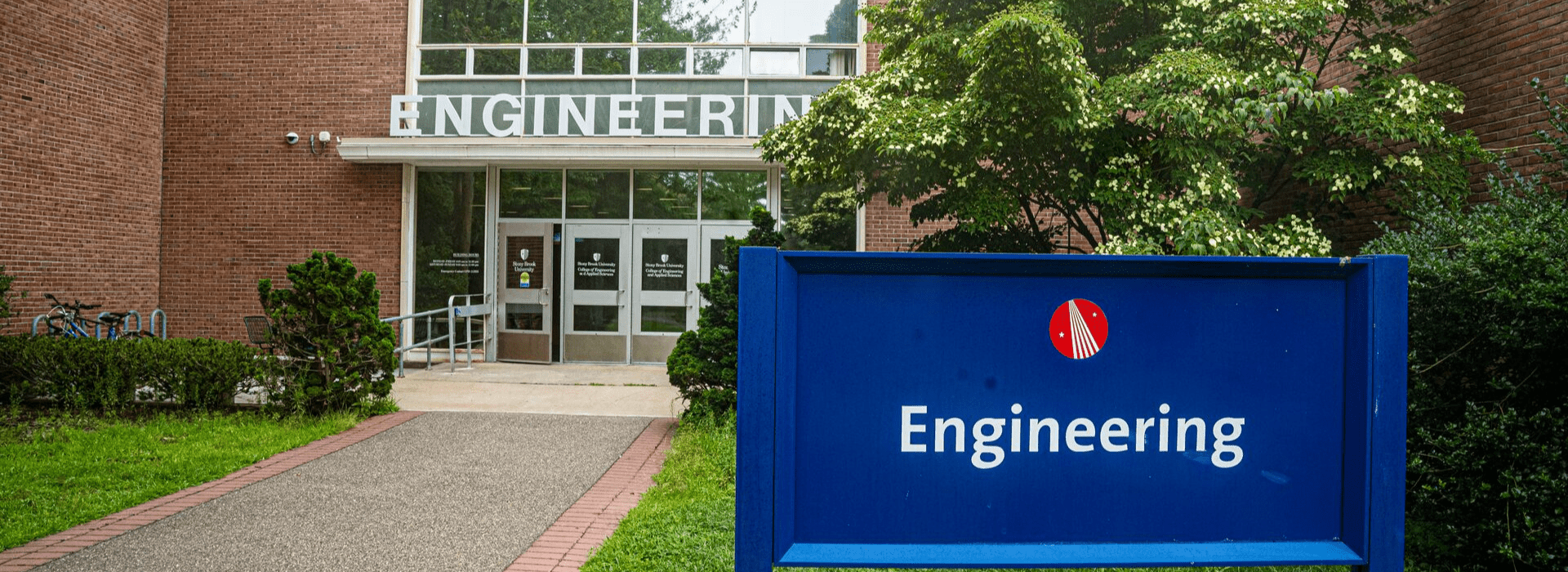
At the College of Engineering and Applied Sciences (CEAS) at Stony Brook University,
we believe this is our moment—our opportunity to define the future we want to create
and the impact we aspire to make. In December 2023, CEAS faculty and staff launched
a bold effort to articulate a shared vision for the college—one that honors our legacy,
reflects our strengths, and meets the urgency of the world’s most pressing challenges.
What followed was a year of deep reflection, honest dialogue, and energized collaboration.
More than 75 faculty and staff engaged in shaping this plan through leadership retreats,
a college-wide SWOT survey, multiple climate assessments, and focused conversations
across departments. Together, we identified not only who we are—but who we dare to
become.
Out of this process emerged a powerful framework: a clear vision, a unifying mission,
and core values that reflect our identity and aspirations. We defined priorities and
objectives that position CEAS to lead, and we committed to bold initiatives that will
move us from intention to action.
This strategic plan is not a static document—it is a living blueprint. We will revisit
and renew it annually at our leadership retreats and share progress openly through
CEAS Inside, ensuring that every voice remains part of our evolving story.
We are not only preparing for the future—we are engineering it.
Vision
To be a first-choice college of engineering and applied sciences with educators who
inspire excellence and elevate our students, innovators who advance the human condition
through impactful research, and partners trusted to serve our world.
Mission
To serve and empower society through education in engineering and applied sciences,
advances in technology, and creation of transformative knowledge.
Core Values
Innovation: We champion creativity, curiosity, and technical ingenuity to develop forward-looking
solutions to society’s most pressing challenges. We foster a dynamic ecosystem of
research and entrepreneurship that advances science, energizes industries, and anticipates
the needs of tomorrow.
Excellence: We pursue excellence in all that we do—through transformative education that equips
students for success, through research that expands knowledge and addresses global
challenges, and through meaningful engagement with our communities. We uphold the
highest standards of integrity, rigor, and impact, striving to continuously improve
and inspire through teaching, scholarship, and service.
Collaboration: We believe the world’s most complex challenges demand interdisciplinary solutions.
Through partnerships that span the arts, humanities, business, medicine, and beyond,
we co-create knowledge and technologies that improve lives—locally, regionally, and
globally.
Inclusive Community: We are an inclusive, welcoming, and supportive community where every individual is
valued and empowered. We celebrate the breadth of backgrounds, identities, and perspectives
that shape our students, faculty, and staff. We foster a culture of belonging, respect,
and mutual care. Through ethical action and socially responsible engagement, we work
together to build a stronger college, university, and society.
Empowerment: We believe that education is a transformative force. We are proud to serve an inclusive
and talented student body—many of whom are the first in their families to attend college—and
we are dedicated to supporting their journey from aspiration to achievement. Through
mentorship, opportunity, and a commitment to access, we foster social mobility and
empower future engineers to lead with purpose.
Priorities, Key Objectives, and Success Measures
Priority: Inspire Learning to Shape and Engage Our Society’s Professionals
Continually Modernize Curricula and Services to Produce Top Quality Professionals
Degree programs in the College of Engineering and Applied Sciences will keep pace
with society’s rapid technological advancement to ensure our graduates are prepared
to succeed as industry or academic professionals. This requires continued investments
in laboratory equipment and facilities, leadership in cutting-edge research, support
and incentives for faculty training and curricular innovation, and regular assessment
of professional demands, opportunities, and best practices. We will be directed by
feedback from employers and recent alumni, through partnerships with our peers and
the broader academic community, and by our thriving research community.
Expand Opportunities for Experiential Learning
The pace of technology is now at an AI-driven inflection point. Although core disciplinary
fundamentals will continue to provide the necessary foundation, experiential learning
is essential to preparing students for a rapidly evolving professional environment.
Students will develop the adaptability, creativity, and interdisciplinary collaboration
skills needed to thrive in life-long careers. Expansion of experiential learning opportunities,
including new cooperative education programs, will leverage industry partnerships
and our community of researchers. We will build upon the strengths of our curricular
capstone design, Vertically Integrated Projects Program, and active student organizations.
Policies that incentivize faculty involvement and provide credit toward teaching workload
for project mentorship will broaden participation and enrich our experiential learning
opportunities.
Reward Innovative and Inclusive Teaching and Mentorship
We will foster a culture of excellence in teaching and mentorship, with a community
that recognizes the best, nurtures potential, shares best practices, and learns from
each other's successes. We will reward innovative, inclusive, and student-centered
approaches and honor those who demonstrate exceptional aptitude and achievement through
our Dean’s Excellence Professorships for Teaching. We will support faculty efforts
to pursue creative and innovative pedagogies, to integrate cutting-edge technologies,
and cultivate an environment where all students can thrive.
Tailor Student Success Efforts to Individual Learners
By leveraging data-driven insights, personalized advising, and adaptive learning technologies,
we will provide proactive support that empowers students to achieve their academic
and professional goals. We will prioritize targeted interventions, proactive mentorship,
and flexible learning pathways that accommodate diverse backgrounds, learning styles,
and aspirations. Through a student-centered approach, we seek to enhance retention,
graduation rates, and overall student satisfaction, ensuring that every learner has
the tools and support needed to thrive.
Engage in the Life of Our Students
A world-class education should extend beyond the classroom and build on a strong supportive,
motivating, and welcoming community. To cultivate the next generation of engineers
and applied scientists, we work to actively engage in the lives of our students, as
mentors, advisors, advocates, and role models. Through personalized guidance on career
pathways, research opportunities, and professional development, we will equip students
with the skills and confidence to excel in their fields. We will inspire excellence,
foster integrity, and provide an inclusive environment to empower students to make
lasting contributions to society.
Student retention and graduation rates
Course pass rates
Graduate and alumni outcomes
Student satisfaction and course evaluations
Priority: Enable Faculty to Innovate and Explore to Their Highest Potential
Create Pipelines to Attract Top Student and Faculty Researchers
Groundbreaking research and innovation require targeted efforts to identify, recruit,
and attract top-tier student and faculty researchers. Through building strategic partnerships,
hosting high-profile events, and offering competitive fellowships and professorships,
we will draw the brightest minds to our college. We will offer an environment that
nurtures creativity, collaboration, and interdisciplinary exploration and provides
the resources, mentorship, and infrastructure necessary for faculty and students to
push the boundaries of discovery. This commitment will strengthen our research impact,
enable our faculty to explore to their highest potential, and advance our role as
a leader in engineering and applied sciences.
Ensure Availability of Modern Facilities to Promising and Productive Research Programs
As a steward of publicly funded resources, we have the responsibility to ensure that
research infrastructure is being used efficiently and strategically for the benefit
of society. Integrated and shared research facilities will be built to maximize equipment
utilization and avoid redundancies. These will enable exploration, foster interdisciplinary
collaboration, and ensure that new faculty have access to state-of-the-art technologies.
In addition, we recognize that infrastructure needs to change with a researcher’s
interests and funding directions. Hence, we will implement dynamic space allocation
strategies that respond to evolving priorities, ensuring that high-impact projects
have access to the facilities they need to thrive.
Facilitate Collaboration and Incentivize Leadership on Large and Complex Efforts
To enhance research and innovation, we will foster interdisciplinary collaboration
through the creation of large affinity groups. We will pursue new directions and strategic
cross-cutting efforts through agile tiger teams. These will be complemented by research-focused
retreats and matchmaking workshops that connect faculty with potential collaborators,
industry leaders, and federal agencies. We will encourage faculty to lead in securing
major grants through seed funding opportunities and incentive structures, and we will
celebrate their success through our Millionaire’s Club and Dean’s Excellence Professorships
for Research.
Build Support Structures to Enhance Productivity in Research, Teaching, and Service
Faculty thrive when they are able to minimize administrative distractions and focus
on creativity, innovation, and intellectual merit. Faculty productivity will be increased
with added administrative support, building of shared services, and streaming of processes.
Key targets are to provide comprehensive pre- and post-award support and facilitate
industry engagement through expansion of our CEAS Office of Research. Other areas
for strategic growth include student support services, maker facilities, and laboratory
operations.
Contribute to Faculty and Staff Success through Mentorship and Professional Development
We will empower faculty and staff to succeed through a strong commitment to mentorship
and professional development at all career stages. Our junior faculty mentorship program
provides structured guidance to early-career faculty on teaching strategies, proposal
writing, and career advancement. They are paired with experienced mentors in their
department and a complimentary department to create interdisciplinary opportunities.
Mentorship will be strengthened by incentivizing senior faculty to engage junior faculty
on collaborative efforts. Additionally, we will ensure teaching faculty and staff
are supported to develop professionally, to stay current in their fields, improve
efficiency and effectiveness, and create career growth opportunities.
Research expenditures
Publications in top venues
Citations
Patents
Students mentored
Retention rates of faculty and staff members
Staff-to-faculty ratio
Priority: Be a Valued and Trusted Partner
Enhance Engagement and Stewardship with Industry and the Local Community
As the bridge between K-12 education and the technological workforce, strong partnerships
with industry and the local community are essential to our mission. By strengthening
engagement and stewardship, we will build and nurture mutually beneficial collaborations
that enhance education, raise social and economic mobility, and drive innovation.
We will expand industry partnerships through joint research initiatives, experiential
learning opportunities, workforce development programs, and technology transfer efforts.
We will deepen our commitment to K-12 education and the broader community with expanded
support for outreach and new pathways for social and economic mobility.
Engage in the Careers of Our Alumni
Our alumni are among our strongest advocates and greatest assets. We will continue
to serve them and will rely on them as partners and advisors in every aspect of our
mission. By fostering lifelong connections, we will provide them with ongoing professional
development and networking opportunities, invite them to contribute on mentorship,
outreach, and education, and partner with them on research and innovation. Additionally,
we will celebrate the achievements of our alumni, recognizing their contributions
to engineering and the applied sciences and their service to the community and our
college.
Build Collaborations to Address Local Needs and Global Grand Challenges
Stony Brook University is uniquely positioned to address global grand challenges while
also meeting the needs of our local community. With our leadership in the New York
Climate Exchange, partnerships with Brookhaven National Laboratory and Cold Spring
Harbor Laboratory, commitment to innovative healthcare, proximity to the Long Island
offshore wind project, and location in the New York metropolitan area, we are the
natural hub for solving the world’s most pressing issues. Through strategic partnerships
with industry, government agencies, research institutions, and community organizations,
we will amplify our expertise in sustainable energy technologies, advanced materials,
coastal engineering, AI, cybersecurity, and engineering driven medicine to increase
our regional impact and our contributions to the world.
Inspire and Prepare the Next Generation of Applied Scientists and Engineers
Stony Brook University is recognized as a leading engine of economic and social mobility
because we actively seek to inspire and provide opportunities for those overlooked
by society. As a college for professionals in high demand, we will fuel the next generation
of applied scientists and engineers with our STEP, CSTEP, and Engineering Gateway
programs, and will expand opportunity with a new summer bridge program and enhanced
partnerships with alumni, educators, industry and community leaders.
Alumni engagement
Educational, industry, and research partnerships
Philanthropic giving
Funding growth from industry and philanthropic sources
Priority: Tell The World About Us
Communicate Our Successes to Recruiters, Peers, and the Broader Community
We have the responsibility to ensure that the achievements of our faculty, students,
and alumni are broadly promoted to inspire learning, advance technological implementation,
and build our reputation as a leader in engineering and applied sciences. We will
strategically communicate through various media platforms, publications, events, and
activities to share our stories throughout our college and the university, and to
our peers, recruiters, and the broader community. We will leverage our weekly college
newsletter, the dean’s quarterly newsletter, our four social media platforms, our
CEAS website and departmental sites, and our public relations efforts, working in
tandem with the university’s marketing communications team.
Promote Top Faculty and Students for External Honors and Awards
Recognizing the achievements of our faculty and students is essential to enhancing
our reputation and building a community that takes pride in each other's successes.
We will actively support nominations for prestigious external honors and awards, ensuring
that our top scholars receive the recognition they deserve for their groundbreaking
research, teaching excellence, innovation, service, and leadership. Showcasing the
accomplishments of our faculty and students will illustrate what Stony Brook University
offers to the world, attracting top talent and inspiring the next generation of engineers
and applied scientists.
Keep Our Faculty, Staff, Students, Alumni and Friends Informed and Engaged
As the second largest college in the university, with our nine departments located
in various buildings across campus, strategic communications are essential for building
and maintaining a community of partners and advocates with a shared sense of ownership
in our success. Through engagement with our faculty, staff and students, we will market
from the inside out. Material will be shared broadly to engage external audiences
including alumni and industry partners to strengthen connections and inspire new opportunities.
We will stay connected with our alumni through networking, providing opportunities
to showcase their successes and invitations to engage as mentors and panelists with
our student body.
Build a Community of Advocates who take Responsibility for our Reputation
Building a community of advocates requires mutual trust and shared responsibility
obtained through transparency, regular engagement, and impactful collaboration. By
strengthening shared governance, we will empower and fully engage our faculty and
staff in shaping our future. We will be invested in and connected with students, alumni,
and valued partners through meaningful participation in our mission and commitment
to their opinions and feedback in advisory boards and committees. Tailored two-way
communication strategies will ensure that all of our constituents feel informed and
engaged, cultivating a network of ambassadors who champion our excellence and reinforce
our standing as a world-class college in engineering and applied sciences.
Faculty, staff, and student honors and awards
Peer and recruiter perceptions
Social media engagement metrics and website traffic and publicity
Net promoter scores
Student admission demand
Feedback from analytics such as reddit, pulse and google alerts
CEAS Faculty and Staff
A special thanks to the following faculty and staff who participated at the CEAS Leadership
Retreats where our strategic plan was created.
Combined List of Participants from past CEAS Leadership Retreats: