Health Disparities
Health disparities is a core focus area of CCSP, where research, advocacy, and community partnerships converge to address the systemic inequalities shaping health outcomes in our communities. In collaboration with Stony Brook’s School of Social Welfare, Stony Brook Family Medicine, and the Program in Public Health, we engage issues ranging from reproductive healthcare justice to the health consequences of environmental harm in marginalized communities on Long Island and globally.
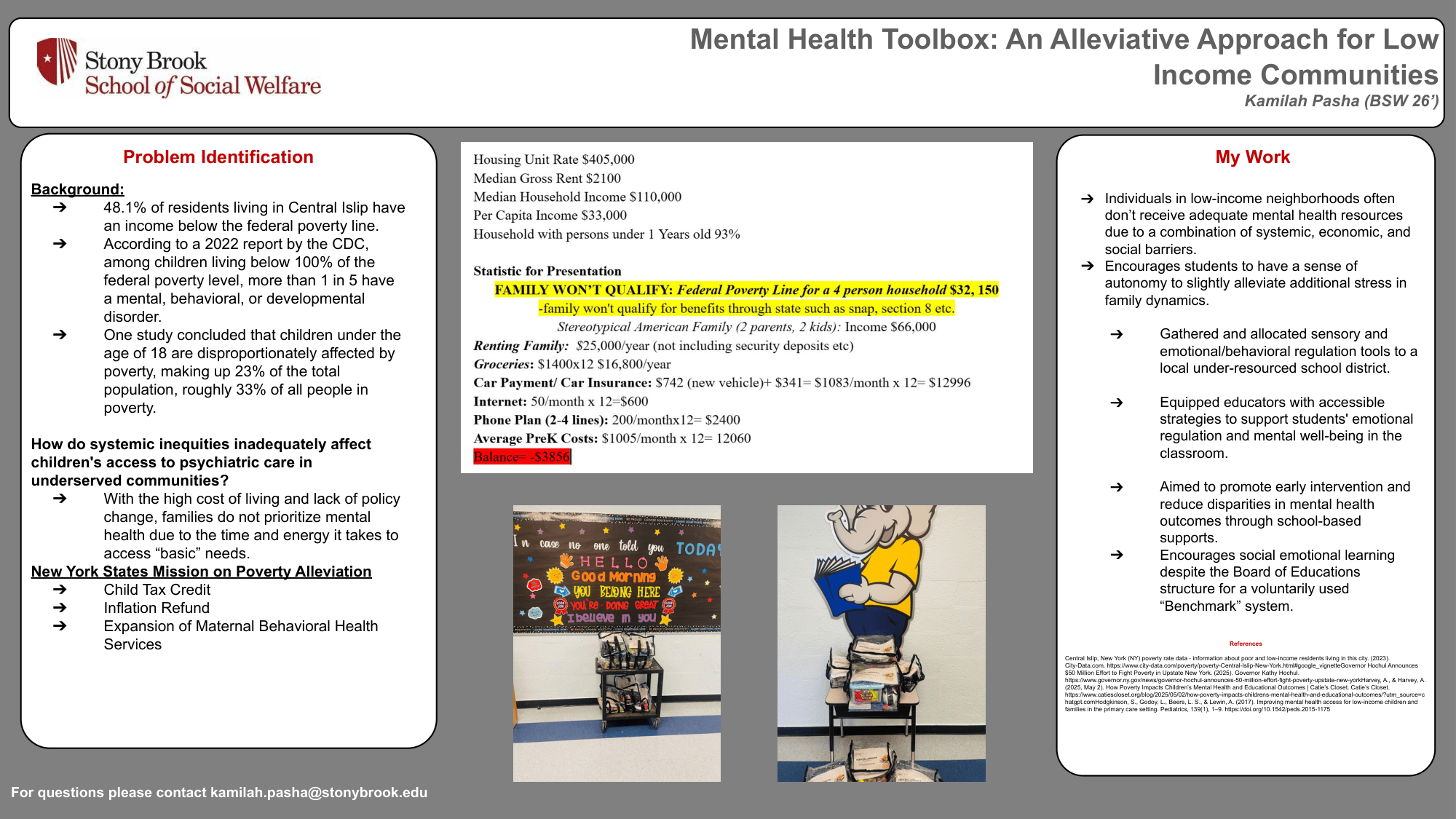
SPOTLIGHT | Mental Health Toolbox: An Alleviative Approach for Low Income Communities
Kamilah Pasha, a Social Work undergraduate and CCSP Summer Social Justice grantee, is addressing mental health disparities among youth in underserved communities, particularly in Central Islip, NY. Kamilah’s project tackles the challenges families face in prioritizing mental health care amid rising costs of living and limited social support systems.
Her approach centers on preventative, early-intervention strategies in special education
classrooms. Each toolkit includes sensory items such as fidget tools, stress balls,
and noise-canceling headphones, alongside educational resources for teachers and parents.
By fostering self-awareness, autonomy, and curiosity about emotional well-being and
social connection, Kamilah’s toolkits help bridge gaps in mental health support that
many families in low-income communities may not otherwise access.