



AI for Business: An Executive Workshop
One-day workshop jointly presented by the Stony Brook University AI Innovation Institute (AI3) and the College of Business
November 20, 2026 · 8:30 AM - 5:30 PM · The SUNY Global Center, 116 East 55th Street, New York, New York 10022
Decide where AI creates value for your organization, then build a 90-day plan to support it.
- A working session for senior leaders.
- You will not be taught to code.
- You will not sit through a technology briefing.
- You will leave with:
- A shortlist of AI opportunities specific to your organization
- An honest assessment of what you would need to deliver them
- A written 90-day plan with named owners and success measures
Seats are limited to 30 participants.

| Format | Cohort | Pre-work | Fee |
| One day, in person | Limited to 30 senior leaders | 45 - 60 minutes | $1,500 ($1,200 company rate for 3+ registrations) |
A University that Treats AI as a Leadership Question
Stony Brook University is SUNY’s flagship and New York’s No. 1 public university with a decades-long history of pioneering AI research, education, entrepreneurship, and innovation.
The AI Innovation Institute (AI3) coordinates AI research and education across every school at Stony Brook and reports directly to the Provost. The College of Business is where AI research and education meet practice. Our faculty investigate fundamental business questions and the answers carry directly into the decisions leaders have to make.
Stony Brook has been named to the Entrepreneur and Princeton Review list of the nation’s Top 50 Graduate Entrepreneurship Programs for five consecutive years. That orientation drives the College’s initiative, on the premise that AI advantage will go to the leaders who understand how AI changes judgment, risk, and strategy. This workshop is that premise applied to your organization, in a single day.
Built for the People Who Have to Decide
This workshop is for leaders who make or shape AI investment and deployment decisions: vice presidents, directors, senior managers, and others on the path to the C-suite. The selection criterion is decision authority, not technical background.
This is for you if:
- You are being asked what your organization should do about AI, and you want a strategic answer rather than a vendor’s answer
- You can influence or approve a pilot, a budget line, or a hiring decision in the next two quarters
- You have seen demonstrations and want to know what is real, what is repeatable, and what it costs
- You would rather leave with a strategic and pragmatic plan you believe in than a set of slides
This is not for you if:
- You want technical training: model building, prompt engineering, or hands-on development
- You are looking for a forecast of what AI will do to the economy by 2030
- You want to evaluate a specific vendor or product; we are deliberately vendor-neutral
- You cannot commit to 45 - 60 minutes of pre-work. The day is built on the assumption you have done it
|
A note on technical backgrounds. None is assumed or required. Technical leaders are welcome and a number attend each cohort: engineering directors, data and analytics leaders, CIOs - who want the strategic and governance view rather than more depth on the technology. If that is you, we keep the technical explanations light and spend the time on the decisions leaders actually have to make. |
Five Things You Take Back to Work
Not notes. Not a slide deck. Documents you have written, that name people and dates.
- A prioritized shortlist of AI opportunities for your organization, each with a stated rationale.
- A scored readiness diagnostic across five dimensions, benchmarked anonymously against the rest of the cohort.
- A written 90-day plan: pilots, named owners, success measures, and first governance steps.
- An accountability partner from a different sector, and a 30-day check-in scheduled before you leave the room.
- Continued access to Stony Brook expertise: two follow-up office hours in the eight weeks after the workshop.
Meet Your Facilitators
Co-delivered by the Stony Brook University AI Innovation Institute (AI3) and the College of Business. A single lead facilitator is present throughout the day.
Lav Varshney
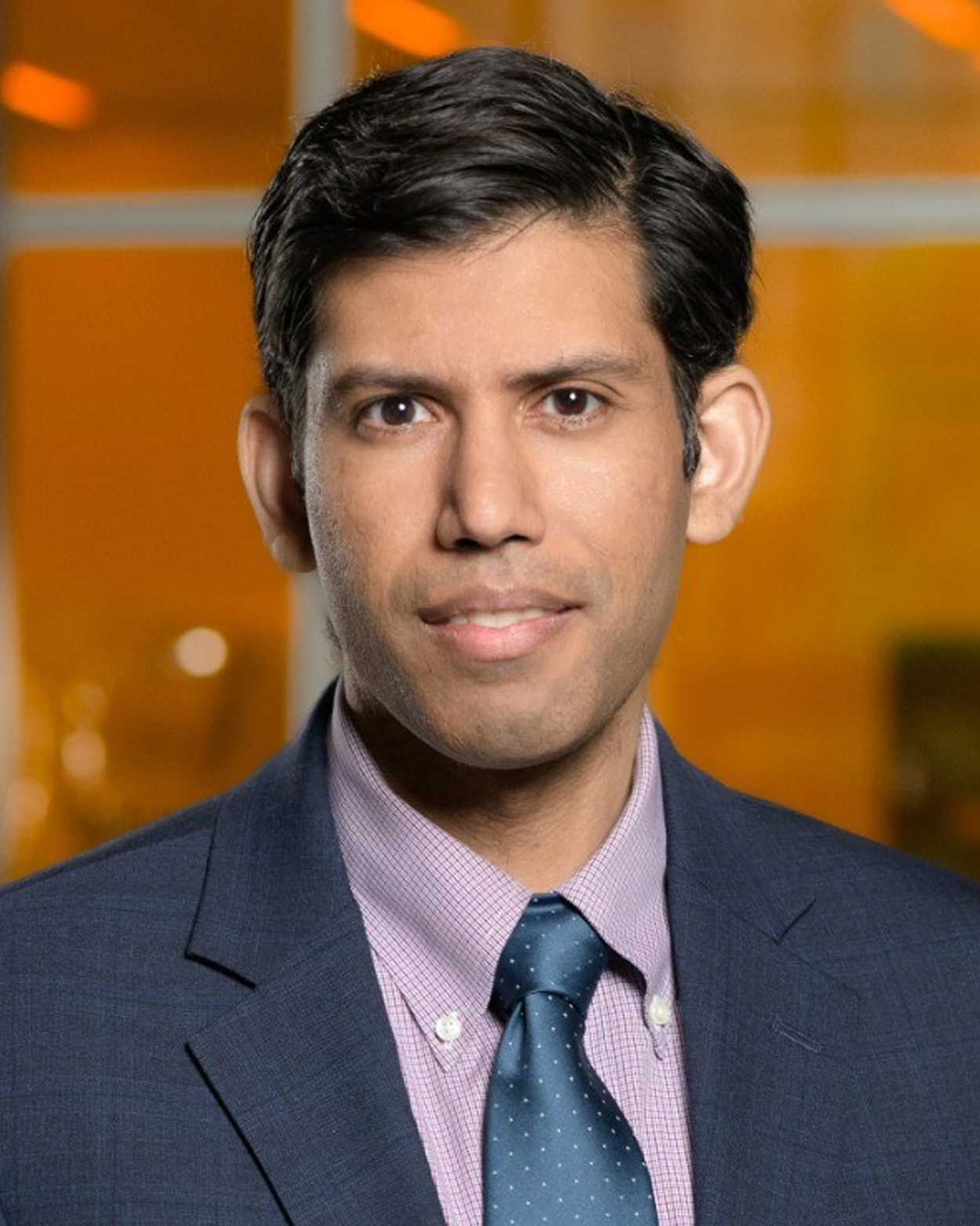
Della Pietra Infinity Professor and inaugural Director of the AI Innovation Institute (AI3). Came to Stony Brook from the University of Illinois Urbana–Champaign; a White House Fellow, and co-founder and CEO of Kocree, a startup building human-controllable AI. He works on what the technology can and cannot do, the difference this workshop is built to make legible.
Luis Lamb

A pioneer of neurosymbolic AI and co-author of Neural-Symbolic Cognitive Reasoning. PhD in Computer Science from Imperial College London and an MBA from the MIT Sloan Fellows Program, with executive experience across industry, government, and research universities. He teaches where AI capability meets innovation strategy.
Richard Chan
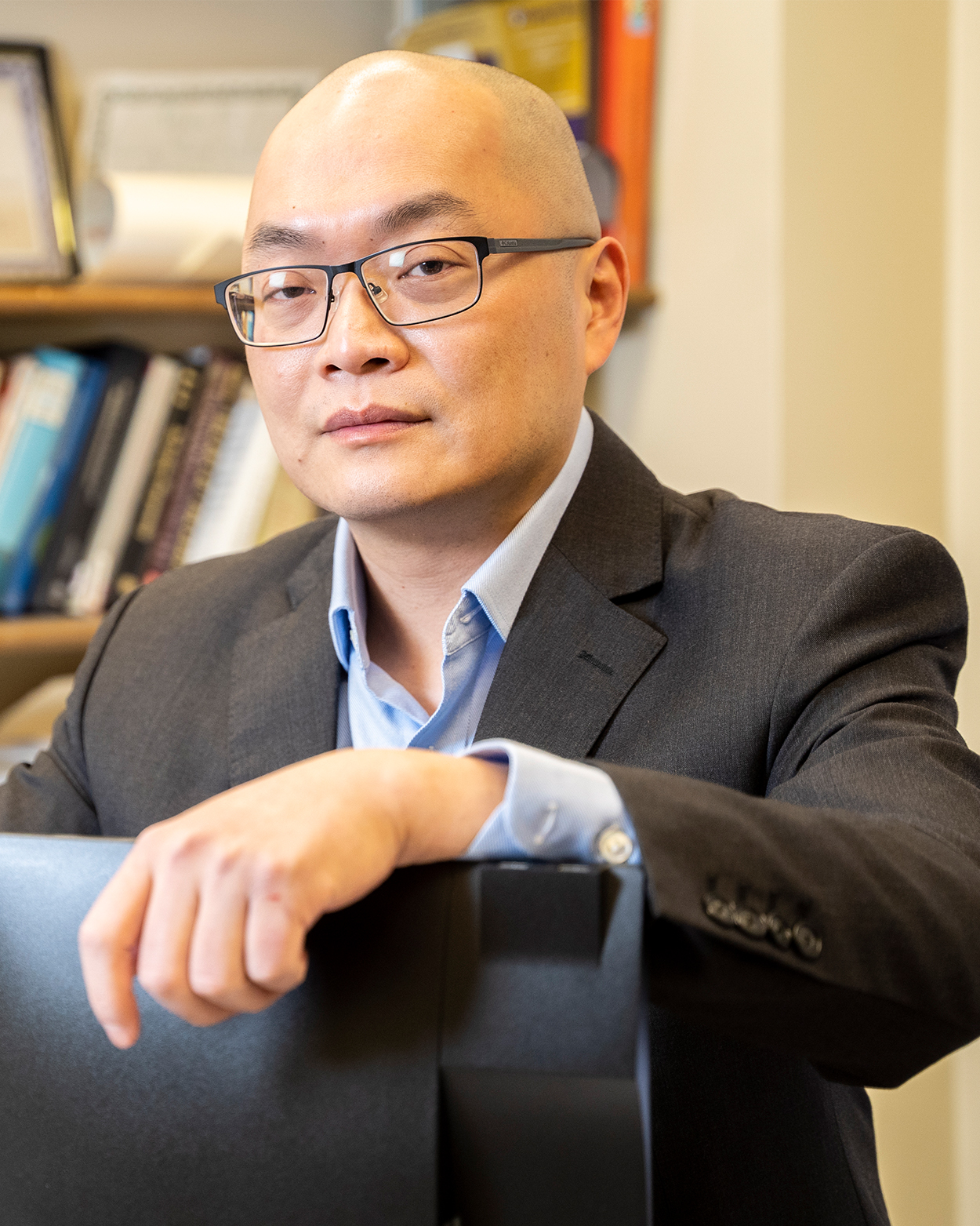
Professor of Organizational Behavior, Strategy & Entrepreneurship, and Director of both the Innovation Center and the Center of Entrepreneurial Finance. He studies how investors and decision-makers actually evaluate opportunities, using computational methods on real funding decisions. He leads the opportunity and strategy work.
Gary Sherman

Associate Professor of Organizational Behavior, Strategy & Entrepreneurship and Co-Director of the MBA Program. PhD in Social Psychology from Virginia; research on power, hierarchy, and behavioral ethics published in PNAS and Psychological Science, and named one of the world’s Best 40 Under 40 Business Professors by Poets & Quants. He anchors the ethics and governance session.
Ed Fabian

President of American Eagle Systems, adjunct professor of Organizational Behavior, Strategy & Entrepreneurship and technological innovation, and Advisor Chair of the Innovation Center. Decades of data protection and audit compliance work with organizations managing substantial amounts of data, the foundation most AI ambitions are quietly built on.
Confirmed Panelists
Tushar Amin
COO, Kaiju Worldwide
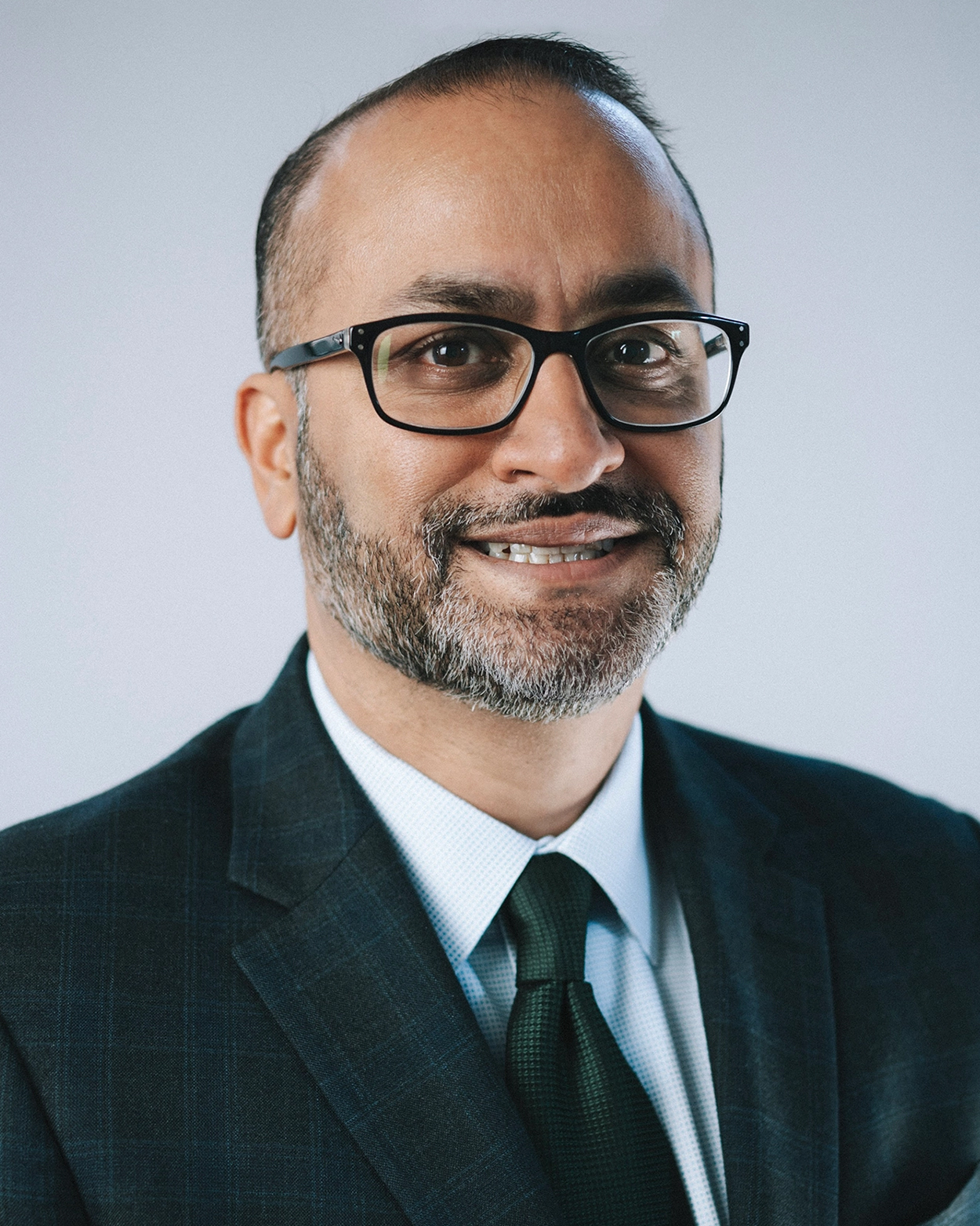
Former CEO of Hazeltree; spent 18 years at IBM, ending as head of strategy and COO of its $28 billion Global Technology Services division, where he put predictive AI and large language models into live operations. Stony Brook alumnus and College of Business Executive in Residence.
Tom Diamante
Organizational Psychologist
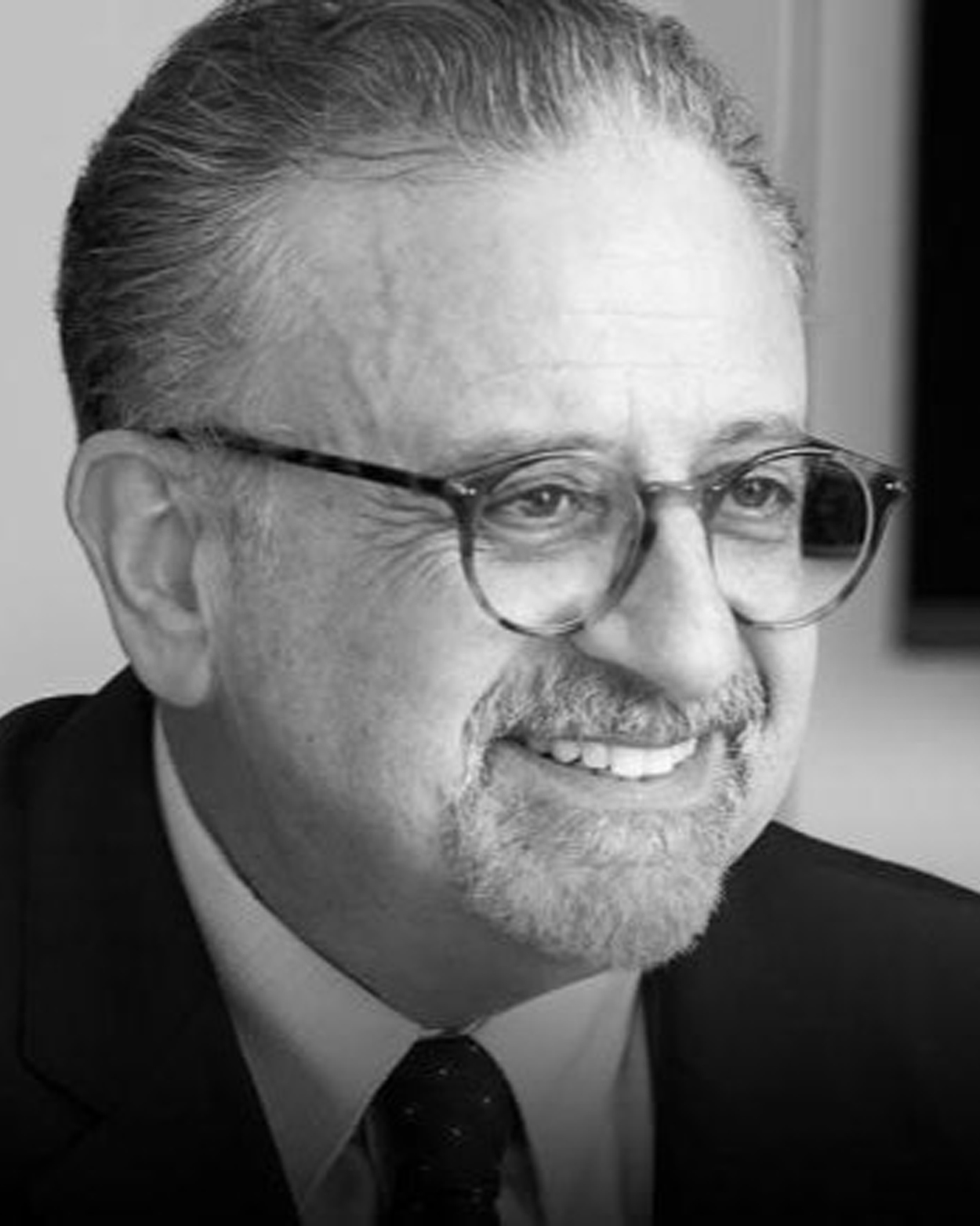
Advisor to the C-suite on high-stakes human capital decisions — talent, performance management, and operational risk. Former CHRO, top-20 privately held wealth management, Director, Leadership & Learning Solutions at CIT (First Citizens Bank) and earlier in his career Vice President, Corporate Strategy and Organizational Capability at Merrill Lynch. Tom serves on the Board of Governors, Risk Management Association - New York Chapter. He works on what AI does to the human side of the operating model, which is where most programs actually stall.
Ed Fabian
President, American Eagle Systems
Adjunct professor of entrepreneurship and technological innovation at the College of Business. Decades of data protection and audit compliance work with organizations managing substantial amounts of data — the unglamorous foundation most AI ambitions are quietly built on.
Stacey Finkelstein
Professor of Marketing, Stony Brook College of Business

PhD and MBA, University of Chicago Booth. She studies judgment and decision-making — how people weigh evidence, and when they act on a recommendation they cannot personally verify.
Agenda
The day funnels deliberately: wide in the morning, narrow by mid-afternoon. Every session ends in something you have written down.
| Time | Session | What you do |
| 8:30 AM | Arrival & coffee | |
| 9:00 AM | Opening (15 min) | Cohort readiness results from your pre-work. Each participant states the one decision they came to resolve. |
| 9:15 AM | Session 1: AI Landscape & Opportunities (90 min) | Clarify what has actually changed, machine learning, generative AI, large language models, agentic systems, and separate genuine capability shifts from noise. Trends and cases that show where the strategic urgency is real. Ends with rapid opportunity generation, framed around unlocking capability you did not previously have rather than accelerating today’s playbook. |
| 10:45 AM | Break (15 min) | |
| 11:00 AM | Session 2: AI Strategy & High-Impact Use Cases (90 min) | How AI reshapes value chains and business models. Map opportunities across marketing, operations, finance, HR, customer service and innovation. Mini-cases that show where value actually lands. Quick wins against longer-term bets, and build versus buy. Output: your 1–3 priority opportunities, with rationale. |
| 12:30 PM | Lunch (45 min) | Seating is deliberately mixed. This is time to meet the rest of the cohort. |
| 1:15 PM | Session 3: Data, Infrastructure & AI Risks (90 min) | Data readiness: quality, access and governance, and which of the three is actually blocking you. Platform and infrastructure choices framed commercially rather than technically. Key risk categories, including what changes when systems act rather than answer. What your diagnostic score means and where your gaps are. Output: your 1–3 priorities for building data and risk capability. |
| 2:45 PM | Break (15 min) | |
| 3:00 PM | Session 4: AI Ethics, Governance & Your Roadmap (90 min) | Bias, hallucination, privacy, IP, security, regulation and reputation — grounded in what you saw fail earlier in the day. Practical governance: decision rights, oversight that functions, and the shadow AI already in your organization. The session closes with protected writing time for your 90-day plan: 1–3 pilots, named owners, success measures, and first governance steps. |
| 4:35 PM | Practitioner Panel (45 min · optional) | Four confirmed panelists — Tushar Amin, Tom Diamante, Ed Fabian and Stacey Finkelstein — on what AI has actually done inside real organizations. Most questions come from the challenges you and your peers wrote on each other’s maps earlier in the day. |
| 5:20 PM | Closing | Closing comments and way forward from the organizers. |
| 5:30 PM | Refreshments & networking |
The Practitioner Panel
Placed at the end of the day, so anyone with a train to catch leaves at 4:30 PM without disrupting the session.
- Panelists speak as operators and researchers, not as sales representatives. Nobody pitches from the stage. Where a panelist’s own firm works in this space, they say so up front.
- Four perspectives that do not automatically agree: enterprise technology and capital markets, human capital and organizational risk, regional IT and data compliance, and academic research on how people actually decide. The disagreements are the most useful part of the hour.
- Questions from the start: no presentations, no slides, no opening statements.
- Most questions come from the challenges you and your peers wrote on each other’s maps earlier in the day.
|
The panelists are named and on the record. You are not - the Chatham House Rule protects the room, so ask the real question. |
Pre-Work: 45–60 Minutes
Due two working days before the session. The day is built on the assumption you have done it — we do not spend the morning on basic definitions.
Readiness Diagnostic
Fifteen statements across five dimensions: strategy and sponsorship, data foundations, technology and delivery, people and adoption, governance and risk. Scored and returned to you. Results are aggregated anonymously and shown to the cohort at 9:00 AM.
Concepts Primer
A short read covering the vocabulary in plain terms — machine learning, generative AI, agents, hallucination, and the handful of others that come up during the day. Read once. Nobody will test you.
Your Context Brief
One page on your own situation: your role and authority, what is already happening in your organization, the single decision you want resolved by 5:00 PM, and what is actually standing in your way. Seen by the facilitators only, and used to shape your table grouping.
How We Work
The Room
Cohort of 20–30 senior leaders drawn from a range of sectors. Working sessions run at tables of 5–6, deliberately mixed by industry, the fastest way to see a pattern in your own business is to hear it described in someone else’s.
Chatham House Rule
What is said here is usable; who said it is not. Competitors may be in the room. Share at a level of detail you are comfortable with, directional figures are fine, and no one will ask you to justify a number.
Bring a Laptop
Several segments are hands-on. Do not bring real company data; we supply realistic material to work with. If your organization restricts AI tools on managed devices, tell us in advance and we will arrange an alternative.
Frequently Asked Questions
Seats are Limited to 30 Participants
Cohorts are built for balance across sectors and seniority, so registration closes when the mix is right rather than when the room is full. Pre-work is issued on confirmation.