



Business Education in Service of Long Island
Applying the Power of Business to Strengthen Communities
The Strategic Vision for Local Impact
Guided by the College's wellness goal and the Dean's charge to pursue signature initiatives with measurable outcomes, the Business and Societal Impact Initiative advances economic opportunity, financial well-being, and regional prosperity across Long Island — through community-facing education, curricular innovation, and research that drives practice. The emphasis throughout: initiatives that are sustainable, measurable, and scalable, woven into existing courses and programs.
Five Efforts, One Goal
A Multi-Faceted Approach to Regional Advancement
Bridging the Gap Between Classroom and Community
True community transformation requires more than a single program; it demands a diverse ecosystem of practical interventions. By aligning experiential student learning with critical local needs, the College of Business has mobilized five distinct initiatives to tackle economic challenges on Long Island. From campus-wide digital literacy campaigns to rigorous, field-tested academic courses, these efforts equip individuals with the tangible tools required for financial independence.
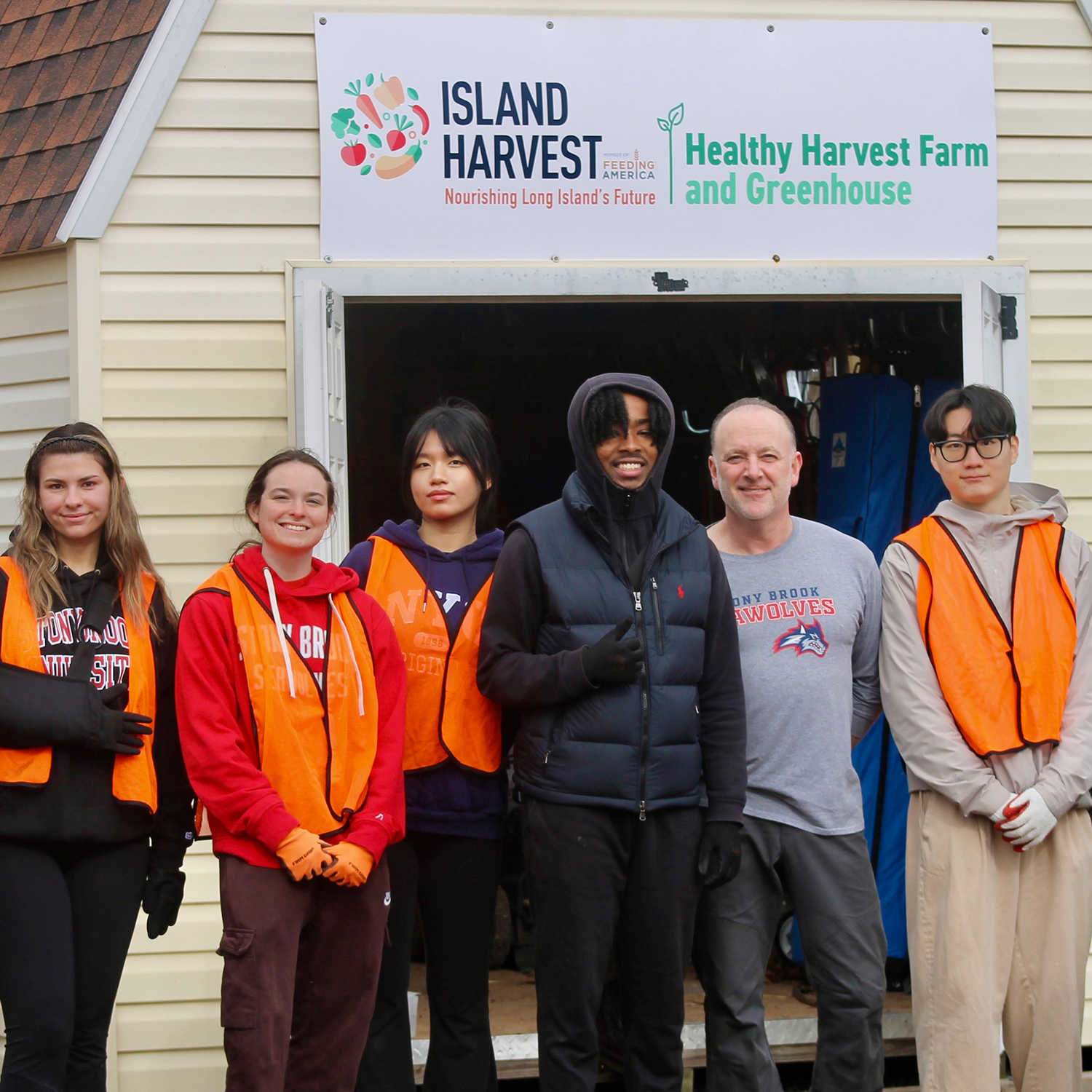
By working in tandem with local libraries, academic researchers, and regional non-profits like Island Harvest, we are transforming business education into an active engine for socioeconomic equity and lasting regional change.
The Initiative at a Glance
- 01 Financial Literacy Month campaign — faculty Instagram and CoB Bulletin messages with pre/post knowledge measures.
- 02 Student-run library education programs, plus a funded faculty study on children's understanding of money.
- 03 A new Personal Finance course by Prof. Tom Tallerico, measuring student knowledge before and after.
- 04 An Honors-student impact study of Island Harvest's workforce-training program.
- 05 A Beta Gamma Sigma day at Island Harvest Farm, focused on hunger and income inequality.
Where Students Put Financial Education to Work
Volunteer Income Tax Assistance (VITA) Program
Free Tax Preparation that Doubled its Reach
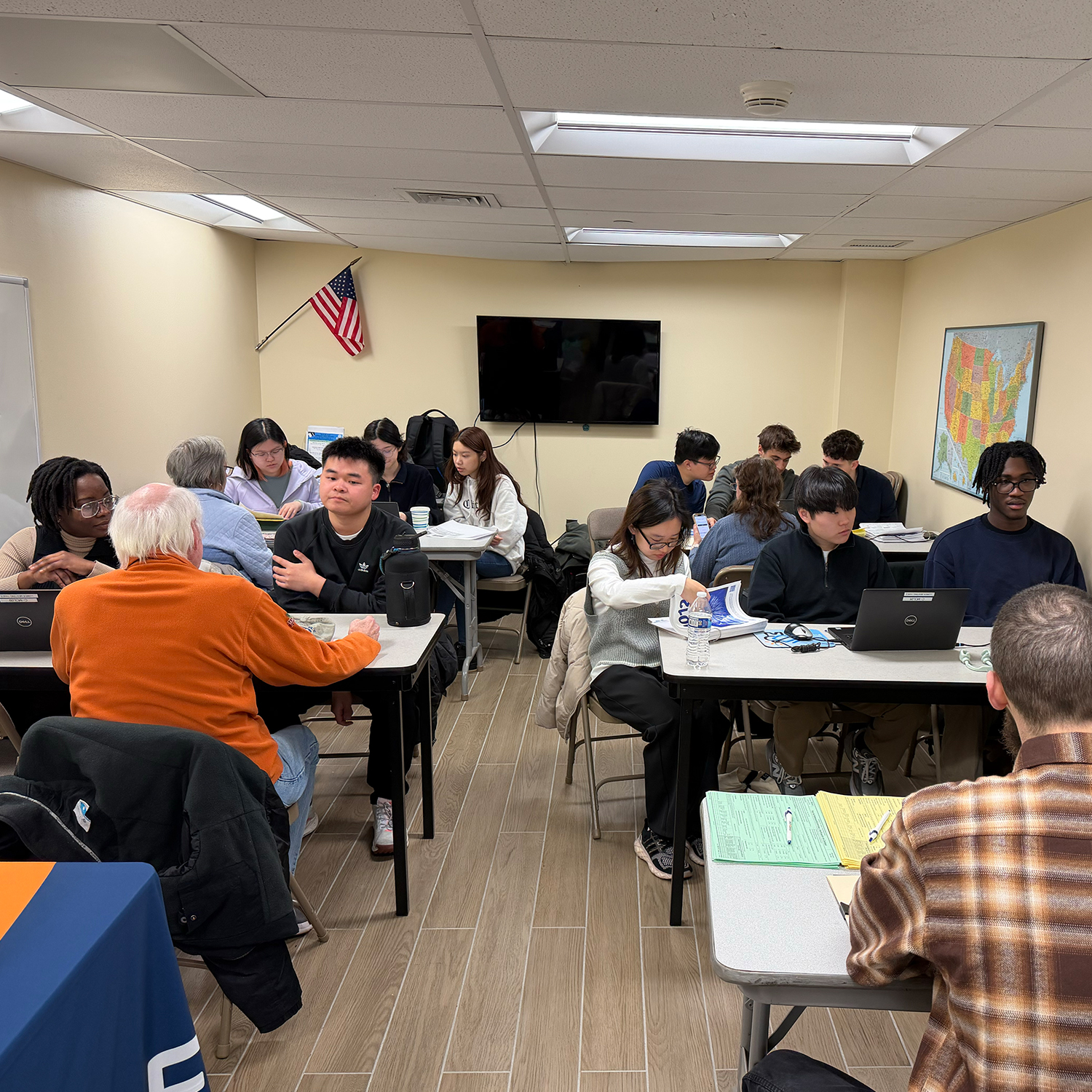
Directed by Prof. Zhifeng Yang with FourLeaf Federal Credit Union, student volunteers provided free tax preparation to low-income taxpayers and retirees at three Suffolk County libraries — and the College added shuttle and rideshare support so every volunteer could reach a site. This work illustrates the three ways the College drives meaningful community impact:
- Education: Workshops, courses, and library programs that build financial literacy for K–5 learners, college students, seniors, and lower-income adults.
-
Scholarship: Faculty research and convenings on economic disparity, prosocial consumption, ESG, and housing equity on Long Island.
- Volunteerism: Students serving the community directly — free tax preparation, farm work, and family financial-literacy events.
What if Learning About Money Felt Like an Adventure?
Money Quest through the Healthly Libraries Program
Financial Literacy for Grades K–5
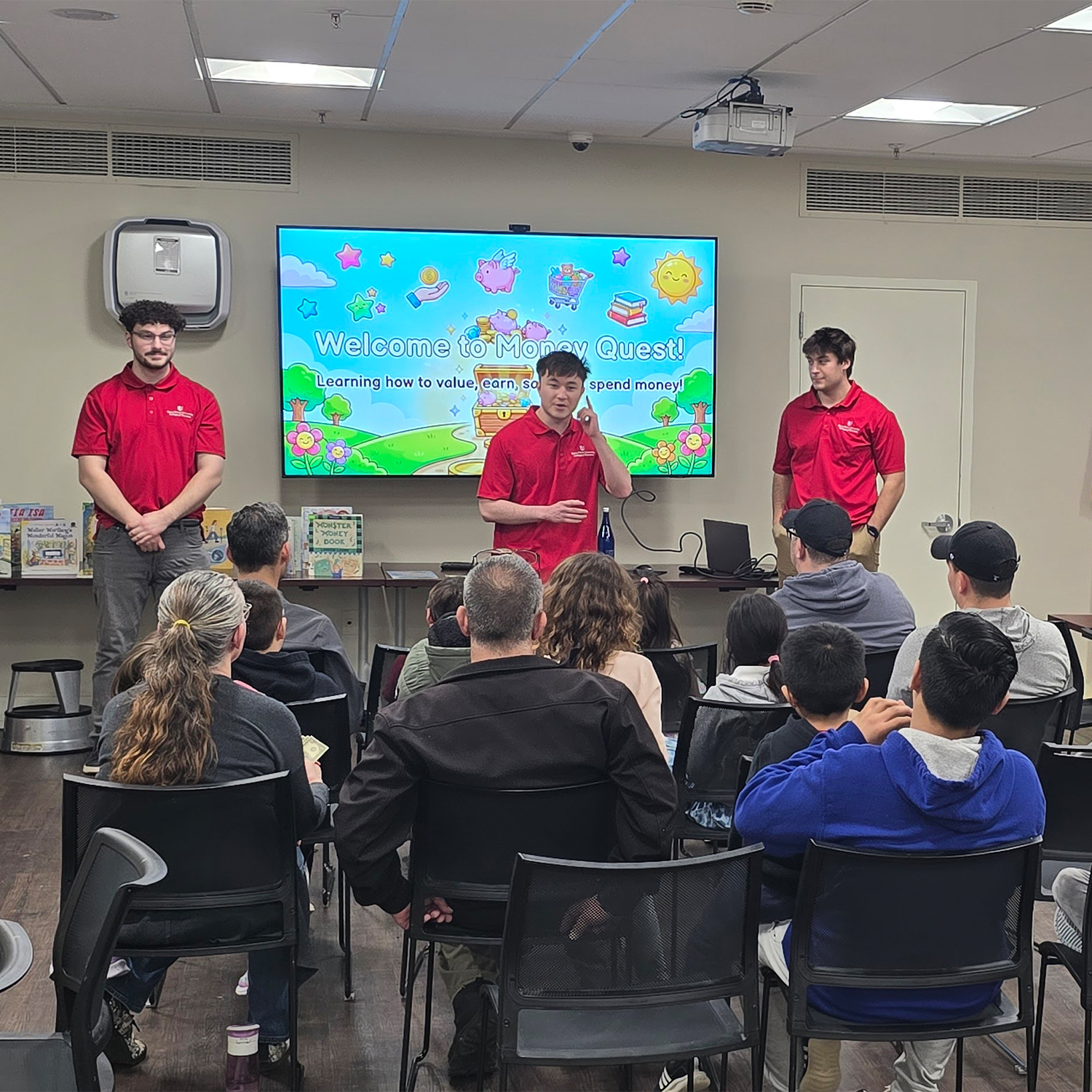
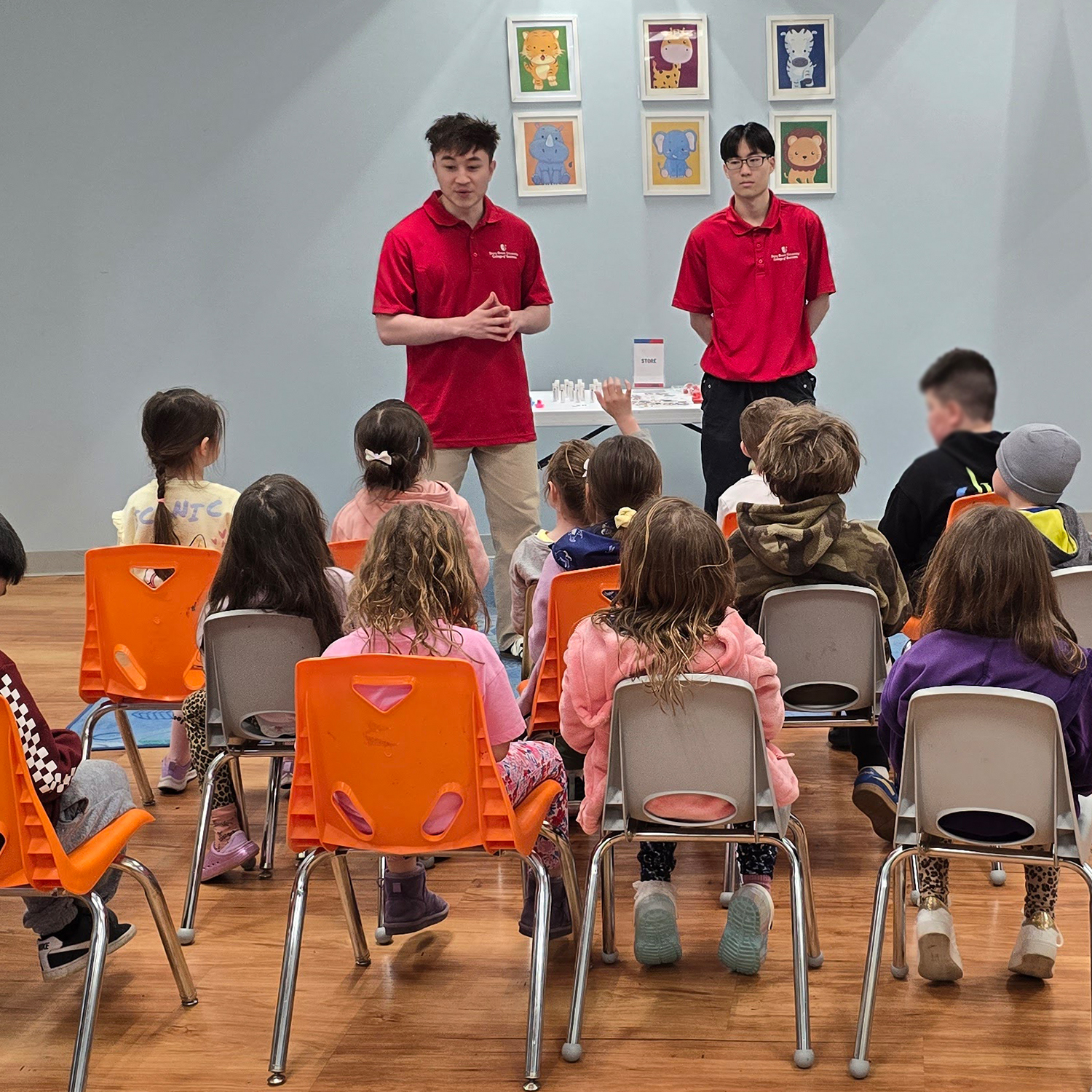
Four Business Honors students — under faculty advisor John Colbert and in partnership with Suffolk County Libraries — built a hands-on journey through “Cashville.” Across three branches, more than 50 children rotated through stations on wants versus needs, budgeting, and earning, then spent the “Wolfie Bucks” they earned at a simulated store. Each child went home with a Stony Brook piggy bank.
Winning on National Stages, Serving Close to Home
Experiential Learning & Competitive Excellence
Advancing Equity Through Applied Business Practice
Students and faculty collaborate with regional partners to address economic disparities through hands-on consulting, volunteer service, and immersive learning experiences — earning recognition along the way:
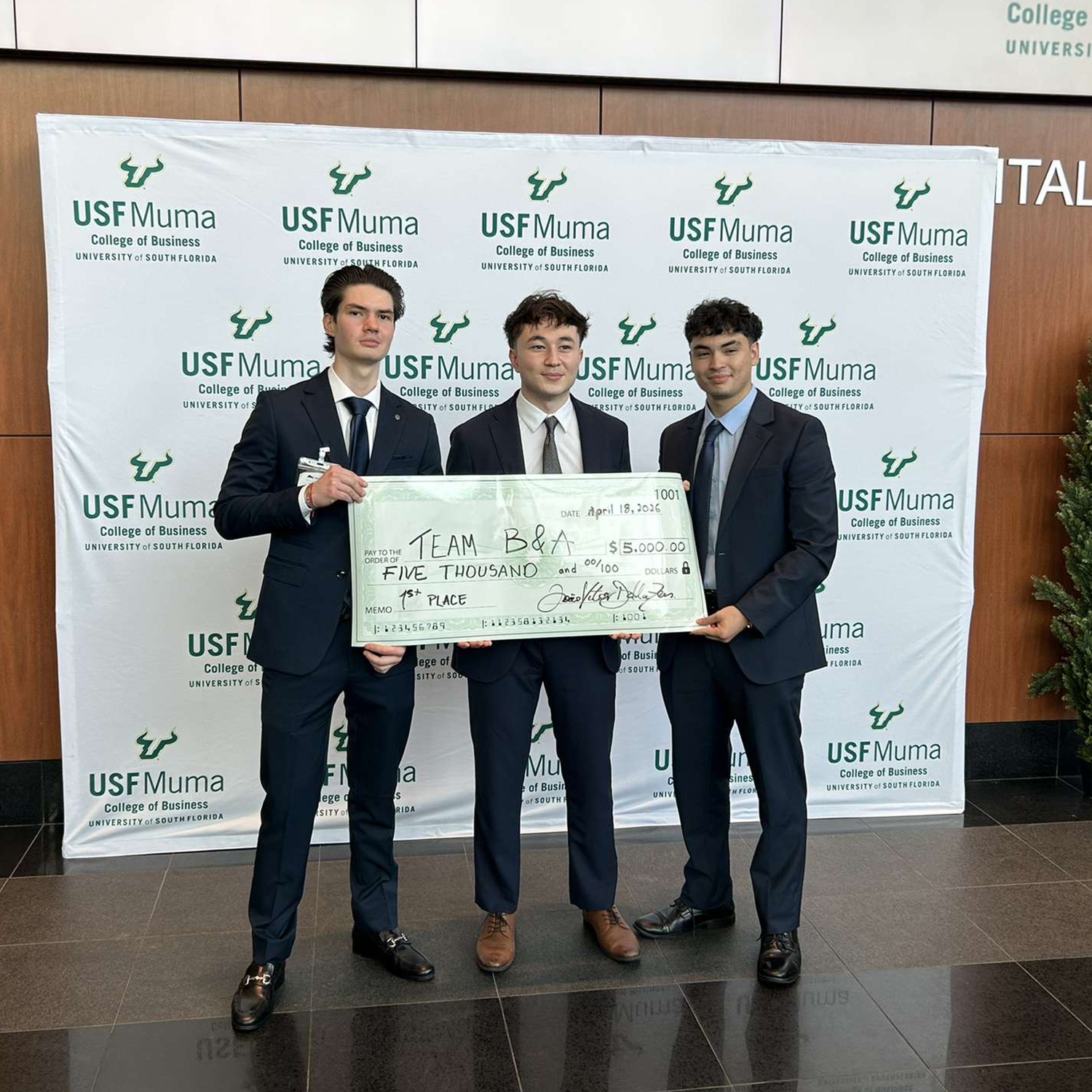
- First place in the USF Stock Pitch Competition (student team)
- Winners of the SBU Healthcare Innovation Challenge
- Honors teams supporting Island Harvest through data-driven analytics projects
- Financial innovation partnerships with Teachers Federal Credit Union exploring next-generation deposit and digital asset models
- Real estate equity discussions through the Kominicki Symposium and affiliated industry forums
- Beta Gamma Sigma student engagement at Island Harvest Farm examining food insecurity firsthand
Financial Capability, Built Into the Curriculum
Curricular Innovation & Career Mobility
BUS 230: Personal Finance
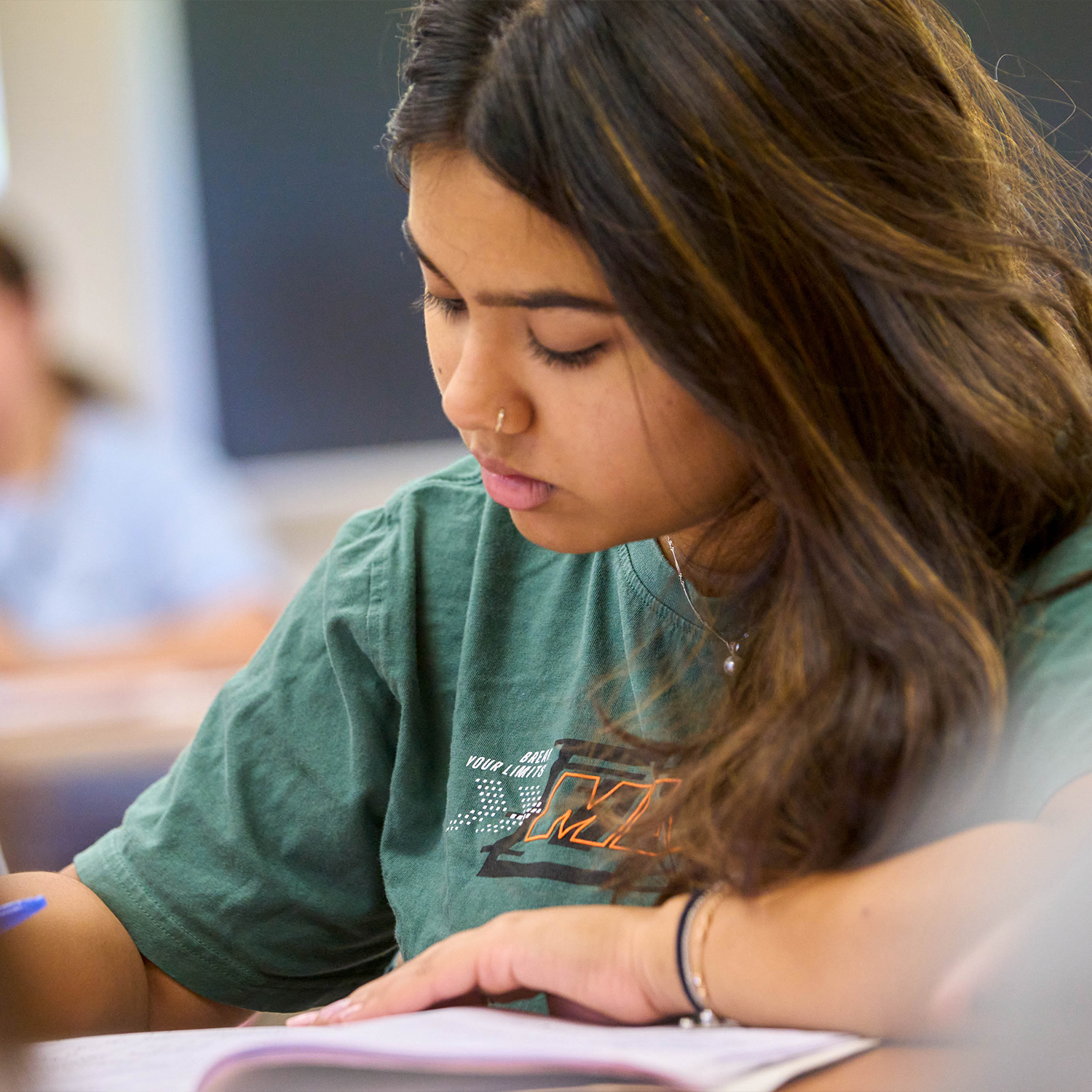
The College of Business integrates financial literacy, career readiness, and applied economic skills directly into academic programming to support long-term student mobility. Developed by adjunct faculty member Tom Tallerico, BUS 230 gives non-business majors the essential financial skills for lifelong economic stability. Topics include:
- Tax documentation and filing fundamentals
- Credit building and credit score optimization
- Home ownership and mortgage structures
- Retirement and savings instruments
- Financial stress management and behavioral finance
Business Solutions for Global Goals
Sustainable Entrepreneurship & Social Innovation
Aligned with the UN Sustainable Development Goals
Across undergraduate and MBA programs, students design solutions aligned with the United Nations Sustainable Development Goals, including:
- Carbon capture trading platforms
- Agricultural preservation systems
- Urban sustainability technologies
- Climate-responsive business models
Career Integration & Professional Certifications
Students gain industry-ready credentials embedded directly into coursework, including HubSpot, Hootsuite, and SEMrush certifications, strengthening placement outcomes and workforce readiness. Additional applied learning includes real estate portfolio modeling, live market analytics, and structured financial decision-making exercises.
Scholarship That Shapes Practice
Research That Drives Practice
Understanding How Young People Learn About Money
Faculty research directly informs educational programming, policy insights, and community-facing initiatives across financial behavior, sustainability, and consumer economics. This includes ongoing work exploring how children and adolescents develop financial understanding, decision-making skills, and consumer behavior patterns — engaging over 550 youth participants through:
- Bilingual parent-child financial communication research
- First-generation student financial confidence studies
- NSF-reviewed youth research seminars
Faculty Research & Recognition
Recent faculty achievements include:
- Best Paper Award in Senior Housing Economics (American Real Estate Society)
- ESG portfolio efficiency and clustering validation studies
- Advanced consumer behavior research in sustainability and prosocial decision-making
Prosocial Consumer Behavior Symposium
Hosted on April 24, 2026, the symposium convened leading scholars from Penn State, the University of Pittsburgh, and Stony Brook University to explore sustainability, consumer ethics, and behavioral economics in modern markets.
Building Impact That Extends Beyond the Classroom
The Business and Societal Impact Initiative reflects a unified commitment to advancing economic opportunity, strengthening communities, and preparing students to lead with purpose.
Explore partnership opportunities, student engagement pathways, and research collaborations with the College of Business.
Initiative Leadership Committee
This initiative is guided by a cross-disciplinary team of faculty leaders: