Research Highlights
Stony Brook Team Improves Supercomputer Design
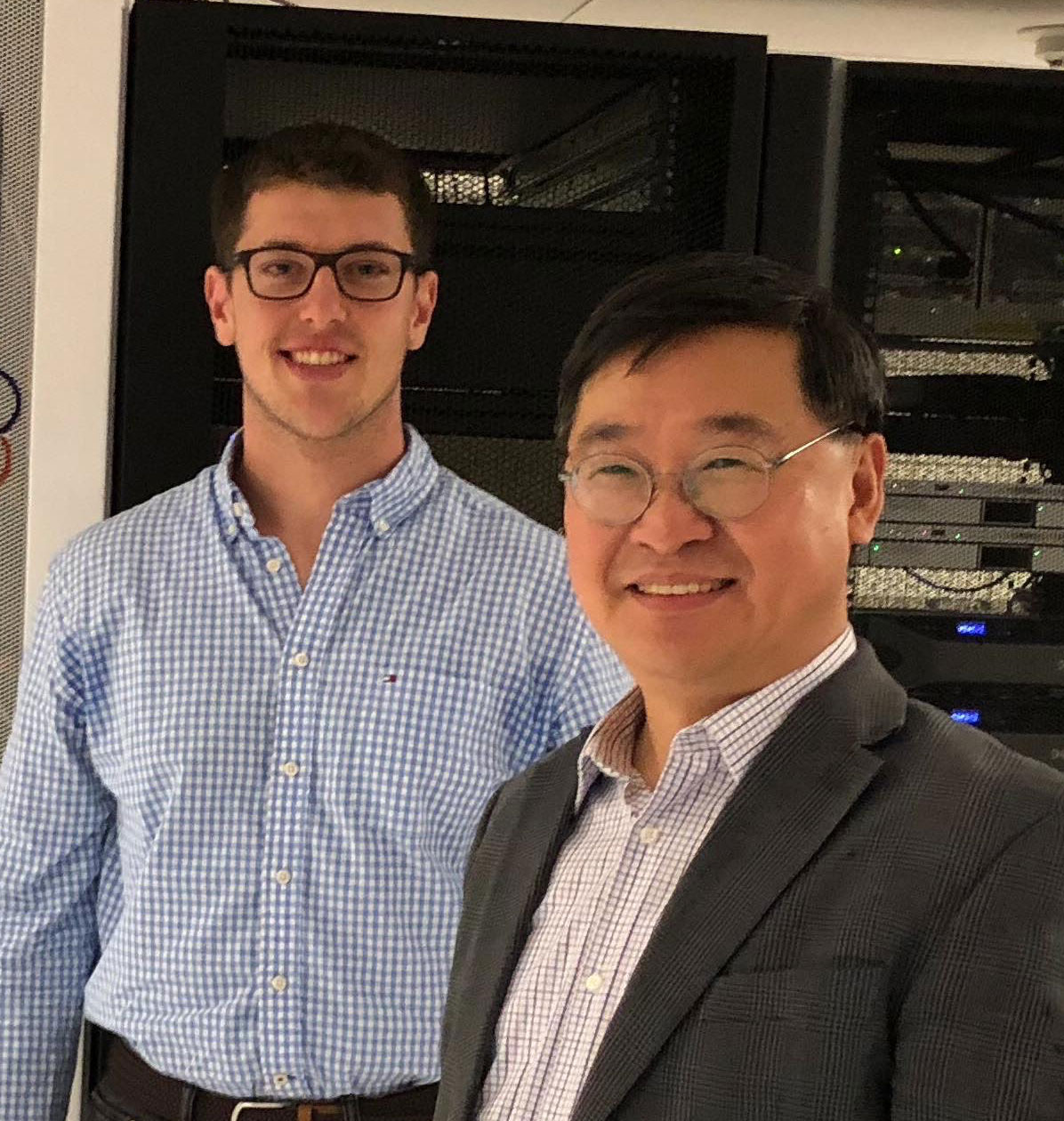
Applied Math professor Yuefan Deng oversees a team of a dozen Stony Brook graduate students, undergraduate students, and occasional high school students looking for ways to improve the design of supercomputers. There are many design strategies for how to interconnect the thousands or millions of processors in a supercomputer. Because supercomputers have so many processors, complex networks are required to interconnect the processors; typically any one processor is directly connected to only a handful of other processors.
Computational Biology
Professor Rob Rizzo is building 3D-structure-based computational models to identify sites on human molecules where proteins from viruses and bacteria attach and cause damage. Once such binding sites are found, he tries to design drugs to interfere with the binding. In Rizzo’s work, the aim of the drugs is to attach to the binding region on foreign protein, to neutralize the protein’s method of attack.

Statistics
Professors Song Wu and Wei Zhu recently published an influential paper in Nature about hereditary versus environmental factors in cancer risk. There has been shown to be a high correlation between the rate of stem-cell division and unavoidable cancer-causing damage to cells in humans. Wu and Zhu analyzed data that showed this correlation to be unaffected by hereditary factors.