


Assanis Receives ASME Internal Combustion Engine Early Career Award
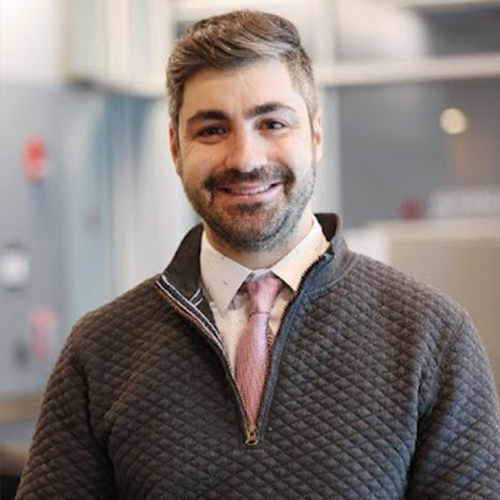 The Department of Mechanical Engineering at Stony Brook University proudly congratulates
Associate Professor Dimitris Assanis on receiving the 2026 Internal Combustion Engine Early Career Award from the ASME Transportation Systems Division, a prestigious honor recognizing outstanding
technical achievements in internal combustion engine research by an early career engineer.
The award was presented at the inaugural ASME DRIVN conference in Detroit, Michigan, held September 14–16, 2026.
The Department of Mechanical Engineering at Stony Brook University proudly congratulates
Associate Professor Dimitris Assanis on receiving the 2026 Internal Combustion Engine Early Career Award from the ASME Transportation Systems Division, a prestigious honor recognizing outstanding
technical achievements in internal combustion engine research by an early career engineer.
The award was presented at the inaugural ASME DRIVN conference in Detroit, Michigan, held September 14–16, 2026.
The award celebrates exceptional contributions to internal combustion engine and aftertreatment research and development by early career researchers in academia, national laboratories, and industry. In its citation, the Society recognized Assanis for building "an outstanding independent research program in hydrogen, ammonia, and low-carbon fuel combustion" and as "a dedicated mentor and leader."
Assanis leads research on clean, high-efficiency combustion systems and the practical decarbonization of engines and distributed power. His work advances the use of hydrogen, ammonia, and bio-derived fuels through a combination of advanced experiments, optical diagnostics, high-fidelity simulations, and artificial intelligence to reduce emissions while maintaining engine performance and reliability. His laboratory is one of very few in the world working in both hydrogen and ammonia combustion — two of the most promising carbon-free fuels, and two of the most challenging to burn cleanly and reliably. Building on that foundation, his group has extended engine and combustion research beyond transportation into distributed power generation, including peaking and backup power and islanded microgrids.
"I'm truly humbled by this recognition," said Assanis. "Hydrogen and ammonia are two of the most promising paths to decarbonizing engines, and very few labs anywhere are equipped to work with both. Building that capability here at Stony Brook has taken a lot of hard work, and it's rewarding to see it come together."
Assanis' research has been supported through collaborations with industry, national laboratories, and multi-agency research programs, helping accelerate the development of next-generation low-carbon energy technologies — and many of those sponsors have returned to fund new work. To date, Assanis has graduated five Ph.D. students and eight master's students and has mentored more than 40 undergraduate researchers.
"The real stars here are my students," Assanis said. "I may be the one holding the plaque, but none of this would be possible without every graduate and undergraduate student who has worked in our lab, whether their role was big or small. Seeing them graduate, land great jobs, and make their mark on the field is what I'm proudest of."
For Assanis, the award also carries personal meaning. He grew up around engines: his father, Dennis Assanis, built a distinguished research career in internal combustion engines as a mechanical engineering professor at the University of Michigan, following his early faculty years at the University of Illinois, and has long been an active member of ASME. He later moved into academic leadership, serving as president of the University of Delaware and now as chancellor of the University of California, Santa Barbara. The younger Assanis has built his own path in the same field — re-envisioning an engine and combustion laboratory at Stony Brook and carrying that expertise into new areas of clean power generation.
"I grew up around engine research, and when your father has been so successful in a field, those are big footsteps to fill," Assanis said. "Our steps have been different. I've taken the same engine and combustion know-how beyond vehicles and into how we generate clean, reliable power, from peaking and backup power to islanded microgrids. Seeing that work recognized means a great deal to me."
The ASME Internal Combustion Engine Early Career Award recognizes the impact of Assanis's research and leadership in advancing cleaner, more efficient engine technologies. The Department of Mechanical Engineering congratulates him on this outstanding achievement.