


CHANGE LEADER NETWORK (CLN)
Peer-led WolfieONE Awareness and Understanding
A Change Leader Network is an integral part of the Change Management Methodology at
Stony Brook. It is a peer-led group of influencers and impacted users across Stony
Brook who will assist in building awareness, active listening and gathering concerns,
promoting buy-in, and providing support to stakeholders impacted by the project. WolfieONE Change
Champions are an indispensable asset to drive and support change adoption.
Find Your WolfieONE Champion
View the most updated list of Champions, Power Users and Super Users.
FIND CHAMPIONS, Power users, and super users
Why is a Change Leader Network Needed?
- Promote understanding to assist employees in understanding changes, dealing with uncertainty and ambiguity as the program progresses through implementation
- Advocate positive change through face-to-face and informal communications that are required to change behaviors and attitudes
- Build accountability and ownership by empowering Change Champions to gather feedback from stakeholders, answer questions and resolve concerns without having to wait or rely only on “formal, official” communications
- Build a community of early adopters who value the opportunity to try out new technology first and get a chance to demonstrate their leadership skills
- Accelerate the adoption of the change by quickly disseminating timely and accurate information and build trust through communication and feedback
How We are Preparing for Go-Live
Building Awareness of What is Changing
- Monthly Change Champion meetings with project updates
- Partnering with our Liaisons and Ambassadors
- Regular campus-wide communications aligned to milestones
- Publishing updates, FAQs, and timelines on the WolfieONE website
Defining Role-Based Impacts
- Conducting Change Impact Assessments across HCM, ERP, EPM, and Tech
- Partnering with functional leaders and SMEs to map process changes
- Identifying which roles are impacted and how
Delivering Targeting Training
- Developing role-based training across HCM, ERP, EPM, and EDM
- Preparing Train-the-Trainer (TTT) sessions
- Launching training modules in Brightspace
- Planning end-user training (self-paced and instructor led)
Reinforcing Adoption Through Champions
- Providing monthly enablement sessions
- Expanding the Champion toolkit
- Sharing message highlights and cascading guidance
- Collecting feedback and surfacing risks early
- Equipping Champions to administer department specific training and to answer common questions
Providing Structured Support During and After Go-Live
- Planning Hypercare after go-live
- Monitoring feedback and questions
- Delivering residual or gap training as needed
- Leveraging “Ask HR” and Help Desk resources
WolfieONE CLN Structure
The WolfieONE Change Leader Network (CLN) is broken down into four key groups. Each group has their specific roles and responsibilities to bring awareness and understanding to the end-user.
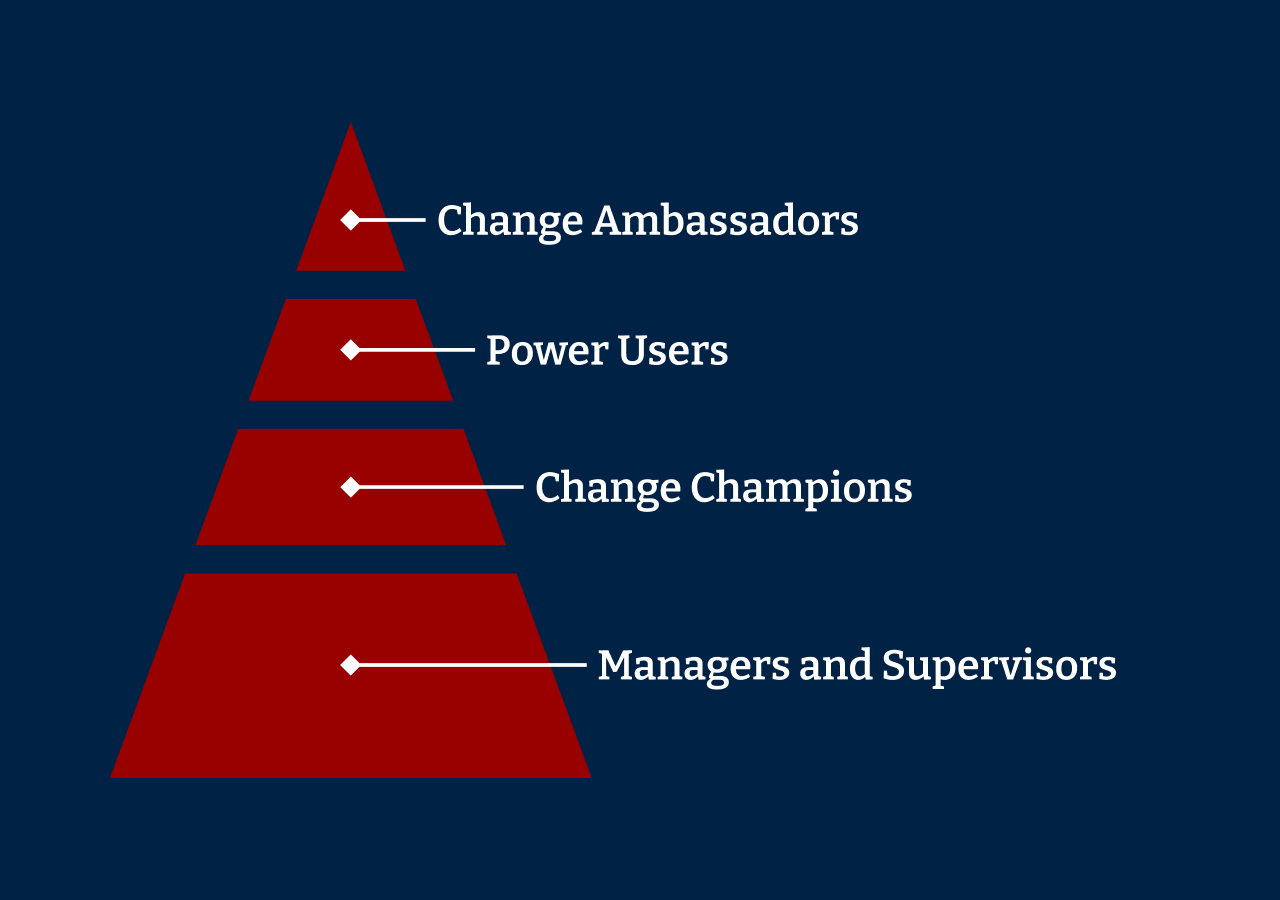
Change Ambassadors
Executive-Level Sponsors
- Publicly endorse WolfieONE
- Reinforce the "why" behind the transformation
- Hold leaders accountable for readiness
- Address resistance at leadership levels
Power Users
Functional Subject Matter Experts
- Participate in advanced training
- Support colleagues during transition
- Provide feedback on system functionality
- Promote best practices
Change Champions
Local Change Advocates
- Share timely updates with their departments
- Answer peer-level questions and promote OCM feedback form
- Reinforce benefits of WolfieONE
- Support training reminders
Managers and Supervisors
Frontline Adoption Drivers
- Reinforce WolfieONE messaging in team meetings
- Ensure required training completion
- Set expectations for new processes
- Model system usage after go-live
Find Your WolfieONE Champion
View the most updated list of Champions, Power Users and Super Users.
FIND CHAMPIONS, Power users, and super users