


Giancarlo La Camera
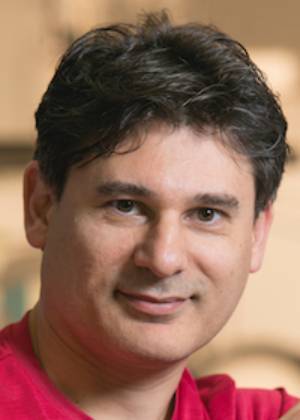
Associate Professor
Director, Center for Neural Circuit Dynamics
PhD, University of Bern
Giancarlo.LaCamera@stonybrook.edu
Life Sciences Building
Office: Room 518
Phone: (631) 632-9109 - office
Fax: (631) 632-6661
Training
Giancarlo La Camera studied Theoretical Physics at the University of Rome "La Sapienza" and received a Laurea (M. Sci.) in 1999. He went on to obtain a PhD in Neurobiology from the University of Bern in 2003. Between 2004 and 2008 he was a visiting fellow at the National Institute of Mental Health, where he performed research on the neural basis of cognitive functions. He then returned to the University of Bern where he focused on the topic of reinforcement learning in populations of spiking neurons. In early 2011 he joined the faculty of Stony Brook University as an Assistant Professor of Neurobiology & Behavior and was promoted to the rank of Associate Professor with tenure in 2017.
Research
theoretical neuroscience / sensory and cognitive processes / learning and behavior
My laboratory pursues theoretical and computational research on the neural basis of sensory and cognitive processes. These include memory, plasticity, decision making, and more recently the chemosensory processes involving taste perception. Priority is given to developing biologically plausible models, often in terms of populations of spiking neurons, using techniques borrowed from physics, machine learning, and data science. With this approach we have characterized the metastable nature of ongoing and evoked activity in several cortical areas (most notably the primary gustatory cortex), and worked out some of its consequences for neural coding. We hope that uncovering the common basis of ongoing and evoked activity can tell us much about how cortical networks are organized and function. The investigation of what type of sensory and cognitive functions can be subserved by metastable (rather than stable) neural activity is also a central effort of the lab.
We are also interested in the theory of learning and modeling synaptic plasticity in cortical circuits. On this topic we have made progress on two main fronts: 1) We have proposed a model of how to segment a sensory stream to extract the patterns of neural activity of unknown nature and timing that are relevant for making decisions. This was achieved by reinforcement learning in a network of spiking neurons, and is a first step towards understanding how an agent can learn to identify the 'features' of its environment that are relevant for decision making. 2) We have proposed a biologically plausible plasticity rule that tunes a spiking network into the metastable dynamical regime we have observed and analyzed in depth in cortical data. The plasticity co-exists with ongoing metastable dynamics (the bulk of the synaptic weights are stable against ongoing neural activity) and can learn new representations by training with new stimuli (the weights remain plastic), offering a potential solution to the long-standing stability-plasticity dilemma.
While the main focus of our lab is the mammalian brain (especially the neocortex), our interests remain eclectic and we are always willing to take on intriguing challenges. For example, we have recently proposed the first mathematical model of decentralized vision in sea urchins, invertebrates that orients to visual stimuli despite lacking eyes.
In addition to building mathematical models of neural circuits and their function, we team up with other research groups in the Department of Neurobiology and elsewhere to test our models against empirical data.
Teaching
Undergraduate (U) and graduate (G) courses which I direct or co-direct:
- AMS/BIO 332 (U) – Computational Modeling of Physiological Systems
- NEU 536 (G) – Introduction to Computational Neuroscience
- BNB 567 (G) – Statistics and Data Analysis for Neuroscience I: Foundations
- BNB 568 (G) – Statistics and Data Analysis for Neuroscience II: Applications
Undergraduate (U) and graduate (G) courses to which I contribute:
- GRD 500 (G) – Integrity in Science (aka “Responsible Conduct of Research”)
- GRD 600 (G) – Rigor and Reproducibility in Research
- NEU 501 (G) – Introduction to Neuroscience Research
- BNB 597 (G) – Seminar Themes: Research Topics in Neuroscience
- BNB 562 (G) – Introduction to Neuroscience II: Systems Neuroscience (2012-2025)
- BIO 338 (U) – From Synapse to Circuit: Self-organization of the Brain (2012-2021)
- BIO 335 (U) – Neurobiology Laboratory (2012-2016)
- PHY 687 (G) – Topics in Biological Physics: Introduction to Computational Neuroscience
(2011)
Publications
L. Lang, C. Yuejiao Zheng, J.M. Blackwell, G. La Camera* and A. Fontanini*, Linear and categorical coding units in the mouse gustatory cortex drive population
dynamics and behavior in taste decision-making, eLife 14:RP109313, 2026
L. Le Donne, L.C. Chan, R. Urbanczik, W. Senn and G. La Camera, Temporal stimulus segmentation by reinforcement learning in populations of spiking neurons, Physical Review E 113, 024406, 2026 | bioRxiv 2020.12.22.424037
X. Yang, G. La Camera* and G. Mongillo*, On the relationship between equilibria and dynamics in large, random neuronal networks, arXiv:2510.19091, 2025
T. Li and G. La Camera, A sticky Poisson Hidden Markov Model for solving the problem of over-segmentation and rapid state switching in cortical datasets, PLoS One 20(7): e0325979, 2025 | bioRxiv 2024.08.07.606969
X. Yang and G. La Camera, Co-existence of synaptic plasticity and metastable dynamics in a spiking model of cortical circuits, PLoS Comput Biol 20(7):e1012220, 2024 | bioRxiv 2023.12.07.570692
T. Li, J. Kirwan, M.I. Arnone, D.E. Nilsson and G. La Camera, A model of decentralized vision in the sea urchin Diadema africanum, iScience 26(4):106295, 2023 | bioRxiv:2022.05.03.490537
Lang, G. La Camera* and A. Fontanini*, Temporal progression along discrete coding states during decision-making in the mouse gustatory cortex, Plos Comput Biol 19(2): e1010865, 2023 | bioRxiv 2022.07.20.500889
B.A.W. Brinkman*, H. Yan*, A. Maffei, I.M. Park, A. Fontanini, J. Wang** and G. La Camera**, Metastable dynamics of neural circuits and networks, Appl Phys Rev 9(1):011313, 2022 | arXiv:2110.03025
G. La Camera, The mean field approach for populations of spiking neurons, Book chapter for Computational Modelling of the Brain, Cellular Neuroscience, Neural Circuits and Systems Neuroscience 1359, Springer, Edited by M. Giugliano, M. Negrello and D. Linaro, 2022 pdf | arXiv:2109.01279
D. Benozzo, G. La Camera* and A. Genovesio*, Slower prefrontal metastable dynamics during deliberation predicts error trials in a distance discrimination task, Cell Rep 35:108934, 2021
G. La Camera*, A. Fontanini and L. Mazzucato, Cortical computations via metastable activity, Curr Opin Neurobiol 58:37–45, 2019 full text
L. Mazzucato, G. La Camera* and A. Fontanini*, Expectation-induced modulation of metastable activity underlies faster coding of sensory stimuli, Nat Neurosci 22:787–796, 2019 → Quanta article
G. La Camera*, S. Bouret and B.J. Richmond*, Contributions of lateral and orbitofrontal regions to abstract rule acquisition and reversal in monkeys, Front Neurosci 12:165, 2018
L. Mazzucato, A. Fontanini and G. La Camera, Stimuli reduce the dimensionality of cortical activity, Front Sys Neurosci 10:11, 2016 | arXiv version
L. Mazzucato, A. Fontanini* and G. La Camera*, Dynamics of multi-stable states during ongoing and evoked cortical activity, J Neurosci 35(21): 8214-8231, 2015 | arXiv version
A. Jezzini*, L. Mazzucato*, G. La Camera and A. Fontanini, Processing of hedonic and chemosensory features of taste in medial prefrontal and insular networks, J Neurosci 33(48): 18966-18978, 2013
T. Minamimoto, G. La Camera, and B.J. Richmond, Measuring and Modeling the Interaction Among Reward Size, Delay to Reward, and Satiation Level on Motivation in Monkeys, J Neurophysiol 101:437-447, 2009
M. Giugliano, G. La Camera, S. Fusi and W. Senn, The response of cortical neurons to in vivo-like input current: theory and experiment II. Time-varying and spatially distributed inputs, Biol Cybern 99(4-5):303-18, 2008
G. La Camera, M. Giugliano, W. Senn and S. Fusi, The response of cortical neurons to in vivo-like input current: theory and experiment I. Noisy inputs with stationary statistics, Biol Cybern 99(4-5):279-301, 2008
G. La Camera and B.J. Richmond, Modeling the violation of reward maximization and invariance in reinforcement schedules, PLoS Comput Biol 4(8): e1000131, 2008
G. La Camera*, A. Rauch*, D. Thurbon, H-R Lüscher, W. Senn and S. Fusi, Multiple time scales of temporal response in pyramidal and fast spiking cortical neurons, J Neurophysiol 96(6): 3448-3464, 2006
E. Curti, G. Mongillo, G. La Camera and D.J. Amit, Mean-Field and capacity in realistic networks of spiking neurons storing sparsely coded random memories, Neural Comput 16(12): 2597-2637, 2004
G. La Camera, A. Rauch, H-R Lüscher, W. Senn and S. Fusi, Minimal models of adapted neuronal response to in vivo-like input currents, Neural Comput 16(10): 2101-2124, 2004
A. Rauch*, G. La Camera*, H-R Lüscher, W. Senn and S. Fusi, Neocortical pyramidal cells respond as integrate-and-fire neurons to in vivo-like input currents, J Neurophysiol 90(3): 1598-1612, 2003
Laboratory Personnel
Co-mentored/collaborations:
- Liam Lang, Postdoc (Fontanini lab) 2020--present
Alumni:
- Tai Yuan, M.S. Student, Masters' Program in Neuroscience (2024--2026)
- Xiaoyu Yang, Ph.D. Student, Graduate Program in Physics and Astronomy (2019--2025). Currently at Grossman Center for Quantitative Biology and Human Behavior, University of Chicago
- Lik Chun Chan, Ph.D. Student, Graduate Program in Neuroscience (rotation student, Fall 2024)
- Tianshu Li, Ph.D. Student, Graduate Program in Neuroscience (2019--2023) and Postdoc, Dept. Neurobiology & Behavior (2023-2024). Currently at the Center for Neural Science, New York University
- Srividya Pattisapu, Ph.D. Student, Graduate Program in Neuroscience (rotation student, Winter 2023)
- Allison George, Ph.D. Student, Graduate Program in Neuroscience (rotation student, Fall 2023)
- Irene Nozal Martin, M.S. Student (Fulbright Awardee), Masters' Program in Neuroscience (2021-2022)
- Luca Mazzucato, Sr. Postdoc (2012-17). Currently Faculty at the University of Oregon.
- Luisa Le Donne, Ph.D. Student, Graduate Program in Neuroscience (2011-2017). Currently at the University of Rome Tor Vergata.
- Lucinda A. Davies, Sr. Postdoc (2011-2015). Currently at GenMab, Princeton.