


2026 MIC Symposium on Multilingualism
Language, Sustainability, and AI
Friday, October 16, 2026

Event Information
Time: Friday, October 16, 9:00am - 5:00pm
Location: Humanties 1006
Opening Remarks: David Wrobel (Dean, College of Arts and Sciences) and Lav Varshney (Director, AI Innovation Institute)
Keynote Speakers: Salikoko Mufwene, David Wei Dai, and Susan Brennan
Presented by: Center for Multilingual and Intercultural Communication (MIC)
Co-Sponsored by: College of Arts and Sciences (CAS), AI Innovation Institute (AI3), Office of Diversity,
Inclusion, and Intercultural Initiatives (DI3), The Sir Run Run Shaw Endowment, Center
for Changing Systems of Power (CCSP), Department of Asian and Asian American Studies
(AAAS), and Department of Linguistics.
If you need special accomodation, please contact chikako.nakamura@stonybrook.edu
Format
- 9:00 - 9:30am: Opening Remarks by David Wrobel (Dean, College of Arts and Sciences) and Lav Varshney (Director, AI Innovation Institute)
- 9:30 - 10:15am: Keynote #1 - Salikoko S. Mufwene
- 10:15 - 10:45am: Faculty Response Panel #1 (chaired by S. N. Sridhar)
- 11:00 - 11:45am: Keynote #2 - David Wei Dai
- 11:45 - 12:15pm: Faculty Response Panel #2 (chaired by Yi Wang)
- 2:00 - 2:45 pm: Keynote #3 - Susan E. Brennan
- 2:45 - 3:15pm: Faculty Response Panel #3 (chaired by Chaoran Wang)
- 3:30 - 4:45pm: Synthesis and Open Discussion with all speakers, panelists, and participants (moderated by Shyam Sharma)
Featured Talks
Economy and Language Vitality
Talk Time: 9:30 - 10:45am
Abstract:
In this paper I discuss some aspects of language vitality that have been overlooked
in the dominant discourse on language endangerment and loss, especially the ecosystemic
factors that have enabled the dominant language to prevail. These include the socioeconomic
structures in which competing languages have coexisted. Globalization, national demographic
size, and political power do not always explain why some languages have become extinct.
One must explain the specific ecosystemic conditions in which a group has been (dis)advantaged
politically and economically. Is it true that the language-shifters are ashamed of
their cultural traditions and that in European colonies they have always done so to
speak European languages because these are prestigious? What does the migration and
contact history of mankind since the development of long-distance trade and the rise
of empires tell us about language shifts and the vitality of cultures, including languages?
Are Indigenous peoples the only ones who have lost their languages?
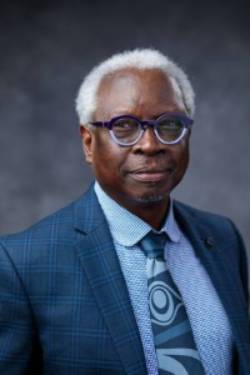
About Salikoko S. Mufwene
Salikoko S. Mufwene is the Edward Carson Waller Distinguished Service Professor in the Dept. of Linguistics, the Dept. of Race, Diaspora, and Indigeneity, and the College at the University of Chicago. His research area is evolutionary linguistics, focused on the phylogenetic emergence of languages and language speciation, and on language vitality. He has authored and (co-)edited dozens of books and has published hundreds of articles, book chapters, and book reviews. He is a fellow of the Linguistic Society of America, of the American Philosophical Society, and of the American Academy of Arts and Sciences. He assumed the Chaire Mondes francophones at the Clollège de France for the 2023-24 academic year.
Faculty Response Panel:
- S. N. Sridhar (Panel Chair; SUNY Distinguished Service Professor, Asian and Asian American Studies
and Mattoo Center for India Studies) - Manisha Desai (Executive Director of Center for Changing Systems of Power; Empowerment Charitable
Trust
Endowed Professor in Global Citizenship; Professor of Sociology and Women, Gender, and Sexuality Studies,
Senior Research Associate, United Nations Research Institute for Social Development) - Sara Hamideh (Associate Professor, Marine and Atmospheric Sciences)
- Janet Ward (Professor, Philosophy; Associate Provost for Arts, Humanities, and Social Sciences Initiatives)
Beyond Cultural Pastiche: Developing CritIC in AI-mediated Clinical Communication
Talk Time: 11:00 - 12:15pm
Abstract:
Health professional education is taking diversity and cultural sensitivity seriously,
and rightly so. As future clinicians work with diverse patients, educators are seeking
meaningful, scalable opportunities for communication training. AI-facilitated simulation
appears to offer one solution, with avatar patients generated with recognisable cultural
cues. Yet this raises an unsettling question: how does AI reproduce culture and what
impact does it have on health trainees? Through analysing multimodal clinical communication
data from human-AI and human-human interactions, this talk explores fundamental differences
in how AI and humans evoke culture. AI-generated cultural talk resembles a pastiche
of essentialist cues that flatten context, diminish human criticality, and reproduce
structural inequalities. Human cultural talk, by contrast, creates context, expands
imagination, and subverts pre-existing boundaries. I conclude by arguing that the
next generation of health professionals needs not only EDI awareness but also Critical
AI Literacy, conceptualised as CritIC (Critical Interactional Competence), in AI-facilitated
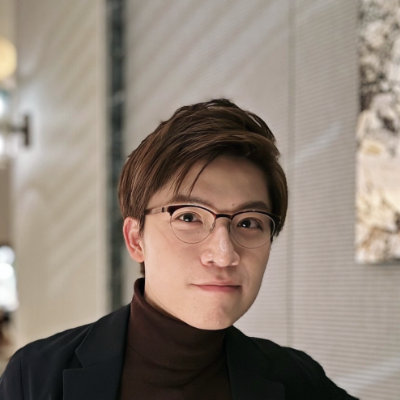
clinical communication.About David Wei Dai
David Wei Dai is Associate Professor in Professional Communication at University College London.
His research examines social interaction across healthcare education, intercultural
and professional communication, language learning and assessment, and human–AI engagement.
His work has appeared in leading venues across applied linguistics, health education,
and learning analytics, including Applied Linguistics, Language Learning, Annual Review
of Applied Linguistics, Medical Education, Advances in Health Sciences Education,
BMC Medical Education, and the LAK26 Proceedings. He is the author of the open-access
monograph Assessing Interactional Competence. His research has been funded by the
British Academy, Leverhulme, the British Council, OET, Duolingo, and TOEFL.
Faculty Response Panel:
- Yi Wang (Panel Chair; Assistant Professor, Asian and Asian American Studies)
- Renee Fabus (Chair and Program Director, Speech-Language Pathology)
- Andrew Flescher (Professor, English and Program in Public Health)
- Ben Zhang (Assistant Professor, Technology, AI and Society)
Searching for Common Ground in Human-AI Interaction (What Gen AI Can't Do)
Talk Time: 2:00 - 3:15pm
Abstract:
For many of us, the alien invasion of LLMs has been unsettling, at best. Who knew that monstrous quantities of text and compute power could simulate human discourse processing? But despite claims about emergent theory-of-mind in “reasoning models,” LLMs remain stochastic parrots: they do not collaborate, project co-presence, form conceptual pacts, accurately signal commitment to what they say, or accrue common ground. This lack of pragmatic competence is clear from our recent studies of narrative and referential communication by AI vs. humans.
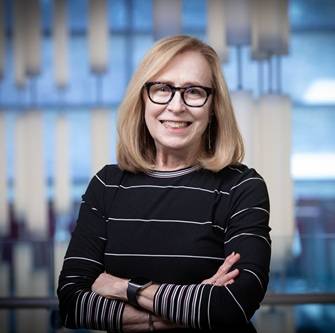
About Susan E. Brennan
Susan Brennan is SUNY Distinguished Professor at Stony Brook University in Cognitive Science within the Department of Psychology, with affiliations in Computer Science and Linguistics. Her research uses eye-tracking, experimental, behavioral, and observational methods to study the psycholinguistics of communication (verbal, nonverbal, and multimodal), adaptive language use, and the human use of technology, including spoken dialogue systems. She currently directs the NSF-funded Research Traineeship project, Detecting and Addressing Bias in Data, Humans, and Institutions, a collaboration among PhD. programs in Cognitive Science, Social & Health Psychology, Computer Science, Applied Math & Statistics, Linguistics, Political Science, Economics, Africana Studies, and Women’s Studies. This traineeship supports students’ AI and bias-related convergent research projects that include assessing potential for LLVMs (Large Language-Vision Models) to act as interlocutors in spontaneous dialogue as well as collaborating with the Innocence Network about AI tools. She holds a Ph.D. in cognitive psychology from Stanford University, an M.S. in visual studies from MIT (from what is now known as the MIT Media Lab), and a B.A. from Cornell University in cultural anthropology. She has worked in industry at Atari Research, Hewlett-Packard Labs, and Apple Computer, as well as at NSF as a program officer for the Graduate Research Funding Program.
Faculty Response Panel:
- Chaoran Wang (Panel Chair; Assistant Professor, Writing and Rhetoric )
- Michael Hochman (Instructional Designer - AI Specialist, Center for Excellence in Learning and Teaching)
- Lav Varshney (Director, AI Innovation Institute)
- Josh Zhang (Associate Professor, Sociology and Institute for Advanced Computational Science)
Synthesis and Open Discussion with All Speakers, Panelists, and Participants
Moderator: Shyam Sharma (Professor, Department of Writing and Rhetoric, SUNY AI Fellow for the Public Good)
Talk Time: 3:30 - 4:45pm