


Mechanical Engineering Stewart Harris Seminar Series
Human-Centric Neural-Machine Interface for Dexterous Control of Assistive Robots
October 23rd, 2026 | 2:00 PM | Engineering 145
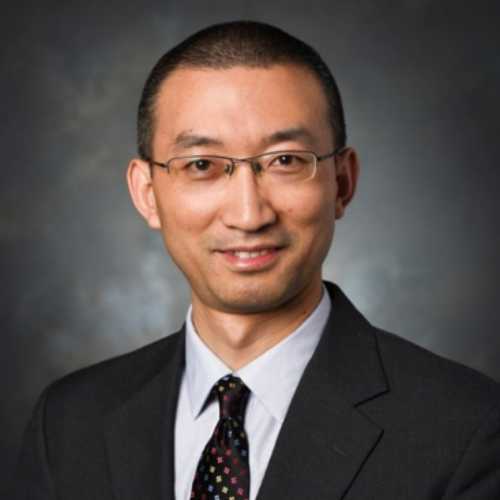 Xiaogang Hu, PhD
Dorothy Foehr Huck and J. Lloyd Huck Chair in Neurorehabilitation
Professor of Mechanical Engineering, Kinesiology, Physical Medicine and Rehabilitation,
Penn State University
Abstract:
An intuitive neural-machine interface is essential for seamless communication between humans and assistive robots. In this seminar, we will explore human-centric machine learning techniques that enhance human-robot interactions. Specifically, we will focus on bi-directional neural interfaces that: 1) predict human intent to enable secure and intuitive control of assistive robotic hands, and 2) provide sensory feedback to users about the machine's state and the surrounding environment. These interfaces facilitate precise and dexterous control of assistive devices, with a particular emphasis on their applications for individuals with clinical conditions.
Bio:
Xiaogang Hu is the Dorothy Foehr Huck and J. Lloyd Huck Chair in Neurorehabilitation
and a Professor of Mechanical Engineering, Kinesiology, Physical Medicine and Rehabilitation
at Penn State University. He earned his B.E. in Mechanical Engineering from Tsinghua
University, followed by a Ph.D. in Kinesiology and Biomechanics from Penn State University.
Dr. Hu completed his postdoctoral training at Northwestern University. His research
focuses on human-robot interaction and assistive robotics, specifically targeting
upper limb rehabilitation for individuals affected by stroke or limb loss. His
research program is funded by NSF, NIH, and DoD. He serves as an associate editor
for the Journal of NeuroEngineering and Rehabilitation, IEEE Transactions on Neural
Systems and Rehabilitation Engineering, and IEEE Transactions on Human-Machine Systems.