


AIAA Space Medicine Panel Explores the Intersection of Engineering, Medicine, and Space Exploration
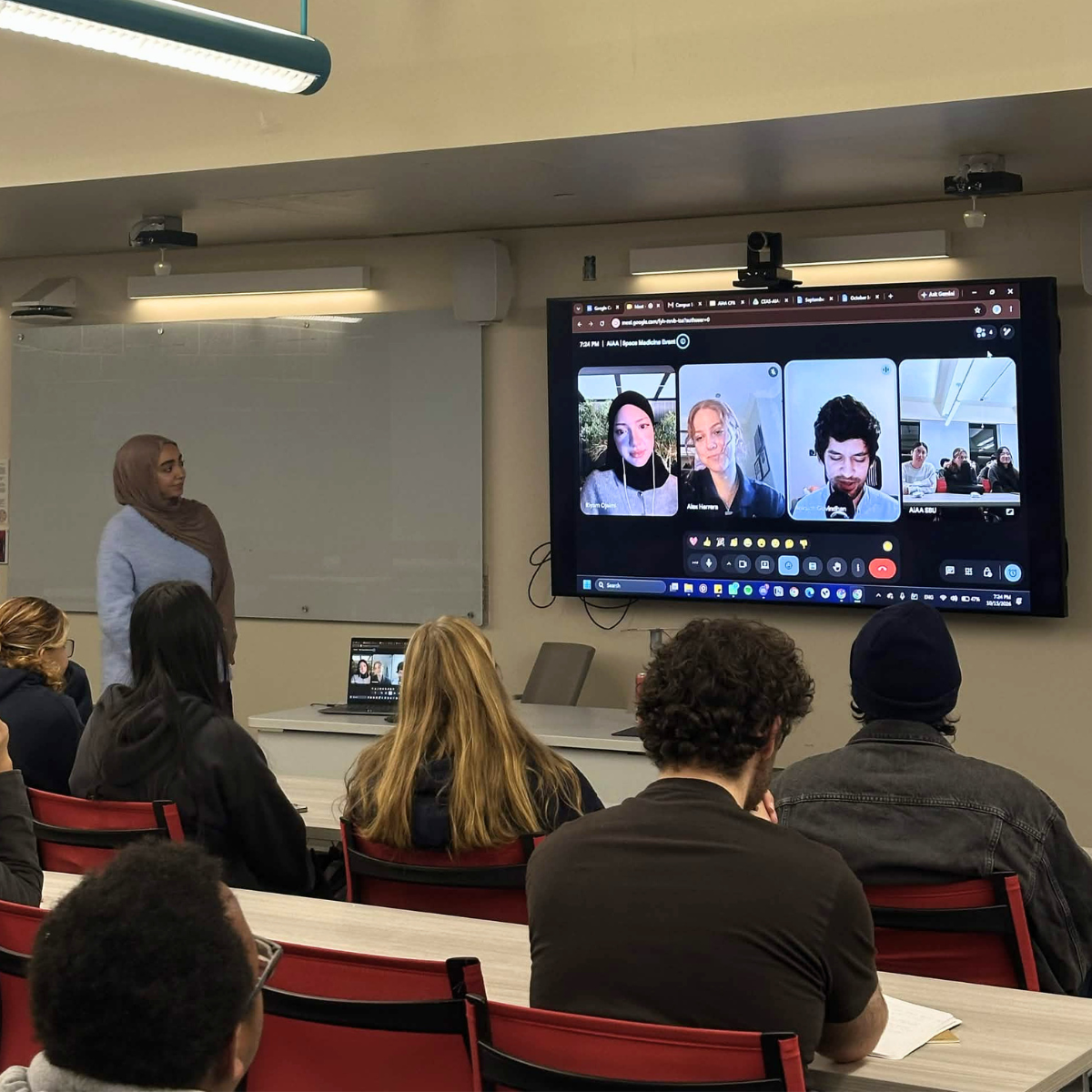
 On October 15, the Stony Brook University chapter of the American Institute of Aeronautics
& Astronautics (AIAA) hosted a Space Medicine Event in SAC 303. The event brought students together to explore how the human body adapts to space
and the engineering and medical innovations needed to protect astronauts during long-duration
missions.
The event featured three guest speakers who offered perspectives from engineering, research, and neuroscience. Alex Herrera, Hardware Payload Systems Engineer at NASA Johnson Space Center, shared insights into her work with ultrasound technology used for human research and medical operations aboard the International Space Station (ISS) and future Artemis missions. Anirudh Govindhan, also a Systems Engineer at NASA Johnson Space Center, discussed his work supporting human health research aboard the ISS and his role as Lead Actigraphy Engineer for Artemis III. Riyam Ojaimi, an undergraduate student at the University of Toronto studying brain sciences alongside health and astronomical sciences, brought a research perspective on neuroscience, cognition, and human performance in extreme environments.
Through the speakers' experiences, students learned about the health challenges astronauts face during spaceflight, how the human body responds to space environments, and the technologies engineers and researchers develop to monitor and protect astronaut health. A Q&A session also gave attendees the opportunity to ask questions about the speakers' work, career paths, and the future of human spaceflight.
The event also included a hands-on CPR session led by Vena Zareif from Stony Brook University's Center for Prevention and Outreach (CPO). Students learned the basics of CPR and practiced the skills themselves, connecting the medical focus of the event with a practical learning experience.
 For Malak Hassibou, President of the Stony Brook AIAA Student Chapter and event organizer,
the goal was to demonstrate the growing connection between two disciplines on campus:
"When we set out to plan this event, our goal was to highlight an emerging intersectionality between two of the major disciplines on Stony Brook's campus, and to show fellow students that they don't have to choose between a medical or an engineering academic background, as Space Medicine lives at the heart of this synergy."
Students echoed the value of exploring this interdisciplinary field. Joshua Garcia, an undergraduate student and AIAA member, shared, “The space medicine event was both informative and engaging! Learning about medical opportunities in the aerospace field is a lesser-known market that, thanks to this event, I now have a blooming interest in.”
Prama Biswas, AIAA PR / Marketing Lead, also reflected on the event’s impact, highlighting the value of seeing engineering principles applied to real-world challenges and discovering connections between seemingly different disciplines:
“The Space Medicine Event was both informative and a great time to see how engineering is applied in the real world. It was eye-opening to see how closely two different fields can be related. It was inspiring and made me want to contribute to something that makes a difference.”
The event highlighted how engineering, medicine, and scientific research work together to address the challenges of human space exploration. Through opportunities like this, Stony Brook AIAA hopes to continue expanding student interest in space health and inspire the next generation of innovators working toward the future of space exploration.