
Research Opportunities
There are ten research areas currently offered as part of the REU program:
- Computational Astrophysics
- Experimental Condensed Matter Physics
- Accelerator physics
- Nuclear Experiment
- High Energy Physics- Collider
- Observational Astrophysics and Cosmology
- Experimental Atomic and Molecular Optics (AMO)
- Theoretical AMO
- Theoretical Cosmology
- Computational Condensed Matter
- Laser Teaching Center
1. 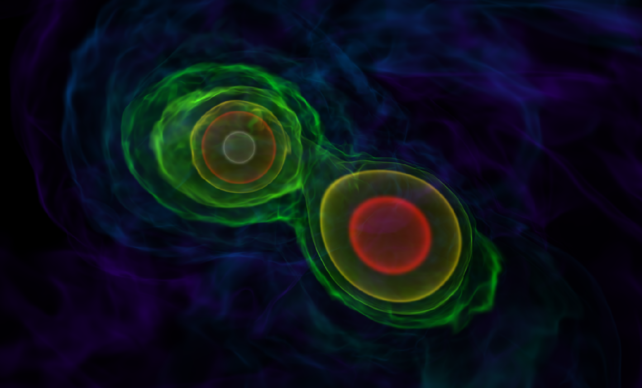 Computational Astrophysics (mentors: Alan Calder / Michael Zingale): Our computational astrophysics group is active in simulations of stellar phenomena
(including various models of supernovae, X-ray bursts, novae) and related topics (exoplanet
structure). We develop a suite of open source simulation codes that solve the equations
of hydrodynamics on adaptive structured meshes, and are written to perform on modern
supercomputers. REU students have a choice of project, usually involving:
Computational Astrophysics (mentors: Alan Calder / Michael Zingale): Our computational astrophysics group is active in simulations of stellar phenomena
(including various models of supernovae, X-ray bursts, novae) and related topics (exoplanet
structure). We develop a suite of open source simulation codes that solve the equations
of hydrodynamics on adaptive structured meshes, and are written to perform on modern
supercomputers. REU students have a choice of project, usually involving:
- Performing simulations of a new science problem (likely 2D, exploratory calculations)
- Working on visualization of simulation data
- Adding to and testing our microphysics (nuclear reaction networks, equations of state, etc.)
Students should have familiarity with programming (we use C++, Fortran, and python primarily). Working in our group, we will train the student on modern software engineering techniques, including version control with git, testing, and debugging.
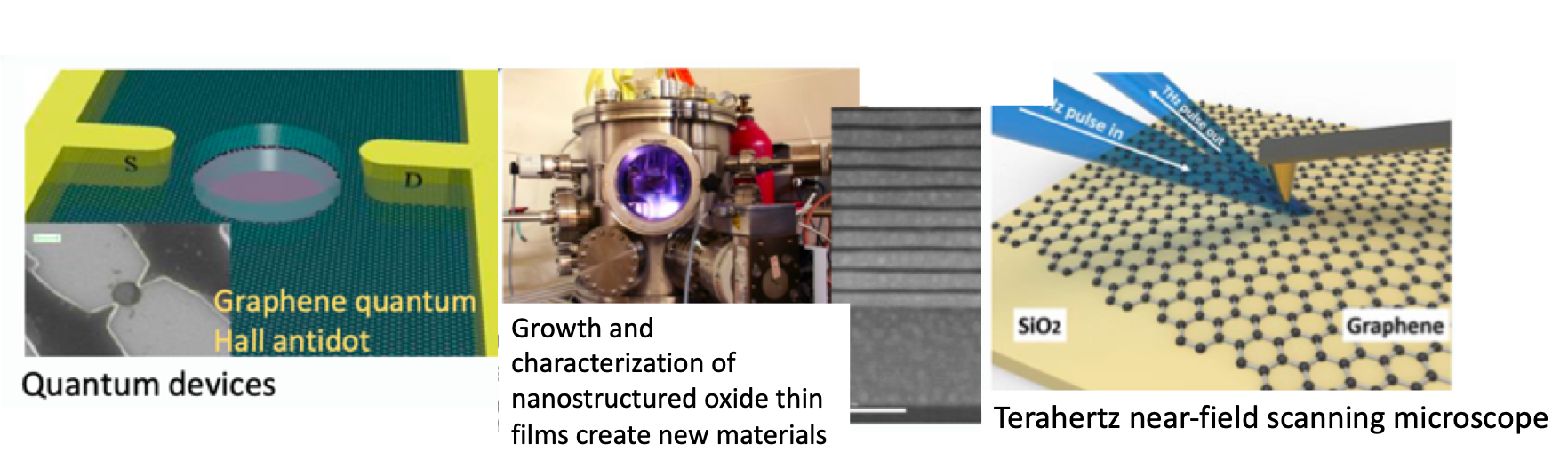
2. Experimental Condensed Matter Physics (mentors: Raymond Blackwell, Xu Du, Qiang Li, Mengkun Liu): There are four highly active experimental condensed matter groups with labs on-site in the physics building at Stony Brook. The groups operate in a highly collaborative fashion with students working in one group having access to the equipment in the labs of the other groups. The focuses of the four groups are:
- Electrical transport and device physics with a focus on 2D materials (Du)
- Quantum materials in energy, and quantum information science and technology (Li)
- Ultra-fast and near field IR spectroscopy (Liu).
- Scanning tunneling microscopy (BLackwell)
The groups are also extensive users of nearby user facilities at BNL, in particular beamlines at NSLS-II and the nanofabrication facilities at the CFN which complement our in-house facilities. Students working in this area would be doing very hands-on projects mastering a number of experimental apparatuses.
3. Accelerator physics (mentor: Navid Vafaei-Najafabadi): Accelerator physics is a growing area of research with many exciting opportunities for undergraduate students in both conventional accelerator physics as well as advanced accelerator technology. Brookhaven National Lab (BNL) and Stony Brook jointly staff and support the Center for Accelerator Science and Education (CASE), which seeks to train the next generation of accelerator scientists and engineers. The Center, along with other Stony Brook faculty connections to BNL, provides a unique opportunity for an REU student to engage in research in collaboration with a world class accelerator facility.
REU students will contribute to experiments in the field of plasma-based particle accelerators, where accelerating forces a thousand times greater than the conventional particle accelerators can be generated. One such experiment, which is currently underway, uses the laser and electron-beam facilities at the Accelerator Test Facility at BNL to experimentally study the properties of plasma waves generated by lasers. This project will give the students hands-on training in a number of areas, including particle acceleration, high power laser physics, laser and particle beam diagnostics, and scientific data analysis. REU students have previously contributed to this research by writing data acquisition and analysis software, studying and designing plasma and electron beam diagnostics, and conducting simulation studies.
4. Nuclear Experiment (mentors: Jan Bernauer, Ross Corliss, Jaydeep Datta, Abhay Deshpande , Axel Drees, Roli Esha, Tom Hemmick, Joanna Kiryluk): Our Nuclear Physics program is ranked 3rd in the United States, and our experimental group offers a number of exciting projects for REU students. The group is active at the US national labs: Brookhaven National Laboratory (BNL) and the Thomas Jefferson Accelerator Facility Lab (JLab), and outside the U, at the Paul Scherrer Institute (PSI) in Switzerland and at the IceCube experiment at the South Pole, with ample projects for REU students to get involved in. The current projects include:
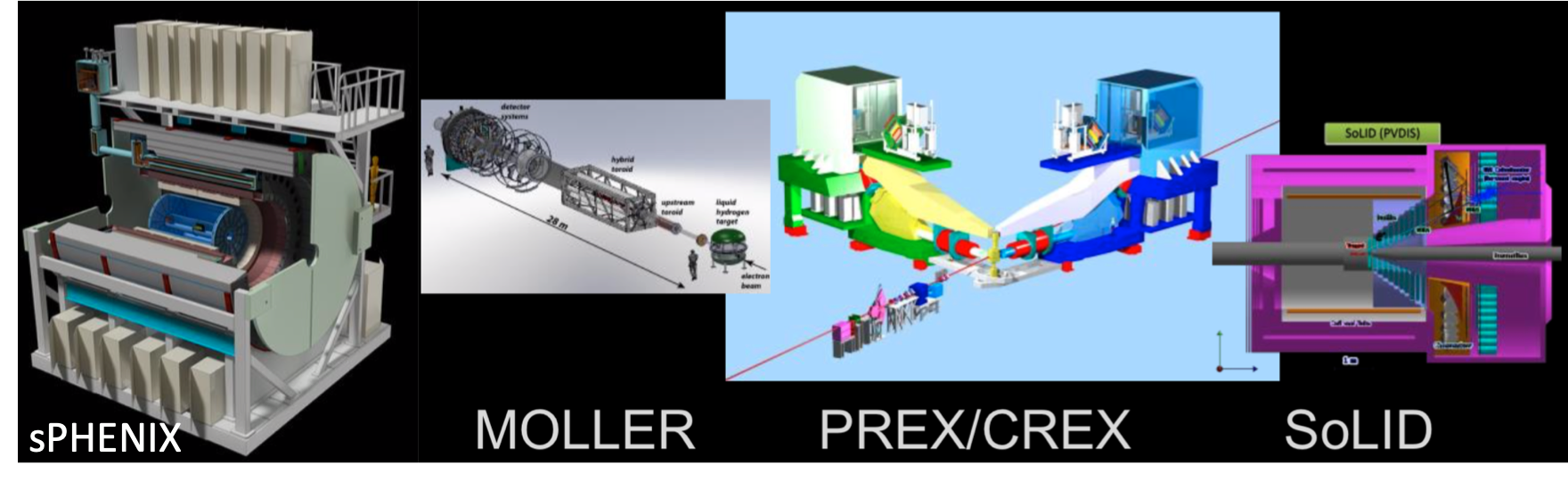
- The sPHENIX experiment at BNL is nearing the end of data-taking. Analysis of the data will be a fabulous opportunity for students to participate and learn basic data analysis techniques and experience life as a graduate student. The central physics goal is characterization of the Quark Gluon Plasma, using heavy quarks and jets. In addition to this physics, the Stony Brook group will also explore color confinement and neutralization (also called hadronization) using internal jet structure through momentum and energy correlations that can be explored using the sPHENIX datasets. Primary mentors include Profs. Drees, Hemmick, Corliss, and Esha.
- The MOLLER experiment at JLab will begin taking data in 2027, intending to make the most precise measurement of electron-electron scattering in order to challenge the Standard Model and look for physics beyond it. In 2026 we will be assembling the different subdetector components in the experimental hall. Our group has just finished building 40% of the forward tracking (GEM) detectors and is now transitioning to contributing to the development of software for analyses of the data. An REU student working in this group will help develop software that will be used in the simulation and analysis of the experimental data. It is also possible to visit JLab to assist in installation, and to observe and operate the MOLLER detector spectrometer in 2026-2028. Profs. Deshpande and Datta work on this experiment.
- The Electron-Ion Collider (EIC) is the highest priority construction project now in the US oce of nuclear physics in the Department of Energy. Stony Brook has been a leader in developing the science, the R&D program for developing new detector technologies for EIC and is playing a leading role in its realization including participantion in the ePIC detector collaboration. This work includes development of proximity focused-Ring Imaging Cherenkov (pfRICH) detector construction and testing. We are coating mirrors and doing the analysis development for the Cerenkov counters. We are also involved in the Time-of-Flight detector R&D and expect to participate in the development of polarized light ions at the EIC. All listed faculty are involved in the EIC.
- There is a large overlap between EIC detector and physics with SoLID, an upcoming experiment at JLab which will investigate deep inelastic scattering (DIS) and parity- violating DIS. The research involves both bench experiments and beam experiments to build and prove new technologies, led by Profs. Datta, Deshpande and Hemmick.
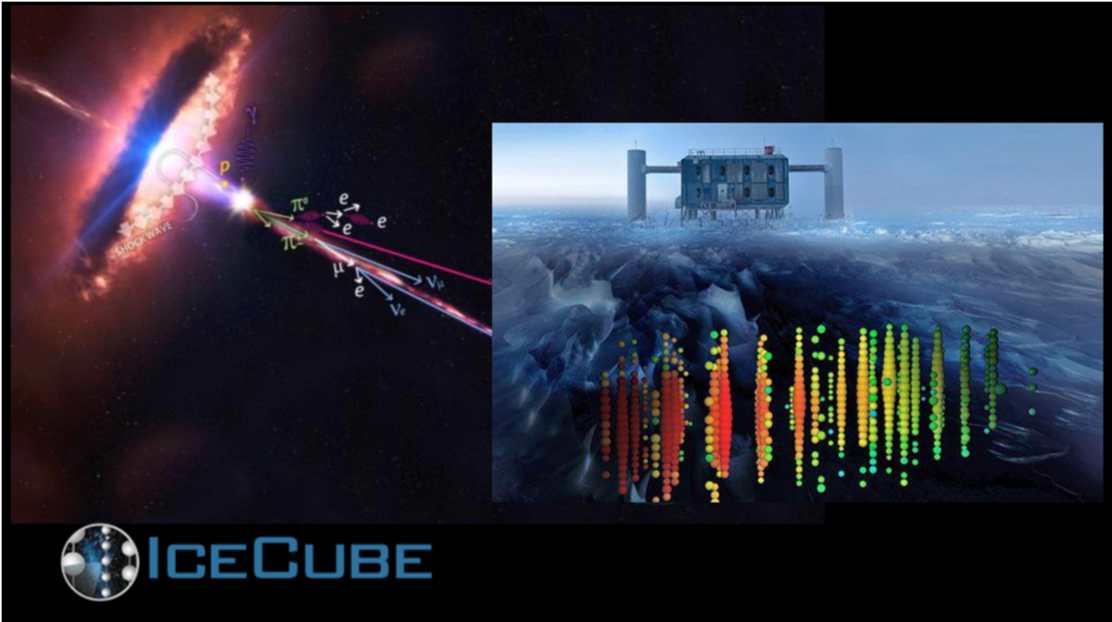
- The IceCube experiment is in operation at the South Pole, studying the Universe by observing high-energy neutrinos. Working with Prof. Kiryluk, an REU student will have the opportunity to participate in this cutting-edge science in the emerging field of neutrino particle astrophysics. They will contribute to analysis of existing and simulated data to reconstruct and identify the flavor of high-energy tau and electron neutrinos with deep learning (neural network) methods and techniques.
- The MUSE experiment, a muon-proton scattering experiment currently running at PSI; and the DarkLight experiment (with Corliss), a search for a dark-sector force carrier with a mass around 20 MeV which is under construction at TRIUMF, Canada, are the primary focuses of Prof. Bernauer’s group. These and other activities in his group offer opportunities for an REU student in an international context, including machine learning projects and work on the analysis of experimental data.
- PIONEER is a rare pion decay experiment at PSI which is expected to start in 2029. Currently in the design phase, PIONEER will measure the ratio of pion decay channels with very high precision to probe Lepton Flavor Violation and the unitarity of the CKM matrix. SBU is responsible for the design and construction of the experiment’s unique, bullet-shaped tracking detector. Under Prof. Datta, an REU student will be involved in detector R&D and software development for the experiment at a stage where their work can actively impact the upcoming experiment’s design.
5. High Energy Physics - Collider (Mentors: Hannah Arnold, Valerio Dao, John Hobbs, Giacinto Piacquadio, Dmitri Tsybychev): The Stony Brook ATLAS group hosts REU student research under the supervision of Profs. Arnold, Dao, Hobbs, Piacquadio and Tsybychev. The group co-leads several physics measurements based on the analysis of the proton-proton collision data recorded with the ATLAS Experiment and delivered by the LHC accelerator at CERN in Geneva. These include the measurement of Higgs decays to b- and c-quarks, the search for the rare double Higgs production process, and the search for the rare Higgs decays to muons and the search for Higgs → aa → bbμμ, where 'a' is a hypothesized new intermediate pseudo-scalar. Student projects will be focused on one of these analyses.
LHC Run 2 ended in 2018, and Run 3 is in full swing. Projects would be associated with the ongoing Run 2 and Run 3 data analyses. The group is also involved in HL-LHC upgrade activities, and should a summer student show interest in this, upgrade-related projects in the areas of tracking (ITK upgrade) and/or calorimetry (LAr upgrade) could be undertaken.
The extremely good LHC machine performance, both in terms of instantaneous luminosity and total data set size, comes at a price: The analysis of the data has to cope with larger data collecting rates, making the online signal selection challenging, with high contamination from pile-up, i.e. additional unwanted soft interactions that are the irreducible by-product of the higher rates. Experimental progress therefore requires not only the analysis of the additional data, but also the design of smarter analyses.
Understanding the physics of LHC collisions, how these are recorded with the ATLAS detector and how to deal with these challenges constitutes an intellectually stimulating environment for a student. At the same time it can be overwhelming if a student is not provided the right tools to filter out the relevant information. Therefore, each student project will focus on one specific challenge, for example the re-optimization of specific aspects of the analysis selection (which is typically connected to better understanding the features of the signal as opposed to the backgrounds), or a selective reduction of the contamination from pile-up, or an exploration of a specific systematic uncertainty such as the b-jet calibration.
The dataset typically required for any of these analysis will be processed in such a way to present the student with data (real data and the corresponding simulated processes) in a format that can typically be analyzed on a single computer, and can be processed within a reasonable time with limited overhead involved. State-of-the-art machine learning techniques will be employed for the optimization.
In all phases the student will be mentored by both an experienced post-doc in the group and a supervising faculty member. By the end of the program, the "isolated" problem will be integrated back into the main ATLAS analysis code, meaning the student's work can have a lasting impact on major analysis work.
Activities related to the upgrade of the ATLAS detector are centered on the understanding of new cutting edge silicon detectors or high performing electronics for the readout of the liquid Argon calorimeter.Interested students will have the opportunity to obtain direct experience with existing prototypes and the testing and commissioning of new detector functionalities.
The project will end with a presentation to the ATLAS Stony Brook group’s weekly meeting and with a presentation to the relevant ATLAS working group meeting.
6. Observational Astrophysics and Cosmology (mentors: Simon Birrer):
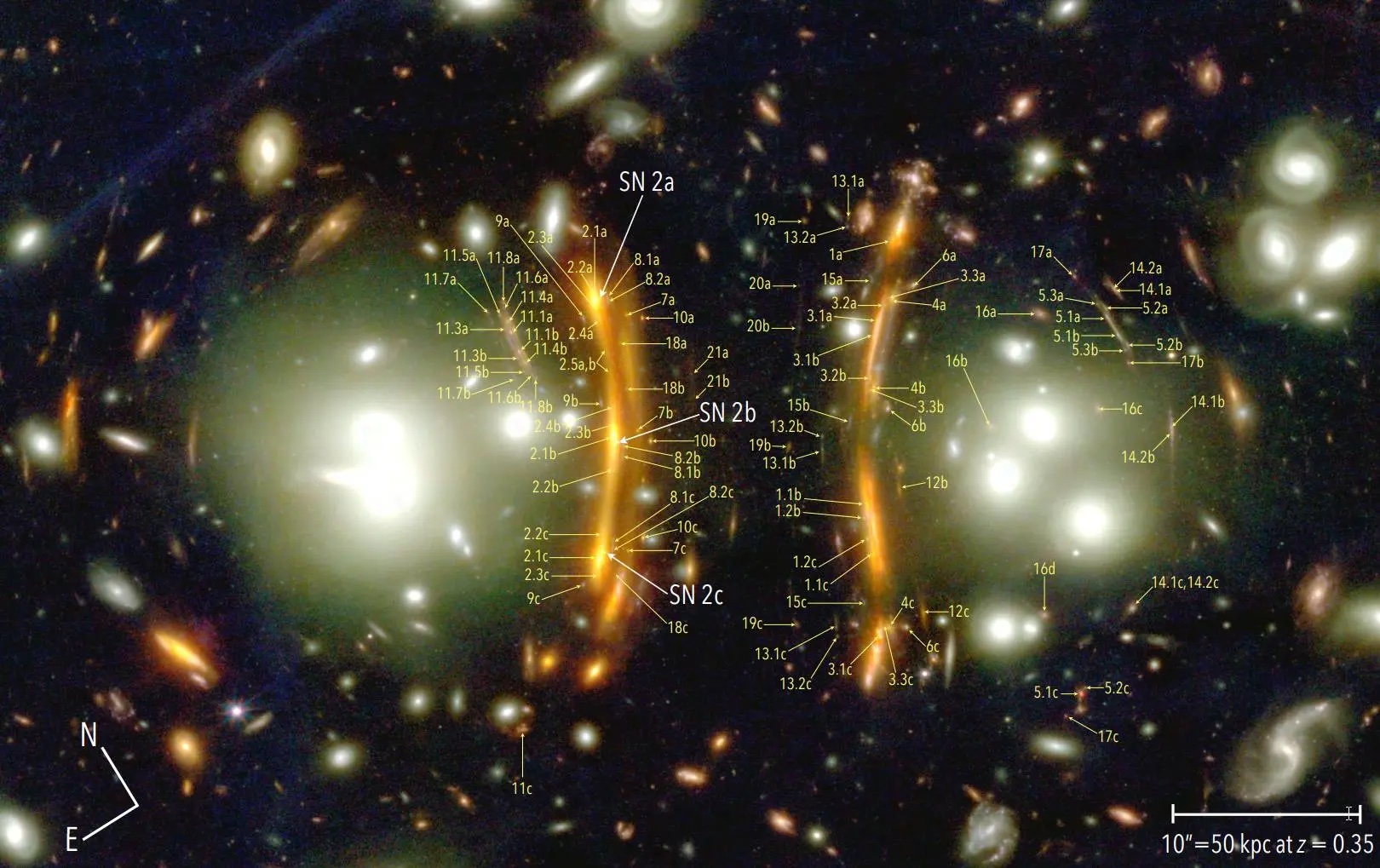
Prof. Birrer's group seeks to answer fundamental questions in physics with astrophysical and cosmological observations. The group’s expertise is in the interface between the exquisite data sets available on one side and the fundamental theory predictions on the other side. They are actively developing advanced computational and statistical tools in an open-source and reproducible manner.
Student projects can be formed around the analysis around Hubble Space Telescope and James Webb Space Telescope imaging data of strong gravitational lenses, or with the testing, documenting and implementation of features in open-source software.
The group is also heavily involved in the preparation and analysis of the next generation ground and space based missions (Vera C. Rubin Observatory, Roman Space Telescope) and projects can be formed around the inspection and analysis of these data sets. Students will learn to work with astronomical data products, developing an intuition into statistical analyses, and in collaborative software developments with pull requests, code review, and continuous integration testing.
7. Experimental Atomic and Molecular Optics (Mentors: Tom Allison, Eden Figueroa, Harold Metcalf, Dominik Schneble, Tom Weinacht):
Experimental AMO research in our department is carried on in five laboratories. It spans an enormously wide range, covering almost all of the areas of current interest in the field:
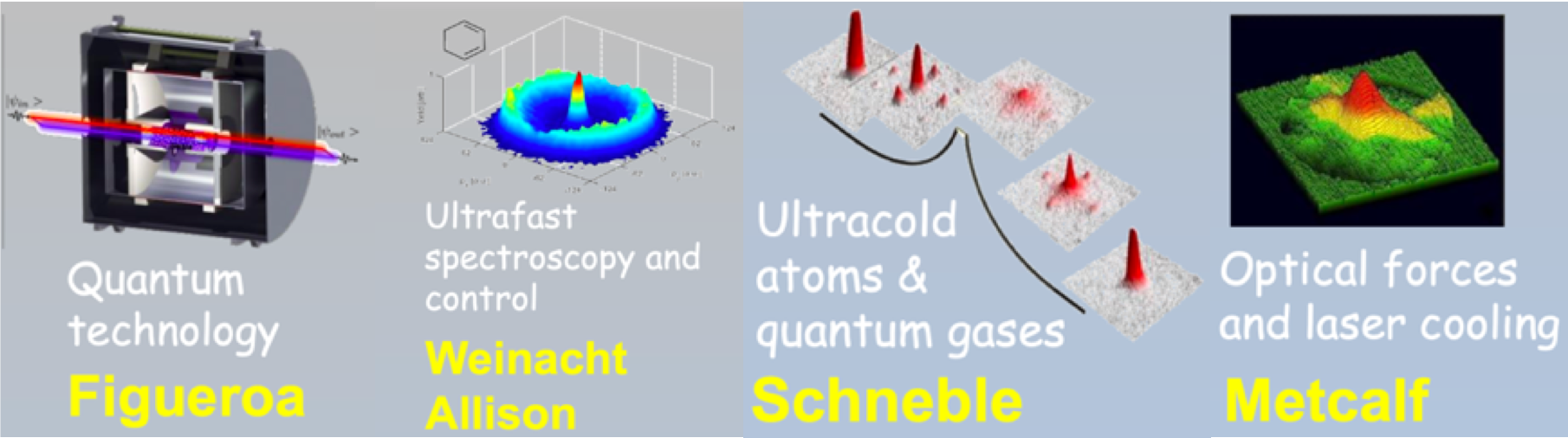
- In the time resolved spectroscopy lab under the guidance of Tom Weinacht, there are opportunities for students to design and test new optical systems for imaging, and manipulating the spatial and temporal properties of femtosecond time scale laser pulses. They could also work on developing software and hardware for data acquisition, as well as approaches for the interpretation of experimental measurements.
- The ultracold-atom lab under the guidance of Dominik Schneble produces gaseous atomic samples in the nanokelvin regime and studies their exotic quantum-mechanical behavior using advanced optical techniques. An REU student would have the opportunity to learn about diode lasers and optics, ultrahigh vacuum, as well as data acquisition and analysis. They would be able to contribute through self-contained projects relating to laser stabilization, acousto-optics, optical atom trapping and imaging, and software and electronics development.
- Using polychromatic light to study ultra-strong optical forces on neutral helium atoms is one topic of study in Harold Metcalf’s lab. One of the exploited transitions occurs in the telecom wavelength region so there is a wide range of fiber-optic instrumentation whose implementation for atomic physics is an extremely beneficial experience for students. There are Ti:Sapph lasers pumped by vanadates, fiber amplifiers, and of course, diode lasers frequency locked to atomic transitions and phase-locked to one another. Along with the physics of laser cooling and coherent exchange of momentum between atoms and light, there are a variety of technological experiences for an interested student.
- The quantum information lab of Eden Figueroa offers hands-on projects for REU students. The projects are aimed at teaching students valuable experimental methods that are common in modern day quantum optics and quantum information research. Possible projects include the construction and optimization of optical resonators, design of temperature-stabilized systems for nonlinear crystals, and the setting of an external cavity diode laser tuned to atomic transitions.
- Frequency comb lasers, recognized with the 2005 Nobel prize in physics, have revolutionized atomic clocks and precision measurement. However, their enormous potential for ultrafast time-resolved measurements has been largely unexplored. The Allison lab develops frequency comb light sources across the electromagnetic spectrum to follow the motions of electrons, holes, and nuclei in molecular and condensed matter systems on ultrafast time scales. Developing new technologies and physics ideas go hand in hand with gaining insight into ultrafast dynamics.
8. Theoretical AMO (mentor: Jesus Perez Rıos, Tzu-Chieh Wei): The research interest of the group of Jesús Pérez Ríos revolves around the fundamentals of atomic and molecular interactions at the borderline of other disciplines of physics. The research interests in the group of Tzu-Chieh Wei include theoretical quantum information, condensed-matter physics, and quantum optics. Research topics include:
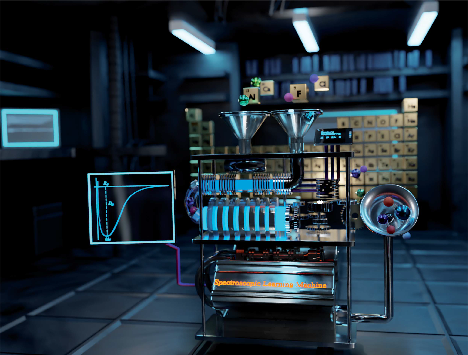
- Cold and ultracold chemistry: Atomic and molecular processes at temperatures close to absolute zero, where quantum mechanics dictates the reaction dynamics and is controlled via external fields.
- Few-body physics: This is the study of physical systems involving few degrees of freedom, such as chemical reactions. We focus on studying three-body recombination or ternary association, i.e., the formation of a molecule out of three free atoms, relevant to atmospheric physics (ozone formation), plasma physics (ion-atom-atom processes), and chemical physics (van der Waals molecule formation).
- Physics beyond the Standard Model: In this line of research, thanks to collaborative efforts with our colleagues from high-energy physics, we try to find suitable atomic and molecular systems for searching for dark matter and new particles and interactions.
- Data-driven chemistry: In this line of research, we use machine learning techniques to study the properties of diatomic molecules, propose novel reaction mechanisms, or improve a given quantum mechanical treatment for electronic structure methods.
REU students participating in this research will explore characteristic traits of quantum mechanics, how to characterize the quantum nature of light and light’s interaction with atoms, how to characterize and quantify entanglement, and how entanglement can be used in various scenarios, and will gain experience in working with Monte Carlo simulations and tensor-network techniques . They will also interact with experimental groups and help to apply theoretical quantum optical tools to study experimental findings, which will help students find their professional paths.
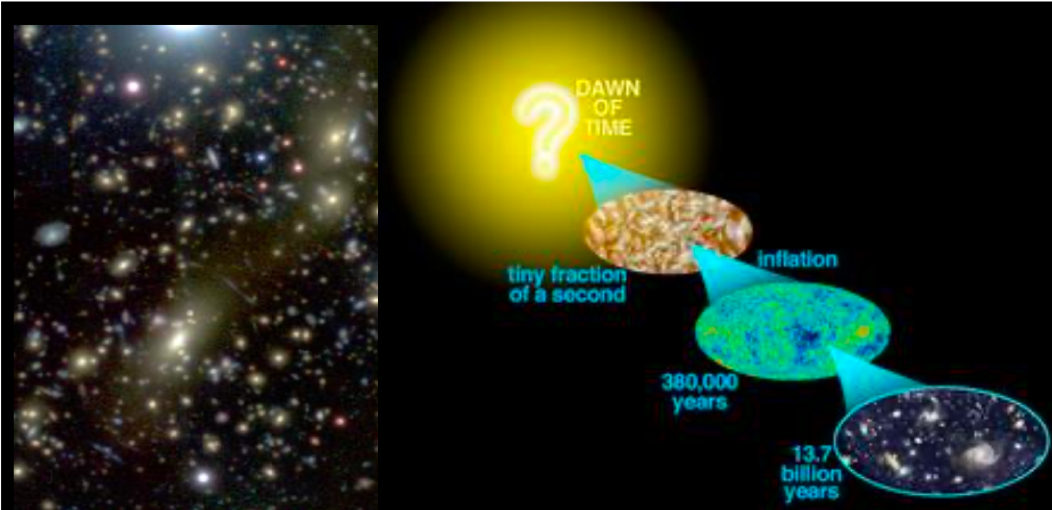 9. Theoretical Cosmology (mentor: Vivian Miranda): The cosmology group at Stony Brook is active in various
research topics with connections to many other areas of physics, from particles and
fields to astronomy. Cosmology research at Stony Brook spans the range of Mathematica-based
investigation to projects using high-performance computing when modeling the Cosmic
Microwave Background and optical lensing, all in close connection to the science of
the Dark Energy Survey and Rubin Observatories. Advanced undergraduate students would
have the opportunity to get involved in research at either end of the spectrum, depending
on their background and interest. An REU student in this group would be offered a
choice of a project involving: measuring new properties of large-scale structure,
extending and testing a simple analytic model for new physics, forecasting early and
late-time dark energy models for 2020's observatories. A student in this group would
learn programming skills and good coding practices and participate fully in the cosmology
group's regular journal club and weekly meetings.
9. Theoretical Cosmology (mentor: Vivian Miranda): The cosmology group at Stony Brook is active in various
research topics with connections to many other areas of physics, from particles and
fields to astronomy. Cosmology research at Stony Brook spans the range of Mathematica-based
investigation to projects using high-performance computing when modeling the Cosmic
Microwave Background and optical lensing, all in close connection to the science of
the Dark Energy Survey and Rubin Observatories. Advanced undergraduate students would
have the opportunity to get involved in research at either end of the spectrum, depending
on their background and interest. An REU student in this group would be offered a
choice of a project involving: measuring new properties of large-scale structure,
extending and testing a simple analytic model for new physics, forecasting early and
late-time dark energy models for 2020's observatories. A student in this group would
learn programming skills and good coding practices and participate fully in the cosmology
group's regular journal club and weekly meetings.
10. Computational Condensed Matter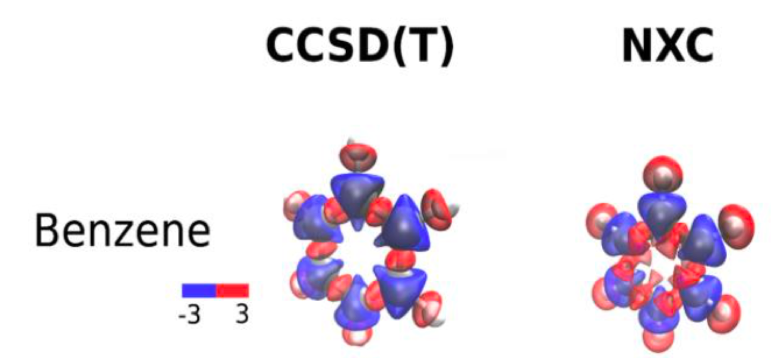 (mentors: Jennifer Cano, Cyrus Dreyer, Marivi Fernandez Serra, Phil Allen):
Students interested in condensed matter physics and computation will have a wide
choice of projects to choose from. The groups of Cano, Dreyer, Fernandez-Serra, and
Allen do research on developing and applying electronic structure methods to study the physics
of materials and condensed systems with intriguing and unexplained physical properties.
These groups are interested in understanding the coupling of electronic and atomic
degrees of freedom and how their collective behavior gives rise to functional physical
properties in different materials and combinations of materials in heterostructure and their interfaces.
While the groups are academically independent, their students interact as part of a single larger community. Group meetings are common and often the faculty will co-supervise students. This collaborative model offers a very favorable and friendly environment for REU students interested on doing research in their area. Current research projects REU students can be involved in include:
- Study of surface properties of topological materials and their use as catalysts, including photocatalytic water splitting: In particular, building on our experience with study- ing photocatalytic water splitting in oxide perovskites, students will study how similar reactions can be catalyzed by protected surface states on oxide topological insulator surfaces.
- Machine learning approaches to improve the theoretical approximations behind the numerical approaches in electronic structure methods: Students will study how to improve the exchange and correlation potential in density functional theory using machine learning. Projects will look at creating new solid-state data bases of accurate results using many body techniques like Greens function methods.
- Many-body methods for quantum defects: Students will explore models of point defects in materials inspired by (or parametrized with) first-principles calculations. The focus will be on defects that may be useful for quantum applications in quantum computing, quantum communication, and/or quantum metrology.
11. Laser Teaching Center: (coordinating mentor: Gillian Winters (Ph.D) )
The Laser Teaching Center (LTC) housed in a dedicated 1100 square-foot suite, has been a permanent facility
within our Department, since its founding in 1995. Over the years we have mentored
and guided many dozens of students, roughly equal number of men and women, from a
widely diverse range of ethnicity and backgrounds. Students are guided by our carefully
chosen mentors for our summer program, but there are ongoing projects and tutorials
throughout the academic year. It provides hands-on, individual educational projects
in optical physics and technology for students at all levels, even our graduate students.
Our high school alumni are admitted to the highest ranking colleges in the country,
and our undergraduate alumni go to the very best graduate schools. Their career trajectories
are astounding: the LTC provides a launching pad for students into graduate school,
industrial and/or government labs, internships, and other career opportunities.
During the summer of 2021, undergraduate projects included measuring the CHSH inequality
with polarization-entangled photons and a remote study on beam propagation from a
laser diode. Our student who worked on entanglement presented his work at the Division
of Laser Science (DLS) Symposium on Undergraduate Research, along with two high school
students who worked on a coherent backscattering experiment and an all-optical invisibility
scheme. In the summer of 2022, the undergraduate projects included the characterization
of Gaussian beams, design of optical tweezers, a study of open-cavity Fabry-Perot
interferometers, an investigation into the classic radiometer, and coupling Laguerre-Gaussian
beams into a hollow capillary. Our student working on the project with Laguerre-Gaussian
beams was invited to present her work at the DLS Symposium on Undergraduate Research
in October. Two other
Stony Brook REU students worked on projects in AMO labs that shared some resources
with the LTC. From this experience, we know that some REU projects can be performed
entirely within the LTC, while for others the Center can play a role in providing
resources to students doing projects in either AMO or Accelerator Physics.