
Faculty and Visiting Faculty
Karen Bender
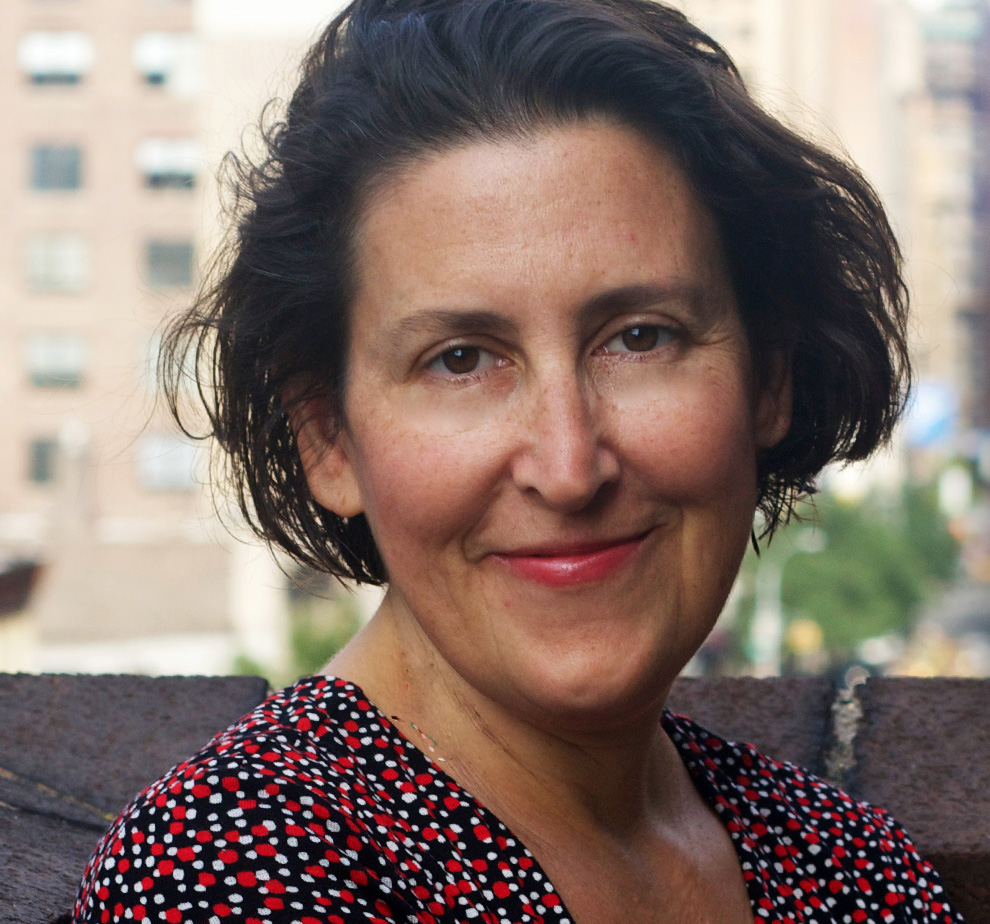
Lecturer, Creative Writing
Karen E. Bender is the author of two story collections: Refund , a finalist for the National Book Award in Fiction, a shortlist selection for the
Frank O’Connor International Short Story Prize, a longlist selection for the Story
Prize, and a Los Angeles Times bestseller, and The New Order , a longlist selection for the Story prize. A new collection, The Words of Dr. L and other stories, is forthcoming from Counterpoint Press. She is also the author of two novels: Like Normal People , a Los Angeles Times bestseller, a Washington Post Best Book of the Year, and a Barnes and Noble Discover Great New Writers selection,
and A Town of Empty Rooms . Her fiction has appeared in magazines including The New Yorker, Granta, Zoetrope, Ploughshares, The Yale Review, The Harvard Review,
Guernica and others, and has been reprinted in Best American Short Stories, Best American Mystery
Stories, and won three Pushcart prizes. She has won grants from the National Endowment
for the Arts and the Rona Jaffe foundation. She is fiction editor of the literary
journal Scoundrel Time. Karen has taught creative writing at universities including Hollins University, the
University of Iowa, Warren Wilson College, Chatham University, and Tunghai University,
and is currently Core faculty at the MFA program at Alma College. Visit her at www.karenebender.com.
FACULTY INTERVIEW:
What genre(s) do you write in?
I'm a fiction writer. I write short stories and novels. I started more with novels and I have switched to short stories for my last three books. I follow my intuition and see whatever comes out. I started as a realist fiction writer, as the world seemed so strange in itself it seemed a challenge to capture it in its truth. Over time, I’ve been exploring other ways to explore reality and I've been moving along the spectrum to stranger and stranger work. Now, a lot of my work is more speculative, which has been really fun too.
What is the thing that excites you about the act of writing?
When you’re writing, you're the boss. It's about your vision of the world and what you want to explore. What a wonderful and unique experience! It's also a way to try and understand the world– all of its complexity and difficulty and sorrow and beauty and anger. Everything that's difficult about being a person, you can try and understand through your writing. It is so exciting when you write something that you expect people will think is freakish, and then someone says that they feel that way too. That's this wonderful bond. I think writing is the only art form that really accesses consciousness, at least in that exact way.
Do you feel like your work is in conversation with other writers or work? If so,
who/what?
Always. You write because you love what you read. You absorb it and you want to create it, you want to give birth to it. You read a book and it just pours into you.
Over the years, there's been so many different writers I have loved. When I was younger, I loved J.D. Salinger, I loved Philip Roth, I loved Erica Jong, I loved Deborah Eisenberg. Then, I loved Carson McCullers. James Baldwin became a huge influence in his moral clarity and beautiful writing. There was a writer when I was in college named Lisa Alther, who wrote a book called Kin-Flicks, which was a huge hilarious hit in the 70s. She was a big influence, in her riskiness and honesty. John Cheever was an influence as I tried to write about the domestic world and capture its eeriness, as was Grace Paley. Then, more recently, more speculative writers. I love Yoko Tawada. Octavia Butler. Ursula Le Guin, Margaret Atwood, Samanta Schweblin. Writers open the door for you—they show you want the possibilities are, what you can try .
What literary magazine would you recommend to your students?
One good place to find literary magazines is Clifford Garstang's Literary Magazine Rankings, which is based on the number of Pushcart Prizes they have won or been listed for. I think the Pushcart Prize Anthology is a good volume to consider in and of itself, it’s what they call the best of the independent presses. That said, no rankings of literary magazines are set in stone, and a literary magazine may be ranked highly but may not be one where you feel your work is a good fit. I think it's good to read a variety of them: The Paris Review, Granta, Ploughshares, Yale Review, Harvard Review, Kenyon Review. Just read a variety of them and see where your work fits.
What is your writing process?
I find an idea that sticks with me until it becomes a pressure on my chest and I have to explore it, until it becomes something I really want to figure out. It might be an image or a character or a situation. Then, I dive right into it. I'm not a plot oriented writer. I'm not someone who starts out and thinks this is how it's going to be organized. This makes my process slow, with a lot of missteps, but it works well for me to follow what's interesting to me emotionally. I let my subconscious guide the process, and I allow myself to really swim around in it.
How do you generate ideas?
I find something I want to explore, something I want to say at that particular moment. What do I not understand that I want to understand?
How do you manage when you get stuck?
I try new things and keep having faith. I was writing a new story recently, and I was feeling the “this is bad” feeling. And I thought, no, you just have to cut this.You just have to cut the bad stuff. I think cutting is helpful when you’re stuck because you can figure out what is and isn’t working, you can more clearly see what it is you are saying.
Inspiration or perspiration?
Both, but there’s just so much perspiration. So much of what makes someone a writer is just sitting down and finishing things. I see so many writers who start something and stop. It is really so hard to stay with a project. When you finish it, when you really take it through multiple drafts, when you make it really solid, you'll find a home for it.
If you weren't a writer, what job would you have?
My whole family is made up of psychiatrists and therapists, so maybe that. In my fantasy life, I would have become a dancer. My mom was a dancer and it was something I really loved. But I was really bad at it, which is why it would have to be a fantasy life.
Do you have a writing tip for emerging writers?
You have to just keep doing it. Keep reading and listening to suggestions that other people have for books. Keep writing and write about what's really important to you. Don't write about what you think you should write. What do you really want to tell people? Write about what you want to write about.