


Order of Exercises
PROCESSIONAL
ORDER OF MARCH
Paul Shepson, Dean, SoMAS
THE PLATFORM PARTY
HONORED GUESTS
THE FACULTY
BACHELOR’S CANDIDATES
MASTER’S CANDIDATES
DOCTORAL CANDIDATES
OPENING REMARKS
Paul Shepson, Dean of SoMAS
CONVOCATION ADDRESS
Robert Aller, Distinguished Professor
AWARDING OF CERTIFICATES
Undergraduate Certificates
Atmospheric Sciences Programs
Brian Colle, Atmospheric Sciences Division Head
B.S. in Atmospheric and Oceanic Sciences
B.S. in Climate Sciences
Marine Sciences Programs
Gordon Taylor, Marine Sciences Division Head
B.A. in Environmental Studies
B.S. in Marine Sciences
B.S. in Marine Vertebrate Biology
Sustainability Studies Programs
David Taylor, Sustainability Studies Division Head
B.S. in Coastal Environmental Studies
B.A. in Environmental Design, Policy, and Planning
B.A. in Ecosystems and Human Impact
B.A. in Environmental Humanities
B.A. in Sustainability Studies
Undergraduate Research Honors
Degrees of Distinction and Honors Research Awards
Paul Shepson, Dean of SoMAS
SoMAS Dean’s Scholarship Awards for Academic Excellence
Paul Shepson, Dean of SoMAS
Petra M. Udelhofen Memorial Scholarship Award
Brian Colle
Timothy Magnussen Memorial Scholarship
Brian Colle
AWARDING OF CERTIFICATES
Graduate Certificates
Master of Arts in Marine Conservation and Policy Certificates
Oliver Shipley, Assistant Professor
Master of Science and Doctoral Certificates in Marine, Atmospheric, and Sustainability
Sciences
Jackie Collier, Professor
CLOSING REMARKS
Paul Shepson, Dean of SoMAS
Message from Dean Paul Shepson
Good afternoon! It is truly a great day today!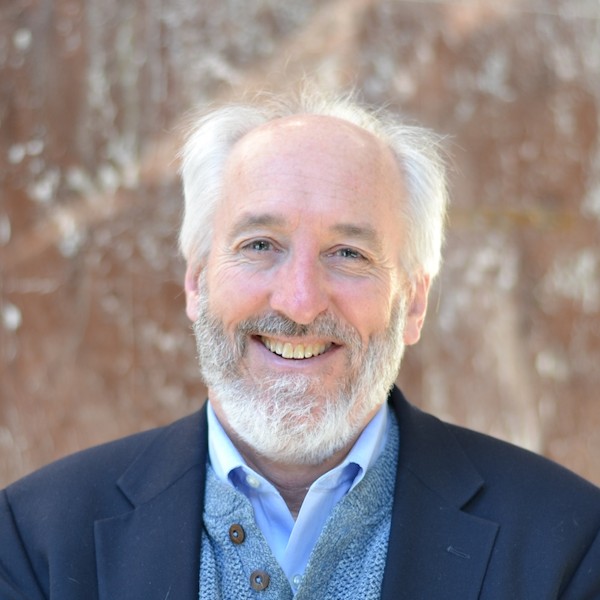 Welcome to the 2026 graduation ceremony for the School of Marine and Atmospheric Sciences!
I am Paul Shepson, Dean of the school.
Welcome to the 2026 graduation ceremony for the School of Marine and Atmospheric Sciences!
I am Paul Shepson, Dean of the school.
SoMAS graduates, you did it! You stayed up late, worked hard, and learned that you can do difficult things, and survive, and we are so proud of you and happy for you!
I understand the concept of commencement, I get it, it's not an end, but a beginning. But I don't know, why not let yourself take a minute and think back at what seems like just yesterday, when you first arrived here, and all that you have accomplished. And congratulate yourself! Wallow in it a bit. It's ok, you deserve it!
So, mom and dad, are you proud? It was likely hard work and a sacrifice for you too, right? Thank you mom and dad - good work!
Ah, but not just mom and dad, let’s take this opportunity to acknowledge other relatives, siblings, grandparents, family and friends who have assisted you along the way. Many people have sacrificed for you, worried about you, for you (right?), and gave you their unconditional love, so many thanks to them!
Let us also thank the professors who have taught you, and counseled you, and the staff who have cared for you and assisted you. Congratulations and thank you to all those in the School of Marine and Atmospheric Sciences who have helped you reach this wonderful goal.
I note that one of the things that is important to SBU is our role in providing opportunities to our students, through their educational experiences, to explore previously unknown/unheard of potential career paths, and in some cases, helping them to define and create their own careers, contributing to social mobility for Seawolf grads. To recognize those who are forging new paths within your families, can I ask those of you graduates who are a first-generation College graduate, to please stand up and be recognized?
So, I want to tell you my thoughts about how important you are. We live in a time in this country when some people are asking questions like - what is the value of higher education? Well, I have been thinking about this, and even though there has been lots of good quantitative information for decades to answer this question, I want to answer more personally. I know what the value is. YOU are the Value! You are awesome!!! You all are the leaders of the future, and we sure all know that we need good leaders in the world.
We are all doing a lot of thinking these days about our value, and how we make sure that we make a difference. For true leaders, like you graduates out there, they lead by example, from their values and priorities and their actions. A good example to me is that in the past year the people of Minnesota coined a new term, i.e., "neighboring".
It is about taking care of your neighbor, no matter who they are, as you would wish them to help you if you were in need. It can involve providing food, or clothing, or emotional support, any sort of help that involves caring about other people. We do have the power to make our own local environment better, no matter what is happening nationally and globally. I think we are good at that in SoMAS. But for SoMAS, we know that we have many neighbors who are important to us, and about whom we think, and study, and nurture, and protect. To us, in the SoMAS family, all the other species are our neighbors, who most often can't advocate for themselves, and who mostly cannot always protect themselves. Our neighbors are people of all kinds, and they are shore birds, and sea turtles, and salmon and tuna, and whales, and polar bears, and lemurs, penguins, and albatross, and bald eagles. When we take care of the forests, and the atmosphere, and the ecosystems, we are taking care of these animals, our neighbors, and we know very well that in turn they then take care of us. And in this way, we lead by example. I am proud of that and of SoMAS and our students.
So, back to the word commencement; it is a pretty good one. Today is the start or continuation of a new adventure. I like to think that every day is a new day, a new gift, and a new opportunity. You are not ending or beginning, you are on a path. The path. To - well, you don't know where! What I want to say is, you don't necessarily need to know; but - you should make it a great adventure. I recently read a book I really enjoyed, and maybe many of you have as well, called "Theo of Golden". It is a simple story about a man who wanted to show compassion, and do nice things, for no particular reason, for other people in his community, making his local community better. I highly recommend it for both the great story, and the message - making the world a better place can start close to home!
Sure, you will want to be able to feed and take care of yourself, but also to enjoy what you are doing, and feel that it is important and useful. So, make it one great life, and make it extraordinary! You are all unique and marvelous expressions of the hopefulness of the future, you are all highly capable of doing great things, making the world a much better place, and doing things that others will someday look back at and think were highly inspired, and brilliant. Aim for that!
To develop the creativity and wisdom to help you to save the Earth, I urge you to spend lots of time in it, all over it. Listen to and learn about what it is telling you. Ah, but you are not just a learner, you have new responsibilities. You are now also a teacher. Teach others to do these things. Spend time with others leading them into forests, through rivers, mountains and in the oceans, and teach them what you know. Be like our friends and teachers, like Carl Safina, Chris Paparo, David Taylor. Spend time interacting with Earth's creatures. They are a miracle. And you are a miracle. Treat yourself and all others that way, with respect and dignity. Keep in mind the importance of the content of your character. And always, to yourself, and to each other, be kind.
If nothing else, I want to leave you with one thought.
You are powerful.
You have the power to make the world a better place.
Do it!
OK, so, two thoughts - you will always be a member of the SoMAS family, so you won't have to face these challenges alone!
Congratulations class of 2026!
And now it is my honor to introduce our Keynote speaker, Prof. Bob Aller.
He is SUNY Distinguished Professor Robert C. Aller, who is a highly accomplished marine geochemist focusing on biogeochemistry in the seafloor, sediment-water interactions, and the role of reverse weather in marine elemental cycling.
Prof. Aller was born in Suffolk County! Suffolk County Mass., in Chelsea, but, really it is basically Boston Harbor. So, lets say he was born in a coastal ecosystem. Born into marine coastal processes. But then moved around between coastal environments. His middle initial C stands for Curwood, an ancient name from Scotland that means Church in the Wood, which sounds lovely, a bit like his office in the middle of our lovely wooded South Campus, and perhaps this helps explain Bob's affection for it, as it too is in his blood.
He has a BA and a BS in Biology/Geology and Chemistry from the U. of Rochester, and an MPh and a PhD from Yale, in 1977. He spent some time on the faculty, all the way to Full Professor, at the University of Chicago, before coming to Stony Brook in 1986.
His research group studies Marine biogeochemistry, and marine animal-sediment interactions. His scholarly outputs have certainly reached and impacted people all around the world, who have cited his work more than 29,000 times!
His most important award comes from his students, as he received the Outstanding Mentor Award in 2020.
Among his honors - he was elected as a Fellow of the American Geophysical Union in 2003, and
also received the ACS Geochemistry Division Medal in 2007.
Another distinction is that he is a better speaker than I am, so without further ado from me -
Please join me in welcoming Professor Aller to the stage.
Convocation Speaker Dr. Robert Aller
 Robert C. Aller is a Distinguished Professor of Marine Biogeochemistry in the School
of Marine and Atmospheric Sciences at Stony Brook University, New York. His research
focuses on elemental cycling at the seafloor and particularly sedimentary biogeochemical
processes in estuaries, deltaic systems, and Arctic fjords. He pioneered quantitative
studies of the effects of bottom-dwelling animals on sediment biogeochemistry, the
application of natural radionuclides to reveal sedimentary processes, the role of
delta – continental shelf systems as global incinerators of sedimentary carbon, and
the importance of rapid reverse weathering in marine elemental cycling. Over the years,
his study areas have ranged widely, and have included the Amazon River – Guianas coast
of S. America; East China Sea – Yangtze River; and the Gulf of Papua ( Fly – Purari
rivers, Papua New Guinea); estuarine systems in North America from New England to
Florida Bay; evaporitic environments in Baja California and Lake Turkana, Kenya; Caribbean
carbonate lagoons; deep sea margins (north Atlantic – see photo; equatorial Pacific),
and, most recently, coastal Svalbard. Although much of his sampling has been from
surface vessels or scuba diving, he has used the submersibles ALVIN and the Johnson
Sea Link to directly study some of the deepest regions of the ocean margins. He
has watched our remarkable planet change rapidly in major and accelerating ways during
his lifetime.
Robert C. Aller is a Distinguished Professor of Marine Biogeochemistry in the School
of Marine and Atmospheric Sciences at Stony Brook University, New York. His research
focuses on elemental cycling at the seafloor and particularly sedimentary biogeochemical
processes in estuaries, deltaic systems, and Arctic fjords. He pioneered quantitative
studies of the effects of bottom-dwelling animals on sediment biogeochemistry, the
application of natural radionuclides to reveal sedimentary processes, the role of
delta – continental shelf systems as global incinerators of sedimentary carbon, and
the importance of rapid reverse weathering in marine elemental cycling. Over the years,
his study areas have ranged widely, and have included the Amazon River – Guianas coast
of S. America; East China Sea – Yangtze River; and the Gulf of Papua ( Fly – Purari
rivers, Papua New Guinea); estuarine systems in North America from New England to
Florida Bay; evaporitic environments in Baja California and Lake Turkana, Kenya; Caribbean
carbonate lagoons; deep sea margins (north Atlantic – see photo; equatorial Pacific),
and, most recently, coastal Svalbard. Although much of his sampling has been from
surface vessels or scuba diving, he has used the submersibles ALVIN and the Johnson
Sea Link to directly study some of the deepest regions of the ocean margins. He
has watched our remarkable planet change rapidly in major and accelerating ways during
his lifetime.
Prof. Aller received undergraduate degrees with highest distinction in Biology-Geology (BS) and Chemistry (BA) from the University of Rochester (1972), and a M.Phil. (1974) and Ph.D. (1977) from Yale University. He began his 50-year academic career in the Department of the Geophysical Sciences at the University of Chicago, where he reached Full Professor in 1986. In recognition of his international collaborations and research contributions, he has been awarded honorary doctorates from Gothenburg University, Sweden and Aix-Marseille University, France. He is a Fellow of the Geochemical Society, the European Association of Geochemistry, and the American Geophysical Union. He received the Geochemistry Division Medal of the American Chemical Society and was an Ingerson Lecturer for the Geochemical Society. He has been recognized as a Sloan Research Fellow, a Dreyfus Foundation Teacher – Scholar in Chemistry and received a Distinguished Alumni Award from the Department of Earth and Environmental Sciences at the University of Rochester. He has served as an associate editor or on the editorial board of multiple international journals in marine science, geochemistry and geobiology.
He loves his family, the Earth, swimming and playing basketball.
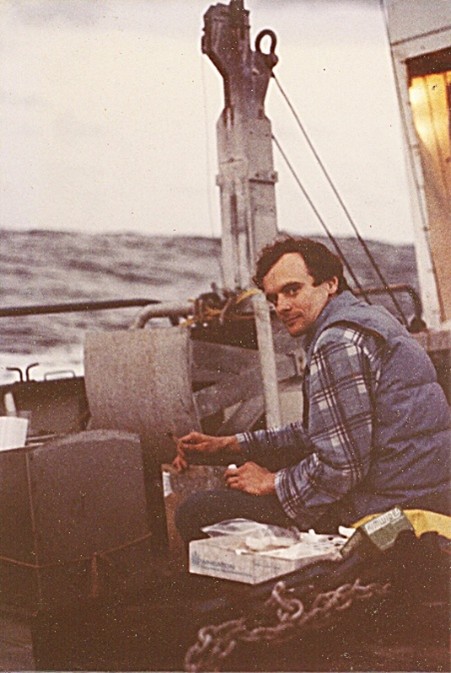
Photo: R. Aller on the RV Knorr; N. Atlantic (Scotian Rise) post-graduation (50 years ago).
Keynote Message from Dr. Bob Aller
First, my sincere congratulations to the graduates achieving Baccalaureate, Masters, and PhD degrees and to their proud families on this joyous occasion celebrating mission-accomplished, at least to this point. We are also celebrating the success of your many teachers and community members who have supported you and selflessly encouraged you all along the way, from nursery school and kindergarten through high school and beyond. So, congratulations to all of us on this major milestone!
So, I referred to mission-accomplished to this point. What happens now? You are probably feeling somewhat anxious about what might lie before you, and about what will certainly be new responsibilities and an unknown mix of opportunities. And, I can confidently assure you that you WILL have opportunities, some of your own making, and some created by others and situations which you will need to recognize as such and to take advantage of.
You may also be feeling a bit discouraged by the sharp divisions in our country, a war underway, an apparently mean-spirited government, and the cloud of impending environmental doom posed by climate change. It is perhaps small comfort to know that the world looked pretty grim at a comparable time in my own life, my parents’ lives, and multiple previous generations. In my case, the Vietnam War was raging and as a reward for graduating, my student deferment ended, and I was classified 1-A with a low draft number. Environmental pollution was rampant: the Cuyahoga River in Ohio had caught fire a few years before, and Rachal Carson’s book Silent Spring had dramatically demonstrated the many ways that we were poisoning ourselves and our remarkable living planet in the name of increased agricultural production and improved economy.
I am sure that each generation has felt overwhelmed by the challenges faced. But I believe that those challenges help us to focus on what is most important, what must be done, and to give us purpose individually and collectively. For me, the specter of being conscripted into what I viewed as an unjustified war motivated me even more to seek an advanced degree and a career dedicated to science, education, and the study of our remarkable planet. Now, over 55 years later, I feel blessed for the wonderful privilege that our society has given me to fight for and to at least partially achieve my youthful idealistic goals. I am also confident that our great country will bless you similarly if you embrace and seize the future.
I want to emphasize to you at this point that the world is never quite as dark and totally out of control as it might seem, and that you, individually and collectively, can make a huge difference in determining future outcomes. A burning river indicative of general environmental degradation, human misery, including cancer and Parkinsons disease (my father included) from toxin exposure, and dying ecosystems, spurred major environmental protections and the banning of chemicals such as DDT from agricultural use, at least in the USA, in the early 1970’s. So, we can recognize drastic problems and are capable of taking corrective measures. Of course, it is human nature to slowly forget and to repeat the same mistakes again and again, like going into a roundabout without an exit. It is clear that we are just smart enough to do things that get us into real trouble, and, like a young boy jumping off a cliff into dark water below, not quite smart enough to anticipate possible negative outcomes of our actions.
In this context, let me talk about our School’s theme posted on our website, and your next big MISSION:
“Build a better planet.”
I am not responsible for that call to arms, and in fact, when I first read it, I thought, if I were deeply religious, does that mean build a better planet than God? Can we really build a better planet? What are we saying? You have most certainly seen the spectacular pictures of Earth taken during the Apollo and Artemis lunar exploration missions (like you and me roughly 60 years apart), and were struck by how remarkable, unique and beautiful our planet is, a blue orb embedded in lifeless, colorless space. Sobering to say the least. You may not yet fully appreciate how truly fragile that beauty is. Those blue oceans, filled with life average a mere 4 km depth, a distance the younger among us could easily run in 20 – 30 minutes were it not for the crushing pressure. Eighty percent of the atmosphere protecting us from lifeless space and deadly radiation lies in a layer averaging about 10 km thick near the planet surface, a distance corresponding to a 1 – 2 hours stroll were you not restrained by gravity.
You might interpret the School’s theme superficially as some sort of geoengineering challenge. For example, If you heard Jim Hurrel’s (Colorado State University) recent seminar as this year’s Okubo Scholar, you might think it would be a possible to sprinkle some molecular ‘glitter’ in the stratosphere and tune the energy balance of the Earth to counter yet another of our ongoing geoengineering efforts: the mining of 600 million years of Carbon storage in rocks and the release of it into the atmosphere in less than 100 years. Screwing around and jumping off cliffs without much thought is in our fundamental nature. (Fun, but with likely consequences).
It is important to realize that our impact on this planet is pervasive and goes far beyond climate change. We have been at it for thousands of years: removing forests from whole continents, annihilating other species and removing natural protective structures such as dense oyster and coral reefs from entire coastlines. One of the fantastic things that I have been privileged, through public support, to experience in my career was studying biogeochemical processes at the deep sea floor using the submersible ALVIN in the East Equatorial Pacific. On my first drive, after sinking slowly for several hours to 4 km depth (the allowed limit of non-military diving depth), I peered through the tiny porthole and in addition to a muddy seabed teaming with numerous animals, I saw an empty Coke cola bottle, with a 1950’s style size and shape, stuck in the mud. Like Kilroy (Goggle: ‘Kilroy was here’), our species has been everywhere and left our signature on even the most remote areas.
Another part of my research experience has been the study of large river systems and their interaction with the ocean, these have included the Yangtze in China, the Amazon – Guianas off Brazil, and the Fly – Purari River deltaic systems of Papua New Guinea. When we first studied the Yangtze in the early 1980s, it was the 4th largest river in the world. Since the subsequent building of the Three Gorges dam and 50,000 additional dams, its sediment delivery has been reduced by ~ 70% of what it was. Similarly, the Amazon was essentially undammed in the 1980’s when we began study of its delta and downstream coastal French Guiana, and now its drainage basin is increasingly deforested and river channels dammed with over 400 major dams built or planned. These represent continental scale changes in fluvial and coastal ocean systems. The impacts are ongoing and largely unknown. There remains only one of the 7 major Asian rivers, the Ayeyarwady – Thanlwin in Myanmar with minimal damming, but large dams are planned. We proposed studying its natural outfall in the Gulf of Martaban but were stymied by a military takeover of the government and politics, another side of science we know well! The New Guinea systems (Fly – Purari on the south coast; Sepik on the north) remain largely unaltered because the extreme tectonic activity in the region minimizes human construction activities (i.e., dams are destroyed by earthquakes). So, during my lifetime massive anthropogenic changes to the Earth System’s hydrologic and biogeochemical cycles have taken place. Quite frankly, altered climate might be considered the least of our worries. Buckel your seatbelts!
Back to Build a Better Planet and what that might mean. We need to better understand and appreciate our relationship to the Earth System and recognize that, although our technologies allow us to observe and admire Earth from a far, as though we were somehow set off and independent of it, we are very much a part of the planet and deeply integrated into its functioning, not simply abstract observers. To truly understand that integration, I urge each of you to abandon your electronic interfaces, what I call the proto-Borg stage of humanity (Google: Borg in Star Trek), and experience the wonders of this planet firsthand, not through a phone or AI model. I believe as your fundamental knowledge of the Earth System grows, that you will dedicate your lives, in whatever way that you can, directly and indirectly, small and major, to ensuring that those wonders survive, that is, that we and our planet survive together. To build a better planet is to build your understanding and positive relationship with it. To paraphrase Bobby Vinton’s 1969 hit song: to know her is to love her!
In summary, this is a right of passing for you, and you have much to celebrate. As you move on, we are handing off the baton to you, with great hope that you will use your talents and your hard-earned skills to promote our common good and ensure a bright future for our world! Go Seawolves!
Candidates for Degrees
Awarding of Undergraduate Certificates
B.S. in Atmospheric and Oceanic Sciences
Presented by Dr. Brian A. Colle
- Jaci Baijnath
- Jack Hardiman
- Ethan Huang
- Stamatia Katsaros
- Abbey Konosky
- Alexander LaPorte
- Samantha McKay
- Edric Rosario
- Jake Surace
B.S. in Climate Sciences
Presented by Dr. Brian A. Colle
Anabella Wiscovitch
B.A. in Environmental Studies
Presented by Dr. Gordon Taylor
- Diane Alarcon
- Lesley Almanzar
- Nicholas Attard
- Kimberly Bagielto
- Harrison Bohrer
- Nicolas Burzo
- Rebecca Caliguiri
- John Caulfield
- Dylan Chai
- Brandon Christiansen
- Athena Cluff
- Sophia Creedon
- Lucy Dewitt
- Lexi Farwell
- Isabella Filagrossi
- Aidan Gallagher
- Allison Huang
- Daniel Imperial
- Devin Kennedy
- Kloey Kun
- Alexander LaPorte
- Allison Ledermann
- Hudson Lee
- Liangjing Li
- Faria Lorin
- Enis Mata Santana
- Matthew Moran
- Ariean Persaud
- Dylan Rudowski
- Shania Ryckman
- Nyles Simblante
- Evelyn Trelfa
- Makayla Uliano
- Pingxin Wang
- Anabella Wiscovitch
- Tyler Zaneski
- Arek Zenel-Walasek
- Tiffany Zheng
B.S. in Marine Sciences
Presented by Dr. Gordon Taylor
- Aliyah Alston
- Reiana Apacible
- Akhai Aponte
- Chloe Arma
- Juliana Brown
- Rendy Cabral
- Rebecca Caliguiri
- Maximillian Chronister
- Danielle Correia
- Benjamin Cowles
- Luca D'Anna
- Braden Donaghy
- Sean Finnerty
- Hannah Forcone
- Samantha Gatuz
- Samuel Gerard
- Juliana Hart
- William Jiang
- Jared Joy
- Madoka Kondo
- Edward Lamparter
- Aiden Latham
- Jean Lin
- Miriya Lok
- Jayson Louisdor
- Jason Lu
- Anthony Maner
- Blair McGuire
- Allison Mitchinson
- Eily Montenegro
- Aelish Mullaney
- Ella Musso
- Braxton Peace
- Renuka Ramcharan
- Hannah Ryan
- Vivian Taylor
- Miguel Inigo Zara
B.S. in Marine Vertebrate Biology
Presented by Dr. Gordon Taylor
- Jenna Cannavaro
- Freja Collishaw-Mozer
- Summer Falkowski
- Kiyanni Gordon
- Kyle Gorman
- Faolan Kayser
- Paola Kennedy
- Rylee Kieffer
- Summer Lambrecht
- Samantha Layton
- Jia Ying Liu
- Declan Looney
- Miranda McGuire
- Analisse Montes
- Kaylee Nielsen
- Zoey Palamara
- Jaedyn Rutledge
- Jessica Struzinski
- Rachel Tanaka
- Lana Williams
- Kai Wingert
- Emily Ynoa
- Harrison Zember
B.S. in Coastal Environmental Studies
Presented by Dr. David Taylor
- Keira Baiz
- Mia Dominguez
- Isabela Fraguada
- Summer Looney
- Jordan Thomas
B.A. in Environmental Design, Policy and Planning
Presented by Dr. David Taylor
- Elena Coupe
- Joseph Dolce
- Jessica Douglas
- Isabella Filagrossi
- Anjie Huang
- Tate Huang
- Gunnar Johansson
- Yamile Joseph
- Lexi Lamothe-Farwell
- Frankie Lentine
- Chelsea Leung
- Tammy Li
- Chengbin Lin
- Tiffany Mei
- Logan Miller
- Abheek Nath
- Jade Salas
- Nikolle Slavnova
- Kate Straubhar
- Leandra Suarez
- Mateusz Zdeb
- Wei Zhang
- Xin Yan Zhao
B.A. in Sustainability Studies
Presented by Dr. David Taylor
- Janina Cichocki
- Ajay Dhanraj
- Sophia Dimont
- Paul Felske
- Derek Hsiao
- Akshay Illiparambil
- Lily Kis-Horvath
- Caroline Rohde
- Chais Sartori
- Kristen Schupner
- Sarah Thomas
- Norimi Truskinovsky
- Ziyi Xiong
Awards
Degrees of Distinction
Degrees with distinction are conferred on candidates in West Campus programs for Bachelor of Arts and Bachelor of Science degrees who have achieved grade point averages of 3.85 (summa cum laude), 3.7 (magna cum laude) or 3.5 (cum laude). All honors listed are based on the current grade point average at the time of publication. The actual honor awarded may be different as it is based on the FINAL grade point average. The actual honor will appear on the final transcript and diploma.
Undergraduate Research Honors
Presented by Dr. Paul Shepson, Dean
Paul Felske, Sustainability Studies
The Effect of Tire Microplastics on Soybean (Glycine max) and Earthworm (Eisenia fetida)
Health
Sharon Pochron, Advisor
Harrison Bohrer, Environmental Studies
Evaluating the Use of Azolla caroliniana Tissue for Composting by Measuring Temperature
to Track Composting Progress
Sharon Pochron, Advisor
Akshay Illiparambil, Sustainability Studies
The Weight of the Waste
Adam Charboneau, Advisor
Jia Ying Liu, Marine Vertebrate Biology
Effects of Ocean Acidification on Growth Rates of Larvae of Blue Mussels (Mytilus
edulis) from Multiple Populations Around Long Island Sound
Dianna Padilla, Advisor
Faria Lorin, Environmental Studies
Sediment Dating and Paleohydrology in the Kalahari Basin, Botswana
Marine Frouin, Advisor
Alumni Association Dean's Choice Award
Presented by Mr. Tom Wilson (MS, 1983)
Anabella Wiscovitch
Climate Science and Environmental Studies Double major, with a Geospatial Sciences
Minor, 3.89 GPA
After graduation, Anabella will be working at the New York State Department of Environmental Conservation. She is deeply grateful for her mentor, Dr. Tara Rider, and the many professors who have guided and encouraged her throughout her time at Stony Brook. Anabella especially cherishes her time studying abroad in Tanzania, where she had the unforgettable experience of seeing one of her favorite animals, hippos, in the wild. She is thankful for the SoMAS community and the friendships she has made along the way, and is excited to begin her career at the DEC.
Petra M. Udelhofen Memorial Scholarship Award
Presented by Dr. Brian A. Colle
Kenneth Gregory
Timothy Magnussen Memorial Scholarship Award
Presented by Dr. Brian A. Colle
Brian Friedlander and Juniper Chien
Awarding of Graduate Certificates
Master of Arts in Marine Conservation and Policy Certificates
Presented by Dr. Oliver Shipley
- Adrian Espinoza
- Jacqueline Geller
- Jack Kranes
- Arthur Kuntarakornkiti
- Sarah Langsdorf
- Kathryn Maio
- Sydney Mantione
- Marissa McKiernan
- Grace Nelson
- Victoria Panuccio
- Julia Samuelson
- Kaitlyn Sherman
- Viktoria Skobodzinski
- Jayda Smith
- Emma Stefanik
- Lauren Tuffy
- Samantha Wilder
Master of Science and Doctoral Certificates in Marine, Atmospheric, and Sustainability
Sciences
Presented by Dr. Jackie Collier
Master of Science in Marine Atmospheric, & Sustainability Sciences
Zachary Barnet
Bergmann’s rule meets climate change: Latitudinal patterns of range expansion and
morphology in Tamanend’s bottlenose dolphin under rapid ocean warming
Dr. Lesley Thorne, Advisor
Amala David
Developing an On Off Carbon Nanodot method for the detection of phosphate in water
Dr. Qingzhi Zhu, Advisor
Dean Hernandez
Unoccupied aerial methods of quantifying the surface-schooling forage fish, Brevoortia
tyrannus, in nearshore waters of Long Island, New York.
Dr. Joseph Warren, Advisor
Yantong Mei
Spatiotemporal Dynamics of YOY Winter Flounder in a Changing Hudson River Estuary
Dr. Yong Chen, Advisor
Lang Ming
Salinity Variability in Great South Bay (2004 – 2024): Evaluating the Relative Roles
of a 10-year Breach and External Forcings
Dr. Jacqueline McSweeney, Advisor
Anthony Murphy-Neilson
Impact of Heat Regimes on Eelgrass (Zostera marina) Health and Labyrinthula Lesion
Presence in Long Island’s Great South Bay
Dr. Bradley Peterson, Advisor
Lucy Plessis-Belair
Assessing Biofiltration and Nutrient Sequestration by Eastern oysters in Port Jefferson
Harbor
Dr. Bradley Peterson, Advisor
Mara Riese
Impact of bay scallop Marosporida infection on kidney function in Argopecten irradians
irradians
Dr. Bassem Allam, Advisor
Paige Tortorice
Extreme storm events in the Gulf of Maine disrupt physical and biological water column
processes
Dr. Joseph Warren, Advisor
Hanaan Yazdi
Impacts of a near shore wastewater outfall on carbonate chemistry
Dr. Roy Price, Advisor
Doctor of Philosophy in Marine & Atmospheric Sciences
Wen Cong
The development and applications of planar optical sensors for studies of sedimentary
diagenesis: O2/pH composite, NH3, and Ca2+
Dr. Qingzhi Zhu, Advisor
Joonghyun In
Corroborating Observational Evidence of Convective Self-aggregation with High Resolution
Global Storm Resolving Models
Dr. Marat Khairoutdinov, Advisor
Erin Leghart
The Climatology and Environmental Conditions for Vertical Shear and Turbulent Layers
in Winter Precipitation Events
Dr. Brian A. Colle, Advisor
Youwei Ma
Tropical cyclones and climate dynamics in idealized coupled climate models
Dr. Christopher Wolfe & Dr. Kevin Reed, Co-Advisors
Julia Marcantonio
Long-Term Observations of Volatile Organic Compounds and Biomass Burning Influences
at the Urban-Rural Interface on Long Island, New York
Dr. John Mak, Advisor
Madison Muehl
Life History and Trophic Dynamics of Lake Turkana’s Fish: Insights from Contemporary
and Deep Time
Dr. Josephine Aller & Dr. Robert Cerrato, Co-Advisors
Katrina Rokosz
Modeling fish community dynamics in changing estuarine and coastal ecosystems in the
Mid-Atlantic
Dr. Yong Chen, Advisor
Brittney Scannell
A Deep Dive into the Habitat Use of Local Fish and Shark Species on New York States
Artificial Reefs
Dr. Bradley Peterson, Advisor
Doctor of Philosophy in Marine Atmospheric, & Sustainability Sciences
Stephanie Arsenault
Population dynamics of bay anchovy (Anchoa mitchilli) in a changing Hudson River Estuary.
Dr. Yong Chen, Advisor
Xiangyan Yang
Developing an end-to-end ecosystem model to inform management of Hudson River Estuary
Dr. Yong Chen, Advisor
Please note: This program includes candidates who have or will have fulfilled all requirements for graduation as of May, June, July, August, and Fall 2026. This listing reflects students who applied for graduation as of May 1, 2026.
Alumni Welcome
Congratulations, graduates! Welcome to the Stony Brook University Alumni Association. When you entered Stony Brook, you became part of a special community — one that values intellectual curiosity, creativity, individuality, and service to society. As a graduate and new alumnus, you continue to be an essential part of this extraordinary community.
Our alums celebrate the achievements of students, faculty, and fellow alumni; serve and support the University; and work tirelessly to ensure that Stony Brook stands with the finest universities in the world.
Get Engaged!
Post celebratory photos of your graduate on Instagram tagging @stonybrooku and @somas.sbu and using #SBUGrad for a chance to be featured by Stony Brook University social accounts.
Many thanks to everyone who helped organize this event! This event could not have happened without the support of the numerous volunteers.
This event is being photographed and/or videotaped and your image may be used in connection with the advertising or promotion of Stony Brook University and the School of Marine and Atmospheric Sciences.
EMERGENCY INFORMATION: In case of emergency, call (631) 632-3333 or dial 333 from any campus phone.
From the SBU 66th Commencement Ceremony
Baccalaureate
School of Marine & Atmospheric Sciences
Advanced Degrees & Certificates
All programs, including the School of Marine and Atmospheric Sciences