Recycle with Wolfie!
Learn the do's and don'ts of recycling at Stony Brook University with Wolfie as your guide. From knowing which plastics belong in the bin to avoiding common contamination mistakes this quick overview makes it easy to recycle correctly and keep our campus clean, efficient, and sustainable.
How to Recycle on Campus
Recycling properly helps reduce contamination and ensures materials can be processed and reused. Stony Brook uses a variety of recycling and waste containers across campus, including desk-side bins, Slim Jim containers and larger collection bins in academic and residential areas. Departments can request recycling containers and service through the University's work order system.
Plastics & Cans
DO:
-
#1, #2, and #5 plastics only
-
Tin and steel cans
-
Empty aerosol containers
-
Shampoo/conditioner bottles
-
Laundry detergent containers
-
Aluminum foil
DON’T:
-
Glass bottles
-
Paint cans
-
Food or liquid residue
Paper & Cardboard
DO:
-
Office and colored paper
-
Newspapers, magazines, catalogs
-
Books and notebooks
-
Cardboard (flattened)
-
Posters and envelopes
-
Cereal boxes
DON’T:
-
Food or liquid residue
-
Used coffee cups
-
Tissues or paper towels
E-Waste
ACCEPTED:
-
Ink jet cartridges
-
Batteries
-
Old cell phones
-
Electronic cables
-
Keyboards
-
Zip drives
Place items in a plastic bag and use designated e-waste bins.
When in Doubt, Throw it Out.
Avoid contamination by only recycling accepted materials. When unsure, dispose of items in regular waste to ensure recyclables can be properly processed.
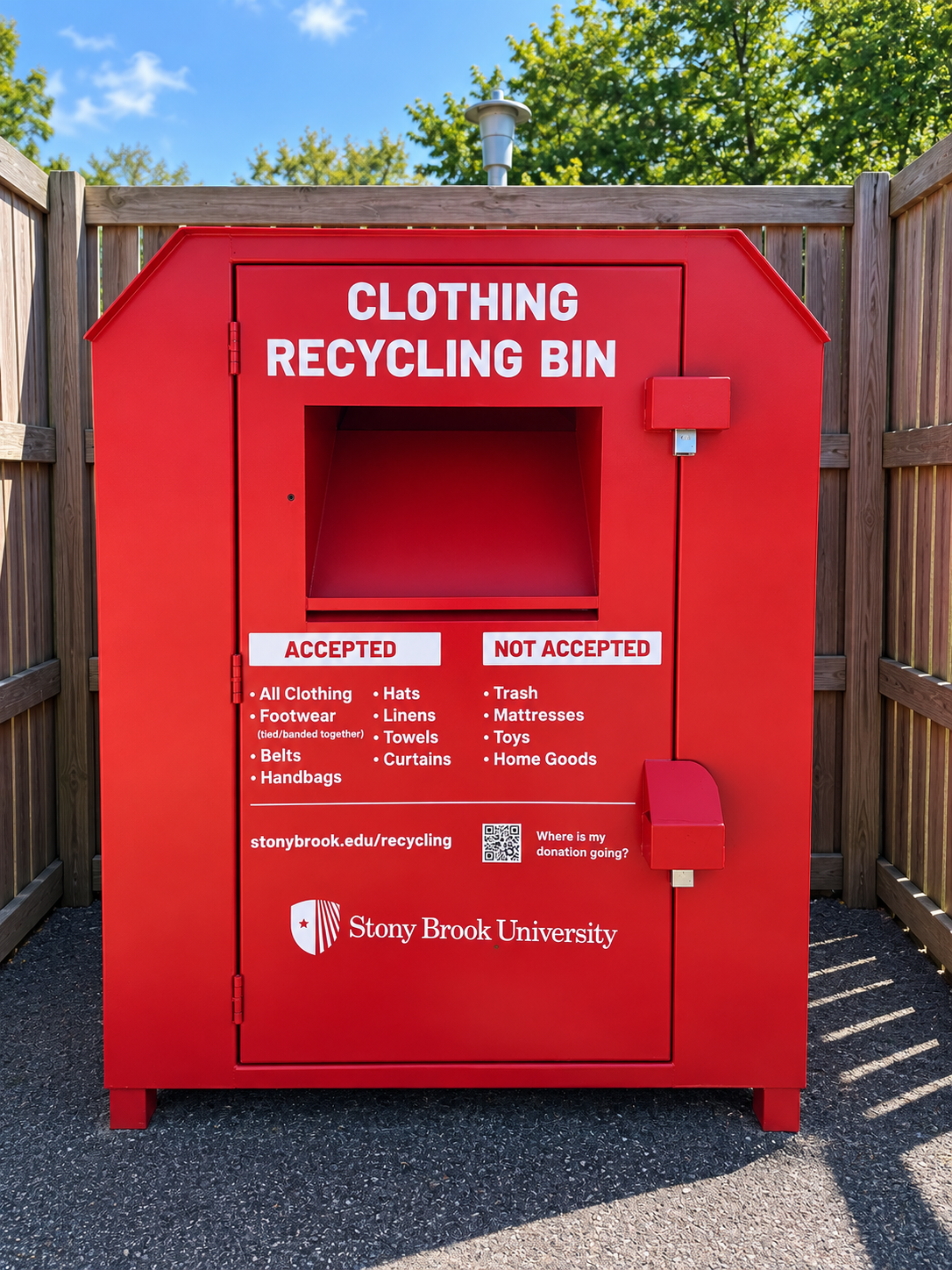
Red Hot Clothing Bins
SBU partners with Wearable Collections, a New York City-based waste management company, that owns the campus clothing recycling bins and collects donations every two weeks. The program collects clothing, shoes, and other textiles, to divert waste from landfills and give pre-worn clothes new life for those in need.