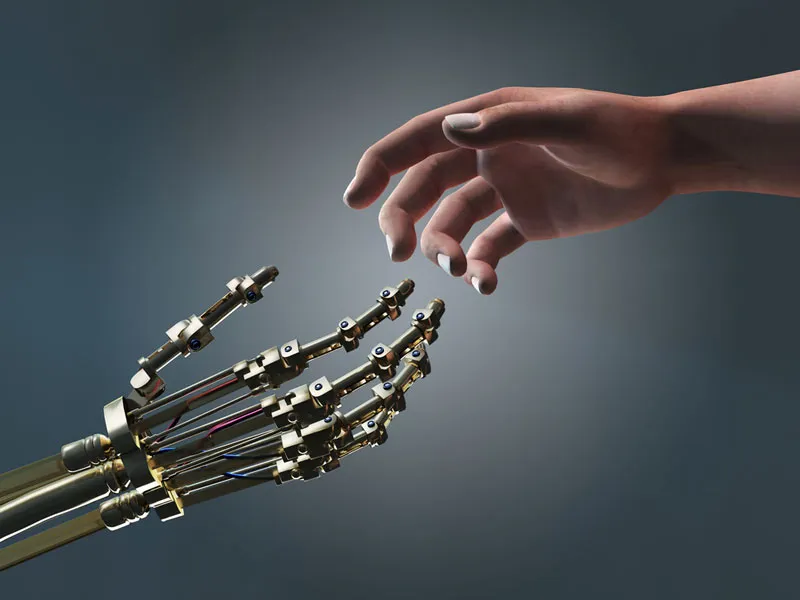
PHI 100.01 Concepts of the Person - Prof. Robert Crease
CER, HUM
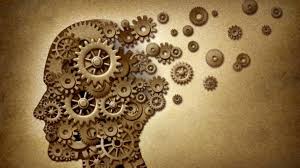
Can AI make better people than humans are? Philosophers have been examining what
it is to be human for millennia, each time capturing different aspects of what it
is to be a person. Different ideas of human selfhood appear in Plato, the Bible, Descartes,
Hume, Kant, Kierkegaard, Nietzsche, Heidegger and other thinkers. Different sides
of selfhood show up when human beings become artists, scientists, friends, and more.
Today it seems that AI does selfhood even better than we do. Does it? By the end
of the semester, you’ll know.
PHI 102.2 Intro to Philosophical Psych - HUM, SBS - Prof. Max Belmont
An Introduction to philosophy through readings and discussion on topics such as human
cognition, memory, behavior, and identity. This course introduces key concepts about
the nature of the human mind in Western Philosophy. The course will be conducted two-fold:
a reading of dialogues from ancient Greek philosopher Plato’s Republic, Book 8 - 10,
then select readings from the history of philosophy that coincide with the dialogues.
The major topics to be covered will be beliefs, motivations, desires, and delusions,
all united in one question: Why do any of those things matter to us, to you?
Fall 2026 Courses
PHI 100.01 - Concepts of the Person - CER, HUM
Prof. Robert Crease
Can AI make better people than humans are? Philosophers have been examining what
it is to be human for millennia, each time capturing different aspects of what it
is to be a person. Different ideas of human selfhood appear in Plato, the Bible, Descartes,
Hume, Kant, Kierkegaard, Nietzsche, Heidegger and other thinkers. Different sides
of selfhood show up when human beings become artists, scientists, friends, and more.
Today it seems that AI does selfhood even better than we do. Does it? By the end
of the semester, you’ll know.
PHI 100.02 - Concepts of the Person - CER, HUM
Prof. Timothly Jaeger
An introduction to philosophy through readings and discussion on topics such as human
identity, human understanding, and human values.
PHI 101.02 - Hist. Intro to Western Phil. - HUM
An introduction to pivotal theories of the Western philosophic tradition. Readings
are drawn from ancient Greek, medieval, and modern classics of philosophy. Topics
may include philosophic theories of politics, morality, logic, metaphysics, knowledge,
anthropology, art, and religion.
PHI 102.02 - Intro to Philosophical Psych - HUM, SBS
Prof. Maxaie Belmont
An Introduction to philosophy through readings and discussion on topics such as human
cognition, memory, behavior, and identity. This course introduces key concepts about
the nature of the human mind in Western Philosophy. The course will be conducted two-fold:
a reading of dialogues from ancient Greek philosopher Plato’s Republic, Book 8 - 10,
then select readings from the history of philosophy that coincide with the dialogues.
The major topics to be covered will be beliefs, motivations, desires, and delusions,
all united in one question: Why do any of those things matter to us, to you?
PHI 103.02 - Philosophic Problems - HUM, SBS
Prof. Dilara Sengul
An introduction to philosophy through the analysis of one or more aspects of contemporary
life such as technology, war, international relations, families and friendships, or
race, class and gender. A variety of texts are used.
PHI 104.01 - Moral Reasoning - CER, HUM
An introduction to philosophy through inquiry into the formation, justification, and
evaluation of moral judgments. Students are introduced to the major theories and problems
of ethics, such as utilitarianism, Kant’s categorical imperative, ethical relativism,
egoism, and classical conceptions of the good and virtue. Against this background
students engage in discussions of contemporary moral issues.
PHI 104.02 - Moral Reasoning - CER, HUM
An introduction to philosophy through inquiry into the formation, justification, and
evaluation of moral judgments. Students are introduced to the major theories and problems
of ethics, such as utilitarianism, Kant’s categorical imperative, ethical relativism,
egoism, and classical conceptions of the good and virtue. Against this background
students engage in discussions of contemporary moral issues.
PHI 105.02 - Politics and Society
Prof. Alexander Hufford
Our tumultuous world of today is a direct product of both ancient and modern political
thought and action. In particular, revolutions of past centuries (like those in England,
America, and France) were all inspired by a blend of ancient and modern political
thought. For this reason, understanding aspects of contemporary political situations
calls for a critical engagement with the foundational texts of Western political theory.
In this course, we will read and analyze selections from Aristotle’s Politics, John
Locke’s Second Treatise of Government, and Jean-Jacques Rousseau’s Social Contract.
Students will gain a solid foundation in ancient political theory and discuss relations
between political theory and historical events, namely, Locke’s connection to the
English Glorious Revolution of 1688 and Rousseau’s connection to the French Revolution
of 1789. We will engage with these texts and ideas in the interest of gaining insight
into the historical origins of contemporary political debates.
PHI 108.01 - Logical and Critical Reasoning
Prof. Gary Mar
Today influencers compete to monopolize, and monetize, our attention and time. One
way to guard against undue influence is to equip our minds with an antidote, the skills
of logical and critical reasoning. This course attempts to impart these skills, and
to inculcate the habit, of critical thinking through a series of modules: creative
problem solving, the art of deductive logic, the rhetorical and ethical principles
of effective advocacy, the laws of probability for distinguishing pseudo-scientific
fallacies from scientific theory testing.
PHI 108.02 - Logical and Critical Reasoning - ESI, HUM
Prof. G Menillo
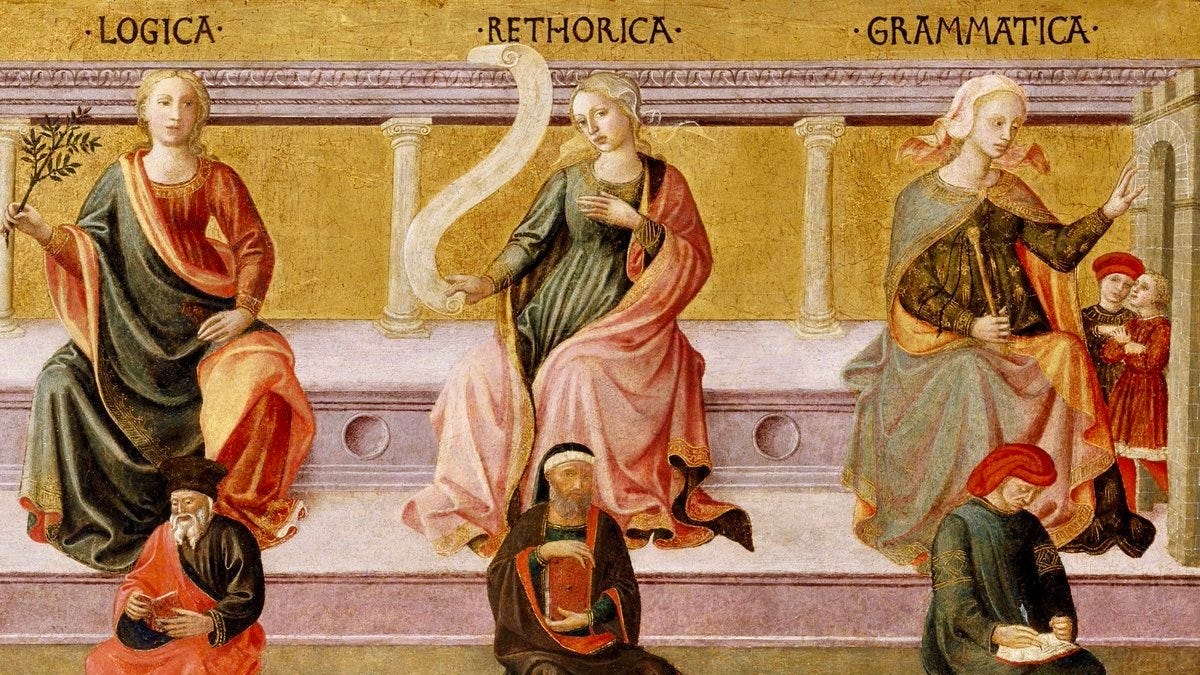
This course will introduce students to the liberal arts of logic, grammar, and rhetoric,
considered to be the three basic branches of knowledge acquisition and exercise since
the Middle Ages. Learning how to read, comprehend, and communicate well is the threefold
purpose of the course. (No use of electronic devices in the classroom.)
PHI 108.03 - Logical and Critical Reasoning - ESI, HUM
Prof. Michael Barr
Students can expect this course to focus around several topics in formal and informal
logic, including but not limited to formal rules of inference, first order predicate
logic, Russell's Paradox and Gödel's first and second Incompleteness Theorems.
PHI 108.30 - Logical and Critical Reasoning - HUM, SBS
Prof. Jennifer Carter
The principal aim of this course is to help a student acquire the skills of thinking,
reading, and writing critically. The student develops a sensitivity to language and
argumentation that is applicable to a wide range of situations and subject matters.
Material is intended for freshmen and sophomores.
PHI 108.31 - Logical and Critical Reasoning - HUM, SBS
Prof. Jennifer Carter
The principal aim of this course is to help a student acquire the skills of thinking,
reading, and writing critically. The student develops a sensitivity to language and
argumentation that is applicable to a wide range of situations and subject matters.
Material is intended for freshmen and sophomores.
PHI 110.02 - Arts and Ideas - HUM
An introduction to the historical and comparative study of the various arts in relation
to the philosophical ideas that prevailed at the same time. At least four significantly
different historical periods of intense creative activity - such as ancient Greece,
the Renaissance, the 18th or 19th century in the West, ancient China, T’ang or Sung
dynasty China, Heian or Muromachi period Japan, and the contemporary age - are studied
in terms of the interconnections between philosophical theorizing and artistic practice.
PHI 112.01 - Technology and Modern Life - STAS
Prof. Jennifer Carter
Investigates the history as well as the present and potential future impact of technology
and artifacts not only on material human life but also on the human experience of
the world. It addresses ethical questions concerning the uses and abuses of technology
as well as asking such questions as whether technology is neutral and merely instrumental
or should be seen as having a more profound impact on human life.
PHI 112.02 - Technology and Modern Life - STAS
Prof. William Perez-Porras - STAS
Computers, robots, AIs, and other forms of machinery challenge conventions about what
is natural and artificial, conscious and non-conscious, good and evil. In this course
we will address and question these conventions guided by three monsters: cyborgs,
golems, and titans. Why monsters? They are both fascinating and frightening, they
live between normal and paranormal worlds, and they are strange and somehow familiar.
In short, monsters resist binary thinking; they are experts in occupying an intermediate
position where conventional oppositions blur and destabilize. This is precisely the
philosophical position that we must inhabit when thinking about modern technology.
Through the cyborg, we will question the limits between the body and the machine,
and the organic and the inorganic. The golem will help us to approach the gap between
words and meaning, and intelligence and sentience. As for the titans, cyclopes will
lead us to a discussion on how power employs technology, Prometheus will show us how
technology is in itself power, and finally Cronus will open for us the question concerning
the future of our world and experience.
PHI 116.02 - Philosophy/America's Founding - HUM, USA
Prof. Tara Mastrelli
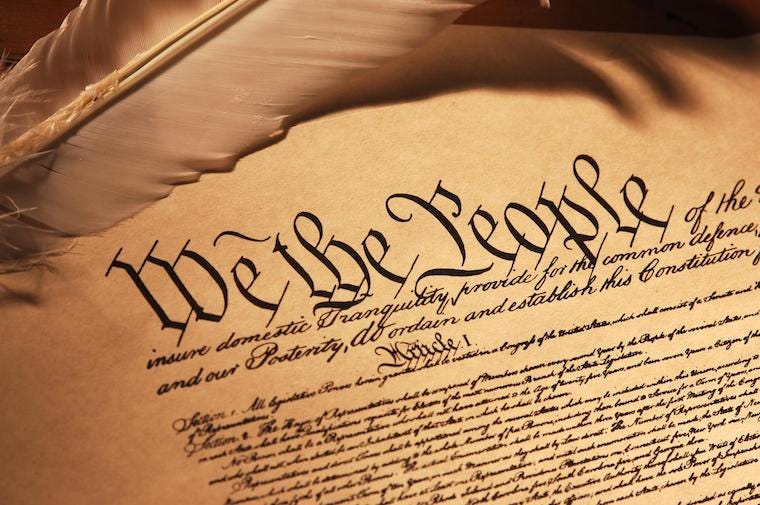
The United States turns 250 this year. And honestly? It’s not looking great. The
questions at the center of this course aren’t tucked safely in the past. They’re in
the news, in the courts, in the arguments you may already be having. This course is
about where those arguments came from, and what’s really at stake. In this course
we will critically engage with the philosophical ideas of the founding of the United
States of America. We will study the political and moral ideas that shaped the founders’
understanding of human nature, justice, and rights, examining how these ideas influenced
the founding of U.S. institutions. We will also analyze debates and critical perspectives
that challenged the glaring contradictions between the purported ideals (i.e. equality,
freedom, etc.) and the lived experience of those who were legally, practically, and
violently excluded from said ideals (i.e. enslaved Black people, Indigenous peoples,
and women). Ultimately, we will ask together (and each student will answer for themselves)
whether the promise of American life was ever meant to—or perhaps more importantly,
can now—be realized by all.
PHI 206.01 - Intro to Modern Phil 17c & 18c - GLO, HUM
Prof. Viviane Magno Robeiro
This course introduces modern philosophy by examining its main disagreements and clashes
with ancient and medieval traditions, emphasizing the radical nature of its ideas.
For this, the student will be introduced to the theoretical revolutions in metaphysics,
the theory of knowledge, and political philosophy. Expect to read the major thinkers
of the period, such as Hobbes, Descartes, Spinoza, Leibniz, Berkeley, Hume, Locke,
and Kant, as well as selected texts by women and Latin-American philosophers that
reinforce the radicality of the universal and modern activity of thought.
PHI 247.01 - Existentialism - CER, HUM
PHI 277.01 - Political Philosophy
PHI 300.01 - Ancient Philosophy
PHI 304.01 - Medieval Philosophy
PHI 310.01 - American Philosophy
PHI 347.01 - Hermeneutics & Deconstruction
PHI 366.01 - Philosophy of the Environment
PHI 368.01 - Philosophy of Science - STAS
Prof. Robert Crease
This is an especially dangerous moment in human history. The Earth can no longer be
treated as an inert background stage for our actions. Human and natural powers are
now intertwined in an unprecedented way. Knowing those powers and how to manipulate
them is critical to the existence and survival of our world. This course is about
the systematic process behind that knowing. It analyzes the history of that process,
its various features – experiment, theory, discovery, evidence, objectivity – and
why that process is important for a democracy.
PHI 384.01 - Adv Topics in Feminist Phil
PHI 402.01 - Analysis of Philosophic Texts
PHI 472.01 - Topics in Asian Philosophy (I)