


Alfredo Fontanini
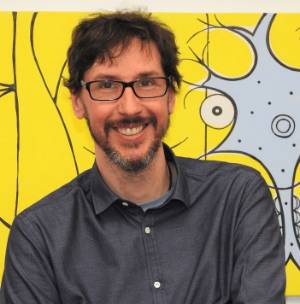
Professor and Chair
MD, PhD, Universita’ degli Studi di Brescia - Italy
Alfredo.Fontanini@stonybrook.edu
Life Sciences Bldg
Phone: (631) 632-4100
Fax: (631) 632-6661
Training
Alfredo Fontanini attended Medical School at the University of Pavia and University of Brescia (Italy), where he received his MD degree in 1998 and his PhD in Neuroscience (2003) under the mentorship of Drs. Pierfranco Spano, Maurizio Memo and James Bower. His graduate work was entirely performed at Caltech in the laboratory of Dr. James Bower. After postdoctoral fellowships at Brandeis University from 2002-2008 under the supervision of Drs. Sacha Nelson and Don Katz, he joined the faculty of Stony Brook University, where he is currently Professor of Neurobiology & Behavior. From 2003-2005 he was a Sloan-Swartz Fellow for Theoretical Neurobiology at Brandeis. In 2009 he became a Klingenstein Fellow, in 2010 received the Ajinomoto Award for Young Investigators in Gustation and the Presidential Early Career Award for Scientists and Engineers. He is a member of the Society for Neuroscience and the Association for Chemoreception Sciences.
Research
In talking about art, the philosopher Alva Noë describes the concept of organized
activities and lists a series of defining characteristics. An organized activity is
a practice that has its roots in biology, requires cognition and thinking, unfolds
over time with a specific temporal structure, emerges via interactions between the
participants, has a function (or multiple functions) and is a potential source of
pleasure (or disgust).
Eating, like art, is an organized activity that requires the coordination of sensory,
motor, physiological, affective and cognitive processes. Understanding eating implies
studying how neural circuits learn to integrate these processes and relate to behavior.
Our lab takes this perspective in studying the insular cortex (aka gustatory cortex)
and other subcortical areas classically believed to be involved in taste and reward.
We study these circuits in rats and mice. We identify food-related behaviors that
require decisions, anticipations and perception and study the role of the insular
cortex in mediating them. We use behavioral training, electrophysiology (multielectrode
recordings and intracellular physiology), optical imaging (2photon calcium imaging),
pharmacology, molecular tools, anatomy and computational methods.
In addition to our in-house work, we have extensive collaborations with the laboratories
of Arianna Maffei (who uses synaptic physiology to dissect cortical circuits and their
plasticity), Giancarlo La Camera (who uses theory and simulations to understand neural
dynamics and coding), and Memming Park (who uses statistical modeling, signal processing
and machine learning to analyze brain activity).
Publications
K. Chen, R. Vincis, and A. Fontanini (2019) Disruption of Cortical Dopaminergic Modulation Delays Licking Initiation. Cerebral Cortex 29(4):1802-1815.
L. Mazzucato, G. La Camera*, and A. Fontanini* (2019) Expectation-Induced Modulation of Metastable Activity Underlies Faster Coding of Sensory Stimuli. Nature Neuroscience 22(5):787-796. *Corresponding and Equally Contributing Authors
M.E. Stone, A. Fontanini, and A. Maffei (2020) Synaptic Integration of Thalamic and Limbic Inputs in Rodent Gustatory Cortex. eNeuro 7(1). pii: ENEURO.0199-19.2019.
R. Vincis*, K. Chen*, L. Czarnecki, J. Chen, and A. Fontanini (2020) Dynamic Representation of Taste-Related Decisions in the Gustatory Insular Cortex of Mice. Current Biology 30(10):1834-1844.e5. *Corresponding and Equally Contributing Authors
M. Haley, S. Bruno, A. Fontanini and A. Maffei (2020). LTD at amygdalocortical synapses as a novel mechanism for hedonic learning. eLife 2020;9:e55175
G.N. Dikecligil, D.M. Graham, I.M. Park, A. Fontanini (2020) Layer-and Cell Type-Specific Response Properties of Gustatory Cortex Neurons in Awake Mice. J. Neurosci. 40(50): 9676-9691
K. Chen, J.F. Kogan, and A. Fontanini (2021) Spatially Distributed Representation of Taste Quality in the Gustatory Insular Cortex of Behaving Mice. Current Biology 31(2):247-256.e4
Laboratory Personnel
Liam Lang - Postdoc
John Chen - Postdoc
Elyse Brozost - PhD Student
Allison George - PhD Student
Diana Guarino - PhD Student
Srividya Pattisapu - PhD Student
Virgil Ballew - MS Student
Abha Kochhar – Lab Manager