The History of MPI

The Mineral Physics Institute (MPI) has been an active and successful arm of the University's research enterprise. We have achieved international leadership in the field, sustain a strong graduate student program, operate a world-class synchrotron beamline that draws scientists from around the world, and maintain a dedicated faculty and staff committed to advancing both the field and the University's standing within it.
Founded in 1989, the MPI served as the launching pad for CHiPR, the Center for High Pressure Research, a National Science Foundation Science and Technology Center (1990–2002). During this period, we became deeply involved in high-pressure synchrotron research at the National Synchrotron Light Source (NSLS) of Brookhaven National Laboratory, and the MPI became the backbone supporting that effort. Support for the MPI continued well beyond the CHiPR era, sustaining an active program of research, education, and outreach. In 2002, COMPRES — the Consortium for Materials Properties Research in the Earth Sciences, a community-based advocate and supporter of high-pressure research programs at national laboratories — was founded within the MPI under the leadership of Donald Weidner. The MPI served as COMPRES headquarters from 2002 to 2010. In its first year, Jay Bass (UIUC) served as President and Donald Weidner as Principal Investigator of the NSF Cooperative Agreement; for the following seven years, Bob Liebermann served as both President and PI. COMPRES now counts 67 U.S. member institutions and 51 international members.
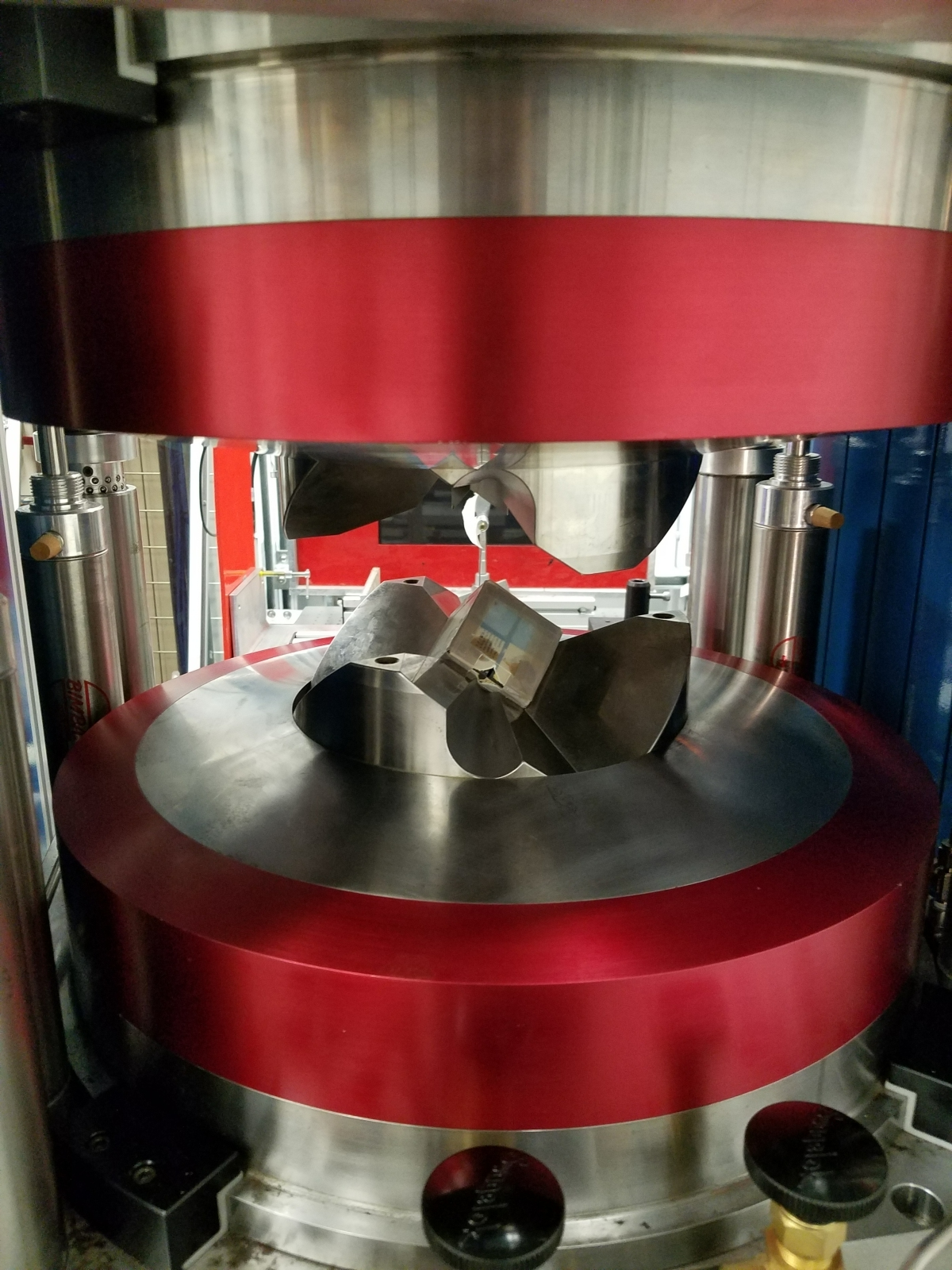
More than three decades ago, we recognized the power of national X-ray and neutron facilities to probe the properties of Earth materials under the extreme pressures and temperatures found deep within the planet. That insight led us to conceive, build, operate, and continually renew a high-pressure beamline at the NSLS, the first large-volume high-pressure beamline at any synchrotron in North America, open to outside scientists through a competitive proposal system. When NSLS closed in 2014, we split the facility in two: half moved to the Advanced Photon Source at Argonne National Laboratory, and the other half moved to a new damping-wiggler port at NSLS-II. Looking ahead, these beamlines will expand our scientific reach to include the Earth's subsurface region. The MPI has also provided the support structure behind Professor Parise's leadership in developing a high-pressure beamline at the Spallation Neutron Source at Oak Ridge.