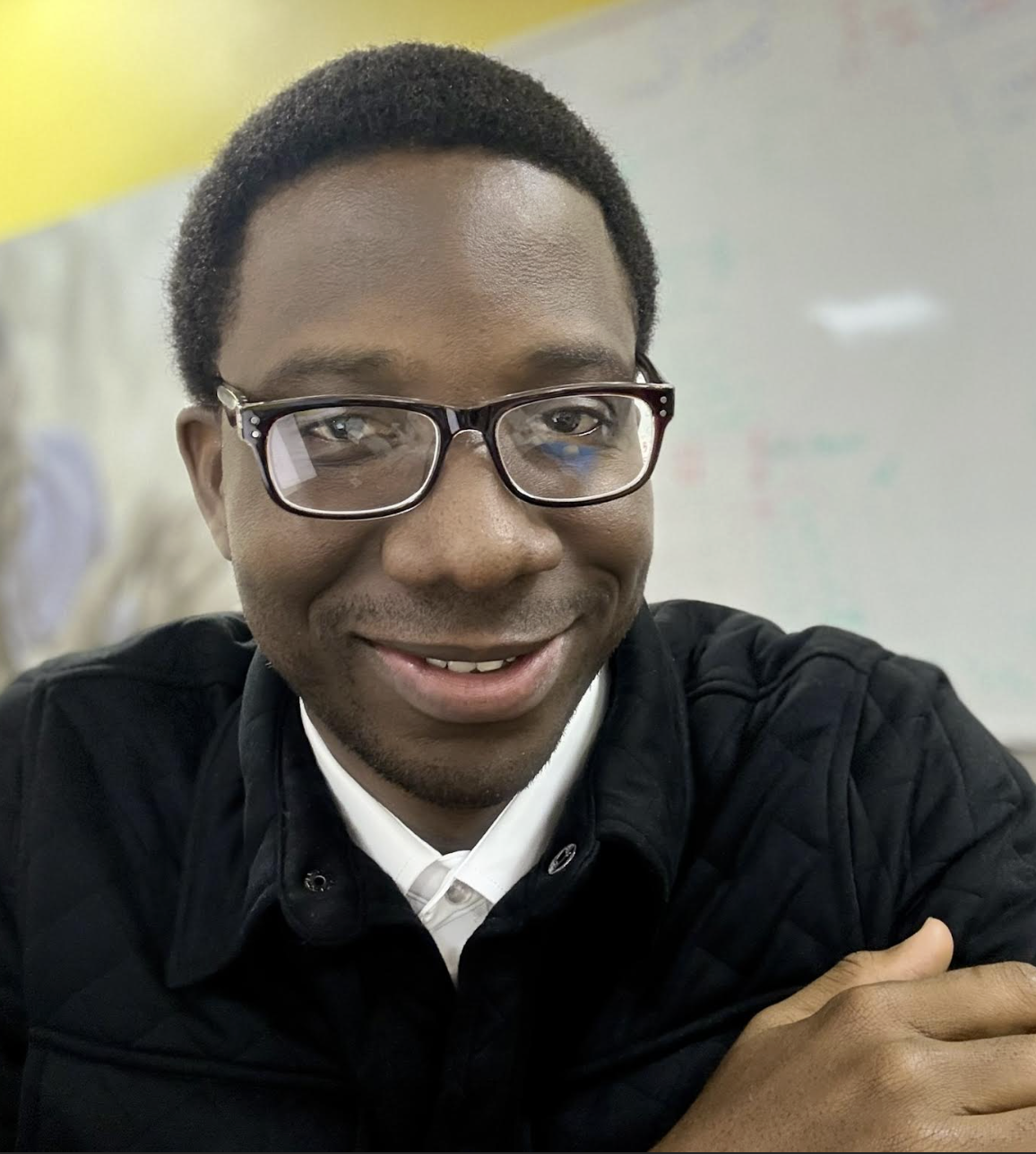
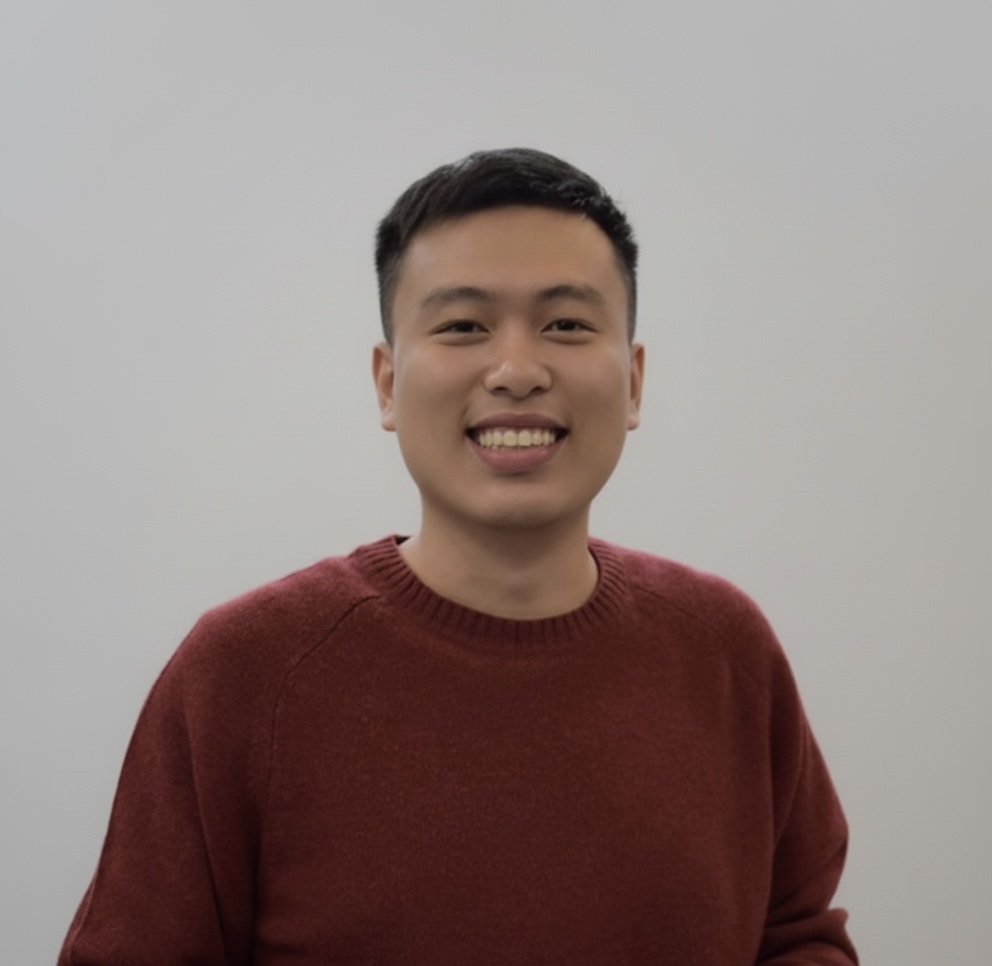
Joseph's research sits at the intersection of artificial intelligence, ethics, and
public policy, with a focus on trustworthy and explainable AI, responsible innovation,
and the governance of emerging technologies. He has about a decade of experience in
AI and digital innovation, including work with UNICEF across multiple country contexts,
where he has applied data and digital technologies to strengthen humanitarian and
public service systems. Joseph holds a Bachelor's degree in Mechanical Engineering
and a Master's degree in Research and Public Policy, with distinction, from the University
of Lagos. He hopes to contribute research that helps shape AI systems and policies
that are both socially beneficial and practically grounded.
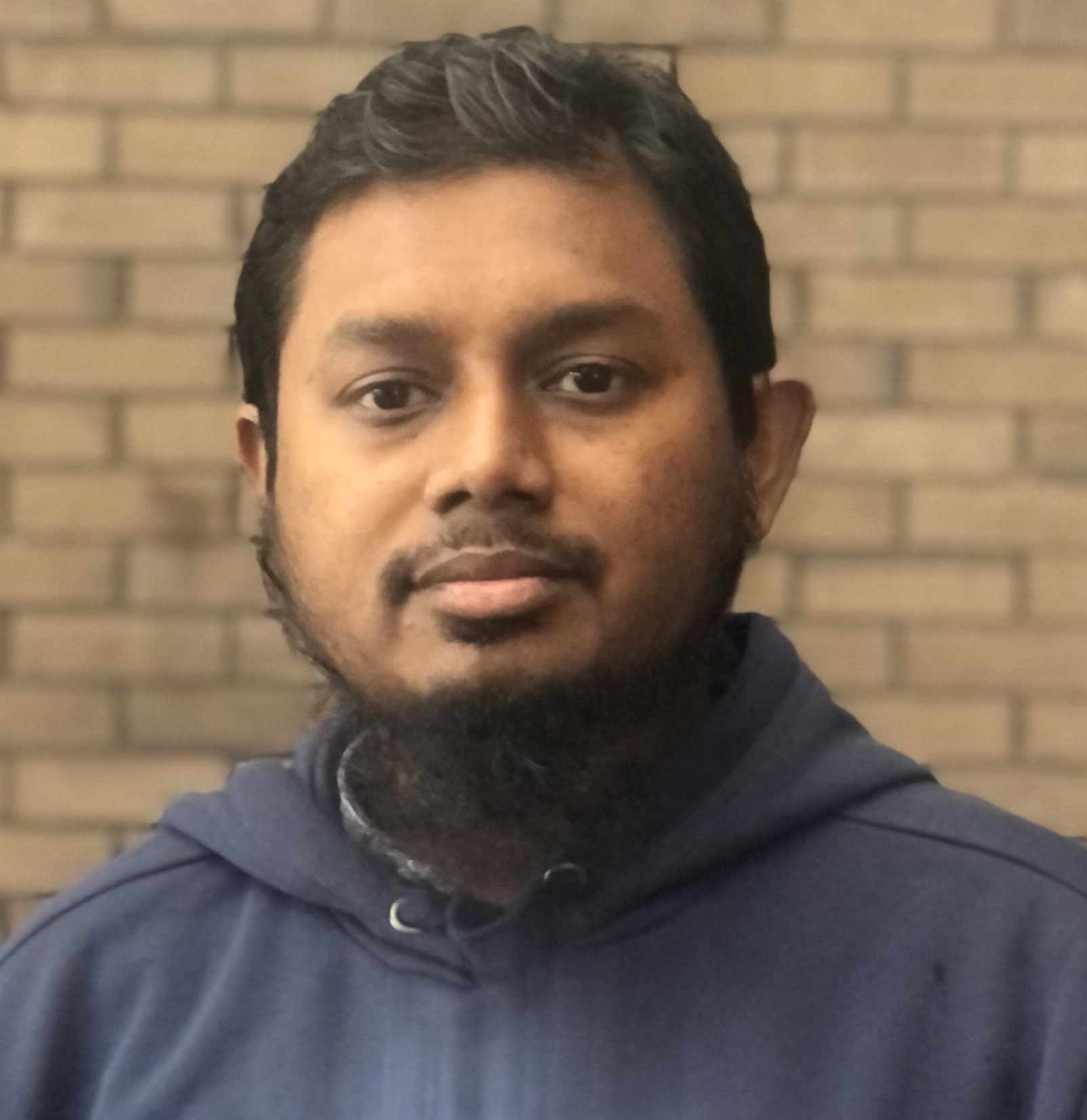
Maeen is working at the Waste Data and Analysis Center developing a multivariate statistical
framework for measuring and comparing municipal solid waste systems across New York
State, translating compositional waste data into policy-actionable evidence for circular
economy planning and waste governance. Before joining Stony Brook, Maeen conducted
field research in Bangladesh's textile industry examining circular economy adoption
in upstream garment supply chains. He holds a B.Sc. in Textile Engineering and an
M.S. in Management of Technology. He is interested in AI integration research in textiles
manufacturing and waste management. He has published in journals including PLOS Sustainability
& Transformation, Journal of Cleaner and Environmental Systems, and Social Responsibility
Journal.
Josh is a part-time Ph.D. student in the Technology, Policy, and Innovation program
at Stony Brook University. He earned an M.S. in Data Science and Analytics from the
University of Missouri, with an emphasis in High Performance Computing, and currently
serves as Associate Director of Philanthropic Funds at Stony Brook University. His
professional work focuses on applying data science, artificial intelligence, and software
development to improve decision-making and resource allocation in higher education.
His research interests include AI policy, machine learning, decision support systems,
and the practical application of emerging technologies to solve complex organizational
and public-sector challenges.
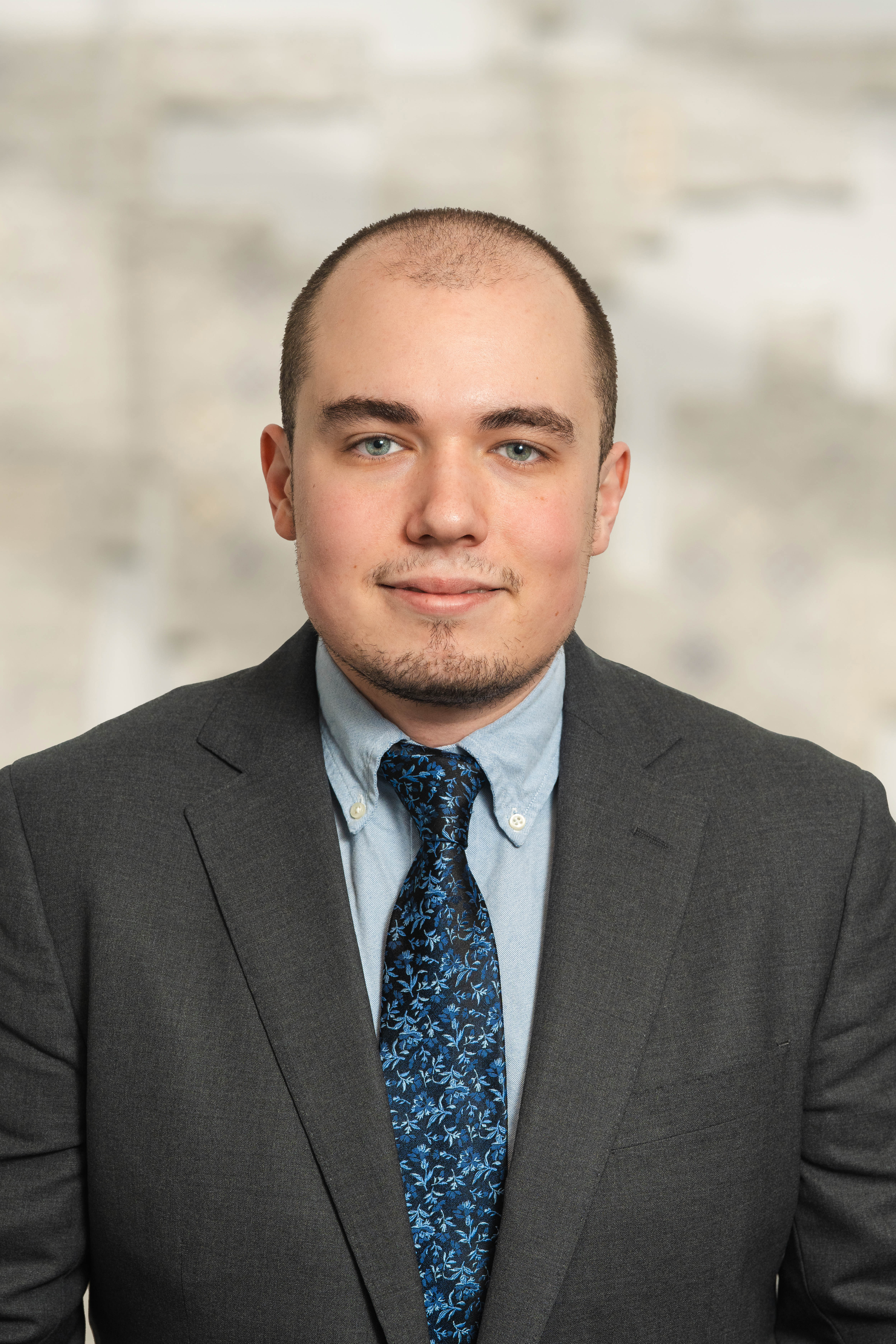
Nicholas is interested in exploring the intersection of artificial intelligence and
creative labor, particularly how AI may be reshaping questions of authorship, ownership,
and value in music and the broader creative economy. He has about a decade of experience
as an independent composer and music producer, alongside experience as a research
assistant in the Department of Technology and Society, where he has contributed to
research on AI and society, AI and health, and antisemitism and technology. Nicholas
holds a Bachelor of Science in Technological Systems Management, with a specialization
in Information Systems, from Stony Brook University. He looks forward to broadening
these interests during the program and contributing to the department's broader research
on AI and society.
Gui is a part-time student in the Stony Brook University Technology and Policy Innovation
Ph.D. Program. Prior to that, he obtained a B.Sc. in Electrical Engineering from the
Federal University at Rio Grande do Sul (UFRGS), Brazil, an MBA from the University
of Michigan and an M.S. in Computational Statistics from the California State University,
East Bay. Before returning to school, Gui spent 15 years working in the telecommunications
and tech industry.
Sera studies circular economy and sustainability as part of climate change mitigation
efforts, particularly focusing on the assessment technique. She tries to broadly expand
her research topic from a dynamic perspective including environmental, social, and
economic approaches.
Mohammad is seeking linkage between human decision-making processes and infrastructure
performance considering behavioral theories and socio-technical uncertainties. His
research interests include finding connections in human behaviors to address decision-making
problems. He is passionate about complex systems and combining social science theories
with quantitative methodologies and providing solutions to support sustainability
and energy transition. He holds a master’s degree in energy systems engineering from
Sharif University of Technology.
Ratasit Ratanasittiroj is a second-year doctoral student in the Technology, Policy,
and Innovation program in the Department of Technology and Society at Stony Brook
University. He is interested in the intersection of nuclear energy technology, public
policy, and community resilience. His research applies agent-based modeling (ABM)
to study how governments and communities adapt to complex technological systems, such
as nuclear energy technologies, in socially equitable and sustainable ways. He has
a strong background in public policy and democratic governance in Southeast Asia.
He received the Royal Thai Government Scholarship in Science and Technology to pursue
research on technology, governance, and society. Before joining Stony Brook University,
he worked for many years as a policy analyst for the Government of Thailand.
Peter Saenz’s research investigates the application of the Internet of Things (IoT)
in healthcare, with a central focus on how IoT can be used to improve operational
efficiency and equitable patient outcomes. Healthcare systems are plagued by a myriad
of problems, including affordability, capacity, and staffing shortages. IoT technologies
will be central to solving these problems. Peter seeks to research the policy implications
of IoT from different perspectives as well as develop IoT-based technology. Peter
has received funding through the NSF’s regional Innovation Corps program and is now
applying to the national NSF I-Corps program in addition to an NSF PFI/ TT funding
opportunity. As Peter’s doctoral studies progress, he intends to apply for NSF SBIR/STTR
grants to help aid in the commercialization of IoT technology.
Amin is a Ph.D. candidate in the Department of Technology and Society at Stony Brook
University. His research explores the intersection of technology and society, with
a focus on the threats and opportunities that arise as artificial intelligence is
integrated into healthcare, including questions of trust and uncertainty in clinical
decision-making. Prior to joining Stony Brook University, Amin worked as a technical
project manager and mechanical engineer for several German companies. He holds a master's
degree in Aerospace Engineering from the University of Stuttgart.
Her research revolves around four interconnected avenues: validating the EPA material
flow model for paper disposal; evaluating the environmental impacts of paper waste
disposal through life cycle assessment; assessing the material recovery facility performance
metrics related to paper recycling and discussing the role of information in MSW policy
generation in the US and how differences in data may change perceptions surrounding
these policies. She led a project focused on documenting Material Recovery Facility
(MRF) technologies, with the goal of developing a comprehensive, user-friendly website.
Prior to that, she was involved in the sampling program for the New York State waste
characterization project. Before Stony Brook, she worked with environmental advisory
companies in India for a few years.
Jonathan is working on research intended to make engineering topics easier to understand
for today's visual-based students. He is most interested in how serious video games
can be turned into tools for learning and assessment in undergraduate STEM programs,
specifically engineering programs. Jonathan received a Bachelor of Science degree
in Mechanical Engineering Technology from Vaughn College of Aeronautics & Technology
and a Master of Engineering degree in Mechanical Engineering from The City College
(CCNY) of the City University of New York (CUNY).
George Wang studies human-centered and responsible AI at the intersection of human–computer
interaction and multimodal systems. His research spans accessibility, spatial computing,
and learning technologies. George enjoys building and evaluating applications with
quantitative and qualitative methods. He earned an M.A. from New York University and
a B.Eng. from The Chinese University of Hong Kong, Shenzhen.