



Undergraduate Neuroscience Research
Most Neuroscience labs at Stony Brook accept undergraduates into their laboratories to do research. However, opportunities may be limited and each laboratory has its own requirements for admission. So plan ahead! Here are some steps that will help you get started and find a research mentor:
Start early! Research and research training take time. Most labs prefer that a student spend at least two semesters on a project. It's hard to begin a project in your final year; the second or third year, after you have taken at least one relevant course, is usually better. (One way to get your foot in the door earlier and get a look at lab life, is as a paid lab aide. This probably won't allow you to do your own project - but it may evolve into one.) Don't plan on starting a project while taking a heavy courseload. Spending a summer or winter break on campus is often the best way to get a lot done in the lab; you may even be able to find a fellowship that will pay you a stipend for doing research. A useful source for general information on undergraduate research and fellowships is the URECA website.
Identify specific faculty in your area of interest. Faculty members are listed, along with their areas of expertise, in departmental and program websites. Neuroscientists at Stony Brook include faculty in the Department and in the broader Graduate Program in Neuroscience. Most have their own web pages or websites with research descriptions, publication lists, and contact information. Explore these; read the research descriptions, maybe do a little extra reading in the area, and think of questions you would like to ask.
Contact those faculty members. All faculty expect to be contacted by undergraduates who are interested in doing research. Contact selected faculty members and ask to meet with them to discuss the possibility of doing research. Email is usually best for a first approach; if you don't get a reply in a few days, follow it up with a phone call, or drop by to ask for an appointment. Come to any meeting prepared to discuss the research and to describe your own background and scientific interests; bring or send a copy of your transcript (unofficial is OK), and a CV if it includes relevant experience.
Don't be discouraged if you get negative or no responses despite a strong transcript. Each lab has openings for at most a few students, and limits on supervisors' time or research funds can restrict the opportunities in a particular lab. Try refocusing or broadening your search interests; ask for alternate recommendations; talk to course instructors or your fellow students.
Neurobiology students who have been named URECA Researchers of the Month:
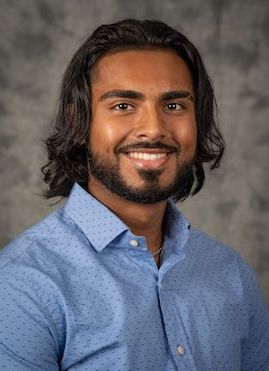
Brandon Jaipersaud
McKinnon lab
September 2025
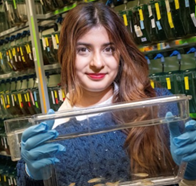
Sohini Alim
Sirotkin lab
February 2025
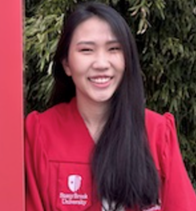
Stephanie Chu
Shrestha lab
May 2023
Gabriella Vaccaro
McKinnon/Rosati Lab
June 2024
Rehman Basharat
Sirotkin lab
January 2024

Hannah Philipose
Seeliger lab
July 2022

Joseph Bisulca
Colognato lab
August 2022

Marcia-Ruth Ndege
Solomon lab
January 2020
Rohan Hofland
Talmage & Role labs
May 2019
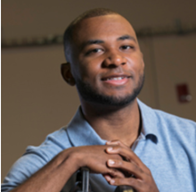
Terence Thomas
Vasudevan lab
June 2018
Pamela Best
Collins/Solomon lab
March 2018
Andrew Kumpfbeck
Colognato lab
June 2017
Maria Anaya
Tsirka lab
January 2017
Jessica Flores
McKinnon lab
November 2016
Jonathan McGuire
Role & Talmage labs
August 2015
David Haray
Krizer lab
April 2015
Wilka Cavalho
La Camera lab
December 2014
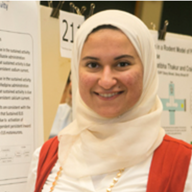
Safa Abdelhakim
Collins lab
May 2014
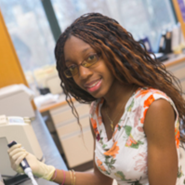
Melissa Daniel
Wollmuth lab
February 2014
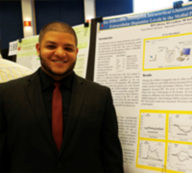
Ramon Cabrera
Kritzer lab
June 2013
Kunal Mandavawala
Sirotkin lab
May 2013
Malack Hamade
Sirotkin lab
July 2012
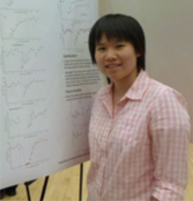
McKinny Kwok
Collins lab
May 2012