Skip Navigation
Search

| Microfluidics is an emerging and cross-disciplinary field that offers many opportunities
for scientific and technological advancements. Research interests include the development and application of methods to produce and
control soft and reactive interfaces at the microscale. To this end, various aspects
of interfacial fluid dynamics and hydrodynamics are examined in silicon and glass
microfluidic modules using high-speed imaging. Investigations focus on the control of viscous and capillary instabilities of microflows in simple and complex geometries. Research areas span between advanced micro-fabrication techniques, multiphase flows, wetting dynamics, miscible flows, and the rheology of complex fluids. |
|
| Microfluidic Multiphase Flows Multiphase flows are encountered in a wide range of applications including chemical, petroleum, and power generation industries. Miniaturization of fluidic devices makes it possible to control fluids streams, droplets, and bubbles in a way that is unprecedented. The understanding of multiphase flow at the microscale not only provides fundamental scientific insights but also offers new functionalities for practical uses. |
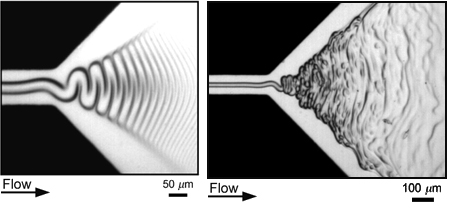
| Misicible Flows The precise manipulation of miscible fluids with large viscosity contrast flowing co-currently at the microscale is an important challenge in science and engineering. Passive and active methods are investigated to enhance mixing between laminar fluid streams. Examples of application include the enhancement of chemical reactions between widely disperates species, such as between viscous material, including complex fluids, and less viscous fluids, including solvent. |
|
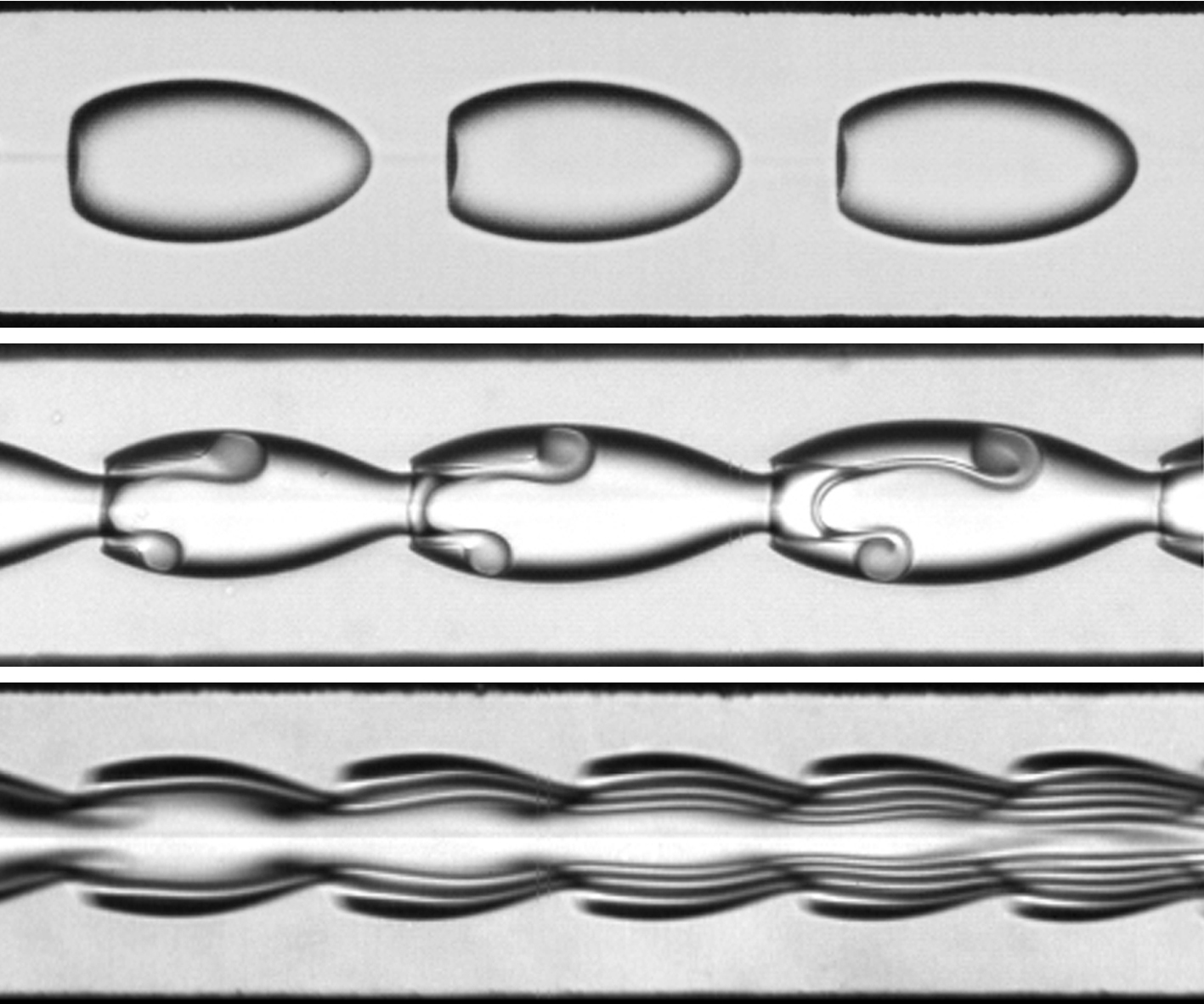
| Immisicible Flows Droplets and emulsions: Microfluidic systems offer the advantage of generating arrays of droplets and bubbles with a high degree of monodispersity. Droplets can be created one-by-one at the junction of cross-channels. We study the influence of flow geometries and fluid thermodynamical properties on the collective behavior and the hydrodynamic coupling of droplets in the presence and in the absence of surfactant. |
|
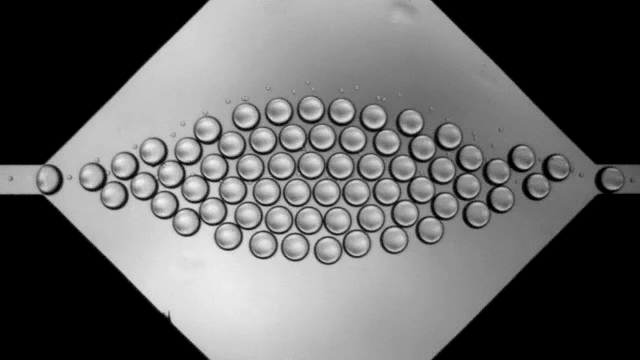
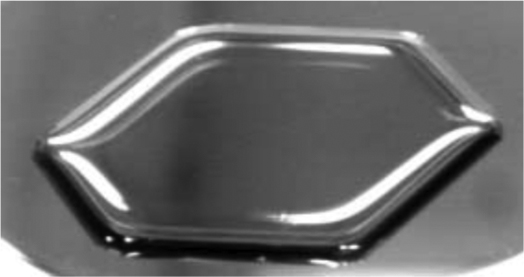
| Bubbles and foams: The conditions for bubble formation, displacement, coalescence, packing, and separation
from continuous phase are investigated with silicon and glass microchannels in the
presence of surface modifications (hydrophilic and hydrophobic surfaces) as well as
with the addition of particulates. |
|
|
 (a) Experimental apparatus for liquid-gas flows. (b) schematics of bubble generation.
(c) Dissolution of CO2 bubbles in high-viscosity oil
(a) Experimental apparatus for liquid-gas flows. (b) schematics of bubble generation.
(c) Dissolution of CO2 bubbles in high-viscosity oil
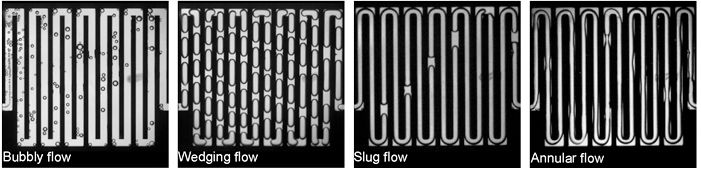
Transport of bubbles in square microchannels
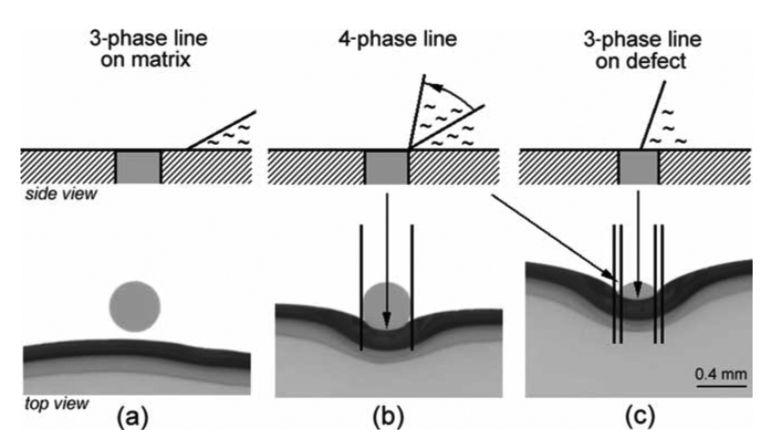
| Wetting and Dewetting The motion of a contact line (fluid/fluid/solid interface) often takes place on a non-ideal surface. Surface modifications and patterning allow for manipulating advancing and receding contact line dynamics, which can be used to confine and displace minute amount of fluid on a surface. |
|
|
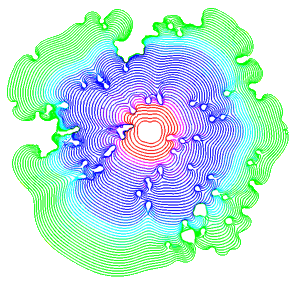 Spontaneous dewetting on a heterogeneous surface |