


Deceased Faculty
Stephen Koch, 1948 - 2026
The Chemistry Department will hold a memorial service on Saturday, November 14 at 12:30 PM in Charles B. Wang Center Theater, Stony Brook University in Prof. Koch's honor. There will be a livestream available: https://www.youtube.com/@sbu-cse
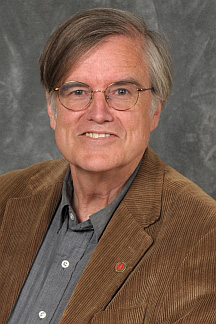
Stephen A. Koch, Professor Emeritus, passed away on August 17, 2026.
Dr. Stephen Koch received his BS degree in Chemistry from Fordham University in 1970 and his PhD degree in Inorganic Chemistry from MIT in 1975. After postdoctoral stints at Cornell and at Texas A&M, he joined Stony Brook in 1978. From then until his recent retirement, his research efforts centered on the synthesis and characterization of new types of transition metal compounds, that exhibit interesting structural, spectroscopic, and reactivity properties, of relevance to bioinorganic chemistry. In this context, Dr. Koch and Dr. Michelle Millar established the Stony Brook Lectureship in Inorganic Chemistry with the inaugural Franklin Award lecture delivered by Professor Harry Gray in 2009. Of special note, Dr. Koch was the Undergraduate Program Director for many years, demonstrating an extraordinary and admirable commitment to fostering the personal and professional success of students. In addition, in 2023, after having served 11+ years as the co-Chair for the Inorganic Division’s programmatic activities, Dr. Koch received the American Chemical Society (ACS) Award for "Distinguished Service in the Advancement of Inorganic Chemistry".
Within the past year, Steve also recently spearheaded the creation of an endowed professorship in molecular inorganic chemistry to honor Michele’s legacy. We are a much greater, stronger, and better Department for having had Steve grace our halls and classrooms with his unparalleled dedication and commitment to our mission; we mourn the loss of a dear friend, colleague, and mentor to so many of us who knew him and who benefited from his profound wisdom and wit. We send our heartfelt condolences to his family, especially his spouse Jane, during this very difficult time. Details for a memorial service will be forthcoming at some point.
Inorganic Chemistry
Our research efforts are centered on the synthesis and characterization of new types of transition metal compounds that exhibit interesting structural, spectroscopic, and reactivity properties. In the area of bioinorganic chemistry, we are elucidating the structure and function of metal ions in biological systems through an inorganic approach. Our most recent work involves the interaction of diatomic molecules, such as N2, CO, H2, CN1- and NO with Fe-sulfur centers in enzymes including nitrogenase, hydrogenase, and carbon monoxide dehydrogenase. A prime goal is to develop iron based nitrogen fixation chemistry. We also have an established program involving the study of active site analogs for zinc-, cadmium-, and mercury-containing proteins. The "zinc finger" proteins that regulate gene transcription by binding to DNA and RNA are of fundamental interest.
In collaboration with the Welch group at Washington University Medical School, we have developed a new class of gallium and indium radiopharmaceuticals. The ability of the 68Ga complex to cross the intact blood brain barrier is a major discovery.
Solid-state metal sulfides and oxides have scientifically interesting and technologically significant electronic, electrochemical, and catalytic properties. We are exploring the analogies between these solid- state materials and homogeneous molecular compounds. In particular, we are attempting to model with homogeneous compounds, the chemistry of heterogeneous metal-sulfide catalysts that are used in the hydroprocessing of crude petroleum. The synthesis and electronic and electrochemical properties of hybrid solid-state/molecular materials is another area under investigation.
Refinement of the nickel site structure in Desulfovibrio gigas hydrogenase using range-extended EXAFS spectroscop.y Weiwei Gu , L. Jacquamet , D.S. Patil , H-X. Wang , D.J. Evans , M.C. Smith , M. Millar , S. Koch , D.M. Eichhorn , M. Latimer , S.P. Cramer J. Inorg. Biochem., 93, 41–51(2003)
Two Dimensional Materials based on trans-[FeII(CN)4(CO)2]2- Building Blocks; First Structural Evidence for a Hydrated Metal Carbonyl Ligation. Jianfeng Jiang and Stephen A. Koch Chem. Commun.,1724–1725 (2002).
fac-[FeII(CN)3(CO)3]1- and cis-[FeII(CN)4(CO)2]2- New members of the Class of [FeII(CN)x(CO)y] Compounds Jianfeng Jiang and Stephen A. KochInorg. Chem. 4, 158-160, (2002)
Chemistry of [Fe(CN)5(CO)]3- New Observations for a 19th century Compound. Jianfeng Jiang, Andrew Acunzo, Stephen A. Koch, J. Am. Chem. Soc.123, 12109 (2001)
trans [Fe(CN)4(CO)2]2-, a 21st Century [Fe(CO)(CN)] compound. JianFeng Jiang and Stephen A. Koch Angew. Chem., Int. Ed. 40(14), 2629-2631 (2001)
The unprecedented [Fe(CN)2(CO)] and [Fe(CN)(CO)] centers in hydrogenase enzymes? Why did nature choose such combinations of vile ligands? Stephen A. Koch, HuaFen Hsu, Sechin Chang, Andy Ancunzo, and JianFeng Jiang. J. Inorg. Biochem.74, 34 (1999)
Evaluation of Gallium-68 Tris(2-Mercaptobenyzyl)Amine: A complex with Brain and Myocardial Uptake. Cathy S. Cutler, M. Cecillia Geron, David. E. Reichert, Abraham Z. Synder, Pilar Herrero, Carolyn J. Anderson, Duncan A. Quarless, Stephen A. Koch and Michael J. Welsh Nuclear Medicine & Biology, 26, 305-316 (1999)
The Gallium(III) and Indium(III) Complexes of Tris(2-mercaptobenzyl)amine and Tris(2-hydroxybenzyl)amine, R. J. Motekaitis, A. E. Martell, S. A. Koch, J.-W. Hwang, D. A. Quarless, Jr., M. J. Welch Inorg. Chem. 37, 5902-5911 (1998)
The Coordination Chemistry of Amine Triphenolate Tripod Ligands with Iron(III). Old Organic Compounds but New Tripod Ligands. J.W. Hwang, K. Govindaswamy, S. A. Koch, J. Chem. Soc. Chem. Comm. 1667-1668 (1998).
Single-Crystal, Solid-State, and Solution 113Cd and 77Se NMR and X-ray Single-Crystal Study of a [Cd(SeR)2(N-donor)2] Complex R. Subramanian, N. Govindaswamy, R. A. Santos, S. A. Koch, G. S. Harbison, Inorg. Chem. 37, 4929-4933 (1998).
The Limitation of X-ray Absorption Spectroscopy for Determining the Structure of Zinc Sites in Proteins. When is a Tetrathiolate not a Tetrathiolate? K. Clark-Baldwin, D. L. Terney, N. Govindaswamy, E. S. Gruff, C. Kim, J. Berg, S. A. Koch, J. E. Penner-Hahn, J. Am. Chem. Soc.120, 8401-8409 (1998).
Factors influencing the in vivo of Behavior of In(III)S3N and Ga(III)S3N C. S. Cutler D. E. Reichert, C. J. Anderson, M. C. Giron, R. J. Motekaitis, D. A. Quarless, L. A. Jones, J. S. Lewis, S. A. Koch, A. E. Martell, M. J. Welch. J. Labeled Compounds and Radiopharmaceuticals, 40, 504-50 (1997).
Development of a new Gallium-68 Imaging Agent that Crosses the Intact Blood Brain Barrier, C. S. Cutler, M. C. Giron, D. E. Reicher, C. J. Anderson, S. A. Koch, M. J. Welch, J. Nucl. Med.38, 466(1997)
A Neutral Spirocyclic Hexacoordinated Germanium(IV) Complex: Hypervalent Germanium Compounds with Sulfur-Containing Eight-Membered Rings, S. D. Pastor, V. Huang, D. NabiRahni, S. A. Koch, H-F. Hsu, Inorg. Chem.36, 5966 (1997)
Chemistry of Iron Thiolate Complexes with CN- and CO. Models for the [Fe(CO)(CN)2]Structural Unit in Ni-Fe Hydrogenase Enzymes, H-F. Hsu, S. A. Koch and C. V. Popescu, E. Münck, , J. Am. Chem. Soc.119, 8371(1997).
Nickel(II) Thiolate Complex with Carbon Monoxide and its Fe(II) Analog: Synthetic Models for CO Adducts of Nickel-Iron-Containing Enzymes, D. H. Nguyen, H-F. Hsu, M. Millar, S. A. Koch, C. Achim, E. L. Bominaar, E. Münck, J. Am. Chem. Soc.118, 8963 (1996).
Synthetic Models for the Iron-Sulfur Protein Rubredoxin: The Use of Sterically Hindered Thiolate Ligands To Stabilize [Fe(SR)4]1- Complexes; Some Considerations of the Structure of the [Fe(S-Cys)4] Center in Oxidized Rubredoxin, M. Millar, J. F. Lee, T. O'Sullivan, S. A. Koch, R. Fikar, Inorg. Chim. Acta243, 333-343 (1996).
A One-dimensional Germanium Sulfide Polymer Akin to the Ionosilicates: Synthesis and Structural Characterization of DPA-GS-8, Ge4S9(C3H7)2NH2(CH3H7)NH2(C2H5). D. M. Nellis, Y. Kee, K. Tan, S. Koch, J. B. Parise J. Chem. Soc., Chem. Commun. 541 (1995)
Structural Evolution from Tin Sulfide (Selenide) Layered Structures to Novel 3- and 4-Connected Tin Oxy-sulfides. J. B. Parise, Y. Ko, K. Tan, D. M. Nellis, S. Koch J. Solid State Chem. 117, 219 (1995)
A New Aminetrithiolate Tripod Ligand and its Fe(II) and Fe(III) Complexes
N. Govindaswamy, D. A. Quarless, Jr., and S. A. Koch, J. Am. Chem. Soc.117, 8468 (1995).
Synthesis, Structure, and Properties of a Binuclear Iron-Thiolate Complex with a trans-Disulfur Bridge: A Structural Isomer of the [Fe2S2] Core of 2-Fe Ferredoxins J. D. Franolic, M. Millar, S. A. Koch Inorg. Chem.34, 1981 (1995)
Novel Two-Dimensional Tin Sulfide Networks: Preparation and Structural Characterization of Sn4S9[(CH3H7)4N]2 and Sn4S9[(CH3H7)4N].[(CH3)3NH] Y. Ko, K. Tan, D. M. Nellis, S. Koch, J. B. Parise J. Solid State Chem. 114, 506 (1995)
Syntheses and Structure of Titanium Tetrathiolate and Tantalum Pentathiolate Complexes. Metal-Sulfur bonding in Early Transition Metal Compounds. D. T. Corwin, Jr., J. F. Corning, S. A. Koch, M. Millar Inorg. Chim. Acta229, 335 (1995)
Novel Layered Sulfides of Tin: Synthesis, Stuctural Characterization and Ion Exchange Properies of TMA-SnS-1, Sn3S7. (NMe4)2.H2O. J. B. Parise, Y. Ko, J. Rijssenbeek, D. M. Nellis, K. Tam, S. Koch J. Chem. Soc., Chem. Commun. 527(1994)
Resonance Raman Spectroscopy of Iron(III)tetrathiolate Complexes: Implications for the Conformation and Force Field of Rubredoxin. R. S. Czernuszewicz, L. K. Kilpatrick, S. A. Koch and T. G. Spiro J. Am. Chem. Soc.116, 7134 (1994). .
X-ray Crystal Structures of a Series of [MII(SR)4]2- Complexes (M= Mn, Fe, Co, Ni, Zn, Cd, and Hg) with S4 Crystallographic Symmetry, A. Silver, S. A. Koch, M. Millar Inorg. Chim. Acta 205, 9 (1993)
X-ray Crystal Structures of a Series of [MII(SR)4]2- Complexes (M= Mn, Fe, Co, Ni, Zn, Cd, and Hg) with S4 Crystallographic Symmetry, A. Silver, S. A. Koch, M. Millar Inorg. Chim. Acta 205, 9 (1993)
Nitrogen-14 Single Crystal Study of the Schiff Base, N-(9-anthrylidene)methylimine R. Subramanian, S. A. Koch, G. S. Harbison J. Phys. Chem. 97, 8625 (1993).
A General Synthesis of Iron(III)Tetrathiolate Complexes. Structural and Spectroscopic Models for the [Fe(S-Cys)4] Center in Oxidized Rubredoxin, L. E. Maelia, M. Millar, S. A. Koch, Inorg. Chem.31, 4594 (1992).
A Distorted [Hg(SR)4]2- Complex with Alkyl Thiolate Ligands; the Fictile Coordination Sphere of Monomeric [Hg(SR)n] Complexes K. Govindaswamy, J. Moy, M. Millar, S. A. Koch Inorg. Chem.31, 5343 (1992)
[M(SR)3L2] Complexes of Ruthenium(IV,III) and Osmium(IV); Structural Integrity of the Trigonal [M(SR)3]1+,0 Cores. S. P. Satsangee, J. H. Hain, Jr., P. T. Cooper, S. A. Koch Inorg. Chem.31, 5160 (1992).
Solid-State 199Hg and 113Cd NMR Studies of Mercury and Cadmium Thiolate Complexes. Spectroscopic Models for [Hg(S-Cys)n] Centers in Bacterial Mercury Resistance Proteins. R. A. Santos, E. S. Gruff, S. A. Koch, G. S. Harbison, J. Am. Chem. Soc.113, 469 (1991).
Single Crystal Spectroscopic Studies of [Fe(SR)4]2- (R = 2Ph-C6H4): Electronic Structure of the Ferrous Site in Rubredoxin. M. S. Gebhard, S. A. Koch, M. Millar, F. J. Devlin, P. S. Stephens, E. I Solomon, J. Am. Chem. Soc.113, 1640 (1991).
Single Crystal Spectral Studies of [Fe(SR)4]1- (R = 2,3,5,6-Me4C6H): The Electronic Structure of the Ferric Tetrathiolate Active Site. M. S. Gebhard, J. C. Deaton, S. A. Koch, M. Millar, E. I. Solomon, J. Am. Chem. Soc.112, 2217 (1990).
Single-Crystal, Solid-State and Solution 113Cd NMR Studies of [Cd(SR)2(N-donor)2] Complexes. Structural and Spectroscopic Analogs for Biologically Occurring [M(S-Cys)2(his)2] Centers. R. A. Santos, E. S. Gruff, S. A. Koch, G. S. Harbison, J. Am. Chem. Soc.112, 9257 (1990).
Trigonal Planar [M(SR)3]1- complexes of Cadmium and Mercury; Structural Similarities Between Mercury- and Cadmium-Cysteine Coordination Centers. E. S. Gruff, S. A. Koch J. Am. Chem. Soc.112, 1245 (1990).