


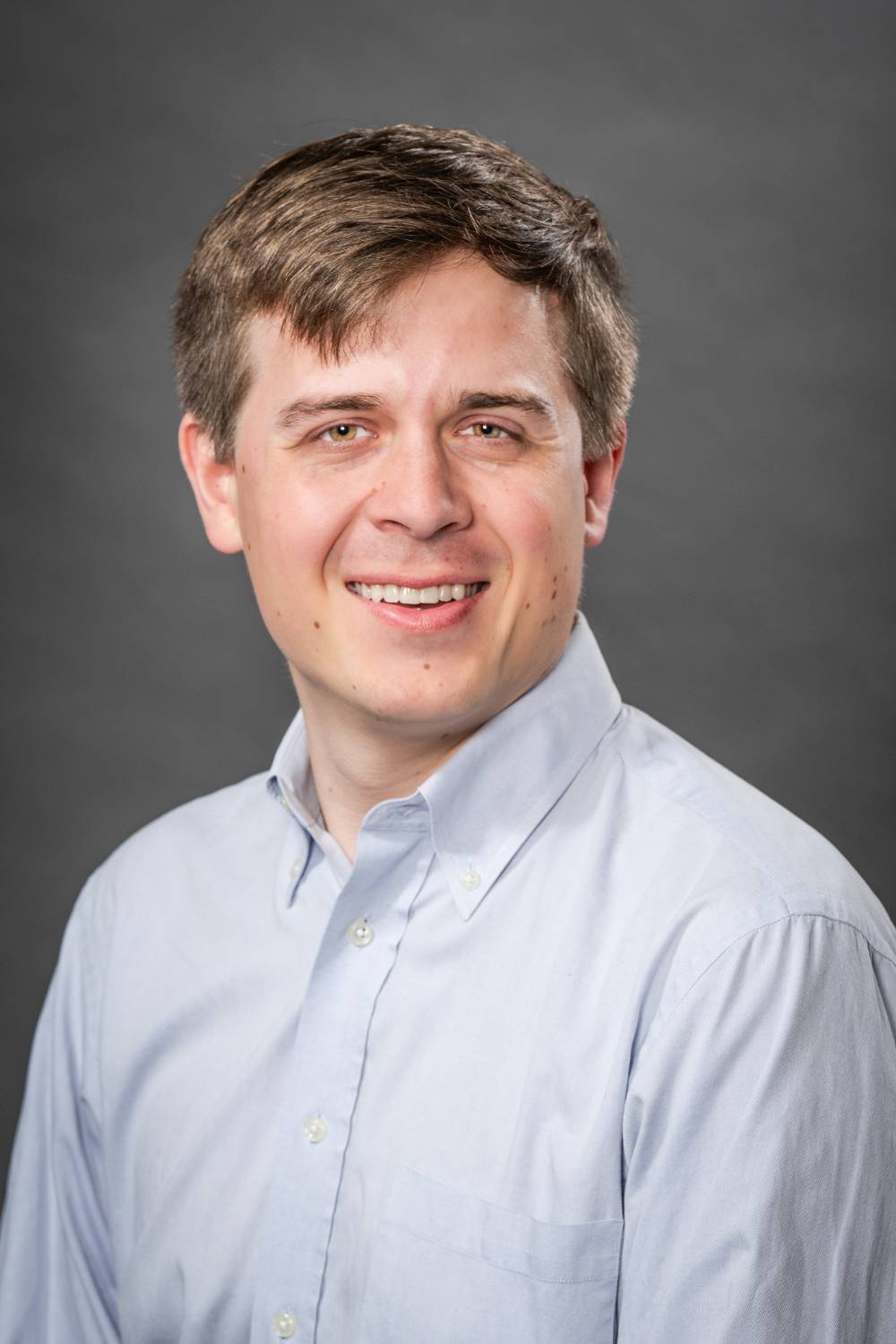
Quinton Bruch
Assistant Professor
B. S. Georgia Institute of Technology, 2016
Ph.D. University of North Carolina at Chapel Hill, 2021
Postdoctoral Fellow, Massachusetts Institute of Technology, 2021 ‒ 2023
779 Chemistry Building
In each project, we will use a mixture of synthetic, physical, and analytical chemistry to create a detailed understanding of the underlying phenomena driving catalyst activity and selectivity. In turn, we will use these insights to guide catalyst design, reaction discovery, and reaction optimization.
Metal–Ligand Role Reversal: Hydride-Transfer Catalysis by a Functional Phosphorus Ligand with a Spectator Metal. Bruch, Q. J.; Tanushi, A.; Müller, P.; Radosevich, A. T. J. Am. Chem. Soc. 2022, 144, 21443-21447
Mechanisms of Electrochemical N2 Splitting by a Molybdenum Pincer Complex. Bruch, Q. J.; Malakar, S.; Goldman, A. S.; Miller, A. J. M. Inorg. Chem.2022, 61, 2307-2318
Temperature and Solvent Effects on H2 Splitting and Hydricity: Ramifications on CO2 Hydrogenation by a Rhenium Pincer Catalyst. Hu, J.;‡ Bruch, Q. J.;‡ Miller, A. J. M. J. Am. Chem. Soc.2021, 143, 945–954
Resources for Improving Safety Culture, Training, and Awareness in the Academic Laboratory. Bruch, Q. J.; Butler, S. K.; Tonks, I. A.; Miller, A. J. M. Comprehensive Coordination Chemistry III Volume I. 2021
Considering Electrocatalytic Ammonia Synthesis via Bimetallic Dinitrogen Cleavage. Bruch, Q. J.;‡ Connor, G. P.; ‡ McMillion, N. D.; ‡ Goldman, A. S.; Hasanayn, F.; Holland, P. L.; Miller, A. J. M. ACS Catalysis. 2020, 10, 10826–10846
Dinitrogen Reduction to Ammonium at Rhenium Utilizing Light and Proton-Coupled Electron Transfer. Bruch, Q. J.; Connor, G. P.; Chen, C-H.; Holland, P. L.; Mayer, J. M.; Hasanayn, F.; Miller, A. J. M. J. Am. Chem. Soc.2019, 141, 20198–20208
ACS DCHAS Graduate Student Safety Leadership Award 2022
NSF Graduate Research Fellow 2016 ‒ 2021