


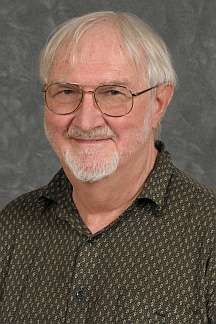
George Stell, 1933-2014
Professor
George Stell passed away on December 22, 2014.
Born in 1933 in the coastal village of Sea Cliff on Long Islands’ North Shore, George
Stell played a central role in the development of the statistical mechanics of classical
and quantum fluids and strongly influenced the careers of many researchers and academicians
who had the good fortune to collaborate with him or have him as a mentor. He is sorely
missed. With a strong mathematical avocation, George obtained his Bachelor of Science
degree in 1951 from Antioch College, in Yellow Springs, Ohio, an institution well
known for its emphasis on Liberal Arts, its cooperative educational program, and for
being a cradle of social activism. After a time at the Chicago division of the University
of Illinois as Instructor of Physics, he returned to New York where he joined the
Institute of Mathematical Sciences (later known as Courant Institute of Mathematical
Sciences) in New York University as a PhD student under the supervision of J B Keller.
He presented his dissertation in 1961 with the title ‘Solutions of the Hierarchy Equations
of Statistical Mechanics for Mixtures’, marking the emergence of his long term interest
in the fields of fluids and disordered matter. He remained for a few years at the
Institute as a staff mathematician, publishing his first key paper on cluster expansions
for fluids in equilibrium [1], a paper that lay the foundation for much of the further
development in the theory of fluids. Later he moved to the Belfer Graduate School
of Science as a postdoctoral fellow under the supervision of J L Lebowitz where, in
collaboration with Shalom Baer, he investigated graph expansions in powers of the
inverse Kac long range γ-parameter [2]. This work was inspired by previous research
of Mark Kac, George Uhlenbeck and a Norwegian postdoctoral research associate at the
Rockefeller University, Per Christian Hemmer. In 1965 George moved to the Polytechnic
Institute of Brooklyn where he was appointed as an associate professor. During that
time he began a long term collaboration with Per Hemmer and other researchers at the
Norwegian Institute of Technology in Trondheim. Among other things, Per Hemmer and
George Stell showed how a simple fluid with an interaction potential exhibiting various
interaction ranges can undergo multiple phase transitions [3]. The Hemmer–Stell potential
became the focus of renewed interest after the late nineties due to its ability to
explain thermodynamic, structural and dynamic anomalies in simple liquids (including
the existence of liquid–liquid equilibria), and especially in connection with the
search for the second critical point of water. In 1968, George moved to the State
University of New York at Stony Brook, where he would spend his next 46 years, first
in the Department of Mechanics (1968–1979) and then in the Department of Chemistry
and Engineering (from 1979 onwards), becoming Distinguished Professor in 2001. At
Stony Brook he supervised his first PhD student, Carol Hall, and several years later
Salvatore Torquato, to name but a few of the many first line scientists who had him
as a mentor. George Stell’s work on the inverse long range γ-parameter expansion paved
the way for his numerous and essential contributions on the behavior of dipolar fluids,
a work in which his collaboration with another Norwegian postdoctoral researcher,
J S Høye, led to very relevant contributions [4]. This collaboration had many ramifications,
some of them in connection with the development of integral equation approaches, in
particular exploring the analytical or semi-analytical solutions of the mean spherical
approximation (MSA) for a large variety of systems, ranging from single component
dipolar fluids, to ionic and Yukawa fluids, as well as classical and quantum polarizable
fluids. Pointing out the thermodynamics inconsistencies intrinsic to the MSA, Stell
and Høye formulated the self consistent Ornstein–Zernike approximation [5] (SCOZA),
a differential equation approximation that in the last twenty years has been put to
test in a wide variety of systems. This approximation has been shown to be able to
reproduce the critical behavior of simple fluids with astonishing accuracy. Ionic
fluids were one of George Stell’s favorite subjects—ripe for the application of his
favorite approaches: integral equation treatments (e.g. the MSA) or cluster expansion
analysis. With seminal contributions back in the 1970s [6], the critical behavior
of ionic fluids was a topic to which he devoted a great deal of work during his scientific
career [7]. The nature of criticality of ionic systems was an issue that was marked
by the long controversy between George’s views and those of Michel Fisher. Their debate
was followed with interest by the scientific community in numerous meetings over more
than a decade. George’s interest in random media dates back to the late 1970s and
was first reflected in his work with one of his first PhD students, Salvatore Torquato,
where the theory of N-point probability functions was extended to 2-phase random media.
In close connection with this problem, one decade later, together with a postdoctoral
researcher, James A. Given, he opened an entirely new avenue of research in the field
of statistical mechanics of partly quenched systems, introducing the Edwards and Jones
replica trick into the realm of fluid theory to describe fluids confined in disordered
porous media [8]. The Replica Ornstein–Zernike equations became a popular tool to
account for the behavior of quenched-annealed mixtures. In particular, its application
to simple and complex fluids confined in random porous media has been the topic of
hundreds of publications over the last 25 years. George’s collaborative activities
took him not only to Norway but also to other European locations, especially Paris.
Attracted both by its cultural life, and the flourishing groups working on statistical
mechanics of fluids both at Orsay and Jussieu, George first moved to Paris as a visiting
Professor in 1968. There he interacted with Loup Verlet, Jean-Jacques Weis and Dominique
Levesque at Orsay, sharing their interest in polar and especially ionic fluids. In
the 1990s, while visiting Jussieu, George, Gilles Tarjus, and Martin-Luc Rosinberg
derived the complete thermodynamic formalism of the Replica Ornstein–Zernike theory
[9]. In close connection with his work on ionic fluids, George undertook a series
of pioneering studies on chemical reactions, associating fluids, and molecular fluids
as a limiting case. This work was initiated with Peter Cummings, a postdoctoral researcher
at Stony Brook at the time [10], and saw further expansion in the late 1980s and early
1990s in the PhD work of Yaoqui Zhou also supervised by George Stell [11]. Almost
a decade later, these approaches were linked within the general framework of Wertheim’s
theory for associating fluids [12] and the proper Reference Interaction Site model
expansion thanks to the collaboration between George and the group of Myroslav Holovko
at the Institute of Condensed Matter Physics in Lviv (Ukraine). George was a visiting
scholar in tens of academic institutions in Europe and US. To name but a few, he was
research scientist at the Laboratoire de Physique Théorique et Hautes Energies at
Orsay (France), Université Pierre et Marie Curie in Paris, at the Institutt for Teoretisk
Fysikk in Trondheim (Norway), the Atomic Energy Research Establishment (Harwell, UK),
at the University of California (Lawrence Radiation Lab), at the Rockefeller University
in New York, the University of Minnesota, and at the Brookhaven National Lab. His
career was marked by numerous awards, which include the Creative Extension Award of
the National Science Foundation (1987), the Lars Onsager Professorship Award (1993),
and the Joel Henry Hildebrand Award in Theoretical and Experimental Chemistry of Liquids
of the American Chemical Society. From 1984 to 1985 he was recipient of the John Simon
Guggenheim Fellowship. Since 1975 he was Fellow of the American Physical Society and
from 1992 he was a member of the Royal Norwegian Academy of Sciences and Letters.
With more than 330 publications spanning the period from 1962 to 2009, George’s scientific
contribution constitutes a substantial part of the solid foundations on which current
statistical mechanics of disordered matter rests. But in addition to that, his human
side was also impressive; a great scientist with a sweet and open personality, a caring
husband and father, and kind and supportive to his students. For those of us who had
the chance to interact with him in person—most of the contributors to this memorial
issue—he left a lasting impression, both for his acute sense of humor and his inspiring
comments on both scientific and non-scientific issues. Moreover, it was always a pleasure
to enjoy his performances as a jazz musician. In fact, George’s love for music paralleled
his enthusiasm for science. He was a skilled trombone player, who loved to join in
jam sessions both in New York and Long Island, and in Paris or Copenhagen. In fact
he kept one trombone in Paris and another one in Trondheim, and so he avoided carrying
it along in his frequent visits to Europe. In George’s words: “Music has always fascinated
me. On the one hand it is devoid of information in a certain sense … of objective
information. Yet it carries this powerful message that is quite mysterious”. In a
sense, this last sentence could also reflect his love and passion for science as well.
Even today, the recording of Carl Halen’s Gin Bottle Seven, featuring George Stell
at the trombone during his time at Antioch College in 1954 is still available, or
its later contribution to Albert Aylers’, Live at Greenwich Village: The Complete
Impulse Recordings, recorded in 1965. In the same fashion that one could meet George
in a jam session in a night club in Paris or Manhattan, it was also possible to encounter
him and Joel Lebowitz disentangling cluster expansions for plasmas at the Parisian
Café de la Paix. In summary, in the previous paragraphs we have just attempted to
provide a sketch of what in our personal view are some of the lines of research which
George pursued along his career that had a lasting impact on the statistical mechanics
of fluids and disordered matter. At the same time, we tried to draw a more personal
picture of George as the kind person, excellent musician and great scientist he was.
A modest homage to his role as scientist, teacher and person follows in the selected
contributions that constitute this Special Issue of the Journal of Physics: Condensed
Matter. We are grateful to those people who have conveyed to us some of their personal
experiences of the time they shared with George, namely J L Lebowitz, P C Hemmer,
J S Høye, and F Ranieri.
References [1] Stell G 1964 Cluster expansions for classical systems in equilibrium The Equilibrium Theory of Classical Fluids ed H Frisch and J Lebowitz (New York: Benjamin) [2] Lebowitz J L, Stell G and Baer S 165 Separation of interaction potential into 2 parts in treating many-body systems.I. General theory and applications to simple fluids with short-range and long-range forces J. Math. Phys. 6 1282 [3] Hemmer P C and Stell G 1970 Fluids with several phase transitions Phys. Rev. Lett. 24 1284 [4] Stell G, Patey G N and Høye J S 1981 Dielectric constants of fluid models: statistical mechanical theory and its quantitative implementation Adv. Chem. Phys. 48 183 [5] Høye J S and Stell G 1977 New self-consistent approximations for ionic and polar fluids J. Chem. Phys. 67 439 [6] Stell G, Wu K C and Larsen B 1976 Critical-point in a fluid of charged hard spheres Phys. Rev. Lett. 37 1369 [7] Stell G 1995 Criticalitiy and phase transitions in ionic fluids J. Stat. Phys. 78 197 [8] Given J R and Stell G 1994 The replica Ornstein–Zernike equations and the structure of partly quenched media Physica A 209 495 [9] Rosinberg M L, Tarjus G and Stell G 1994 Thermodynamics of fluids in quenched disordered matrices J. Chem. Phys. 100 5172 [10] Cummings P T and Stell G 1984 Statistical mechanical models of chemical-reactions analytic solution of models of A + B reversible AB in the Percus–Yevick approximation Mol. Phys. 51 253 [11] Stell G and Zhou Y 1989 Chemical association in simple-models of molecular and ionic fluids J. Chem. Phys. 91 3618 [12] Kalyuzhnyi Y V, Vlachy V, Holovko M F and Stell G 1995 Multidensity integral-equation theory for highly asymmetric electrolyte-solutions J. Chem. Phys. 102 5770
References [1] Stell G 1964 Cluster expansions for classical systems in equilibrium The Equilibrium Theory of Classical Fluids ed H Frisch and J Lebowitz (New York: Benjamin) [2] Lebowitz J L, Stell G and Baer S 165 Separation of interaction potential into 2 parts in treating many-body systems.I. General theory and applications to simple fluids with short-range and long-range forces J. Math. Phys. 6 1282 [3] Hemmer P C and Stell G 1970 Fluids with several phase transitions Phys. Rev. Lett. 24 1284 [4] Stell G, Patey G N and Høye J S 1981 Dielectric constants of fluid models: statistical mechanical theory and its quantitative implementation Adv. Chem. Phys. 48 183 [5] Høye J S and Stell G 1977 New self-consistent approximations for ionic and polar fluids J. Chem. Phys. 67 439 [6] Stell G, Wu K C and Larsen B 1976 Critical-point in a fluid of charged hard spheres Phys. Rev. Lett. 37 1369 [7] Stell G 1995 Criticalitiy and phase transitions in ionic fluids J. Stat. Phys. 78 197 [8] Given J R and Stell G 1994 The replica Ornstein–Zernike equations and the structure of partly quenched media Physica A 209 495 [9] Rosinberg M L, Tarjus G and Stell G 1994 Thermodynamics of fluids in quenched disordered matrices J. Chem. Phys. 100 5172 [10] Cummings P T and Stell G 1984 Statistical mechanical models of chemical-reactions analytic solution of models of A + B reversible AB in the Percus–Yevick approximation Mol. Phys. 51 253 [11] Stell G and Zhou Y 1989 Chemical association in simple-models of molecular and ionic fluids J. Chem. Phys. 91 3618 [12] Kalyuzhnyi Y V, Vlachy V, Holovko M F and Stell G 1995 Multidensity integral-equation theory for highly asymmetric electrolyte-solutions J. Chem. Phys. 102 5770