


Richard E.F. Leakey, FRS. 1944-2022.
In addition to this extraordinary set of accomplishments as a fossil finder, Richard became the first Kenyan director of the Kenya National Museum in 1969. Having built this into a world class research institution with a collection of important regional sites and museums, in 1989 he became the director of the Kenyan Wildlife Services. At the time, KWS was underfunded and unable to prevent the escalation of poaching of elephants and rhinos. Richard raised large amounts of money and built the ranger service into a formidable force that was able to make a massive dent in the success of poachers. To draw attention to the obscenity of the ivory trade, Richard convinced Kenya’s President Daniel arap Moi to burn all of Kenya’s ivory stock. Images of the fire were headline news all over the world and the price of ivory plummeted, dramatically reducing incentives for poachers and dealers.
In 1995, Richard turned his attention to politics, in particular to democratic and transparent government. As one of the founders of Safina, in what was then a single party state, Richard worked fearlessly and tirelessly to force the government to allow multi party elections and represented Safina as a member of parliament. In 1999, with pressure mounting from international organizations such as the IMF and World Bank, President Moi asked Richard to become his second in command as Head of the Civil Service, a position to which all Cabinet Secretaries, the Army, Air Force, Navy, Police and all government employees reported. Richard brought into government a group of young technocrats from the private sector who quickly become known as the Dream Team. Incorruptible and committed to improving the quality of life for average Kenyans, the Dream Team quickly made reforms in banking, telecommunications and transportation that set the stage for the vibrant economy and tech sector that we see in Kenya today. Feeling that he had accomplished as much as he could, Leakey resigned in 2001.
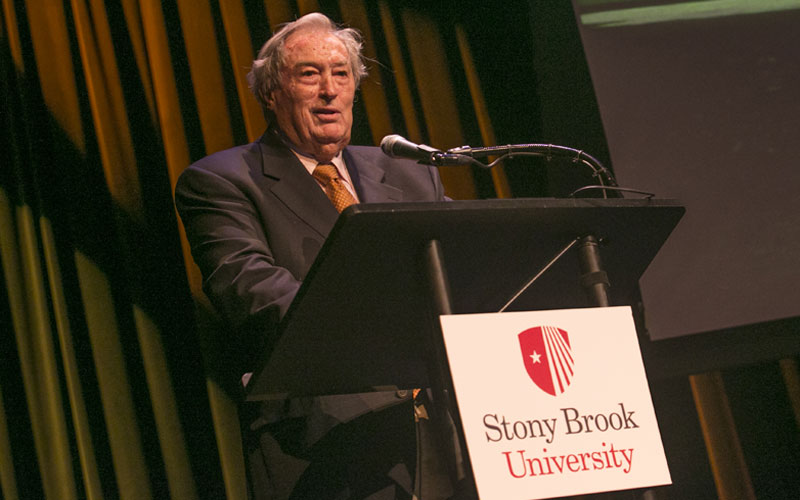
Stony Brook awarded Richard an honorary Doctor of Science degree in 1998. On hearing the news of Richard’s resignation from the Kenyan government, Stony Brook President Shirley Strum Kenny was determined to bring Richard to Stony Brook as a faculty member. He joined the faculty as a Visiting Professor in 2001 and organized two World Environmental Forums on issues concerning climate change and the environment and initiated an annual series of symposia and workshops, the SBU/TBI Human Evolution Workshop series that convened every year until COVID. In 2005, Richard proposed to Stony Brook the idea to partner to build and operate the Turkana Basin Institute, two field stations in the remote Turkana Basin to facilitate and support scientific research and education with special emphasis on the sciences relevant to human evolution, the environment and sustainability. Richard was a regular visitor to the Department spending four to six weeks at Stony Brook each fall and spring, during which visits he enjoyed meetings faculty and students to discuss their work and giving guest lectures. When the Origins field school began in 2011, Richard made a point to spend time at the field stations with the students and always presided over field school graduations until his declining health made travel to Turkana too difficult.
The Department of Anthropology and the whole University were enriched by Richard’s presence in our lives and work. He made numerous friends here and initiated many multi-disciplinary programs to broaden participation by Stony Brook colleagues in work in the Turkana Basin. He will be sorely missed….