


Studying Multilingualism for Social Justice:
A Response to Difficult Times
Co-sponsored by the Office of Global Affairs and Mattoo Center for India Studies
Date: Wednesday, October 17th, 2018, 11:00 AM-12:00 PM
Location: Javits Lecture Center 102
Watch: Studying Multilingualism for Social Justice
Lecture Abstract
We live in uncertain times of serious deterioration of solidarity for human diversity,
a widening of economic inequalities and intensification of racial and religious hatred,
and alarming tides of authoritarian populism spreading across the globe. Many multilinguals
– even more so multilinguals in marginalized communities – are vulnerable in the present
climate. How can the study of multilingualism respond to these difficult times and
generate knowledge that can support, in particular, social justice for multilinguals
who learn a new language (formally or informally) during young, middle, or older adulthood,
and therefore well outside primary socialization in the family? In opposition to the
disaffection for ethics, power, and ideologies that has traditionally predominate
among researchers of adult language development, I will argue that research must serve
both elite and marginalized multilinguals. I will propose several research strategies
to respond to the needs that so many multilingual individuals, families, and communities
are experiencing in our difficult times.
About the Speaker: Lourdes Ortega
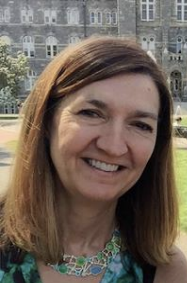
Lourdes Ortega is a Professor in the Department of Linguistics at
Georgetown University. Her main area of research is in second language acquisition. She is best known for her award-winning meta-analysis of second-language instruction in 2000, her best-seller textbook Understanding Second Language Acquisition (2009, translated into Mandarin in 2016), and for championing a bilingual turn in SLA. Her latest book is The Cambridge Handbook of Bilingualism, co-edited with Annick De Houwer (Cambridge University Press, 2019). Lourdes is spending the fall of 2018 as a senior fellow at the Advanced Research Collaborative at the Graduate Center, City University of New York.