


Elaine Luo
Assistant Professor, Marine Sciences Division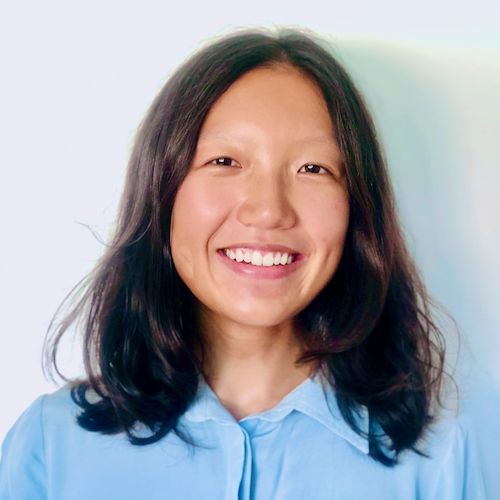
Education: Ph.D. 2020 - University of Hawaii at Manoa
Research Topics
microbial oceanography, computational biology, metagenomics
Biography and Research Focus
Our overall goal is to determine how microbes impact ecology and biogeochemistry, with a particular emphasis on under-explored environments with novel microbial diversity. Microbial engines drive biogeochemical cycles that influence habitability and sustainability of life on Earth. The ocean covers 70% of our planet and absorb ~2.5 gigatonnes of atmospheric carbon each year, more than the carbon stored in the atmosphere, soils, and all biomass combined. It contains ~1030 microbes that perform key ecosystem processes such as primary production and recycling of biomass that drive carbon cycling and export. Despite their ecological and biogeochemical importance, abundance, and metabolic diversity, environmental microbes remain some of the most understudied life-forms on our planet.
My lab uses short- and long-read metagenomics combined with field sampling, experimentation, wet lab, and computational biology to study the diversity and impacts of microbial communities. We bridge microbial ecology with biogeochemistry, and environmental and human health across a diversity of environments to address the following questions:
- How do microbes impact carbon and nutrient cycling that are critical to sustainability of life on Earth?
- What novel diversity and function is waiting to be discovered in microbes from diverse environments?
- How do microbes impact environmental and human health?
Learn more about oure research in this podcast.
Tracer-based (qSIP) metagenomics to link microbial diversity to key ecosystem processes
Exploratory metagenomic studies can uncover an unprecedented amount of microbial diversity. Linking novel diversity (e.g., 'omics) to function (e.g., biogeochemical cycling) remains an ongoing challenge to the field of environmental microbiology. Our lab combines metagenomics with quantitative stable isotope probing (qSIP) to identify key components across multiple scales (genes, pathways, populations, and tropic interactions) that drive microbial carbon cycling.
Diversity, spatiotemporal variability, and biogeochemical impacts of giant viruses
Giant viruses, with genomes and physical sizes that rival those of known cells, challenge our preconceptions on the biological differences between viruses and cells. This project utilizes high-throughput metagenomics sequencing data at Station ALOHA to address these questions:
- What is the diversity, population structure, and spatiotemporal variability of giant viruses in the open ocean?
- How might giant viruses contribute to vertical transport and carbon sequestration to the deep sea?
Biogeochemical and ecological impacts of viral parasites
Contemporary metagenomic approaches, such as hybrid short- and long-read sequencing, have potential to reveal novel classes of life-forms in natural microbial communities, such as virus-induced mobile genetic elements (“viral parasites”). While viruses depend on cellular host metabolism to synthesize DNA and structural proteins for reproduction, viral parasites are mobile genetic elements that lack most viral genes required for producing viruses. Instead, these free-loaders parasitize viral particles by replacing another virus's DNA with their own (right). We are interested in these following questions:
- How might they impact the rate of viral production and carbon transformation from cells to organic matter?
- What role do they play in the sustainability of marine communities, e.g. though horizontal gene transfer, virulence and disease, and virus-host interactions (is "the enemy of my enemy my friend"?)
Publications
Luo Lab members *eq. contribution
Sheam M, Luo E. The biogeography of hydrothermal vent giant viruses across the global ocean. 2026. BioRxiv
Luo E, Pham N, Rogers T, Sheam M, Benner B, Vallino J, Trubl G, Huber J. Quantitative stable isotope probing (qSIP)-informed metagenomics identifies viruses infecting chemoautotrophs. 2026. Nature Communications
Sheam M, Luo E. 2025. Vertical transport and spatiotemporal dynamics of giant viruses in the North Pacific Subtropical Gyre. ISME Journal
Hackl T, Laurenceau R, Ankenbrand M, Bliem C, Cariani Z, Thomas E, Dooley K, Arellano A, Hogle S, Berube P, Leventhal G, Luo E, et al. 2023. Novel integrative elements and genomic plasticity in ocean ecosystems. Cell 186(1):47-62
Eppley J, Biller S*, Luo E*, Burger A, DeLong E. 2022. Marine viral particles reveal an expansive repertoire of phage-parasitizing mobile elements. PNAS 119 (43) e2212722119
Luo E, Leu A, Eppley J, Karl D, DeLong E. 2022. Diversity and origins of bacterial and archaeal viruses on sinking particles reaching the abyssal open ocean. ISME Journal 16: 1627-1635
Luo E, Eppley J, Romano A, Mende D, DeLong E. 2020. Virioplankton population dynamics and reproductive strategies in the oligotrophic open ocean water column. ISME Journal 14: 1304-1315
Beaulaurier J,* Luo E*, Eppley J*, Den Uyl P, Dai X, Turner D, Pendelton M, Juul S, Harrington E, DeLong E. 2020. Assembly-free single-molecule sequencing recovers complete virus genomes from natural microbial communities. Genome Research 30(3): 437-446
Coenen A*, Hu S*, Luo E*, Muratore D*, Weitz J. 2020. A primer for microbiome time-series analysis. Frontiers in Genetics 11: 310
McMullen A*, Luo E*, Martinez-Hernandez F, Tominaga K, Ogata H, Yoshida T, DeLong E, Martinez-Garcia M. 2020. Diel cycling of the cosmopolitan abundant Pelagibacter virus 37-F6: one of the most abundant viruses on Earth. Environmental Microbiology Reports 12(2): 214-219
Luo E, Aylward F, Mende D, DeLong E. 2017. Bacteriophage distributions and temporal variability in the ocean's interior. mBio 8(6): 01903-17