


Arianna Krinos-Quinn
Assistant Professor, Marine Sciences Division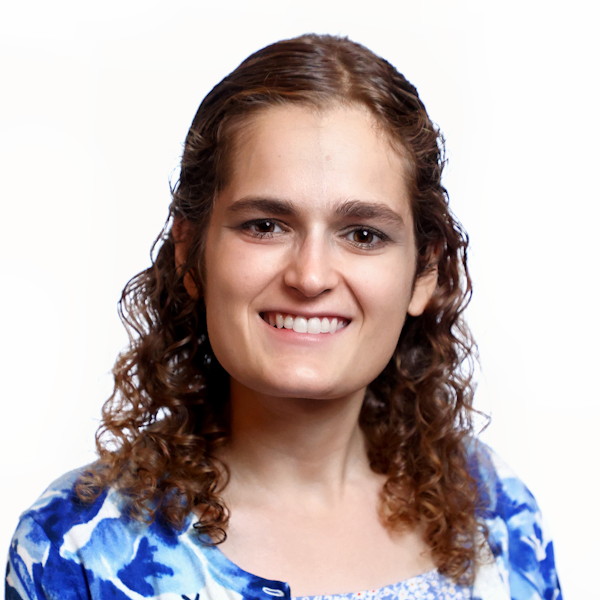
Education: Ph.D. 2024 - MIT-WHOI Joint Program in Oceanography and Applied Ocean Science and Engineering
Research Topics
Coastal phytoplankton, ecosystem modeling, bioinformatics, marine microbial ecology
Biography and Research Focus
Arianna’s PhD was jointly advised by Dr. Harriet Alexander at Woods Hole Oceanographic Institution (WHOI) and Dr. Michael (Mick) Follows at the Massachusetts Institute of Technology (MIT). Arianna’s research centers on how to leverage molecular datasets to identify microbial (especially microbial eukaryotic) traits that can be useful to biogeochemically-relevant models. She is excited about including undergraduates in research projects and designing undergraduate courses that include programming and creative, data-driven inquiry.
Arianna is deeply invested in pedagogy training and educational outreach. Arianna served as a Teaching Development Fellow (2023-2024) with the MIT Teaching & Learning Lab and as a leader of the WHOI Broader Impacts Group.
Publications
2026
-
Nutrient response strategies drive coastal range shifts of phytoplankton taxabioRxiv, 2026
2025
-
A call for early-career teams in interdisciplinary microbiology researchNature Microbiology, 2025
-
Contributions of the Petabyte Scale Sequence Search Codeathon toward efforts to scale sequence-based searches on SRAarXiv preprint arXiv:2505.06395, 2025
-
Global Metagenomics Reveals Hidden Protist DiversitybioRxiv, 2025
-
Intraspecific diversity in thermal performance determines phytoplankton ecological nicheEcology Letters, 2025
2024
-
Time-series metagenomics reveals changing protistan ecology of a temperate dimictic lakeMicrobiome, 2024
-
Missing microbial eukaryotes and misleading meta-omic conclusionsNature Communications, 2024
-
Microeukaryote metabolism across the western North Atlantic Ocean revealed through autonomous underwater profilingNature Communications, 2024
-
Protistan community composition and metabolism in the North Pacific Subtropical Gyre: Influences of mesoscale eddies and depthEnvironmental Microbiology, 2024
2023
-
Reverse engineering environmental metatranscriptomes clarifies best practices for eukaryotic assemblyBMC bioinformatics, 2023
-
Eukaryotic genomes from a global metagenomic data set illuminate trophic modes and biogeography of ocean planktonmBio, 2023
-
Vitamin B12 conveys a protective advantage to phycosphere-associated bacteria at high temperaturesISME communications, 2023
2022
-
Marine microeukaryote metatranscriptomics: sample processing and bioinformatic workflow recommendations for ecological applicationsFrontiers in Marine Science, 2022
2021
-
EUKulele: Taxonomic annotation of the unsung eukaryotic microbesJournal of Open Source Software, 2021
-
Seasonal changes and the unexpected impact of environmental disturbance on skin bacteria of individual amphibians in a natural habitatFEMS Microbiology Ecology, 2021
-
Estimating the maximal growth rates of eukaryotic microbes from cultures and metagenomes via codon usage patternsbioRxiv, 2021
-
The Bioinformatics Virtual Coordination Network: An open-source and interactive learning environmentIn Frontiers in Education , 2021
2020
-
Ecosystem-scale nutrient cycling responses to increasing air temperatures vary with lake trophic stateEcological Modelling, 2020
2019
-
Enhancing collaboration between ecologists and computer scientists: lessons learned and recommendations forwardEcosphere, 2019
-
Parameter and uncertainty estimation for a model of atmospheric CO_2 observationsSIAM Undergraduate Research Online, 2019
-
Including variability in air temperature warming scenarios in a lake simulation model highlights uncertainty in predictions of cyanobacteriabioRxiv, 2019
-
Nuggets of Wisdom from Destinations Doomed Due to Dragon Dominion.UMAP Journal, 2019
2018
-
Better to Marry Renewables than to Burn Fossil Fuels in Border States.UMAP Journal, 2018
-
Ocean acidification: effects of pH on 45 Ca uptake by lobster branchiostegitesJournal of Comparative Physiology B, 2018