


Brian Gallagher (BS, 2019)
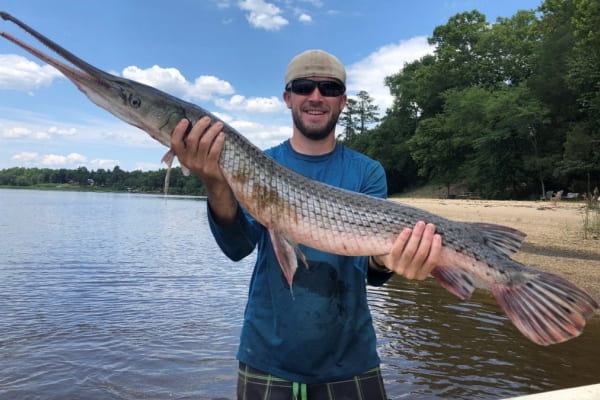
Throughout his education and career in aquatic ecology, Brian Gallagher developed a strong interest in how human impacts such as climate change, harvest, and contaminants influence the ecology and evolution of fishes. He credits his four years as a Marine Vertebrate Biology major at SoMAS from 2009 to 2013 as crucial in jump-starting these interests, most notably though opportunities to conduct undergraduate research. After gaining important experience in three different labs, Brian took on a more ambitious role during my last two years, working with Mike Frisk, Anne McElroy and Bob Cerrato on a collaborative study of six historically overfished winter flounder populations along an urbanization gradient in Long Island. This project was a formative experience, as it made him grapple with the complexity of how different populations respond to multiple human impacts in the real world.
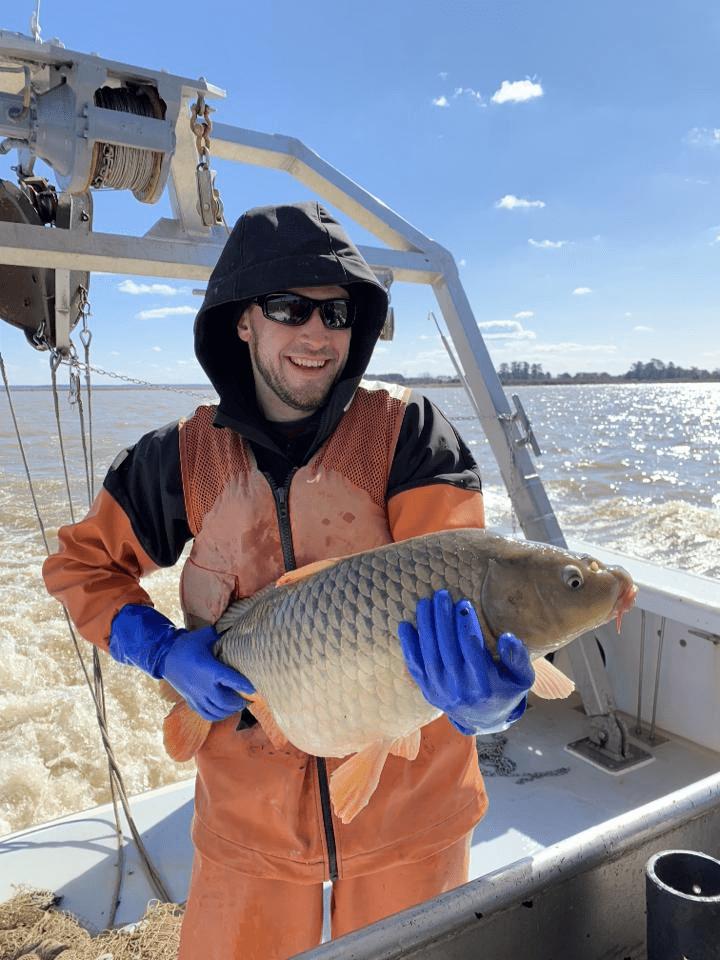 After graduating from SoMAS, Brian completed an MS program at Chesapeake Biological
Laboratory (part of the University of Maryland Center for Environmental Science) from
2013 to 2016, where he studied migration behavior and long-term abundance patterns
in Hudson River white perch. Importantly, his previous experience at SoMAS provided
a firm background for this study, as he had already worked with white perch and familiarized
myself with relevant laboratory techniques (especially working with fish otoliths)
as an undergraduate. While Brian very much enjoyed doing research and taking classes
as a student, he felt the need to take on a new type of role to become better-rounded,
which led to his current job as chief scientist of the Juvenile Striped Bass Seine Survey at the Virginia Institute of Marine Science, one
of the longest-running aquatic monitoring programs on the United States east coast.
This job, in addition to being a lot of fun, has allowed Brian to broaden my skills
and experiences in a way that would not have been possible if he had stayed in school.
After graduating from SoMAS, Brian completed an MS program at Chesapeake Biological
Laboratory (part of the University of Maryland Center for Environmental Science) from
2013 to 2016, where he studied migration behavior and long-term abundance patterns
in Hudson River white perch. Importantly, his previous experience at SoMAS provided
a firm background for this study, as he had already worked with white perch and familiarized
myself with relevant laboratory techniques (especially working with fish otoliths)
as an undergraduate. While Brian very much enjoyed doing research and taking classes
as a student, he felt the need to take on a new type of role to become better-rounded,
which led to his current job as chief scientist of the Juvenile Striped Bass Seine Survey at the Virginia Institute of Marine Science, one
of the longest-running aquatic monitoring programs on the United States east coast.
This job, in addition to being a lot of fun, has allowed Brian to broaden my skills
and experiences in a way that would not have been possible if he had stayed in school.
From there, Brian moved on to the next step in his career, as a PhD at Concordia University in Montreal, with support from an internal fellowship and a Fulbright Award. HIs research focused on how population characteristics and ecological feedbacks will promote or constrain adaptation to climate change across multiple populations of brook trout in Cape Race, Newfoundland. Such research will be crucial for informing the conservation and management of salmon, trout, charr, and other coldwater fish populations that will be threatened by climate change in the coming decades.