


Mechanical Engineering Seminar
Evaluating Infotaxis Search With Robot Experiments
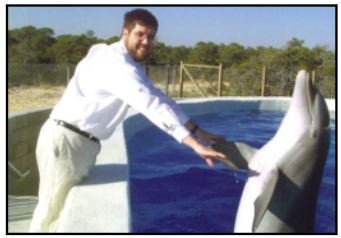 John R. Buck, Ph.D
Chancellor Professor of Electrical and Computer Engineering
University of Massachusetts, Dartmouth
Abstract:
Infotaxis, proposed by Vergassola et al. (2007), is a search strategy that chooses its actions to maximize the expected gain of information at each step. This contrasts with the Maximum A Posteriori (MAP) strategy which chooses the location maximizing the probability of containing the object of interest. Vergassola et al. were originally motivated by insect searches for odor plumes, which frustrate classic gradient methods. Lee et al. [2019] subsequently proposed extending infotaxis from passive odor detection to active remote sensing to model the search behavior of echolocating mammals. In this talk, we address two research questions: (1) How does changing the beamwidth of the transmitted energy impact the performance of infotaxis and MAP, and (2) How robust is infotaxis to mismatch between assumed sensor performance and actual sensor performance? We present results contrasting Infotaxis and MAP search performance from robots using ultrasound sensors and Arduino controllers. [Work funded by ONR MURI program]
Bio:
John Buck is a Chancellor Professor of Electrical and Computer Engineering at the University of Massachusetts Dartmouth. He received his PhD from the MIT/WHOI Joint Program in 1996. Dr. Buck is a Fellow of the Acoustical Society of America and a Senior Member of the IEEE. He is a past recipient of the ONR Young Investigator award and the NSF CAREER award, as well as a former Fulbright Senior Fellow to Australia. His teaching awards include the Manning Prize from the University of Massachusetts President’s Office, the Mac Van Valkenburg Early Career Teaching Award from the IEEE Education Society, the Leo M. Sullivan Teacher of the Year award from the UMass Dartmouth Faculty Federation, and the Goodwin Medal from MIT. He is the co-author of the Signals and Systems Concept Inventory, in addition to two signal processing textbooks. His research interests include acoustic signal processing, array processing, marine mammal bioacoustics, and engineering pedagogy.