


ASME Honors Mechanical Engineering Professor
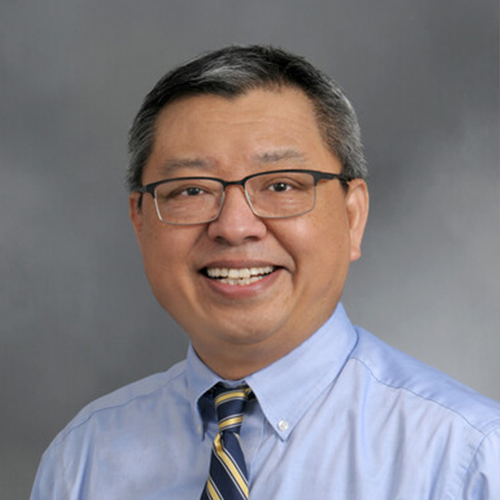 Professor Jeff Ge recently received both the Lifetime Achievement for Machine Design and the A.T. Yang Memorial Award for Theoretical Kinematics from the American Society of Mechanical Engineers (ASME).
Lifetime Achievement for Machine Design
Known as “the most prestigious award in the field of machine design,” the Machine Design Award, recognizes “eminent achievement or distinguished service in the field of machine design.”
“I am tremendously honored and humbled by what this award represents,” said Ge. ““I have read the machine design textbooks written by some of the recipients when I was an undergraduate student. Both my doctoral thesis advisor and my postdoctoral advisor are also on the list. I feel my work is now part of a larger and continuing legacy that includes not only the work of the award recipients but also those of their students and collaborators.”
“I am pleased but not surprised to see Jeff honored for his leadership and advancement of the field of machine design,” said P. Scott Carney, chair of the Department of Mechanical Engineering. “His scholarly contributions to computer-aided design and his breakthrough insights have led the field and placed Stony Brook University’s mechanical engineering program on a world stage.”
A.T. Yang Memorial Award for Theoretical Kinematics
Named for UC Davis Professor, A.T. Yang, a pivotal figure in mechanical engineering, the A.T. Yang Memorial Award is given for the best theoretical kinematics paper presented at ASME’s Annual Symposium on Theoretical Kinematics.This is Professor Ge’s second A.T Yang Award.
The award-winning paper was co-authored with Ge’s PhD student Huan Liu and Professor Mark Langer from Indiana University and was supported by a now-completed NIH grant. It builds on earlier research that tries to “get a sense of how something moves.” Using a “kinematic hull, a kind of 3D envelope that wraps around all the possible positions an object takes as it moves,” to break complex motion into smaller parts, the team’s work has many practical applications, including robotics, mechanical design, and radiotherapy, where it can make cancer treatments “more precise by shaping radiation zones to match the way a tumor moves.”